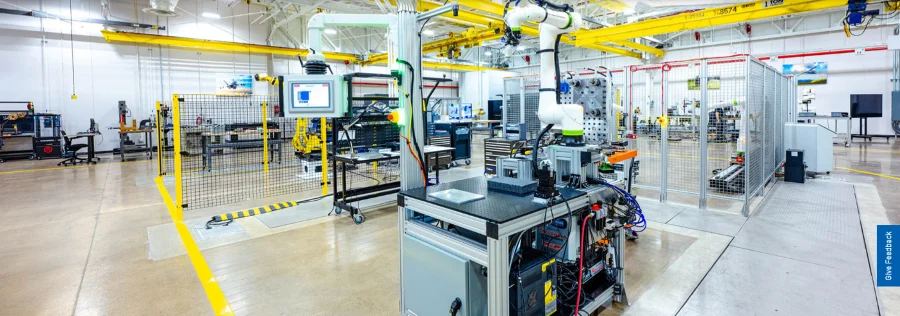




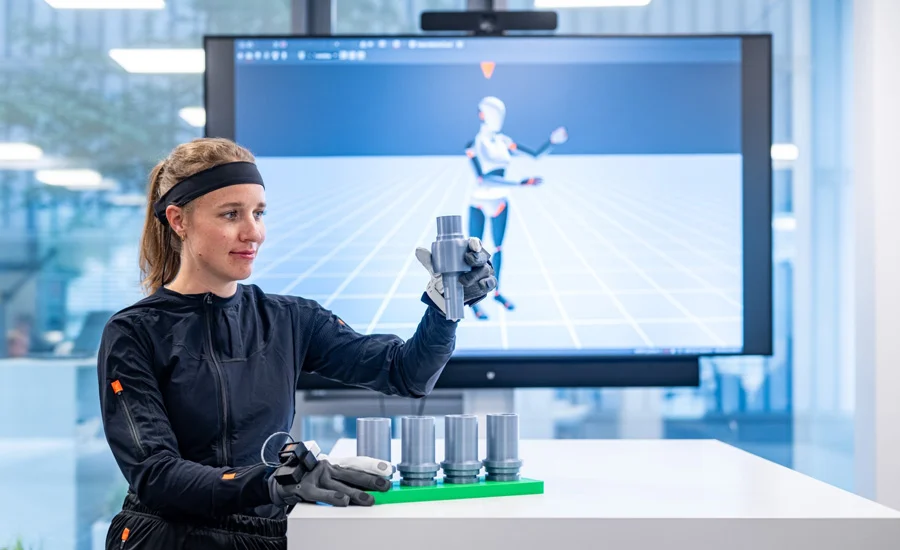
LANDSHUT, Germany — The automotive manufacturing sector is undergoing a profound structural evolution, and at the forefront of this transformation is BMW’s component production facility in Landshut, Germany. Moving far beyond traditional automation, engineers and software developers at the Landshut assembly plant are actively developing advanced software architectures designed specifically to power AI-supported humanoid robots.
This ambitious initiative positions the Landshut facility as a crucial incubator for physical artificial intelligence within BMW’s global production network. Rather than relying solely on off-the-shelf hardware or simple programmable logic controllers, the plant is pioneering an ecosystem of open software platforms, sophisticated training data pipelines, advanced motion planning, and cutting-edge machine learning methodologies. These localized software development efforts directly complement ongoing physical pilot programs exploring the deployment of humanoid robots at other major BMW manufacturing sites, including Leipzig, Germany, and Spartanburg, South Carolina.
As the lines between science fiction and industrial reality continue to blur, automotive manufacturing plants are increasingly examining how humanoid form factors can address acute labor shortages, ergonomic challenges, and the demand for hyper-flexible manufacturing lines. BMW’s multi-pronged approach offers a masterclass in how legacy automotive giants are blending software engineering with deep industrial expertise to shape the factories of tomorrow.
Main Facts: The Anatomy of BMW’s Landshut Robotics Initiative
The core objective of the Landshut project is to determine precisely which manufacturing tasks are best suited for humanoid robots. Traditional industrial robots are exceptionally proficient at repetitive, high-speed, and rigidly structured tasks—such as spot welding or heavy lifting along a linear assembly line. However, they traditionally struggle with environments that require dynamic flexibility, intricate fine motor skills, and deep contextual situational awareness.
Humanoid robots, with their bipedal locomotion, articulated arms, and human-like hands, are uniquely positioned to navigate workspaces originally designed for human operators. To make these complex machines viable on a factory floor, the Landshut facility is tackling several critical technological pillars:
- Open Software Platforms: The plant relies heavily on open software architectures. This strategy allows engineers to combine traditional, deterministic programming with modern AI models. By integrating visual information processing, natural language comprehension, and physical robot actions, the team is building a modular robotics ecosystem capable of seamless integration.
- Environmental Perception and Autonomous Decision-Making: Software developed at Landshut enables robots to perceive their physical surroundings in real time, evaluate dynamic shop-floor situations, and derive appropriate operational actions independently without constant human intervention.
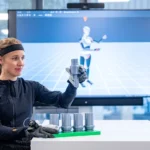
- Demonstration-Based Learning: Instead of writing every line of code for a specific movement, engineers utilize learning-from-demonstration techniques. Using motion-capture technology, project teams physically demonstrate tasks, which are then translated into behavioral models that the robots can generalize across multiple use cases.
- Rigorous Virtual Simulation: Before any physical robot executes a task on a live assembly line, motion patterns and behavior policies are thoroughly tested within virtual simulation environments to accelerate learning and eliminate safety risks.
Chronology: From Concept to Pilot Integration
The integration of humanoid robotics into automotive manufacturing has accelerated dramatically over the past several years, shifting from theoretical research papers to concrete, factory-floor deployments.
Phase 1: Exploration and Global Pilots
BMW’s exploration of humanoid technology began with strategic evaluations of emerging market hardware. This paved the way for early-stage pilot deployments at key facilities. Notably, BMW initiated trials exploring humanoids at its vehicle assembly plant in Leipzig, Germany, as well as its massive manufacturing campus in Spartanburg, South Carolina. These early deployments focused primarily on assessing hardware durability, basic manipulation tasks, and the physical ergonomics of integrating bipedal robots alongside human workers.
Phase 2: Establishing the Landshut Software Hub
While Leipzig and Spartanburg served as testing grounds for hardware deployment, BMW recognized that hardware is only as capable as its underlying software. Consequently, the Landshut component production plant was designated as a primary software development hub. Engineers at Landshut began shifting focus toward the complex cognitive layer: training data management, simulation modeling, and the open-source frameworks required to make humanoid systems truly adaptable.
Phase 3: Data Harvesting and Simulation Modeling
With the software framework established, the Landshut project team initiated comprehensive data-gathering campaigns. Real-world production environments and specialized test setups were instrumented to capture the nuances of component manufacturing. This data was subsequently channeled into virtual simulation engines to model complex motion planning.
Phase 4: Scaling and Behavioral Policy Implementation
Currently, the Landshut facility is transitioning its developed software and learning models into structured pilot projects. By utilizing demonstration-based learning, engineers are rapidly expanding the behavioral repertoire—or "policies"—of the robotic systems. These technologies are rigorously vetted outside of ongoing production lines before being cleared for gradual, staged scaling within actual manufacturing workflows.
Supporting Data: The Mechanics of Humanoid Training
Developing software for humanoid robots requires an immense volume of high-quality training data and multi-layered simulation. The methodology employed at BMW Landshut bridges the gap between physical reality and digital abstraction.
Capturing Human Expertise
To teach a humanoid robot how to handle complex automotive components—such as wiring harnesses, interior trim pieces, or delicate mechanical sub-assemblies—the robot must first understand how a human performs the task. The Landshut project team utilizes a multi-modal approach to capture this data:
- Camera Systems: High-definition optical sensors record spatial coordinates, lighting variations, and object states.
- Motion Capture Suits: Human technicians wear specialized suits embedded with sensors that map joint angles, posture shifts, and ergonomic reaches during assembly tasks.
- Data Gloves: Advanced gloves record finger articulation, grip strength, and tactile manipulation nuances necessary for fine motor skills.
Translating Data into Action Policies
Once raw movement data is harvested, it undergoes rigorous processing. Machine learning algorithms convert this data into behavioral models, commonly referred to in robotics as "policies." These policies act as functional blueprints. Instead of hardcoding a robot’s arm to move precisely five inches to the left, a policy allows the robot to recognize an object’s position, calculate the optimal grasp, and execute the movement dynamically—even if the target object is slightly out of place.
Simulation-Accelerated Learning
Physical testing alone is too slow and resource-intensive to train advanced AI models. Therefore, Landshut engineers rely heavily on digital twins and physics-based simulations. By modeling factory floors virtually, millions of hours of trial-and-error machine learning can be compressed into days or even hours. Edge cases, potential collisions, and efficiency bottlenecks are identified and resolved in the digital realm long before a physical robot ever touches a production part.
Official Responses: Insights from BMW Leadership
BMW’s leadership emphasizes that the integration of humanoid robotics is guided by practical industrial utility rather than technological novelty. The strategy is deliberately pragmatic, focusing squarely on measurable manufacturing value.
Dr. Wolfgang Bluemlhuber, head of driving dynamics and in-house component manufacturing at BMW, highlights the unique collaborative nature of the Landshut initiative:
"At Landshut, we are combining software expertise with industrial practice in our component production. This allows us to test new technologies at early stages and carefully evaluate their benefits for production."
This perspective underscores BMW’s philosophy that advanced technologies must prove their economic and operational worth before earning a permanent place on the factory floor.
Echoing this pragmatic stance, Christoph Jagoda, the physical AI project manager at the Landshut factory, emphasizes the importance of real-world alignment:
"For us, it is crucial to develop the technology in very close alignment with real-world requirements. We are not just testing what is technically possible, but also where humanoid robots can truly deliver reliable benefits in component production."
Jagoda’s comments reflect a broader industry realization: while humanoid robots capture public imagination, their ultimate success in manufacturing depends entirely on their ability to solve genuine operational friction points, improve worker ergonomics, and maintain high standards of quality and uptime.
Implications: The Future of Component Production and Automotive Labor
The work being conducted at BMW’s Landshut plant carries profound implications for the broader automotive manufacturing ecosystem and the future of industrial labor.
1. The Rise of Modular, Open Robotics Ecosystems
By prioritizing open software platforms, BMW is helping steer the manufacturing industry away from proprietary, closed-loop automation silos. An open ecosystem allows different robotic systems—from autonomous mobile robots (AMRs) to stationary multi-axis arms and bipedal humanoids—to communicate, share data, and coordinate tasks collaboratively. This modularity reduces integration costs and future-proofs factories against rapid hardware obsolescence.
2. Redefining Human-Robot Collaboration
The introduction of humanoid robots does not signal the wholesale replacement of human workers. Instead, it points toward a sophisticated paradigm of cooperation. Humanoid robots are ideally suited to take over ergonomically strenuous, highly repetitive, or physically taxing tasks—such as overhead installations, heavy material handling in cramped spaces, or tedious sorting operations. This frees human operators to focus on quality control, process optimization, and complex problem-solving.
3. Economic and Competitive Advantages
Automotive component manufacturing is characterized by tight profit margins, high volume demands, and rapid design iterations. Factories that successfully integrate adaptable AI-driven robotics will enjoy unprecedented manufacturing flexibility. When vehicle models change or new component designs are introduced, traditional hard automation requires extensive and costly retooling. Software-defined humanoid robots, by contrast, can simply be updated with new behavioral policies via software deployment, drastically reducing changeover times and capital expenditures.
4. A Blueprint for Global Scaling
As Landshut refines its software pipelines, data collection frameworks, and simulation methodologies, the resulting toolsets will serve as a foundational blueprint for BMW’s global manufacturing network. Lessons learned in Landshut will directly inform expansions at Spartanburg, Leipzig, and beyond, establishing a standardized operational language for physical AI across the corporation.
Conclusion
BMW’s initiative at the Landshut assembly plant represents a significant milestone in the evolution of modern manufacturing. By bridging the gap between theoretical software development and rigorous industrial practice, BMW is moving past the hype cycle surrounding humanoid robotics. Through open platforms, sophisticated simulation, and demonstration-based learning, the Landshut engineering team is actively constructing the software foundation that will enable humanoid robots to become reliable, highly versatile partners in automotive component production. As these technologies mature and scale, they promise to redefine the boundaries of factory efficiency, ergonomic safety, and technological adaptability for decades to come.