DALLAS — In a major push to modernize America’s defense industrial base, aerospace and defense giant Lockheed Martin Corp. has announced a sweeping $300 million expansion of its munitions manufacturing plant in Grand Prairie, Texas. The strategic investment will expand the facility’s physical footprint to more than 735,000 square feet, embedding cutting-edge commercial technologies, artificial intelligence, and high-precision machining into the heart of the company’s missile production lines.
The Grand Prairie site serves as the crucial headquarters for Lockheed Martin Missiles and Fire Control (MFC), a division responsible for engineering and manufacturing some of the U.S. military’s most relied-upon precision missiles, advanced rocket systems, and sophisticated electro-optical sensor systems. By marrying commercial manufacturing speed with rigorous defense reliability, the multi-million-dollar upgrade aims to future-proof the supply chain and dramatically accelerate the delivery of critical munitions to the front lines.
Main Facts
- Investment Scale: Lockheed Martin is committing $300 million to upgrade and enlarge its Grand Prairie, Texas, munitions manufacturing plant.
- Footprint Expansion: The physical manufacturing footprint will expand to encompass more than 735,000 square feet, which includes 100,000 square feet of brand-new space and the adaptive reuse of 85,000 square feet of existing office space.
- Technological Integration: The newly reconfigured spaces are specifically engineered to accommodate advanced automation, digital manufacturing tools, and high-precision machining cells.
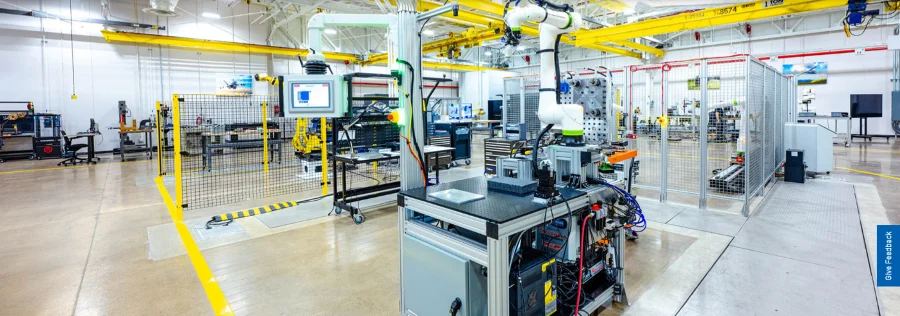
- Strategic Partnerships: Lockheed Martin is teaming up with automated manufacturing startup Hadrian Automation to introduce a state-of-the-art, 24-machine automated machining cell, slated to be fully operational by early 2027.
- Workforce and Output: The Grand Prairie facility currently employs roughly 800 production workers. In 2025 alone, the facility manufactured an impressive 250,000 individual parts.
- Supply Chain Synergy: The increased output and component production will directly feed final assembly sites located in Camden, Arkansas, and Troy, Alabama.
Chronology of the Grand Prairie Modernization
The path toward transforming Lockheed Martin’s Grand Prairie facility into a high-tech, digital-first manufacturing hub has been carefully plotted to meet rising global demand and shifting geopolitical pressures.
- Early 2025 and Prior: The Grand Prairie plant functioned as a traditional aerospace and defense manufacturing center, relying on established techniques to produce 250,000 parts annually with a workforce of nearly 800 production employees. However, rising global demand for precision-guided munitions made it clear that legacy manufacturing tempos were no longer sufficient.
- Mid-2025: Leadership at Lockheed Martin began formulating comprehensive modernization strategies. Recognizing the need to bridge the gap between commercial efficiency and defense-grade performance, the company started evaluating automated manufacturing partners who could deliver rapid prototyping and high-volume machining capabilities.
- Late 2025: Lockheed Martin announced a strategic collaboration with GM Defense to cross-pollinate commercial automotive manufacturing methodologies into the defense sector, laying the groundwork for broader industrial reforms.
- Current Announcement: Lockheed Martin formally unveils the $300 million capital investment for Grand Prairie. The project breaks down into 100,000 square feet of new construction and 85,000 square feet of office space converted into advanced manufacturing bays.
- Early 2027 (Projected): The heavily anticipated Hadrian Automation 24-machine cell is scheduled to go live, introducing commercial-style autonomous machining directly into the defense production environment.
Supporting Data and Operational Scale
To fully understand the magnitude of the Grand Prairie expansion, industry analysts look at the numbers driving Lockheed Martin Missiles and Fire Control operations.
The physical expansion takes a campus that was already central to U.S. defense logistics and pushes it past the 735,000-square-foot threshold. Within this expanded ecosystem, the integration of 100,000 square feet of fresh manufacturing construction alongside 85,000 square feet of converted office space creates dedicated floor plans for digital fabrication.
The facility’s existing workforce of roughly 800 production employees is poised to work alongside next-generation automated systems rather than being replaced by them. In 2025, this workforce successfully turned out 250,000 parts. With the addition of the Hadrian Automation-powered machining cell—which features 24 interconnected, high-precision machines—the facility’s capacity for complex metal cutting, turning, and finishing is expected to scale exponentially.
Furthermore, Grand Prairie does not operate in a vacuum. It functions as the upstream supplier for vital final assembly hubs across the American South. Components machined, fabricated, and digitally inspected in Grand Prairie will be shipped rapidly to final assembly plants in Camden, Arkansas, and Troy, Alabama, where weapon systems are completed and prepared for deployment.
Official Responses and Executive Insights
Lockheed Martin leadership has been vocal about the philosophical and practical shifts driving this investment. Speaking on the necessity of fusing commercial agility with military standards, Chairman, President, and CEO Jim Taiclet emphasized the urgency of the moment.
"[We have] brought together commercial speed and combat-proven performance, because America needs both," said Jim Taiclet. "[By] combining advanced technology with the expertise of our American workforce, we’re transforming manufacturing to deliver critical munitions at speed and scale."
Taiclet noted that the multi-million-dollar infusion is specifically designed to help the Grand Prairie facility "reach record production levels." By streaming components more efficiently to Camden and Troy, the entire manufacturing pipeline benefits.

The partnership with Hadrian Automation is viewed by Lockheed executives as a linchpin in countering foreign industrial advantages, particularly those held by competitors like China. Hadrian’s software-driven, highly automated machining cells are designed to drastically lower domestic production costs while maintaining rigorous aerospace tolerances.
"Hadrian will bring an innovative, highly automated machining cell to the Grand Prairie facility, operated by the world-class Lockheed Martin production workforce," Taiclet explained. "Expected to be operational in early 2027, the 24-machine cell will bring commercial-style manufacturing technology directly into [our] production environment and add dedicated capacity for critical defense components."
This initiative is part of a broader corporate strategy. By stepping away from isolated defense manufacturing silos, Lockheed Martin is actively weaving commercial supply chain resilience into its core operations.
"[We are] building a manufacturing model designed for speed, scale and sustained production, bringing together the best of defense and commercial manufacturing to build a more resilient, automated and digitally integrated production model designed to deliver critical capabilities faster," Taiclet added. "The new Hadrian cell is النبات the latest example of that strategy. It follows [our] recently announced collaboration with GM Defense to apply commercial automotive manufacturing expertise to defense production."
Broader Implications for the Defense Industrial Base
The $300 million modernization of the Grand Prairie munitions plant carries significant implications for the broader United States defense ecosystem, local economics, and geopolitical strategy.
1. Revitalizing the Domestic Industrial Base
For years, government reports and defense analysts have warned that the U.S. defense industrial base suffers from aging infrastructure, supply chain bottlenecks, and a lack of surge capacity. By injecting hundreds of millions of dollars into modernizing physical plants and adopting AI-driven automation, prime contractors like Lockheed Martin are signaling a new era of manufacturing resilience. Projects like the Grand Prairie expansion prove that legacy defense firms are willing to integrate cutting-edge commercial technologies—such as those pioneered by startups like Hadrian—to overcome traditional manufacturing lag.
2. Countering Geopolitical Competitors
In an era of great power competition, manufacturing velocity is a strategic deterrent. The ability to replenish stockpiles of precision munitions rapidly is vital for national security. By leveraging artificial intelligence, digital thread technologies, and autonomous machining cells, U.S. defense plants can produce complex components faster, cheaper, and with fewer quality defects, directly countering the massive state-backed manufacturing capacities of adversaries like China.
3. Workforce Evolution and Upskilling
The transition from traditional, manual machining environments to digitally integrated, automated floors changes the nature of manufacturing labor. While the Grand Prairie plant relies on its 800-person production workforce, the nature of their daily tasks is evolving. Workers are increasingly transitioning into system operators, quality validators, and automation technicians. This upskilling not only secures high-paying, high-tech jobs in the Dallas-Fort Worth metroplex but also builds a more adaptable workforce capable of managing advanced robotics and AI-managed machine cells.
4. A Blueprint for Future Collaborations
Lockheed Martin’s dual approach—partnering with agile technology startups like Hadrian while simultaneously cross-utilizing heavy industrial expertise from automotive giants like GM Defense—serves as a blueprint for the future of defense procurement. As the Department of Defense continues to emphasize the need for rapid acquisition and commercial technology adoption, projects executed at facilities like Grand Prairie will likely set the standard for how major defense contractors upgrade their infrastructure in the decades to come.
With the facility expansion well underway and the high-tech Hadrian machining cell targeted for an early 2027 launch, Lockheed Martin’s Grand Prairie campus is well-positioned to remain a cornerstone of American tactical superiority for generations.