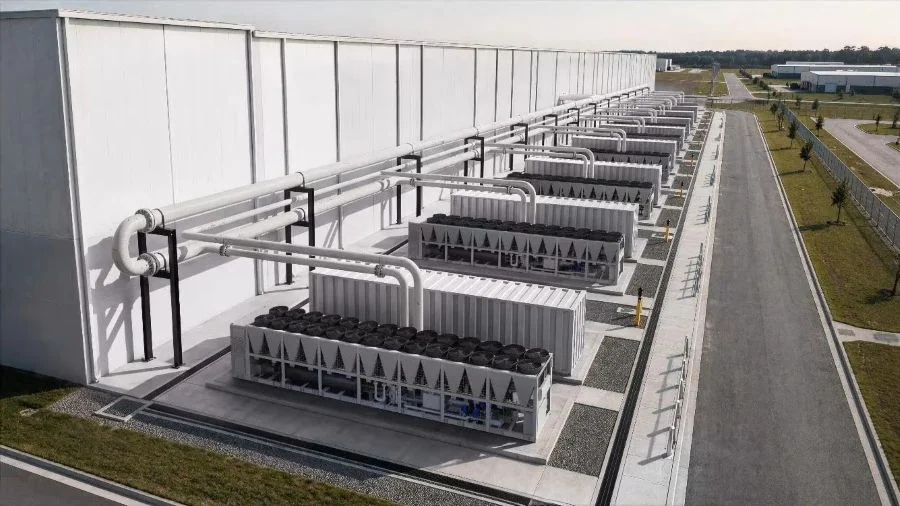
WINDSOR, VA — In a major strategic move designed to capitalize on the explosive growth of artificial intelligence and high-performance cloud computing, LG Electronics Inc. has announced plans to construct a massive 350,000-square-foot manufacturing facility in Windsor, Virginia. The new plant will be dedicated to assembling advanced commercial chillers and specialized cooling systems explicitly engineered for modern data centers.
Slated to ramp up production early next year, the Windsor facility represents LG’s first dedicated chiller manufacturing plant in the United States. The multi-million-dollar investment underscores the South Korean multinational conglomerate’s deepening commitment to the North American market, positioning the company at the epicenter of the nation’s burgeoning digital infrastructure supply chain.
Main Facts
The upcoming Windsor, Virginia facility marks a critical turning point for LG’s industrial footprint in North America. Key operational highlights of the project include:
- Facility Scope: A 350,000-square-foot advanced manufacturing and assembly plant.
- Core Product Line: Specialized industrial chillers and sophisticated thermal management systems tailored for data center applications.
- Production Timeline: Manufacturing operations are scheduled to commence and rapidly scale up early next year.
- Strategic Location: Windsor, Virginia, places the plant in close geographic proximity to Northern Virginia’s "Data Center Alley," home to the highest concentration of data centers globally.
- Corporate Portfolio Expansion: The facility expands LG’s U.S. manufacturing footprint, joining other major domestic production sites, such as its state-of-the-art smart appliance factory in Clarksville, Tennessee.
The project is designed to address an immediate, pressing bottleneck in the tech sector: the staggering thermal loads generated by modern hyper-scale data centers and artificial intelligence server racks. By localizing production, LG aims to drastically reduce lead times, secure supply chain resilience, and offer customized heating, ventilation, air conditioning (HVAC), and water heating solutions tailored to the strict regulatory and environmental standards of U.S. commercial clients.
Chronology of the Investment
The decision to build the Windsor chiller plant is the culmination of years of market analysis, shifting global supply chain dynamics, and surging domestic demand for specialized electrical and mechanical infrastructure.
The Rise of AI and the Thermal Crisis (2022–2023)
As generative artificial intelligence and large language models (LLMs) captured global attention, technology giants accelerated the construction of hyper-scale data centers. Traditional air-cooling methods quickly proved inadequate for cooling dense server racks packed with power-hungry graphics processing units (GPUs). Industry analysts flagged an impending infrastructure crisis: without advanced liquid and high-performance chiller technologies, data centers faced severe thermal throttling, hardware degradation, and massive energy inefficiencies.
Site Selection and Strategic Planning (2023–2024)
Recognizing North America as the primary hub for global AI development, LG executives began evaluating locations for a dedicated U.S. thermal management manufacturing base. Company leadership weighed several key factors, including regional logistics, availability of skilled technical labor, pro-business regulatory environments, and proximity to major technology hubs. Virginia emerged as the clear frontrunner due to its unmatched data center density and established engineering workforce.
Official Announcement and Groundbreaking Preparations (Late 2024–Present)
Following internal approvals and state-level coordination, LG officially unveiled its Windsor project. Engineering teams immediately initiated layout designs for the 350,000-square-foot facility to ensure a seamless transition from groundbreaking to early-next-year production targets. The plant is currently undergoing final pre-construction milestones, equipment sourcing, and regional talent recruitment.
Supporting Data and Market Dynamics
To fully understand the weight of LG’s investment in Windsor, one must examine the macro-level data driving the North American data center and HVAC markets.
The North American AI Dominance
According to industry data highlighted by LG Electronics executives, more than half of the world’s artificial intelligence data centers are located in North America. This staggering concentration is fueled by massive capital expenditures from hyperscalers like Microsoft, Google, Amazon Web Services (AWS), and Meta, all of which continue to expand their physical footprints to support exponential increases in cloud computing and machine learning workflows.
The Geography of "Data Center Alley"
Virginia plays a disproportionately large role in this ecosystem. Loudoun County and surrounding regions in Northern Virginia—often dubbed "Data Center Alley"—handle an estimated Windsor-accessible share of global internet traffic. By locating the new manufacturing facility within the commonwealth of Virginia, LG ensures that its heavy industrial chillers can be transported rapidly and cost-effectively to the nation’s most active deployment zones, minimizing shipping overhead and carbon footprints.
The Physics of High-Performance Computing
Modern data processing requires chips that generate unprecedented amounts of heat. As Chris Ahn, president of LG Electronics USA’s air conditioning technology division, notes:
"As AI adoption accelerates, [data centers] are becoming critical infrastructure for large-scale data processing and high-performance computing… Their stable operation depends on effective heat management, making high-performance cooling [technology], including chillers, essential."
Without reliable, energy-efficient chillers, data centers risk catastrophic hardware failures, thermal shutdowns, and unsustainable power consumption spikes. Industrial cooling systems are no longer ancillary utilities; they are the literal lifeblood keeping the digital economy online.

Official Responses and Executive Insights
Corporate leadership from both LG’s global and regional divisions has emphasized that the Windsor facility is a cornerstone of the company’s long-term enterprise growth strategy in the West.
Don Kwack, President and CEO of LG Electronics North America
Weighing in on the regional advantages of the new plant, Don Kwack emphasized the holistic value of the Windsor site:
"This factory represents an important step in [our] strategy to expand production capacity for advanced cooling technologies and better serve the rapidly expanding customer base in North America. Virginia offers the workforce, location and infrastructure needed to support our long-term growth."
Kwack’s comments underline a broader corporate shift toward localized manufacturing. By building products closer to where they are consumed, multinational corporations can insulate themselves against global shipping disruptions, geopolitical trade tensions, and unpredictable tariff fluctuations.
Chris Ahn, President of LG Electronics USA’s Air Conditioning Technology Division
Elaborating on the technical and commercial significance of the chillers, Chris Ahn highlighted how the plant transforms LG’s market positioning:
"With our first chiller plant in the United States, [we are] addressing the growing need for advanced cooling solutions for data centers across the country. Chillers produced in Virginia also will support [our] role as a total HVAC solutions provider offering U.S. customers a broad portfolio of heating, ventilation, air conditioning, and water heating products and building controls."
Ahn’s remarks point to an important cross-selling and integration opportunity. By providing chillers alongside traditional commercial HVAC equipment and building automation controls, LG can position itself as a single-source vendor for massive infrastructure projects, simplifying procurement for enterprise clients.
Implications for the Industry and the Regional Economy
The establishment of LG’s Windsor chiller plant carries profound implications for multiple stakeholders, ranging from regional labor markets to the broader U.S. energy landscape.
1. Economic Boom for Southeastern Virginia
The construction and eventual staffing of a 350,000-square-foot high-tech manufacturing plant will inject substantial economic vitality into Windsor, Virginia, and surrounding localities.
- Job Creation: The facility will create hundreds of direct manufacturing, engineering, logistics, and management jobs.
- Supply Chain Localization: Local component suppliers, raw material providers, and transport logistics companies stand to benefit from long-term vendor contracts with LG.
- Workforce Development: Training initiatives will likely emerge in collaboration with regional trade schools and community colleges to supply the specialized mechanical and electrical assembly talent required for precision chiller manufacturing.
2. Strengthening U.S. Critical Infrastructure Supply Chains
For decades, heavy industrial equipment—including large-scale chillers—was frequently imported from overseas manufacturing hubs. By establishing a domestic footprint, LG helps safeguard U.S. digital infrastructure against external supply chain shocks. This aligns with broader federal initiatives encouraging industrial reshoring and the localization of critical tech hardware.
3. Energy Efficiency and Sustainability Goals
Data centers are notoriously energy-intensive, consuming vast amounts of electricity not just for computing, but for running the cooling infrastructure required to keep servers from melting. LG’s advanced chillers are engineered with energy efficiency in mind. By deploying next-generation thermal management systems built locally, data center operators can optimize their Power Usage Effectiveness (PUE) ratios, meeting corporate sustainability targets and complying with increasingly stringent local and federal environmental regulations regarding energy consumption and refrigerant safety.
4. Setting a Precedent for Future Tech-Industrial Synergy
The marriage of industrial manufacturing and digital technology is growing tighter by the day. As AI workloads continue to expand into fields like healthcare, autonomous driving, and financial modeling, the demand for physical cooling infrastructure will only escalate. LG’s proactive investment in Windsor signals that the physical machinery supporting the cloud must be built with the same speed, scale, and precision as the software running inside it.
Conclusion
LG Electronics’ decision to build a 350,000-square-foot chiller manufacturing plant in Windsor, Virginia, is a landmark development for both the global electronics giant and the North American tech ecosystem. By bridging the gap between surging artificial intelligence demands and heavy industrial HVAC manufacturing, LG is cementing its role as a vital pillar of the modern digital economy. With production slated to kick off early next year, the Windsor facility stands ready to cool the hardware that powers the future.