




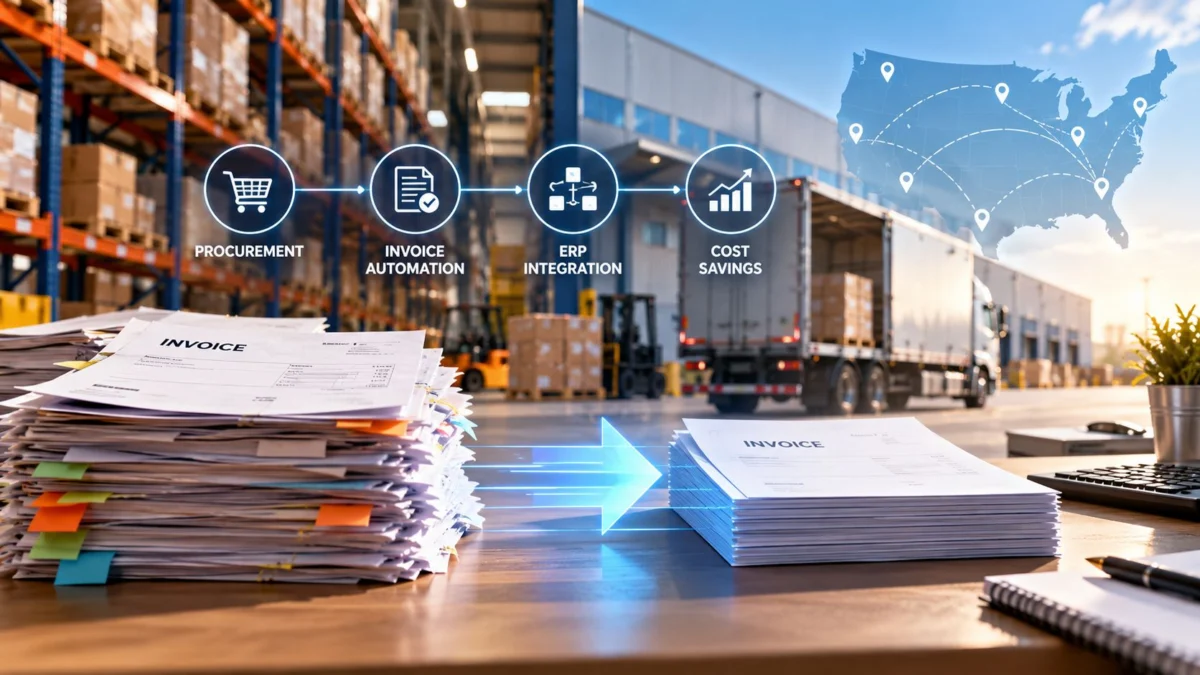
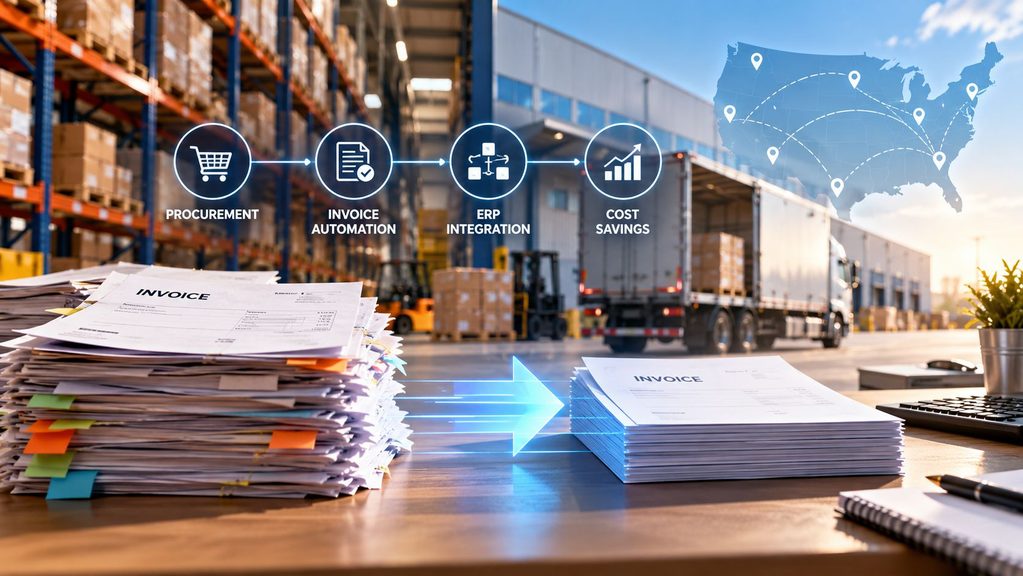
In an era where third-party logistics (3PL) providers are under immense pressure to tighten margins and enhance supply chain agility, the digital maturity of a firm’s back-office operations is often the deciding factor in profitability. Custom Goods Logistics, a California-based 3PL powerhouse operating 36 specialized warehouses across the United States, recently reached a critical milestone in its digital transformation journey. By integrating Vroozi’s procurement and accounts payable (AP) automation platform with its existing NetSuite ERP, the company has successfully bridged the gap between fragmented, manual processes and a centralized, high-velocity financial ecosystem.
The results, announced on October 21, 2026, speak to the power of targeted automation: the company has effectively doubled its invoice processing speed, slashed labor requirements in half, and secured significant six-figure annual savings. This case study offers a blueprint for logistics companies struggling with the "silo effect" caused by multi-location management.
The Core Challenge: Fragmented Procurement in a Distributed Network
Custom Goods Logistics manages a vast and complex infrastructure, providing warehousing, transportation, fulfillment, and specialized U.S. Customs examination services. Operating 36 distinct facilities with a workforce exceeding 600 employees, the company faced a persistent challenge: how to maintain centralized control when purchasing and financial approvals were occurring in disparate, disconnected locations.
Before the implementation of Vroozi, the company’s procurement landscape was a patchwork of localized workflows. Each facility operated with varying procedures, leading to inconsistent spending controls and a lack of transparency for the central finance team. Accounts payable staff were bogged down by manual data entry, shifting invoice information from physical or email formats into their NetSuite ERP. This manual intervention was not only time-consuming but also prone to human error, creating a disconnect between procurement activity and final financial reconciliation.
For a company that relies on the rapid movement of goods, the administrative lag in the back office was becoming a drag on overall operational agility. Finance teams were forced to spend countless hours sifting through email chains and spreadsheets to reconcile accruals, a process that obscured the company’s real-time financial position.
A Chronology of the Transformation
The journey toward automation for Custom Goods Logistics was not an overnight overhaul, but a systematic integration of technology and process standardization.
- Phase 1: Standardization and Integration: The initial priority was to move away from decentralized purchasing. The company brought procurement activity for over 100 supplier catalogs into a single Vroozi environment. By establishing strict spending thresholds and automated approval routing, the company created a unified purchasing policy that applied across all 36 warehouses.
- Phase 2: ERP Synergy: The company implemented a direct, automated bridge to its NetSuite ERP. This ensured that once an invoice was approved within Vroozi, the data flowed seamlessly into the accounting system, eliminating the need for redundant data entry.
- Phase 3: Operational Optimization: With the foundational systems in place, the company began to see immediate improvements in throughput. This allowed the finance team to shift from "reactive data entry" to "proactive financial management."
- Phase 4: Expanding the Scope: Following the successful pilot and stabilization, Custom Goods Logistics moved into an expansion phase. This included the automation of equipment lease invoices and the implementation of granular part-number tracking—a vital step for a company managing heavy machinery like forklifts and warehouse assets.
Quantifying the Impact: Data-Driven Results
The measurable success of this initiative is defined by two primary metrics: processing throughput and resource allocation.
Prior to the integration of the Vroozi platform, the accounts payable team was managing a volume of work that required eight full-time employees. Following the implementation, that same volume of work is now handled by just four employees. This represents a 50% increase in department efficiency, allowing the company to reallocate human capital to more strategic, value-added tasks.
In terms of processing capacity, the numbers are equally compelling. The team moved from processing three to four invoices per hour to a current rate of six to seven. This near-doubling of output has contributed to annual savings estimated in the six-figure range.
The financial clarity gained is perhaps the most significant, if intangible, benefit. Ziyad Zreik, Director of AR/AP at Custom Goods Logistics, notes that the company can now "pinpoint to the penny" how much needs to be accrued. By moving away from "sifting through emails," the finance department has transformed into an engine of operational intelligence rather than a bottleneck of administrative processing.
Perspectives from Leadership: A "Game-Changer" for Finance
The success of this project is largely attributed to the alignment between the logistical needs of the warehouse and the technical capabilities of the software partner. Ziyad Zreik, who spearheaded the initiative, emphasized that the change was not just about faster processing, but about the quality of the data.
"We were able to streamline and create efficiencies and realize about half the cost in that department," Zreik stated. "It’s a game-changer on the reporting side. We’re able to pinpoint to the penny how much needs to be accrued, instead of sifting through emails."
Zreik also credited the support team at Vroozi for the success of the implementation. The partnership extended beyond simple software deployment, with Vroozi assisting in the creation of "guardrails" and "safety nets" within the system. "Anytime I email them, they’re extremely quick with their responses, and they always jump on a call no matter what," Zreik added. "We wanted to implement part numbers, more guardrails, more safety nets, and more trackability, and they were very helpful throughout."
Strategic Implications for the Logistics Industry
The case of Custom Goods Logistics offers several critical insights for enterprises navigating the complexities of digital transformation.
1. The Myth of the "Big Bang" Replacement
Many organizations believe that to modernize, they must discard their existing ERP system. Custom Goods Logistics proves otherwise. By keeping NetSuite as the core ERP and using Vroozi as an "automation layer," the company gained the benefits of modern procurement technology without the risk and expense of a total system rip-and-replace. This "best-of-breed" approach is becoming the gold standard for logistics firms that need specialized functionality that a generic ERP might not provide out of the box.
2. Process Standardization Before Automation
Technology cannot fix a broken process. The success at Custom Goods Logistics was predicated on their ability to first centralize their purchasing catalogs and define clear, universal approval thresholds. By standardizing the "rules" of procurement across all 36 warehouses, they created an environment where automation could thrive.
3. Moving Toward Operational Intelligence
The ongoing expansion into equipment lease tracking and part-number monitoring represents a transition from transaction efficiency to operational intelligence. For a 3PL, knowing the total cost of ownership for a specific piece of warehouse equipment is as important as paying the invoice on time. By capturing granular data at the point of procurement, the company is positioning itself to make better long-term decisions regarding capital expenditure and maintenance.
4. Scalability in Distributed Operations
The model established by the company is inherently scalable. As they bring new warehouses into their network, the standardized, automated procurement process can be deployed as a "plug-and-play" component of their onboarding. This ensures that rapid growth does not lead to a proportional increase in administrative overhead.
Conclusion: A Blueprint for the Future
As the logistics industry continues to face volatility—ranging from fluctuating supply chains to labor shortages—the ability to control costs and maintain financial visibility is paramount. Custom Goods Logistics has demonstrated that by leveraging automation, they can not only survive these pressures but thrive by optimizing their internal resources.
The results—doubling throughput, halving the required labor, and achieving significant cost savings—serve as a powerful testimony to the efficacy of the Vroozi-NetSuite ecosystem. For other logistics operators, the lesson is clear: the path to efficiency is not always through larger systems, but through smarter connections. By integrating the right tools to bridge the gaps between procurement, accounts payable, and the ERP, firms can transform their financial operations from a fragmented, manual burden into a streamlined, strategic asset.
As Custom Goods Logistics continues to refine its use of the platform, the industry will be watching to see how this newfound data visibility influences their future operational strategies. For now, they have set a high bar for what can be achieved through the intelligent application of procurement technology.