




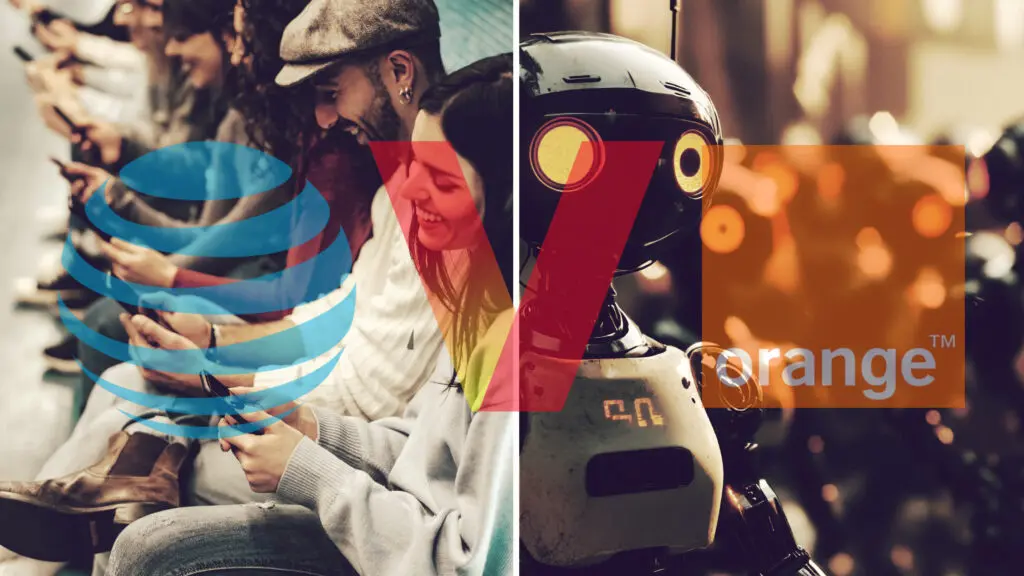
For the global telecommunications sector, the third quarter of 2026 has provided a much-needed breath of fresh air. After years of struggling with stagnating top-line growth and the crushing weight of legacy infrastructure costs, giants like Orange, AT&T, and Verizon are reporting improved earnings. However, a deeper analysis reveals a sector in transition—moving from a period of defensive belt-tightening to a high-stakes gamble on the future of AI-driven infrastructure.
The industry is currently defined by a fundamental question: Can the financial stability gained through operational austerity today translate into genuine, long-term revenue growth tomorrow?
Main Facts: The Current State of Telco Financials
The latest earnings season paints a picture of a sector that has mastered the art of "doing more with less." The primary drivers of this recent momentum are not explosive new service launches or a sudden surge in consumer demand. Instead, telcos are benefitting from a combination of aggressive cost discipline, improved operational leverage, and a strategic shift toward bundled services.
Orange, for instance, has reported a robust performance, with revenue climbing 3.6% and EBITDAaL (EBITDA after leases) rising by 4.6%. Most impressively, the company has managed to lower capital expenditure by 2.5% while boosting cash flow by 8.8% over the first three quarters. This efficiency has allowed Orange to raise its full-year EBITDAaL guidance from 4% to over 4.5%.
This trend is echoed across the Atlantic. AT&T and Verizon have similarly leveraged a "back-to-basics" strategy. By shedding non-core assets, simplifying organizational structures, and implementing targeted workforce reductions, these carriers are demonstrating that they can grow earnings significantly faster than their revenue top lines.
Chronology of the Q3 Shift
The trajectory of this shift became clear throughout October 2026. The narrative began with AT&T’s mid-month disclosure, which highlighted a successful pivot toward fiber-and-mobile bundling. Following this, the market turned its attention to Verizon, which—despite reporting a modest 1.5% revenue growth—saw its EBITDA jump by 8%.
Verizon’s performance served as a blueprint for the current industry strategy: a sharp focus on subscriber retention, reduced customer acquisition costs, and a firm rejection of the "hype" surrounding non-traditional competitors like SpaceX’s Starlink. Instead of chasing satellite trends, Verizon focused on cementing its position as a foundational provider of AI-ready infrastructure.
Orange followed shortly after, cementing the global nature of this trend. While their growth remains geographically uneven—with significant success in the Middle East and Africa (up 14.2%) compared to a flatter 0.5% in France—the overall narrative remains consistent: the "tier-one" telco market is successfully decoupling earnings growth from top-line revenue stagnation.
Supporting Data: Efficiency Through Contraction
The "efficiency" mentioned in earnings calls is, in large part, a euphemism for substantial workforce reductions. To maintain margins in a low-growth environment, these companies have aggressively trimmed their human capital:
- AT&T: Workforce reduced from approximately 141,000 to 133,000 between 2024 and year-end 2025.
- Verizon: Headcount decreased from 99,600 to 89,900 over the same period.
- Orange: Staffing levels dropped from 137,000 to 123,500 between 2023 and 2025.
These figures illustrate that the current profitability is not merely a result of market expansion, but of structural consolidation. By reducing operational overhead, these firms have created the financial runway necessary to pivot toward their next major capital allocation: AI infrastructure.

Official Responses and Strategic Divergence
While the financial results are similar, the strategic responses to the "AI wave" vary wildly.
The Infrastructure Play
Verizon, under CEO Dan Schulman, has positioned itself as an essential partner for the hyperscalers. The company revealed a $4 billion pipeline of signed AI infrastructure contracts, including a high-profile deal with AWS. Schulman’s rhetoric is calculated to soothe investors: he frames AI not as a distant fantasy but as a "real business" with "attractive margins." However, he remains pragmatic, noting that the financial impact of these investments will likely not materialize until 2027.
The Architectural Evolution
T-Mobile has taken a more technical, architectural approach. CTO John Saw has been vocal about the transition from merely "connecting" AI to "supplying the intelligence" behind it. Their work with companies like Figure AI and Serve Robotics suggests a future where the network is not just a pipe for data, but a participant in AI inference.
The European Perspective
Orange, by contrast, has remained notably quiet on the topic of AI infrastructure, focusing instead on European sovereignty and joint ventures, such as the bid for European MSS spectrum. This highlights a geographic divide: the US market is currently dominated by high-speed, high-capital-intensity AI infrastructure battles, while European operators are currently preoccupied with regulatory and spectrum-based regional consolidation.
Implications: The Shift Toward Physical AI
Perhaps the most significant implication for the industry is the shift in network traffic patterns. As Yago Tenorio, a lead technical voice at Verizon, noted at the 6G Forum, the rise of "Physical AI"—robots, wearables, and autonomous cameras—will fundamentally alter the demand for bandwidth.
Currently, networks are designed for a 8:2 or 9:1 downlink-to-uplink ratio, optimized for media consumption. Physical AI, which requires constant sensory input and feedback loops, is pushing this ratio toward 1:1. This is a profound shift that cannot be solved by incremental software upgrades. It implies that the "future" of the telco business is not just in selling data, but in re-engineering the physical architecture of the network to handle bidirectional, high-speed, low-latency AI communication.
The Verdict: Uncertain Economics Tomorrow
Despite the current optimism, the sector remains in a precarious position. The "use cases" that will justify the massive capital expenditure required for 6G and AI-edge computing are still largely theoretical.
Are "wearables" the next mobile phone? Is Integrated Sensing and Communication (ISAC) truly a viable business model? The industry is currently betting billions on the premise that they will be.
We are seeing a paradox: Telcos have never been more disciplined in managing their current, legacy businesses, yet they have never been more exposed to the risks of the next technological frontier. Today’s quarterly snapshots reflect a company-wide commitment to fiscal health, but the long-term viability of the telco model hinges on whether they can transition from being the "plumbers" of the internet to the "engineers" of the AI-powered physical world.
As the industry enters the final months of 2026, the consensus is clear: the belt-tightening phase has been a success. But the "AI rave-up" is just beginning, and for many operators, the true cost—and the true reward—remains hidden behind a horizon of 2027 and beyond. The fiscal gains of today are, at best, a down payment on a future that remains as uncertain as it is ambitious.