





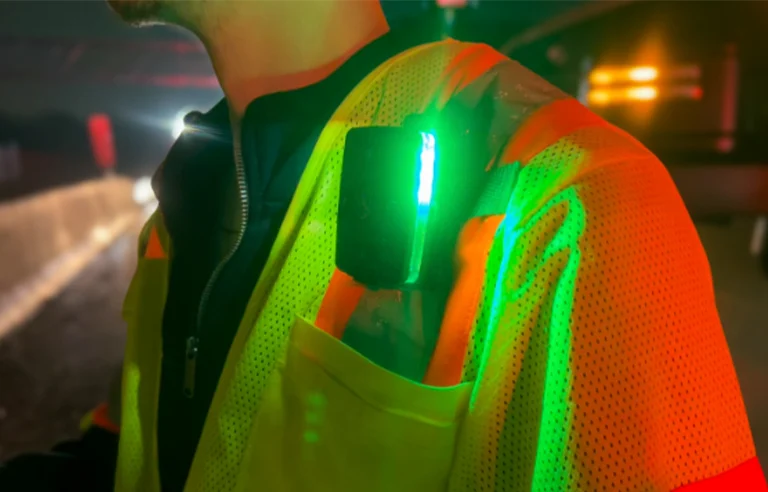
INDIANAPOLIS — In an aggressive push to curb the alarming rate of roadside accidents and fatalities, the Indiana Department of Transportation (INDOT) has officially launched a statewide safety initiative known as "Project Greenlight." The program equips highway maintenance personnel and roadside assistance crews with specialized, high-visibility wearable safety beacons designed to dramatically increase their profile to passing motorists.
As work zone hazards continue to present a persistent and deadly challenge for state transportation agencies nationwide, Indiana’s deployment of 375 wearable green flashing lights represents a calculated, data-driven strategy to harness human psychology and visual science in the ongoing battle for roadway safety.
Main Facts: The Core of Project Greenlight
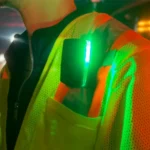
At the heart of Project Greenlight is the distribution and utilization of the Guardian Angel wearable safety light—a rugged, high-intensity LED device engineered to be secured directly to a worker’s high-visibility safety vest or jacket.
Rather than relying on standard amber or white illumination, which can easily blend into the visual clutter of modern construction zones, emergency flashers, and vehicle headlights, these devices project a distinct, flashing green pattern.
According to research cited by INDOT from the prestigious Battelle Memorial Institute, pairing these specialized green flashing lights with standard high-visibility reflective vests makes roadside workers 89% more visible to approaching drivers than traditional gear alone.
Key Elements of the Initiative:
- Initial Rollout: 375 units are being distributed to highway workers and safety service patrols across Indiana.
- Target Scenarios: Recommended primarily for nighttime operations, low-light conditions, and severe weather events, including heavy rain, dense fog, and snowstorms.
- The Color Science: INDOT selected bright green because it falls within the spectrum of light most easily and rapidly processed by the human eye from significant distances, setting it apart from standard amber work zone lights.
- Core Objective: To compel distracted or speeding motorists to perceive roadside workers much earlier, thereby encouraging them to slow down and execute safe "move over" maneuvers.
Chronology: From Concept to Statewide Deployment
The path to Project Greenlight’s statewide implementation was built on careful observation, rigorous testing, and a phased rollout designed to evaluate real-world efficacy before committing to full-scale adoption.
Fall 2025: The Pilot Phase
Recognizing the escalating dangers faced by frontline workers, INDOT launched a localized pilot program in the autumn of 2025. The trial deployed the green wearable lights in three distinct geographic areas across the state.
During this initial phase, the technology was tested extensively by two primary groups:

- The Hoosier Helpers: INDOT’s dedicated safety service patrol crews, who routinely assist stranded motorists, clear debris, and manage traffic incidents on some of Indiana’s busiest and most hazardous interstate corridors.
- Highway Maintenance Crews: General maintenance personnel who perform patching, barrier repairs, and roadside upkeep in close proximity to moving highway traffic.
Winter 2025–2026: Evaluation and Refinement
Feedback gathered from workers during the pilot phase proved overwhelmingly positive. Operators reported that passing motorists appeared to react sooner—giving crews a wider berth—particularly during adverse weather conditions and overnight operations when visibility is severely compromised.
Spring 2026: Official Statewide Rollout
Bolstered by the success of the pilot and supporting data from independent research institutes, INDOT formally announced Project Greenlight as an official, permanent safety program, scaling up distribution to encompass hundreds of workers throughout the state’s various districts.
Supporting Data: The Science of Visibility and Driver Behavior
To understand why Project Greenlight is expected to yield significant safety dividends, transportation safety experts point to a convergence of human factors psychology, visual perception science, and empirical field data.
The Human Element in Visual Processing
Driving at highway speeds places a heavy cognitive load on motorists. Between navigating traffic, processing digital dashboards, and managing external distractions, a driver’s reaction time is often measured in fractions of a second. Standard amber warning lights, while ubiquitous in construction zones, often suffer from "visual noise"—they blend seamlessly with the amber hazard lights of trucks, directional arrow boards, and distant street lighting.
Human eyes, however, possess a heightened evolutionary sensitivity to the green spectrum of light. The human retina contains photoreceptor cells that distinguish wavelengths of green much more efficiently over long distances compared to other colors. By introducing a bright, flashing green beacon at torso level on a human silhouette, the brain of an approaching driver immediately recognizes the distinct shape and color of a person rather than generic construction equipment.
The Battelle Memorial Institute Findings
The 89% increase in visibility cited by INDOT stems from extensive evaluations conducted by the Battelle Memorial Institute, a renowned independent research and development organization. Battelle’s studies into roadside worker visibility have consistently demonstrated that wearable active lighting systems—lights that emit their own illumination rather than merely reflecting it—dramatically alter driver response curves.
When drivers can identify a human worker from hundreds of feet further back, the resulting timeline looks drastically different:
- Extended Reaction Window: Motorists have up to several additional seconds to comprehend the hazard.
- Behavioral Modification: Drivers are measurably more likely to execute a lane change ("Move Over" laws) or reduce their speed well before reaching the immediate work zone boundary.
Official Responses: Leadership Weighs In
State officials have championed Project Greenlight not merely as an equipment upgrade, but as a moral imperative to protect the men and women who maintain Indiana’s critical transportation infrastructure.

In the official press release announcing the program, INDOT Commissioner Lyndsay Quist emphasized that frontline workers remain the agency’s highest priority.
"Studies show drivers are more likely to move over and slow down when they see these green lights in work zones," Commissioner Quist stated. "The safety of our team is always our top priority as they make improvements to Indiana’s infrastructure, and we hope this small tool will have a big impact."
Safety advocates and union representatives have similarly echoed these sentiments, noting that while automated speed enforcement and physical concrete barriers remain vital components of work zone safety, the ultimate point of failure in many fatal accidents is the individual driver’s failure to perceive a human being standing on the shoulder. By making that human being impossible to miss, Project Greenlight aims to bridge the perceptual gap.
Implications: The Broader Impact on Highway Safety
The rollout of Project Greenlight in Indiana carries implications that extend far beyond state borders, potentially serving as a blueprint for transportation departments across the United States.
1. Shifting the Burden of Safety
For decades, highway safety campaigns have placed a heavy emphasis on personal protective equipment (PPE) that relies entirely on passive reflection—such as retro-reflective vests and hard hats. While essential, passive PPE only works if a driver’s headlights are actively illuminating the worker. Active wearable lighting shifts the paradigm, ensuring that workers project their own visual presence regardless of ambient lighting angles or dirty vehicle windshields.
2. Combating the Distracted Driving Crisis
The rise of smartphone use and in-car infotainment systems has turned distracted driving into an epidemic on American roadways. Roadway maintenance workers—including construction laborers, surveyors, tow truck operators, and safety patrols—face unprecedented perils. Initiatives like Project Greenlight represent an adaptive response to a deteriorating driving culture, utilizing high-intensity visual stimuli to pierce through driver distraction.
3. A Potential National Standard
As departments of transportation nationwide grapple with rising fatality rates in highway work zones—often driven by speeding and reckless driving—successful state-level innovations are closely watched by federal agencies such as the Federal Highway Administration (FHWA). If Indiana’s deployment of green wearable beacons successfully reduces struck-by incidents and near-misses over the coming year, it is highly likely that similar programs will be adopted by neighboring states, potentially paving the way for national guidelines regarding active wearable lighting for roadside personnel.
Looking Ahead
As INDOT distributes the remaining balance of the initial 375 Guardian Angel units and monitors their performance through the changing seasons of 2026, the ultimate measure of Project Greenlight’s success will be written in the most important metric of all: zero injuries, zero fatalities, and every highway worker returning home safely to their families at the end of a shift.