





PERRY, GA — In one of the most significant foreign automotive investments in the southeastern United States in recent years, German luxury automaker Audi AG has officially confirmed plans to construct a massive, state-of-the-art vehicle assembly plant in Perry, Georgia. Representing a staggering $4 billion capital investment, the greenfield facility will be strategically situated approximately 100 miles south of Atlanta, positioning Audi to fundamentally transform its operational dynamics, supply chain resilience, and market share across the North American continent.
Once fully operational, the sprawling manufacturing campus is slated to achieve a production capacity of up to 200,000 vehicles annually. The development marks a watershed moment for the brand, effectively establishing North America as a primary, self-sustaining pillar of Audi’s global manufacturing empire, operating on equal footing with its established networks in Europe and China.
Main Facts: The Perry, Georgia Project
The announcement details a sweeping industrial undertaking designed to reshape Audi’s commercial trajectory in the Western Hemisphere. Key parameters of the Perry project include:
- Financial Commitment: A massive $4 billion greenfield investment.
- Geographic Location: Perry, Georgia, situated roughly 100 miles south of the major logistics and transportation hub of Atlanta.
- Production Output: Up to 200,000 premium vehicles per year at maximum capacity.
- Core Product Focus: Next-generation premium SUVs specifically tailored to the preferences and demands of North American consumers.
- Strategic Purpose: Localization of manufacturing to bypass import tariffs, reduce supply chain vulnerabilities, shorten delivery lead times, and unlock untapped commercial growth potential in the United States.
By shifting a significant portion of its vehicle lineup directly to American soil, Audi is signaling a departure from its historical reliance on transatlantic shipping routes. This localized approach aims to shield the brand from global logistics disruptions while offering unprecedented agility in responding to shifting regional consumer trends.
Chronology: The Path to Perry
The decision to break ground in middle Georgia is the culmination of years of internal strategic re-evaluation, market analysis, and site-selection evaluations.
Phase 1: Identifying the North American Deficit (2020–2022)
For decades, Audi enjoyed robust sales in the United States—traditionally one of the world’s most lucrative luxury vehicle markets—while relying entirely on European and Mexican assembly plants for vehicle imports. However, as global supply chain shocks cascaded through the automotive sector during the early 2020s, executive leadership in Ingolstadt recognized that a lack of dedicated U.S. manufacturing was a critical vulnerability. Audi’s executives observed rivals such as BMW, Mercedes-Benz, and Volvo successfully scaling American operations, prompting a rigorous internal review of the brand’s North American footprint.
Phase 2: Strategic Vision and Site Selection (2023–2024)
By mid-2023, Audi’s board of management formalized a plan to establish North America as a third foundational pillar of its global manufacturing network. A confidential site-selection task force—code-named internally to protect market sensitivity—began evaluating dozens of potential locations across the American Southeast. Key criteria included proximity to robust interstate highways, skilled labor pipelines, competitive energy costs, and synergy with existing automotive supplier clusters. Perry, Georgia, emerged as the ideal candidate due to its central location in the state, pro-business economic development climate, and proximity to major ports and logistics corridors.
Phase 3: Project Approval and Announcement (Late 2024–Present)
Following extensive feasibility studies and negotiations regarding state and local economic incentives, Audi AG’s board of management gave the project the final green light. The formal announcement places Perry on the global automotive map, kicking off the initial engineering, environmental impact assessments, and architectural design phases for the multi-billion-dollar facility.
Supporting Data: Engineering the Future of Manufacturing
Audi has emphasized that the Perry plant will not merely replicate traditional automotive assembly lines; rather, it will serve as a global showcase for advanced manufacturing technologies, sustainability, and ergonomic design.
Designing for Flexibility and Efficiency
According to company statements, the facility "will be designed around future manufacturing requirements, with a focus on efficiency, flexibility and the ability to respond to evolving customer needs and market demand." In modern automotive manufacturing, consumer preferences can shift rapidly from internal combustion engines to hybrid and fully electric architectures. By building the Perry facility from the ground up, Audi engineers can implement modular production architectures that allow multiple vehicle platforms to roll down the same mixed-model assembly lines.
Advanced Technologies and Digital Twins
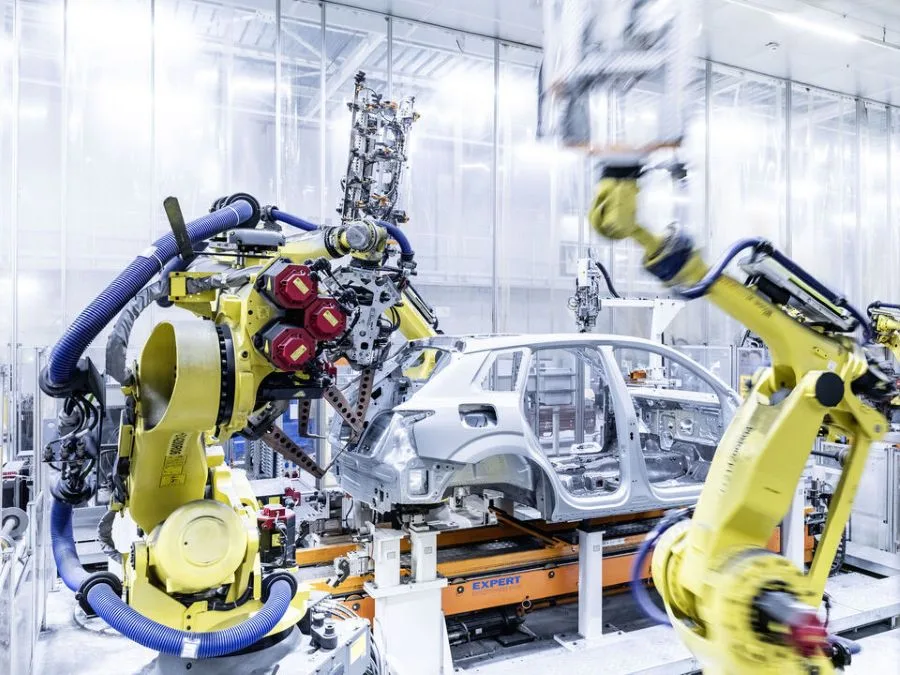
The plant is expected to heavily integrate Industry 4.0 paradigms. This includes the deployment of autonomous mobile robots (AMRs) for material handling, artificial intelligence-driven computer vision for real-time quality assurance, and digital twin technology—virtual replicas of the physical plant used to simulate, optimize, and troubleshoot assembly processes before physical tools are even turned.
Developing a Local Supplier Network
A greenfield investment of this magnitude requires a robust local ecosystem. Audi’s production and logistics division is currently laying the groundwork for a comprehensive regional supplier network across Georgia and the broader Southeast. Sourcing components locally will minimize carbon emissions associated with long-distance freight, lower inventory holding costs, and ensure compliance with strict regional content requirements.
Official Responses: Leadership Perspectives
The magnitude of the Perry project has drawn commentary from Audi’s highest-ranking corporate officers, highlighting the strategic weight assigned to the American market.

Gernot Döllner, chairman of the board of management at Audi, underscored the cultural and commercial shift behind the investment:
"We have much greater ambitions for Audi in America. The United States is one of the world’s most important premium markets, and we have not yet realized our full potential. We are determined to change that—with premium products, a stronger brand and a competitive local production base. This is about building a stronger Audi business in America—not only about building a factory."
Döllner’s remarks point to a broader corporate realignment. For years, Audi’s U.S. sales volume lagged behind some of its chief German competitors, a disparity many analysts attributed to the lack of localized production models that could be priced more competitively and adapted instantly to American tastes.
Gerd Walker, member of the board of management at Audi responsible for production and logistics, elaborated on the operational philosophy driving the plant’s design:
"Building a new plant from the ground up allows us to rethink manufacturing from day one. We can design highly efficient and flexible production processes, integrate advanced technologies and develop a strong local supplier network. Our ambition is to establish a benchmark for premium manufacturing that strengthens our global production network."
Walker further contextualized the global significance of the Georgia facility, noting:
"This investment will establish North America as a third major pillar of Audi’s global production network alongside Europe and China. Establishing local production is a key element of a broader growth strategy focused on customer needs, a compelling product portfolio and a more competitive business model."
Implications: Economic and Industrial Impact
The construction of Audi’s Perry assembly plant carries profound implications for the local economy, the American automotive labor market, and Audi’s global competitive stance.
Regional Economic Transformation
For Perry and Houston County, Georgia, the arrival of a $4 billion automotive titan represents a generational economic event. The project is expected to generate thousands of direct high-paying engineering, technical, and assembly jobs, while indirectly supporting tens of thousands of additional positions in logistics, tier-1 and tier-2 component supply, commercial real estate, and local services. State and local educational institutions will likely collaborate with Audi to establish specialized technical training programs, ensuring a steady pipeline of skilled talent proficient in modern robotics, automation, and advanced metallurgy.
Elevating North American Automotive Competitiveness
By anchoring production in the U.S., Audi joins a select fraternity of luxury automakers manufacturing on American soil. This move insulates the brand from currency fluctuations, international trade disputes, and sudden tariff adjustments. Furthermore, producing SUVs specifically tailored to North American buyers—where larger vehicle segments and specific comfort features dominate consumer preference charts—allows Audi to capture market share that was previously ceded to domestic brands or locally manufactured European competitors.
Sustainability and Environmental Standards
As global automakers race toward aggressive corporate sustainability targets, greenfield plants offer a blank canvas for eco-friendly industrial design. Audi’s Perry facility is anticipated to incorporate cutting-edge environmental controls, including energy-efficient LED lighting, closed-loop water recycling systems, extensive rooftop solar installations, and waste-reduction protocols designed to move the facility as close to net-zero carbon emissions as technologically feasible.
Conclusion
Audi AG’s decision to invest $4 billion in a premier assembly plant in Perry, Georgia, is far more than a routine real estate acquisition or capacity expansion. It is a calculated, aggressive declaration of intent. By institutionalizing North America as a core manufacturing pillar, Audi is recalibrating its global business model to meet the demands of the world’s most discerning luxury consumers. As ground breaks and steel rises in the heart of Georgia, the automotive industry will be watching closely as Audi redefines what it means to build premium vehicles locally, sustainably, and for the future.