By Industry News Desk
Published: October 2026
Main Facts
The forestry and timber industries have long operated on the margins of technological innovation, relying on heavy machinery, grueling manual labor, and traditional methods passed down through generations. Today, however, that paradigm is shifting. Kodama Systems, an advanced robotics and physical AI firm headquartered in Sonora, California, announced a fresh $7 million funding injection to scale its operations, deepen equipment manufacturer partnerships, and refine its supervised autonomy capabilities for extreme off-road environments.
This latest capital raise brings Kodama’s total venture backing to $14 million. The funding round was co-led by Konvoy Ventures and Breakwater Ventures, with significant participation from Blue Forest Asset Management, NYA Ventures, Breakthrough Energy Ventures, Congruent Ventures, Dangerous Ventures, M1C, and others.
Kodama is not merely theorizing about the future of automation; it is actively deploying it. Over the past six months alone, machines equipped with the company’s hybrid teleoperation and autonomy software have successfully hauled more than 100,000 tons of timber across commercial logging sites in the southeastern United States. While the startup initially drew attention for its wildfire risk-reduction and forest-thinning initiatives in the rugged terrain of the western United States, its primary commercial focus has pivoted toward large-scale plantation timber operations in the Southeast.
Chronology of Innovation
To understand how Kodama reached its current milestone of commercial deployment and multi-million-dollar funding, it is necessary to examine the company’s deliberate, step-by-step technological evolution.
The Genesis and Western Roots
Kodama Systems was founded to confront one of North America’s most pressing ecological crises: catastrophic wildfires. In the western United States, decades of fire suppression and changing climates created overstocked, highly flammable forests. Early on, Kodama focused on forest thinning—removing excess biomass to restore ecological health and reduce wildfire risk. Operating heavy machinery in dense, dangerous mountain terrain highlighted the absolute necessity of removing human operators from harm’s way.
The Pivot to Teleoperation First
Approximately two and a half years ago, Kodama made a strategic technical pivot that would define its operational success. Rather than pursuing an "autonomy-first" model—where fully driverless machines attempt to navigate complex environments with remote teleoperation serving merely as a fail-safe—Kodama chose the reverse path.
The company started with a robust teleoperation framework and systematically layered supervised autonomy on top of it. According to company leadership, this decision proved to be a masterstroke. By keeping human operators in the loop via remote stations from day one, Kodama ensured high reliability while simultaneously capturing an immense volume of real-world edge-case data.
Commercial Scaling in the Southeast
Over the past year, the company shifted a significant portion of its commercial footprint to the southeastern United States, establishing deep-rooted partnerships with plantation timber operators in states like Georgia. Machines integrated with Kodama’s technology are now running strenuous 10-to-14-hour shifts daily, steadily building a massive data repository that feeds the company’s continuous learning loop. With the close of its $7 million financing round, Kodama is transitioning from regional trials to broad commercial scaling, aiming to integrate its platform into an even wider array of heavy forestry machinery.
Supporting Data and Technical Architecture
The forestry sector is plagued by punishing working conditions, high turnover rates, and severe labor shortages. Kodama’s hardware-agnostic software platform is designed to tackle these systemic issues head-on by redefining how heavy equipment is operated on remote job sites.
The Brutal Reality of Logging
The modern forestry industry struggles to attract and retain a younger workforce. Prospective loggers face grueling daily schedules:
- The Early Rise: Operators often leave their homes by 4:00 AM or 4:30 AM to arrive at remote job sites by 5:30 AM.
- Physical Toll: Operators spend 9 to 10 hours a day inside heavy machinery, absorbing constant shocks and vibrations while driving over tree stumps, rocks, and deep ruts.
- High Turnover: Industry attrition is severe. Kodama executives note that some logging outfits experience complete turnover, cycling through as many as eight skidder operators in a single year due to physical burnout and safety concerns.
How Kodama’s Hybrid System Operates
Kodama bridges the gap between manual labor and full automation through a hybrid model combining supervised autonomy with advanced teleoperation.
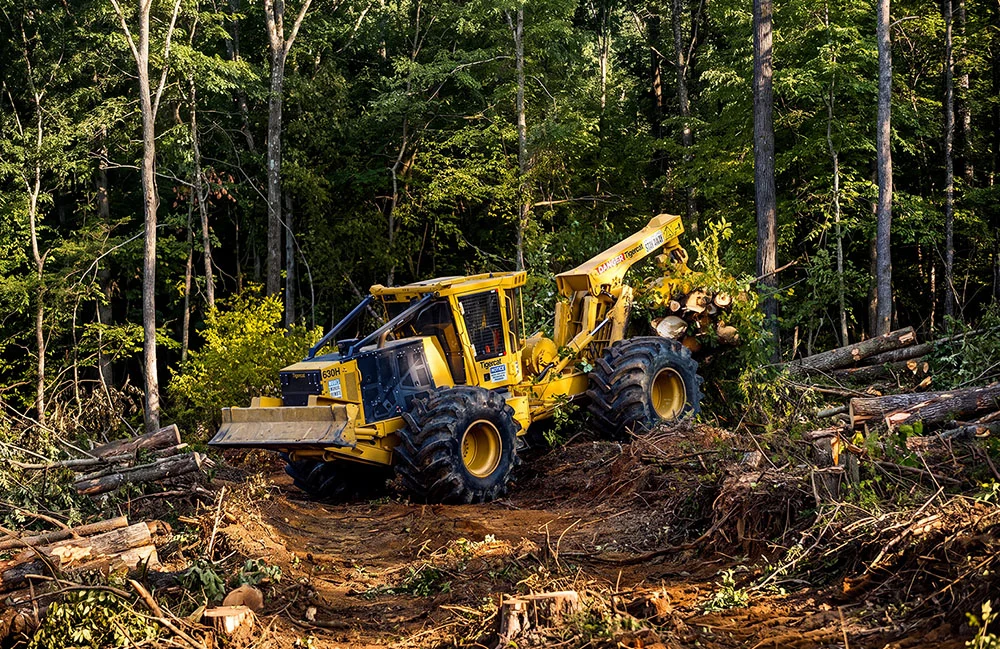
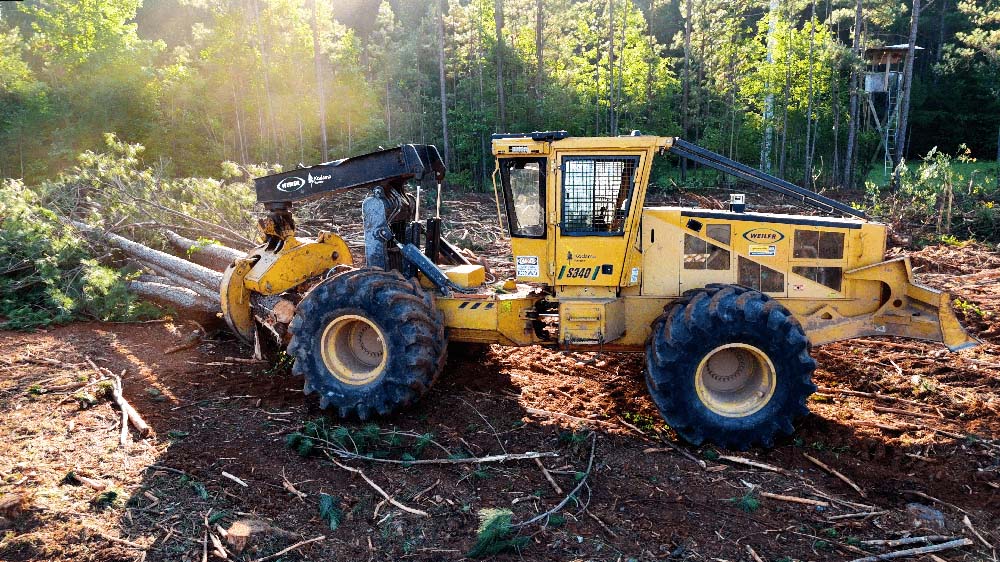
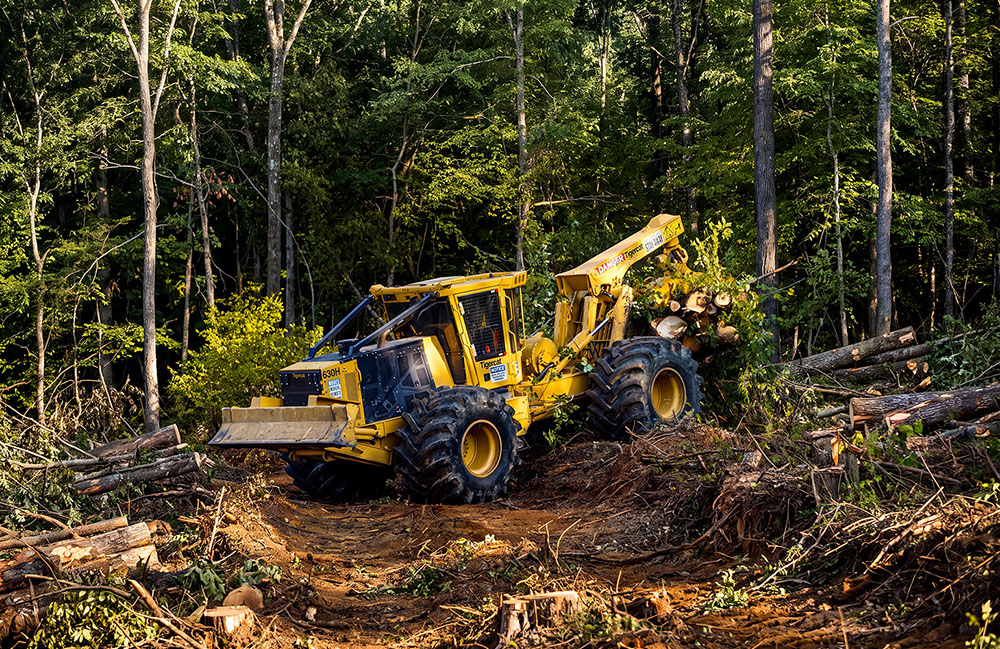
Currently, the company’s technology is primarily deployed on skidders—heavy vehicles equipped with large mechanical claws known as grapples. Once loggers cut down a cluster of trees, the skidder picks them up, drags them to a central clearing called a landing, and prepares them to be loaded onto transport trucks. Kodama’s software allows repetitive, straightforward transit tasks to run autonomously, while human experts step in remotely to manage complex edge cases, difficult terrain, and delicate maneuvers.
Furthermore, the data collection loop is staggering. Every day that Kodama’s systems operate remotely, they generate approximately one terabyte of training data. This compounding data advantage spans diverse machinery, distinct operator behaviors, changing weather, and complex forestry workflows.
Ecosystem Integration vs. Aftermarket Retrofits
Unlike the construction industry—where automation often relies on aftermarket retrofit kits and must contend with closed ecosystems enforced by OEMs like Caterpillar—Kodama has chosen a collaborative approach. The company is actively integrating its platform directly with existing Original Equipment Manufacturers (OEMs). Kodama has already successfully integrated its software with two of the three largest forestry equipment manufacturers in the world.
By partnering directly with OEMs, Kodama can leverage built-in factory sensors, proprietary diagnostic systems, and real-time fault detection capabilities that would be difficult to replicate through third-party aftermarket modifications alone.
Official Responses and Leadership Insights
Key executives at Kodama Systems have shared critical perspectives on the company’s trajectory, technological philosophy, and long-term industry impact.
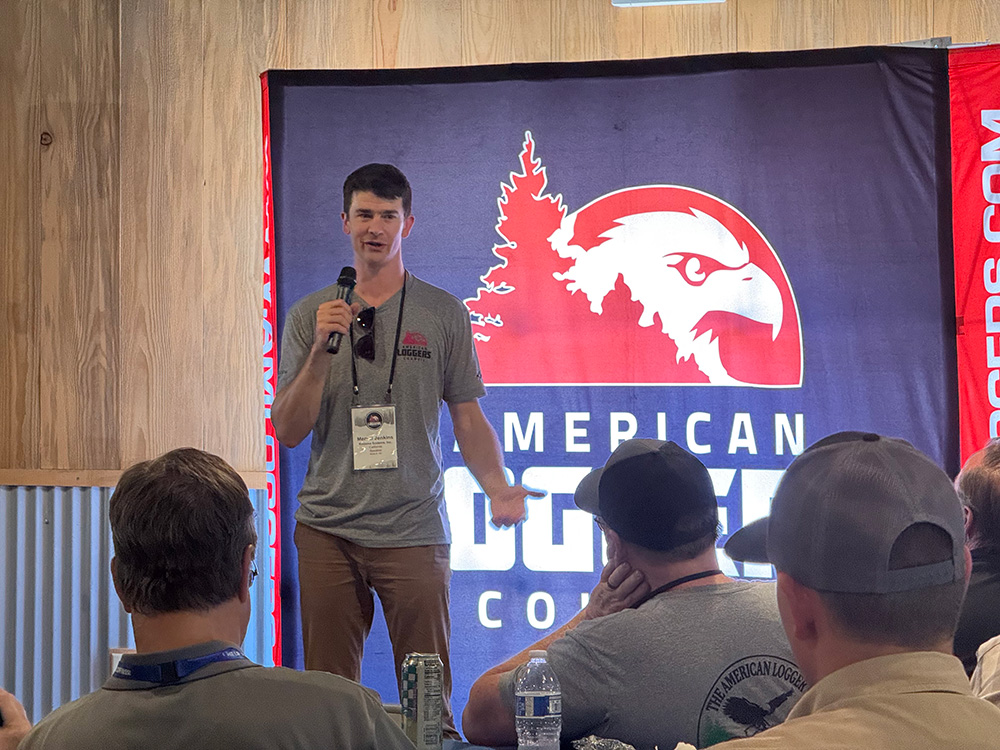
Merritt Jenkins, Co-Founder and CEO of Kodama:
"If we look more broadly, though, this is a tool for land management, and this is absolutely a tool that will be used in wildfire mitigation, from a forest thinning perspective, as well as wildfire suppression… Every day that we remotely operate the machine, we’re generating about a terabyte of training data. Starting two and a half years ago, we took the explicit direction of starting with teleoperation, and incrementally adding autonomy, versus autonomy first with a teleoperations failover. That’s been absolutely the right decision."
Jenkins also emphasized the strategic advantage of working alongside established equipment manufacturers:
"It’s preferable to integrate with the OEMs because you can leverage all of their knowledge and all of the sensors and fault detection that are already on the machine."
Ben Pinfield, Go-to-Market Associate at Kodama:
"Right now, we’re working with different forestry companies across the southeastern U.S. We’re at a point where we’re scaling, integrating into new machine types, and developing more autonomy capabilities in forestry… For the heavy equipment operations, that work can be pretty rough on their bodies. It’s like the bang just isn’t worth the buck as far as the physical trade-off for a lot of these operators. So, our customers are having a hard time hiring talent. Even when they are able to hire talent, a lot of times, it’s unreliable."
Pinfield also highlighted the human safety element, noting that nearly every veteran logger has a harrowing story regarding machine rollovers, falling timber, or severe workplace injuries. Transitioning operators out of the physical cab and into climate-controlled remote control stations fundamentally transforms workplace safety.
Implications for the Future of Forestry
The infusion of $7 million into Kodama Systems signals a broader transformation for land management, timber production, and industrial automation.
1. Reversing the Labor Crisis
By moving operators out of remote, hazardous forests and into ergonomic remote-control hubs, companies like Kodama can vastly expand their labor pool. Older, highly experienced loggers who can no longer endure the physical pounding of a skidder cab can extend their careers by years, managing fleets from afar. Simultaneously, the profession becomes far more attractive to younger, tech-savvy generations comfortable with digital interfaces and robotic oversight.
2. Enhanced Safety Standards
Forestry consistently ranks among the most hazardous occupations in the world. By deploying supervised autonomy for predictable hauling routes and remote operation for tricky terrain, the frequency of severe accidents, rollovers, and crushing injuries will plummet.
3. Precision Forestry and Site Optimization
Historically, logging sites relied on rudimentary communication methods like CB radios to coordinate heavy machinery. Kodama’s technology introduces unprecedented digital visibility to the forest floor.
"Right now, it’s several people coordinating via CB radio," Jenkins observed. "We know the real time location of our machines. We have metrics of productivity, fuel use, and the shock and vibration on the machines. So, we believe that we can eventually further optimize these sites in terms of how the machines are used and how they coordinate with each other."
4. Expanding Environmental Resilience
Beyond commercial timber production, the scalability of Kodama’s platform holds profound implications for environmental conservation and climate defense. As climate change accelerates wildfire seasons across North America, automated and teleoperated fleets will be critical in executing large-scale forest thinning and biomass removal projects safely, economically, and at a speed that manual labor forces have never been able to match.
With robust financial backing, established OEM integrations, and a proven track record of moving hundreds of thousands of tons of timber, Kodama Systems is well-positioned to drag an ancient industry into the age of physical AI—ensuring that our forests, and the workers who manage them, have a sustainable future.