In the realm of modern electronics engineering, the reliability of a system is frequently dictated by its most vulnerable components: the connection points. Whether deployed in a torrential downpour on an offshore wind turbine or within the near-absolute vacuum of deep space, electrical and data connectors serve as the vital lifelines of power and signal transmission.
However, safeguarding these connection points against hostile operating conditions is rarely a one-size-fits-all proposition. Design engineers and technical buyers routinely face a critical architectural dilemma: when to specify a hermetically sealed connector and when an environmentally sealed variant will suffice.
Understanding the distinctions between these two technologies—ranging from their underlying physics and manufacturing processes to their financial and structural trade-offs—is essential for optimizing both system performance and budget.
The Anatomy of Harsh Environments: Main Facts and Industry Context
Modern electronics operate in increasingly punishing environments. Industrial automation floors expose equipment to chemical washdowns, particulate matter, and intense vibrations. Simultaneously, renewable-energy installations, marine infrastructure, and aerospace platforms subject hardware to dramatic thermal shifts, extreme moisture, and atmospheric pressure variations.
To survive these conditions, connectors must rely on robust protective sealing. Yet, the level of protection required varies drastically based on the application’s tolerance for failure.
At a high level, sealing strategies are split into two primary methodologies:
Environmental Sealing: Designed to block macroscopic contaminants—such as water, dust, and dirt—using elastomeric gaskets, engineered housings, and O-rings.
Hermetic Sealing: Engineered to achieve absolute atmospheric isolation, fusing materials at a molecular level to prevent even microscopic gas or moisture ingress under extreme vacuums or pressures.
Choosing incorrectly can result in catastrophic system failure or, conversely, unnecessary financial overhead driven by "over-specification."
Evolution and Engineering Chronology: How Connector Sealing Developed
The evolution of connector sealing mirrors the rapid advancement of industrialization and aerospace exploration.
The Early Days of Weatherproofing
Historically, outdoor and industrial electrical installations relied on rudimentary protective housings—cast-iron boxes, rubber boots, and simple mechanical enclosures. While these rudimentary measures kept out large volumes of rain and heavy debris, they offered little defense against fine particulate infiltration or sustained moisture exposure under pressure.
The Rise of Standardized Environmental Protection
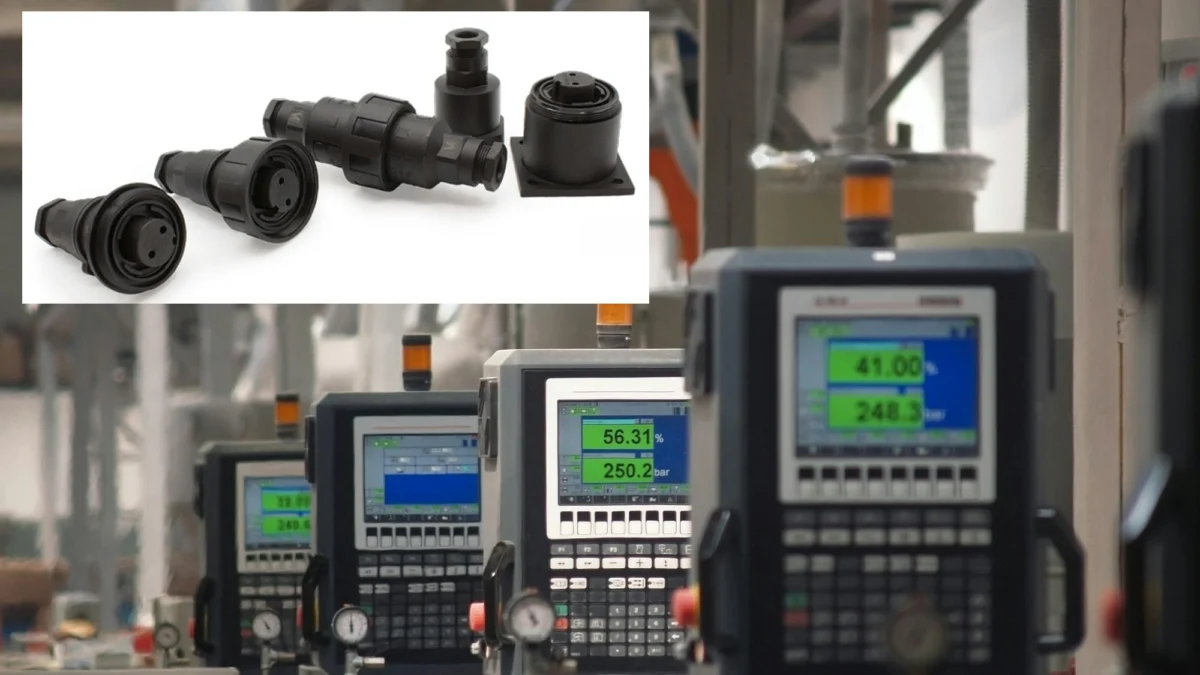
As industries automated and electronic components miniaturized, the need for standardized, reliable protection became glaringly apparent. This drove the development of engineered elastomeric seals and the universal adoption of Ingress Protection (IP) ratings. Companies began developing dedicated modular series—such as Bulgin’s iconic Buccaneer range of power and data connectors—which revolutionized industrial-grade plug-and-play connections by integrating reliable O-ring and gasket technologies capable of withstanding severe weather and repeated washdowns.
The Demands of the Space Age and High Vacuum
Simultaneously, the aerospace, defense, and scientific research sectors demanded a wholly different class of protection. Standard O-rings, which can degrade or allow microscopic gas permeation over time, were inadequate for high-altitude satellites, deep-space probes, and semiconductor vacuum chambers. This drove the maturation of glass-to-metal and ceramic-to-metal bonding techniques. These advanced manufacturing processes created gas-tight seals capable of passing rigorous helium leak tests, cementing hermetic connectors as the gold standard for mission-critical, zero-failure environments.
Deep Dive: What is a Hermetically Sealed Connector?
A hermetically sealed connector goes far beyond merely keeping out water; its primary function is to connect two isolated compartments of specialized electrical equipment without permitting any gases, vapors, or moisture to leak through the barrier.
Manufacturing and Verification
Achieving a true hermetic seal requires advanced material science. Manufacturers typically employ glass-to-metal (GTM) or ceramic-to-metal (CTM) bonding techniques. During this process, glass or ceramic inserts are fused under high heat directly to metallic housing components and electrical pins, creating a rigid, gas-tight atomic barrier between the insulating materials and the metal shell.
To verify that absolute isolation has been achieved, these components undergo stringent helium leak testing. This non-destructive testing method measures extremely low leak rates under vacuum or pressurized conditions, ensuring that even under extreme barometric shifts, no gas molecules can breach the interface.
Ideal Applications
Because of their unyielding integrity, hermetically sealed connectors are reserved for mission-critical environments where the internal atmosphere of a system must remain completely stable, and where even minimal gas ingress could compromise safety or functionality:
Aerospace and defense avionics
Satellites and deep-space exploration probes
High-vacuum chambers and semiconductor manufacturing equipment
Specialized medical and scientific instruments
The Trade-Offs
While unmatched in performance, hermetically sealed connectors come with distinct disadvantages. Due to their complex manufacturing processes, high-precision materials, and rigorous testing requirements, they are significantly more expensive and rigid than environmentally sealed alternatives, making them poorly suited for applications that do not strictly require atmospheric isolation.
Deep Dive: Environmentally Sealed Connectors and IP Ratings
In contrast to the gas-tight nature of hermetic components, environmentally sealed connectors are designed explicitly to protect electrical contacts from external contaminants—such as water, dust, mud, and industrial chemicals—during outdoor or factory-floor deployment.
Engineering Features
Environmentally sealed connectors utilize engineered polymer housings, compression glands, and specialized elastomeric O-rings. When mated, these flexible elements deform to fill microscopic gaps, effectively blocking moisture and particulate intrusion. This prevents premature corrosion, electrical short circuits, and signal degradation.
Such connectors are ubiquitous across industrial automation networks, renewable-energy setups (such as solar farms and wind turbines), transportation infrastructure, and marine electronics.
Decoding Ingress Protection (IP) Ratings
To help engineers select the correct environmental seal for specific operating conditions, the industry relies heavily on Ingress Protection (IP) ratings. Defined by international standards, an IP code consists of two digits following the "IP" prefix:
First Digit (Solid Particle Protection): Ranges from 0 (no protection) to 6 (full dust-tight resistance against small particulates).
Second Digit (Liquid Ingress Protection): Ranges from 0 (no protection) up to 8 (continuous immersion beyond 1 meter) and specialized ratings like 9K (protection against high-pressure, high-temperature water jets).
For example, a connector rated IP68 is entirely dust-tight and capable of continuous submersion underwater, making it ideal for harsh marine applications. Meanwhile, an IP69K rating indicates resilience against aggressive, high-pressure washdowns commonly found in food processing and heavy industrial environments.
Comparative Analysis: Pros and Cons
Feature
Environmentally Sealed Connectors
Hermetically Sealed Connectors
Primary Goal
Block moisture, dust, and external debris.
Achieve absolute gas and atmospheric isolation.
Sealing Mechanism
Elastomeric O-rings, gaskets, and compression glands.
Glass-to-metal or ceramic-to-metal molecular fusion.
Testing Standards
IP Ratings (IP66, IP67, IP68, IP69K).
Helium leak testing for ultra-low gas leak rates.
Typical Environments
Industrial floors, marine, solar farms, transportation.
Aerospace, defense, satellites, vacuum chambers.
Cost & Complexity
Moderate cost; flexible and easy to deploy.
High cost; rigid design with complex manufacturing.
Risk of Over-Specification
Low risk in standard outdoor setups.
High risk if deployed where environmental sealing suffices.
Official Industry Perspectives and Expert Insights
Industry leaders continually refine these technologies to meet shifting demands for sustainability, modularity, and ruggedness. Tristan Stubbs, Mechanical Team Leader at Bulgin, emphasizes the balance engineers must strike when designing modern connectivity solutions.
Reflecting on recent engineering developments—such as the evolution of the Buccaneer connector series and the introduction of sustainable, high-performance designs like the Vitalis Buccaneer—Stubbs notes that many industrial-grade systems favor environmental sealing because it delivers the necessary level of rugged protection without unnecessary architectural complexity.
"Hermetic sealing is preferred when a connector needs to be completely isolated from the external environment, giving it the edge in aerospace, defense, satellite, and other mission-critical applications," Stubbs explains.
"However, environmental sealing grants robust protection against moisture, dust, and other contaminants in applications that still require a high level of reliability and durability—but not so high that hermetically sealed connectors are necessary."
Furthermore, experts warn against the financial and logistical pitfalls of "over-specifying." Utilizing a hermetic connector in an application where an IP67 or IP68 environmentally sealed connector would suffice needlessly inflates bill-of-materials (BOM) costs, complicates assembly, and introduces unnecessary rigidity into mechanical designs.
Implications for System Architects and Future Engineering
The choice between hermetic and environmental sealing carries profound implications for product lifecycle management, maintenance costs, and operational safety.
Financial Optimization: Specifying environmentally sealed connectors where complete atmospheric isolation is unneeded prevents runaway project costs. Conversely, cutting corners by using an environmental seal in a true vacuum or high-pressure gas containment vessel invites catastrophic failure.
Sustainability and Longevity: As industries pivot toward greener operations—such as remote renewable energy grids and unmanned marine monitoring systems—connectors must endure years of weathering without human intervention. Advanced polymer compounds and sustainable manufacturing techniques (such as those being integrated into modern industrial connector lines) reduce electronic waste by extending field-service lifespans.
System Reliability: By carefully mapping environmental risks—such as thermal expansion, chemical exposure, particulate density, and pressure differentials—against standardized metrics like IP ratings and helium leak rates, engineers can build resilient architectures capable of surviving the world’s most unforgiving conditions.
Ultimately, both sealing methodologies are vital pillars of modern electrical engineering. By understanding their distinct capabilities, limitations, and optimal use cases, technical buyers and design engineers can successfully navigate the delicate balance between robust performance, long-term reliability, and cost-effective design.