



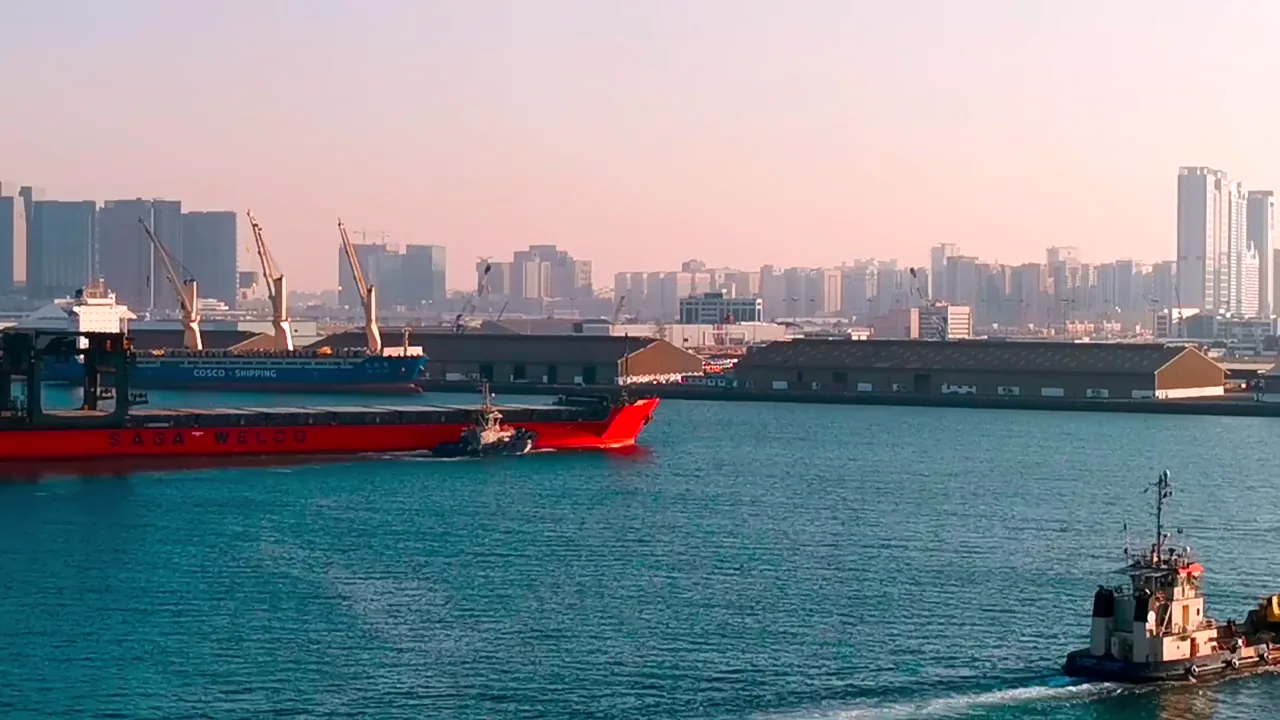
The global maritime industry, responsible for transporting roughly 80% of the world’s trade, is currently undergoing its most significant transformation since the transition from sail to steam. At the heart of this metamorphosis is China, which has rapidly positioned itself as the dominant force in the development of "green shipping corridors"—defined routes between major port hubs where zero-emission shipping solutions are supported and demonstrated.
According to a comprehensive new report from the Global Maritime Forum (GMF), unveiled during their annual summit in Shanghai, China is now connected to 21 active green corridor projects. This represents nearly one-fifth of all such initiatives globally, with the nation adding ten new ventures in 2025 alone. While these figures underscore China’s ambition to lead the decarbonization of international trade, the industry remains at a critical juncture: the transition from ambitious policy announcements to large-scale commercial reality.
Main Facts: A New Maritime Powerhouse
The data released by the GMF paints a picture of a nation leveraging its manufacturing prowess and state-directed industrial policy to capture the nascent market for green maritime fuels. Of the 21 projects currently under the GMF’s observation, the scale of Chinese participation is unprecedented.
However, the report includes a sober assessment of the "maturity" of these projects. As of the end of June 2025, the breakdown of these corridors revealed:
- Initiation phase: 12 projects.
- Feasibility study phase: 5 projects.
- Preparation phase: 3 projects.
- Realization phase: 1 project.
The solitary project that has reached the realization stage is the Australia-East Asia Iron Ore corridor. This route is of vital strategic importance, involving the deployment of ammonia-fueled bulk carriers to transport iron ore from Australia’s Pilbara region to Chinese steel mills. This route acts as a bellwether for the industry, proving that decarbonizing the "heavy lifters" of the shipping world—dry bulk carriers—is possible, provided there is a dedicated supply chain of alternative fuels.
Chronology: The Path to the Green Horizon
The development of China’s green shipping infrastructure has accelerated significantly in the last 24 months. To understand the momentum, one must look at the key milestones achieved:
- 2024 (Early): Increased emphasis on green methanol production in domestic industrial parks, laying the groundwork for bunkering capacity.
- September 2025: The launch of the International Green Shipping Corridor Alliance. This body, comprising 45 companies and organizations from 12 nations, serves as a multilateral framework to harmonize standards for alternative fuels and port infrastructure.
- October 2025: A historic milestone for the maritime industry occurred when the Mineral Europa, a 210,000 dwt newcastlemax vessel owned by CMB.TECH and chartered by Fortescue, completed the first-ever commercial voyage powered by ammonia.
- Late 2025: The Mineral Europa successfully conducted the world’s first commercial ship-to-ship bunkering of green ammonia at the port of Zhoushan, signaling that the infrastructure for dangerous, non-traditional fuels is finally operational.
Supporting Data: Fueling the Future
China’s influence is not limited to shipyards; it extends deep into the chemical and energy sectors. The nation is currently the global leader in green fuel production capacity, effectively monopolizing the supply chain for the fuels that will power the next generation of vessels.
Green Methanol and Ammonia Dominance
The GMF report highlights that China holds approximately 80% of the world’s green methanol output capacity that has passed its Final Investment Decision (FID). In the ammonia sector, China controls over 40% of global green ammonia capacity. The country’s industrial pipeline is aggressive, aiming for:
- 30 million tonnes of green methanol production annually by the early 2030s.
- 15 million tonnes of green ammonia production annually by the early 2030s.
While analysts warn that not all announced projects will successfully secure funding or reach completion, the sheer volume of capital being deployed suggests that China is betting on a "first-mover" advantage that could make it the primary supplier of marine fuel for the global fleet.
The Rise of Bunkering Infrastructure
Port infrastructure is equally critical. Over ten Chinese ports are currently engaged in the construction of methanol bunkering facilities. Projections indicate that bunkering volumes will reach 100,000 tonnes by mid-2026, a significant jump from the 64,000 tonnes recorded throughout 2025. Shanghai, functioning as the primary hub, accounts for roughly 90% of this capacity, consolidating its status as the "green gateway" to the East.
Official Responses and Industry Perspectives
Industry leaders speaking at the Shanghai summit emphasized that while the technology exists, the "market reality" remains the biggest hurdle.
"We are building the engines and the ships," noted one senior representative from a major Chinese shipping conglomerate, "but we are doing so in a market that is not yet ready to pay for the cost of carbon reduction."
The GMF has echoed these sentiments, stressing that the current economic structure of the shipping industry is fundamentally misaligned with the goals of the Paris Agreement. The forum advocates for three specific pillars of policy intervention:
- Direct Subsidies/Price Support: To shrink the massive price differential between green fuels and traditional heavy fuel oil.
- Harmonized Certification: A global standard for what constitutes "green" fuel is essential to ensure that carbon credits and environmental regulations are recognized across borders.
- Network Funding: A call for increased public-private partnerships to fund the "last mile" of distribution infrastructure at smaller, regional ports.
Implications: Hurdles to Commercial Viability
Despite the rapid physical development of corridors and fuel capacity, the economic outlook for green shipping remains fraught with challenges.
The Pricing Gap
The most daunting barrier is the cost of ownership and operation. Even with China’s domestic production scale driving down costs, green methanol and green ammonia are still priced at two to three times the cost of conventional marine fuels. Furthermore, the capital expenditure for battery-electric cargo ships is roughly double that of standard diesel-powered vessels. Without regulatory mandates or aggressive carbon taxes, shipowners face a "green premium" that makes sustainable shipping a financial liability in a competitive global market.
The Demand-Side Dilemma
Consumer behavior remains a paradox. Research referenced in the GMF report indicates that while 65% of cargo owners express a willingness to pay more for low-carbon transport, their threshold for that premium is remarkably low. On average, shippers are willing to pay only a 3% premium for green logistics. This 3% is insufficient to bridge the gap between the cost of conventional shipping and the true cost of green shipping, which in some cases requires a price increase of 50% to 100% per TEU (twenty-foot equivalent unit).
The Geopolitical and Regulatory Outlook
The creation of the International Green Shipping Corridor Alliance is a strategic response to these hurdles. By bringing together 12 nations, the alliance hopes to prevent a "balkanization" of green shipping standards. If each nation develops its own rules for bunkering safety and fuel certification, the cost of compliance will skyrocket, effectively killing the economic case for green shipping.
Furthermore, as the International Maritime Organization (IMO) moves toward more stringent greenhouse gas reduction targets, China’s early investment in infrastructure positions it as the "supplier of choice" for international shipping companies. Should the European Union or other major economies implement high-cost carbon border adjustments, ships fueled by Chinese-produced green methanol may become the only vessels capable of entering Western ports without paying punitive environmental levies.
Conclusion
China’s strategy in the maritime sector is a clear example of industrial foresight: by building the fuel production capacity, the bunkering infrastructure, and the pilot corridors simultaneously, the nation is creating an ecosystem that will be difficult for rivals to displace.
However, the GMF report serves as a timely reminder that technology is only half the battle. The transition to a green shipping economy will ultimately be decided by financial mechanisms—carbon pricing, green fuel subsidies, and the willingness of cargo owners to internalize the cost of a cleaner planet. For now, the "green corridor" remains an ambitious, albeit nascent, concept. As the industry moves toward 2030, the success of these projects will depend less on the ability to build ships, and more on the ability to build a sustainable business model for the fuel that powers them.