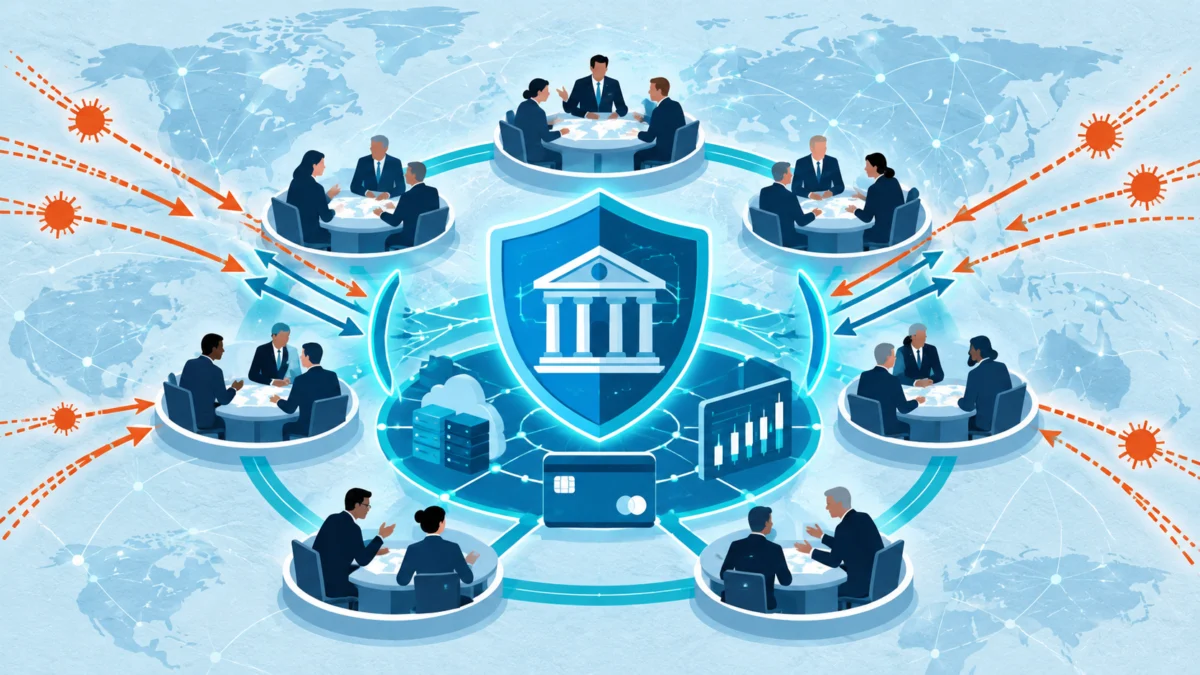
In a significant shift toward proactive defense, the Group of Seven (G7) has announced plans to conduct high-stakes tabletop exercises designed to simulate and mitigate the evolving risks posed by artificial intelligence to the global financial system. This transition marks a departure from general warnings about digital threats, moving instead toward a regime of "operational rehearsal"—where policymakers and financial regulators test their capacity to respond in real-time to AI-driven systemic shocks.
The decision, confirmed by Japan’s Finance Minister Satsuki Katayama during the recent International Monetary Fund (IMF) and World Bank annual meetings in Bangkok, signals that the world’s leading economies are prioritizing the "machine-speed" threats inherent in the current technological landscape.
Main Facts: The New Frontier of Financial Defense
The G7’s commitment to these exercises is a recognition that the integration of AI into financial infrastructure has fundamentally altered the risk calculus for central banks and commercial institutions alike. While the October 16 press conference provided the strategic mandate, specific details regarding the timing, participating private-sector entities, and the precise nature of the attack scenarios remain classified.
However, the core objective is clear: to move beyond theoretical policy discussions and identify "blind spots" in cross-border coordination. The exercises aim to determine whether financial authorities can effectively communicate across jurisdictions, preserve the continuity of critical services, and contain market volatility when events move faster than established regulatory manuals allow. This is not a reaction to an imminent attack, but rather a strategic hardening of the global financial architecture.
Chronology: Building a Foundation for Cyber-Coordination
The move toward these AI-focused exercises is the latest milestone in a multi-year effort to synchronize international cyber-defense.
- Pre-2025: Initial establishment of the G7 Cyber Expert Group, tasked with fostering collaboration between ministries, central banks, and market regulators.
- May 2026: A landmark simulation involving all G7 jurisdictions tested a large-scale, coordinated attack on the financial sector. This exercise focused on crisis communication and incident recovery, laying the groundwork for the current initiative.
- September 2025: The G7 Cyber Expert Group released a formal statement detailing how AI-enabled threats—such as autonomous vulnerability exploitation and systemic concentration risks—demand a rethink of current defensive postures.
- June 2026: The IMF released an analytical report highlighting how AI increases the speed and breadth of cyber-attacks, providing a technical roadmap for the G7’s upcoming rehearsals.
- October 2026: Following the IMF and World Bank meetings, the G7 officially committed to integrating AI-specific scenarios into its cycle of operational drills.
Supporting Data: Why AI Changes the Timing of a Crisis
The urgency behind this initiative is driven by three specific challenges identified by the G7 and the IMF: Speed, Scale, and Ambiguity.
1. The Speed of Machine-Speed Exploitation
Traditional cyber-defense relies on human-in-the-loop verification: analysts review alerts, managers approve responses, and regulators coordinate through established channels. AI-driven attacks, however, can identify and exploit vulnerabilities at machine speed, rendering traditional escalation protocols dangerously slow. In the first hours of a breach, the window for containment is minuscule; delays in decision-making can mean the difference between a contained incident and a contagion that spreads across multiple borders.
2. Systemic Scale and Common Infrastructure
The financial sector is increasingly reliant on a consolidated stack of cloud providers, software libraries, and telecommunications networks. This concentration creates a "single point of failure" dynamic. If an attacker uses AI to identify a shared vulnerability across multiple cloud environments, they could potentially hit dozens of financial institutions simultaneously. The G7 exercises aim to address the risk of "correlated outages," where isolated losses coalesce into a systemic event.
3. Ambiguity and Misinformation
AI’s ability to generate sophisticated phishing campaigns, deepfake impersonations of officials, and false incident reports creates a "fog of war" in the digital sphere. During a crisis, authorities must verify the integrity of information while under intense pressure from markets and the public. These exercises will test the ability of officials to authenticate messages, distinguish between real and manufactured data, and manage public sentiment during a period of extreme uncertainty.
Official Responses and Institutional Perspectives
The IMF, in its October 2026 Global Financial Stability Report, emphasized that cyber incidents now represent a core risk to financial stability. According to the Fund, the primary danger lies in the loss of confidence. When market participants cannot verify if balances are accurate or if payment systems are functioning, they often react with precautionary behavior—withdrawing liquidity or ceasing trading—which can trigger a crisis even if the actual technical loss is limited.
"Confidence matters because customers and investors react to uncertainty," the IMF report noted. "If they cannot determine whether balances are accurate, payments will settle, or markets will reopen, precautionary behavior can amplify the original technology failure."
The G7’s approach aligns with the IMF’s recommendations: establishing robust recovery capacity, implementing machine-speed defenses, and ensuring that public-private collaboration is not just a policy aspiration but an operational reality.
Implications: What to Expect from the Financial Sector
While the G7 announcement does not impose a new binding legal standard, it fundamentally shifts the supervisory expectations for financial institutions. Boards and senior management should anticipate a new wave of scrutiny regarding their AI-specific threat models.
Supervisory Expectations
Regulators will likely pivot toward asking harder questions:
- Third-Party Dependencies: How does the institution manage the risk of a failure at a common cloud or software provider?
- Crisis Decision Rights: Who has the absolute authority to disconnect systems, and what are the pre-agreed triggers for such a move?
- Operational Continuity: Can the firm continue to operate in a "degraded" mode if its primary AI-driven analytical tools are compromised?
The Role of Technology Providers
Banks can no longer test their resilience in a vacuum. Technology providers—the cloud platforms and AI model developers—must be active participants in these drills. A bank’s recovery plan is only as good as its vendor’s ability to restore services during a peak-demand event. Providers must demonstrate that they can segment compromised environments and provide forensic evidence while simultaneously managing the recovery of multiple clients.
Addressing the Resource Gap
A significant concern remains the disparity between Tier-1 global banks and smaller institutions. The latter may rely on the same infrastructure but lack the specialist talent to manage complex AI-based recovery scenarios. The G7’s exercise framework is intended to act as a "leveler," providing sector-wide playbooks that can assist smaller players in navigating systemic disruptions.
Conclusion: Turning Policy into Resilience
The transition from discussing AI cyber risk to practicing a joint response is a landmark step in protecting the interconnected global economy. These exercises serve as a diagnostic tool, revealing gaps in authority, slow escalation chains, and incompatible reporting formats before a real-world catastrophe occurs.
For investors, credit analysts, and stakeholders, the success of this initiative will not be measured by the number of meetings held, but by the tangible changes in operating practices. Indicators of success will include rewritten disaster recovery manuals, verified backup communication channels, and clarified vendor obligations.
The G7 has set the stage for a more rigorous, reality-based approach to digital security. As artificial intelligence continues to reshape the financial landscape, the ability to "rehearse for the worst" will be the defining characteristic of a resilient financial system. The coming months will likely see the unveiling of specific scenarios that will test the mettle of the world’s most powerful financial institutions, marking a new chapter in the ongoing battle to secure the future of global finance.