Published: October 9, 2026
By: Alejandra Carranza (Adapted and Expanded)
Main Facts
Global ocean freight markets have defied seasonal norms, maintaining exceptionally high spot rates and severe port congestion despite the arrival of China’s Golden Week. Traditionally a period of relative calm that offers shippers a temporary reprieve from peak-season pressures, the week-long holiday in October 2026 failed to bring the expected relief. Instead, severe weather events—specifically major typhoons striking vital Asian maritime gateways—combined with an extended peak shipping season driven by U.S. tariff deadlines, have kept freight fees elevated across major transpacific trade lanes.
According to data compiled by logistics platform Freightos as of October 6, spot rates remain near historical highs:
- Asia to U.S. West Coast: $8,322 per Forty-Foot Equivalent Unit (FEU).
- Asia to U.S. East Coast: $9,606 per FEU.
These figures underscore an unusual market dynamic where structural supply chain bottlenecks, meteorological disruptions, and aggressive carrier pricing strategies have converged. While factory floors across China temporarily closed for the Golden Week celebrations from October 1 through October 7, the downstream logistics ecosystem remains deeply strained. Over 150 vessels have faced severe berthing delays at key hubs like Shanghai, while U.S. importers continue to grapple with the tail end of an unprecedented, frontloaded peak shipping season.
Chronology of the Disruption
To understand how global maritime logistics reached this pressurized juncture in the final quarter of 2026, it is essential to trace the timeline of compounding disruptions that began earlier in the year.
Early 2026: The Rush to Beat Tariffs
The roots of the current market state trace back to early 2026, when U.S. importers and retailers began aggressively frontloading inventory. Driven by looming tariff deadlines and anticipated regulatory surcharges, supply chain managers rushed to secure container space months ahead of the traditional peak shipping window. This surge initiated an unusually early and aggressive peak season that distorted typical capacity planning.
Summer 2026: Sustained Demand Defies Forecasts
Rather than tapering off as summer progressed, transpacific import demand remained robust throughout July and August. Industry analysts had initially forecast an early cooling of the market, but high volumes persisted. According to the National Retail Federation (NRF) and Hackett Associates’ Global Port Tracker, September 2026 ultimately shaped up to be potentially the busiest month of the year for inbound containerized cargo at major U.S. ports, as supply chains operated at maximum capacity to absorb the relentless influx of goods.
Mid-September 2026: Meteorological Bottlenecks and Vessel Bunching
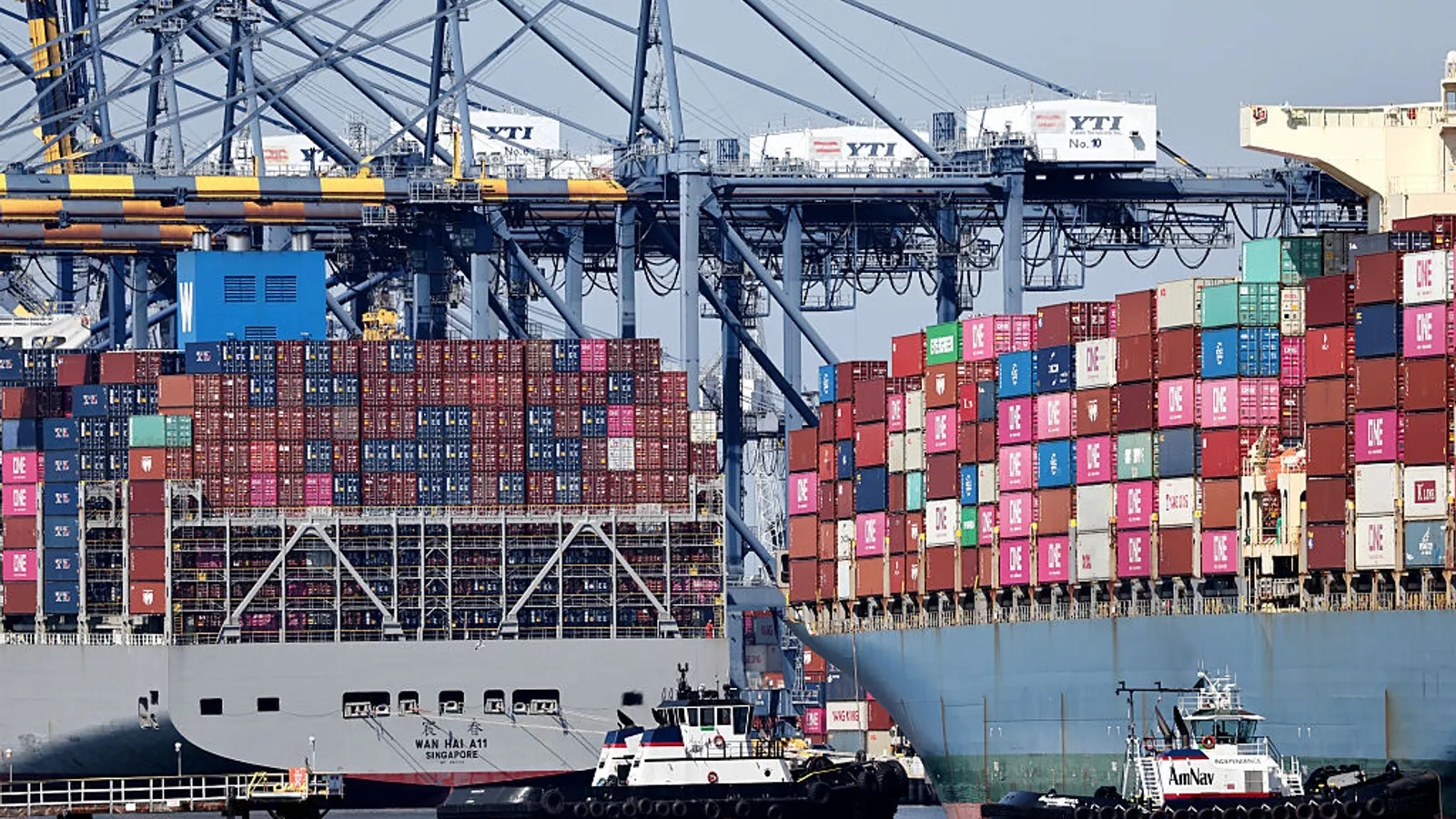
As the peak season collided with autumn, severe weather struck major Asian manufacturing and export hubs. A series of powerful typhoons battered vital maritime gateways across the region. The resulting port closures, mandatory safety suspensions, and navigation hazards created widespread schedule disruptions.
By mid-September, data highlighted by American Global Logistics revealed that 157 vessels were waiting at berth in Shanghai alone. Average port delays ballooned to seven to ten days, triggering a domino effect of vessel bunching, port omissions, and severe scheduling irregularities across transpacific routes.
October 1–7, 2026: Golden Week Fails to Deliver Relief
China’s Golden Week holiday officially commenced on October 1 and ran through October 7. Historically, this week marks a mandatory pause in production and a seasonal window for ocean carriers and shippers to catch their breath. However, because of the massive backlog of accumulated cargo volumes and delayed vessels sitting offshore, carriers elected to maintain or even push spot rates upward, subverting the anticipated post-peak slump.
October 8–9, 2026: Transitioning to Replenishment
On October 8, the NRF and Hackett Associates released their updated Global Port Tracker report, confirming that the extended peak shipping season was finally wrapping up. With most holiday merchandise safely landed at destination ports, the focus for the remainder of the year shifted toward last-minute replenishment and preliminary preparations for the early 2027 Lunar New Year rush. Nevertheless, ocean freight rates remain stubbornly high as carriers work through the lingering aftermath of September’s typhoons.
Supporting Data and Market Metrics
The financial toll of these compounding disruptions is clearly reflected in prevailing freight market metrics and macroeconomic supply chain indicators.
Transpacific Spot Rates
The Freightos weekly data indexes show that transpacific lanes continue to command extraordinary premiums. While spot rates have fluctuated slightly from their mid-summer absolute highs, the baseline cost of moving goods across the Pacific remains multiples higher than historical historical averages for the fourth quarter.
- The FEU Divide: Moving a standard forty-foot container from an Asian port to the U.S. West Coast at $8,322 represents a profound cost burden for medium and small-sized enterprises (SMEs) that lack long-term contracted rates. Meanwhile, shipments routed to the U.S. East Coast via alternate paths or enduring longer transit times command $9,606 per FEU.
- Carrier Leverage: Despite the theoretical dip in manufacturing output during Golden Week, ocean carriers have maintained tight capacity management through blank sailings (scheduled voyages that are cancelled to artificially tighten supply) and aggressive rate-setting. This has effectively cushioned carriers against the typical volume dips associated with early October holidays.
Port Congestion and Vessel Turnaround Times
The operational metrics inside major Asian and North American ports illustrate the depth of the current congestion crisis:

- Shanghai Backlog: Mid-September tracking identified 157 commercial vessels waiting at berth or anchor around Shanghai, the world’s busiest container port.
- Turnaround Delays: Vessel turnaround times that normally take 24 to 48 hours stretched to over a week in many instances, as terminals struggled with yard density issues, landside equipment shortages, and the chaotic bunching of delayed arrivals.
- Schedule Reliability: Global schedule reliability metrics have suffered significantly. The cascading effect of typhoon-induced port omissions means that container ships arriving on the U.S. West Coast are frequently off-schedule, creating secondary congestion at domestic intermodal rail and trucking yards.
Official Responses and Industry Insights
Key stakeholders across the global supply chain spectrum—ranging from freight forwarders and logistics executives to retail policy experts—have weighed in on the unprecedented convergence of factors defining the late-2026 shipping landscape.
Perspectives from Freight Forwarding and Logistics Leaders
Albert Zerega, Senior Vice President of Commercial at American Global Logistics, noted the stark departure from seasonal norms in a widely cited industry update.
"China’s Golden Week is a time when ocean shippers tend to catch their breath, but not this year," Zerega remarked on LinkedIn.
Ordinarily, the market should be transitioning into a predictable multi-month lull in demand—the quiet corridor sitting squarely between the frantic back-to-school/holiday peak season and the pre-Lunar New Year rush. Instead, carriers capitalized on structural backlogs to sustain elevated pricing structures.
Amplifying these concerns, an operational update from Ascent Global Logistics detailed the meteorological roots of the current crisis:
"Typhoon-related disruption at major Asian gateways has contributed to congestion, port omissions, vessel bunching, and schedule changes. Recovery can take several weeks as terminals and carriers work through accumulated cargo volumes."
Retail and Import Policy Perspectives
Jonathan Gold, Vice President for Supply Chain and Customs Policy at the National Retail Federation, provided insight into how the retail sector has managed the turbulent logistics environment during an interview accompanying the October Global Port Tracker release.

"Most holiday merchandise has arrived, and the remainder of the year is just a matter of last-minute replenishment and preparation for early 2027," Gold stated.
Gold’s remarks highlight that while the heavy lifting of holiday inventory importation concluded earlier than usual due to the spring and summer frontloading rush, the retail sector remains acutely vulnerable to structural freight fees and transit volatility that could impact profit margins on replenishment goods.
Implications for Shippers, Retailers, and Consumers
The convergence of weather-induced disruptions, tariff-driven inventory frontloading, and aggressive carrier rate management carries profound operational and financial implications for global supply chain participants moving into 2027.
1. Financial Strain on Cargo Owners
For Beneficial Cargo Owners (BCOs) and retail brands, the refusal of spot rates to decline post-Golden Week means higher-than-expected logistics expenditures heading into the final financial quarter. Companies that relied heavily on the spot market to manage unforecasted demand have seen their shipping budgets severely compressed. Even businesses with primary service contracts are finding themselves exposed to surcharges, peak-season fees, and equipment imbalances.
2. Supply Chain Resilience and Inventory Strategies
The events of 2026 have forced logistics planners to fundamentally reassess their inventory timing strategies. The traditional playbook—relying on predictable lulls during Golden Week or slow periods in late autumn—is proving unreliable in an era defined by intensifying climate volatility and geopolitical trade policy shifts. Moving forward, supply chain architects are expected to diversify sourcing geographies further, build buffer stock even earlier, and utilize multi-modal routing strategies to mitigate localized port closures.
3. Downstream Impacts on Consumers
While much of the primary holiday inventory successfully cleared customs and arrived at distribution centers before the worst of the autumn typhoon disruptions, the sustained high cost of ocean freight introduces persistent inflationary pressures. Retailers absorbing higher transportation fees may pass these costs onto consumers, particularly for electronic goods, apparel, and seasonal home products requiring fast replenishment.
4. Outlook for Early 2027
As terminals slowly clear their accumulated backlogs over the coming weeks, the maritime logistics industry will have a very narrow window of normalization before attention turns to the Lunar New Year in early 2027. With carriers demonstrating a strong capacity to control spot rates through disciplined sail management and external shocks continuing to test port resilience, the global shipping ecosystem remains in a state of high alert. Shippers must remain agile, data-driven, and prepared for persistent volatility well into the new year.