By Global Aviation Correspondent
October 2026
Main Facts
Michigan-based cargo airline Kalitta Air has emerged as the reported "mystery customer" behind a significant order for eight Airbus A350 freighters, a transaction initially logged by European aerospace giant Airbus in August 2026 as an "undisclosed" agreement. According to industry sources speaking to Reuters, the firm order marks a potential strategic pivot for the prominent US all-cargo carrier, which has historically relied heavily on Boeing widebody equipment.
While Airbus confirmed the transaction within its official August orders and deliveries data for its new-generation cargo model, Kalitta Air has maintained a cautious stance. Representatives for the carrier have neither officially confirmed nor denied the multi-billion-dollar deal, instead framing their current engagement with Toulouse as part of ongoing, high-level evaluations.
"Kalitta Air is evaluating the Airbus A350F platform as part of our long-term fleet planning," a spokesperson for the airline told Reuters. "At this time, we remain in the evaluation phase and have no aircraft order to announce."
If confirmed, the acquisition of eight A350 freighters would represent a major milestone not only for Kalitta Air’s fleet modernization roadmap but also for Airbus’s aggressive push to capture a larger share of the heavy widebody cargo market, historically dominated by its American rival, Boeing.
Chronology of Events
To understand how this landmark order materialized, it is necessary to trace a series of fleet adjustments, developmental milestones, and industry reports spanning the last several years:
- 2023–2024: Amid rising global air cargo demand and increasingly stringent environmental regulations, Kalitta Air begins mapping out a long-term replacement strategy for its aging classic freighter fleet. Industry analysts note that while the iconic Boeing 747 has served as the backbone of Kalitta’s operations for decades, fuel efficiency and carbon emission standards necessitate a transition to next-generation twin-engine platforms.
- September 2025: Aircraft lessor AerCap delivers the first converted Boeing 777-300 freighter to Kalitta Air. This delivery marks the launch of a seven-aircraft order designed to bridge the operational gap between older quad-jet aircraft and ultra-modern widebody twins.
- Early 2026: Airbus ramps up marketing and production preparation for the A350F. In April, the manufacturer announces that the massive specialized cargo door has successfully arrived at the final assembly line, setting the stage for structural integration and the much-anticipated maiden flight.
- August 2026: Airbus records an order for eight A350 freighters in its monthly data ledger. However, the identity of the buyer is masked under the "undisclosed customer" classification, sparking intense speculation across aviation circles regarding which major global carrier has stepped forward.
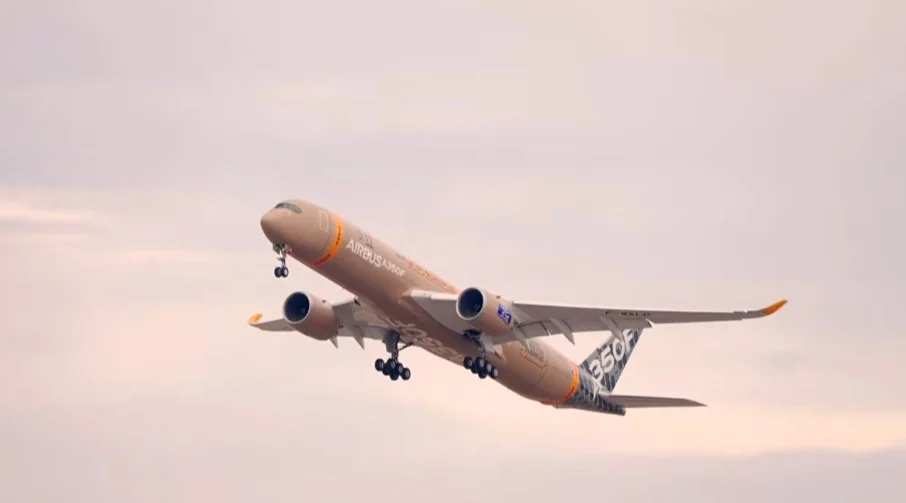
- August 29, 2026: The first Airbus A350F prototype successfully lifts off from Toulouse-Blagnac Airport in France for its maiden flight, broadcasting live streams to aviation enthusiasts and prospective buyers worldwide.
- October 2026: According to insider reports leaked to Reuters, sources close to the transaction identify Kalitta Air as the buyer behind the August order. Media outlets, including Air Cargo News, reach out to Kalitta Air for formal confirmation, prompting the airline’s statement regarding ongoing "fleet planning evaluations."
Supporting Data and Fleet Analysis
The operational profile of Kalitta Air reveals a company deeply invested in heavy-lift capacity, making the addition—or potential addition—of the A350F a fascinating study in fleet diversification.

According to fleet intelligence data from Planespotters.net, Kalitta Air operates a diverse and heavy-duty cargo fleet:
- Boeing 747s: The carrier maintains a formidable baseline of 19 Boeing 747-400 freighters, comprising a mix of factory-built production models and converted aircraft. These iconic quad-jets have long provided the heavy volumetric capacity required for outsized cargo, charter operations, and ACMI (Aircraft, Crew, Maintenance, and Insurance) contracts.
- Boeing 777s: Kalitta has steadily integrated twin-engine efficiency. The airline operates eight production Boeing 777 freighters. Furthermore, following the 2025 agreement with AerCap, all seven of the ordered converted Boeing 777-300 freighters have now been fully delivered and integrated into active service.
By comparison, the Airbus A350F program is gathering remarkable commercial momentum. With this latest batch of eight aircraft included, Airbus has secured a total of 115 orders for the A350 freighter from at least 14 distinct customers. Notably, the European airframer has managed to capture 34 firm orders for the A350F model alone during the course of 2026, underscoring accelerating market confidence in the aircraft’s performance metrics, composite airframe advantages, and advanced Rolls-Royce Trent XWB engines.
Official Responses and Stakeholder Perspectives
The aviation community has reacted with intense interest to the reported pairing of Kalitta Air and the Airbus A350F. Because Kalitta has traditionally maintained an all-Boeing fleet across its modern widebody operations, an order for European-built widebody freighters would represent a significant psychological and strategic shift.
The Manufacturer’s Viewpoint
Airbus has positioned the A350F as the benchmark for sustainable, high-capacity air freight. Built heavily with carbon-fiber-reinforced polymers (CFRP), the aircraft offers a payload capacity of up to 111 tonnes while burning significantly less fuel and emitting substantially less $textCO_2$ than older generation freighters like the Boeing 747-400F.
The A350F prototype is currently engaged in a rigorous nine-month test and certification campaign. Airbus executives have reiterated their ambition to secure simultaneous type certification from both the European Union Aviation Safety Agency (EASA) and the United States Federal Aviation Administration (FAA). Crucially, the aircraft is being certified under the latest Amendment 27 safety regulations, which introduce stricter criteria for cargo handling systems, fire suppression, and structural integrity. Airbus has maintained its target to achieve full certification by the middle of 2027, paving the way for initial commercial deliveries to launch operators shortly thereafter.
The Operator’s Stance
Kalitta Air’s public posture remains officially non-committal. By stating that they are "evaluating the Airbus A350F platform as part of our long-term fleet planning" while maintaining that they "have no aircraft order to announce," airline executives are employing standard industry diplomacy. Such language allows carriers to protect proprietary negotiations, manage supplier relationships with both Airbus and Boeing, and finalize operational integration studies before making public declarations.
Industry analysts suggest that even if Kalitta is quietly holding off on a formal celebratory announcement, the leaked data points to advanced financial and technical commitments that have already been vetted by Airbus’s sales division.

Strategic Implications for the Air Cargo Industry
The reported agreement between Kalitta Air and Airbus carries profound implications for the global air cargo landscape, touching upon manufacturing competition, fleet strategies, and environmental compliance.
1. The Erosion of Single-Manufacturer Dominance
For decades, major US-based cargo airlines have overwhelmingly favored Boeing for widebody requirements, largely due to pilot training synergies, maintenance familiarity, and domestic supply chain proximity. If a quintessential US charter and scheduled cargo operator like Kalitta Air successfully incorporates the Airbus A350F alongside its existing Boeing 777 and 747 fleets, it signals a broader willingness among cargo airlines to adopt "best-of-breed" multi-vendor strategies.
2. The Race to Decarbonize Air Freight
With international environmental regulations tightening—including CORSIA (Carbon Offsetting and Reduction Scheme for International Aviation) mandates and regional carbon taxation—cargo operators are under intense pressure to retire inefficient quad-jet aircraft. The Boeing 747-400 fleet that Kalitta operates, while operationally versatile, cannot match the fuel efficiency of modern twin-engine widebodies. The A350F, with its advanced aerodynamics and high-bypass turbofan engines, offers a vital tool for carriers seeking to maintain revenue ton-kilometers (RTKs) while drastically shrinking their carbon footprint.
3. Certification and Market Entry Timelines
The timing of Kalitta’s reported order aligns neatly with the A350F’s industrial timeline. With flight testing underway following the August 29 maiden flight from Toulouse, the aircraft is slated to enter commercial service just as legacy freighters approach critical maintenance thresholds. If Airbus delivers on its promise of mid-2027 EASA and FAA certification under Amendment 27, early-order customers like Kalitta could find themselves taking delivery of next-generation assets right as global air freight demand hits new cyclical peaks.
Conclusion
As the nine-month flight test campaign progresses in France, all eyes will remain on Michigan to see when Kalitta Air transitions from its current "evaluation phase" to a formal public acknowledgment. Whether the reported eight-aircraft order is confirmed next week or closer to the A350F’s eventual entry into service, the development underscores a rapidly evolving air cargo market where efficiency, advanced technology, and cross-manufacturer fleet diversification are rapidly becoming the keys to long-term survival.