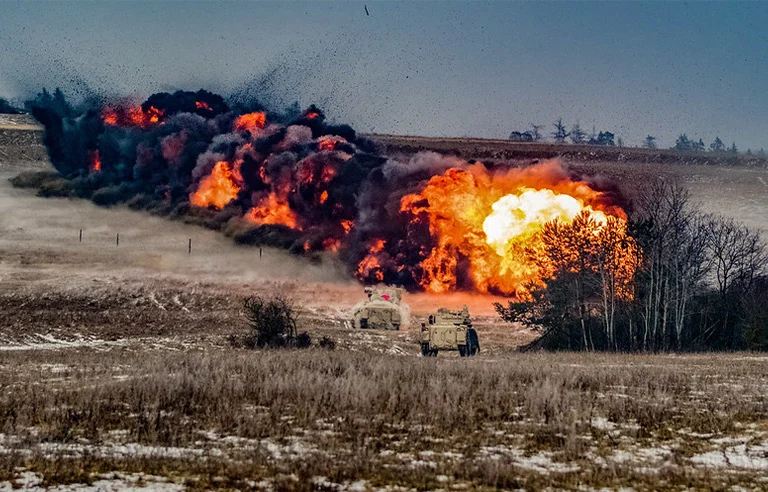
MINNEAPOLIS — For generations, the physical toll of military service has been understood primarily through the immediate trauma of the battlefield: shrapnel wounds, amputations, and the acute presentations of traumatic brain injury (TBI). However, a comprehensive new study published in the medical journal Neurology suggests that the invisible shockwaves of modern warfare leave a much more persistent, systemic signature on the human body than previously recognized.
According to the research, military personnel exposed to powerful blasts from improvised explosive devices (IEDs), land mines, and heavy weaponry face a significantly elevated risk of developing serious neurological and systemic health conditions—including seizures, strokes, and neuropathy—years, and even decades, after hanging up their uniforms.
The findings mark a critical turning point in how medical professionals, policymakers, and veterans’ advocates understand the multifaceted consequences of military service, reframing blast exposure not merely as an isolated event of acute trauma, but as a chronic, whole-body condition with lifelong health implications.
Main Facts: The Scope and Severity of Post-Blast Sequelae
The study, spearheaded by researchers examining data from the Veterans Health Administration (VHA), provides some of the clearest evidence to date regarding the long-term health trajectories of service members exposed to explosive overpressure.
By analyzing the medical records and self-reported deployment histories of nearly 37,000 veterans who received ongoing care for at least two years post-service, the research team uncovered a stark statistical correlation between explosive force and late-onset medical pathologies.
The core findings reveal that veterans with a history of high-level blast exposure face drastically increased odds of neurological deterioration compared to their unexposed peers:
- Seizure Disorders: Veterans exposed to at least one high-level blast were 79% more likely to receive a formal diagnosis of epilepsy or seizures.
- Neuropathy: The risk of developing nerve damage—manifesting as numbness, tingling, or chronic pain in the extremities—increased by 38% among high-level blast survivors.
- Cerebrovascular Events: The likelihood of suffering a stroke climbed by 35% for those with documented high-level blast exposure.
Beyond the neurological sphere, the study illuminated an unexpected web of systemic vulnerabilities. High-level blast exposure was also significantly linked to an elevated incidence of metabolic and chronic respiratory conditions, including type 2 diabetes, high cholesterol, chronic bronchitis, emphysema, and even viral hepatitis (specifically Hepatitis B and C).
These expansive findings challenge the historical medical consensus, which has traditionally treated neurological blast injuries as localized events contained primarily within the skull. Instead, the data points to a cascading systemic response triggered by explosive shockwaves, prompting experts to call for an immediate overhaul of post-deployment medical monitoring protocols.
Chronology of the Research: From Battlefield Physics to Clinical Discovery
To fully grasp the significance of the recent Neurology publication, it is helpful to examine the historical trajectory of how military medicine has approached blast injuries.
The Signature Wounds of Recent Conflicts
During the peak of the post-9/11 conflicts in Iraq and Afghanistan, the widespread tactical deployment of IEDs and asymmetric warfare introduced a new class of battlefield trauma. Unlike conventional artillery of past centuries, modern insurgent tactics frequently exposed troops to repeated concussive forces in enclosed spaces, urban environments, and vehicles.
Initially, military medicine classified these incidents under the umbrella of Mild Traumatic Brain Injury (mTBI) or concussions. Troops were often evaluated for immediate symptoms—such as disorientation, tinnitus, headaches, and temporary memory loss—and, if cleared, were frequently returned to duty.
The Shift Toward Chronic Overpressure Research
In the years following active deployment, however, thousands of veterans began reporting lingering, progressive cognitive and physical symptoms that defied easy diagnosis. Neurologists, researchers, and veterans’ advocates pushed for deeper epidemiological investigations into the long-term effects of "blast overpressure"—the sudden change in atmospheric pressure caused by an explosion that compresses and damages soft tissues, particularly the brain.
Data Collection and Cohort Selection
The researchers behind the recent study sought to bridge this knowledge gap by tapping into the vast health informatics infrastructure of the Veterans Health Administration. They curated a cohort of nearly 37,000 veterans who had maintained consistent VHA healthcare utilization for a minimum of two years following their discharge.
Participants completed detailed self-reported questionnaires concerning their military occupational specialties, deployment environments, and specific instances of blast exposure. Researchers categorized these exposures into distinct tiers:
- High-Level Blast Exposure: Direct involvement with heavy ordnance, IEDs, land mines, or large-scale explosive detonations.
- Occupational Low-Level Blast Exposure: Regular, repetitive exposure to lower-magnitude concussive forces, such as those experienced by artillery crews, heavy weapons instructors, and breach teams firing high-caliber systems over extended periods.
- Unexposed Control Group: Veterans who served during the same eras without documented exposure to significant explosive events.
Following the aggregation of exposure data, researchers cross-referenced these metrics with long-term diagnostic codes within VHA electronic health records to track the emergence of neurological, cardiovascular, and metabolic diseases over time.
Supporting Data: Unpacking the Numbers
A closer look at the data underscores the profound statistical disparities between exposed and unexposed cohorts. While the percentages of absolute incidence for certain rare conditions may appear modest at first glance, the relative risk multipliers represent a major public health concern for the millions of individuals who served in combat zones over the last three decades.
Prevalence Rates Across the Cohort
Within the study population, exposure metrics were distributed across various operational profiles:
- 11% of participants reported experiencing at least one high-level blast.
- 17% served in occupations associated with chronic, low-level blast exposure.
- 5% reported experiencing both high-level and low-level blast phenomena during their military careers.
When evaluating specific disease markers, the proportional breakdown reveals clear divergence points:
- Seizures: Nearly 4% of participants who experienced a clinical seizure reported a history of high-level blast exposure, compared to fewer than 2% of those with no recorded blast history.
- Neuropathy: More than 11% of individuals diagnosed with peripheral neuropathy had a documented history of high-level blast exposure, contrasted with approximately 8% in the unexposed control group.
- Strokes: Over 2% of those who suffered strokes reported high-level blast trauma, versus 1.6% among unexposed veterans.
The Confounding Factor of Age
One of the most critical nuances highlighted by the study authors involves the age demographic of the cohort. Many of the participating veterans were relatively young when the study was initiated. Because chronic conditions like stroke, neuropathy, and metabolic syndromes typically manifest later in life, researchers caution that the current data may actually underestimate the true lifetime burden of blast exposure. As this veteran population ages, the cumulative damage inflicted by military overpressure may surface in even greater numbers.
Official Responses and Expert Perspectives
The publication of the study in Neurology has drawn widespread commentary from military medicine experts, researchers, and veteran advocacy groups, all of whom are grappling with the operational and clinical ramifications of the data.
Reframing Blast Injury as a Systemic Issue
Dr. Sarah L. Martindale, a physician and researcher with the Salisbury (NC) VA Health Care System and co-author of the study, emphasized the paradigm shift required by these findings.
"Blast exposure is often viewed through the lens of acute injury and brain health," Dr. Martindale said in an official press release accompanying the study. "But our findings reinforce that blast exposure is a whole-body problem with health implications that extend well beyond the time of exposure."
This perspective moves away from the historical view that an unshielded brain simply bounces against the skull during a shockwave and heals like a standard concussion. Instead, modern biophysical models suggest that the sudden pressure differential forces blood and cerebrospinal fluid violently through blood vessels, shearing delicate neural pathways, disrupting the blood-brain barrier, and potentially triggering chronic neuroinflammatory cascades that affect peripheral organ systems as well.
Calls for Comprehensive Clinical Monitoring
In light of the correlations between high-level blasts and systemic illnesses—ranging from chronic bronchitis and emphysema to metabolic disorders like diabetes and high cholesterol—the study’s authors are advocating for a fundamental transformation in how veterans are monitored over their lifespans.
Rather than waiting for patients to present with acute symptoms like a stroke or debilitating seizures, researchers recommend that the VHA and civilian healthcare networks establish specialized surveillance programs for combat veterans with documented blast histories. Early screening for cardiovascular markers, metabolic panels, and neurological baseline testing could allow for preventative interventions that mitigate long-term disability.
Implications: Policy, Medicine, and the Future of Veteran Care
The implications of this research extend far beyond academic neurology journals; they strike at the heart of military readiness, veteran benefits policy, and clinical practice standards.
Implications for Military Doctrine and Equipment
As awareness grows regarding the cumulative damage of both high-level and low-level blasts, the Department of Defense faces mounting pressure to re-evaluate training protocols and personal protective equipment (PPE).
For decades, military training involving heavy weaponry has prioritized functional performance while tolerating repetitive sub-concussive blasts for gunners, breachers, and artillery personnel. If low-level and high-level blasts share underlying pathophysiological mechanisms that degrade neurological and metabolic health over time, military branches may need to implement stricter exposure limits, mandate advanced blast-mitigating gear, and rotate personnel out of high-risk occupational specialties more frequently.
Transforming Veterans Health Administration Care
For the VHA—the largest integrated healthcare system in the United States—these findings necessitate a proactive operational strategy. Clinicians across primary care, cardiology, neurology, and endocrinology must be educated on the long-term systemic fallout of military blast overpressure.
Furthermore, these scientific findings carry significant weight for the Department of Veterans Affairs (VA) disability claims process. Historically, securing service connection for complex chronic illnesses years after discharge has often required veterans to prove a direct, immediate line of causation—a burdensome evidentiary hurdle for conditions with delayed presentations like neuropathy or cerebrovascular disease. As peer-reviewed literature increasingly links blast exposure to these delayed-onset pathologies, policymakers and advocates argue that the evidentiary framework for disability adjudication must evolve to reflect modern medical science.
A Continuing Imperative
Ultimately, the study serves as a sobering reminder of the true, long-term cost of military service. The wounds inflicted by modern explosives do not always bleed on the battlefield, nor do they always heal when the deployment ends. By recognizing blast exposure as a chronic, systemic condition affecting the brain, nerves, and metabolic systems, the medical community can take vital steps toward safeguarding the health and well-being of those who serve long after the smoke has cleared.