WASHINGTON — In a forceful push to overhaul occupational safety standards within the freight and passenger rail sectors, the National Transportation Safety Board (NTSB) has formally called on the Federal Railroad Administration (FRA) to implement a nationwide prohibition preventing railroad workers from riding on moving rail equipment during shoving operations.
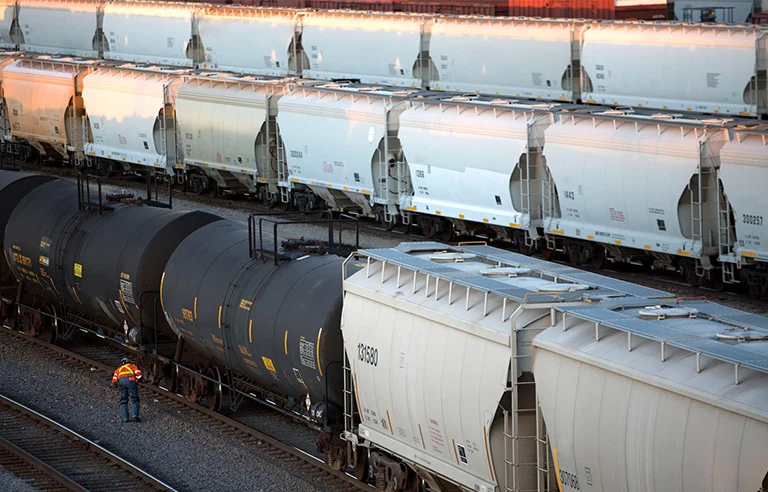
The recommendation, detailed in a comprehensive and sobering investigation report released by the safety board, underscores a persistent and lethal hazard deeply embedded in traditional railroading practices. According to the Association of American Railroads (AAR), a "shoving movement" occurs when a locomotive pushes a group of railcars ahead of it during switching, yard, or line-of-road operations. While long treated as a standard procedure to navigate rail yards and industrial tracks, the NTSB’s findings argue that the practice places workers at an unacceptable, catastrophic risk of bodily injury or death.
The push for a regulatory ban highlights a tense ongoing debate between federal safety investigators, labor advocates, and rail operators regarding the modernization of yard operations. With modern technology and alternative ground-based procedures readily available, the safety board asserts that continuing to allow employees to cling to the sides or ends of moving railcars is an avoidable tragedy waiting to happen.
The Anatomy of the Risk: Main Facts and Hazards
At the heart of the NTSB’s safety alert is the practice of workers riding equipment to provide "point protection." Point protection refers to the essential safety protocol of ensuring that the track ahead of a moving train or cut of cars is completely clear of obstructions, misaligned switches, or other equipment. Traditionally, a crew member—often a switchman or conductor—will mount the leading end of the lead railcar to act as the "eyes and ears" for the locomotive engineer, who is frequently hundreds of feet away and facing an obstructed view.
However, the NTSB’s investigative findings reveal that this method exposes workers to severe, life-threatening vulnerabilities. When a worker is positioned on the exterior of a moving railcar, they face a gauntlet of physical dangers:
- Falls from Equipment: Uneven ballast, slippery conditions caused by rain, snow, or ice, and sudden slack action within the train can easily cause a worker to lose their grip and fall directly beneath the wheels of the moving cars.
- Crushing and Pinning Hazards: In the event of an unexpected collision with stationary equipment, a sudden coupling, or a derailment, workers riding the leading edge have virtually no protection. They are frequently pinned, crushed, or thrown into the path of wreckage.
- Struck-by and Clearance Hazards: Workers are routinely exposed to "close clearance" structures, including wayside signals, parked railcars on adjacent tracks, bridges, and industrial buildings that line yard tracks.
Furthermore, the NTSB report criticizes current federal regulations, asserting that existing rules do not adequately address the compounding risks of shoving movements, nor do they consistently mandate that crews perform thorough hazard analyses before initiating switching tasks.
A Deadly Toll: Chronology of Recent Incidents
The urgency behind the NTSB’s new directive is rooted in a grim statistical reality. According to the agency’s data, 14 railroad workers have died and two others have suffered severe, debilitating injuries in 16 distinct shoving-related accidents investigated by the board since October 2020.
The frequency of these catastrophic events has alarmed federal investigators, prompting an acceleration in oversight. The safety board has opened two additional accident investigations into shoving-related fatalities since August alone, signaling that the carnage on the nation’s rails is not abating.
A historical look at railroad safety data reveals that riding rolling equipment has historically been accepted as an inherent risk of the trade—a "cost of doing business" mentality that the NTSB is now aggressively challenging. For decades, unions have raised concerns about the safety of riding shoving cuts, particularly as rail carriers push for leaner crews, longer trains, and faster switching times in the name of Precision Scheduled Railroading (PSR).
The clustering of these fatal incidents over the past four years has forced the NTSB to transition from routine safety advisories to an urgent demand for a structural ban. The investigative timeline demonstrates that despite voluntary company policies and general training initiatives, workers continue to be killed or maimed while performing point protection from moving equipment.
Supporting Data and Safer Technological Alternatives
To substantiate its call for a federal prohibition, the NTSB emphasizes that the railroad industry is not operating in the 19th century. Modern engineering, telecommunications, and sensor technologies provide multiple viable alternatives that eliminate the need for a human being to ride the exterior of a moving railcar.
Among the safer alternatives highlighted by the board are:
- Ground-Level Point Protection: Crew members can walk alongside the movement or position themselves safely on the ground ahead of the shoving path, maintaining visual contact while remaining entirely clear of the rail equipment.
- Dedicated Monitoring Vehicles: In larger yards, railroads can utilize specialized ground vehicles equipped with clear sightlines to oversee switching operations.
- Advanced Camera and Vision Systems: The deployment of remote-controlled locomotive cameras, closed-circuit television (CCTV) networks, and wireless video feeds allows engineers and remote operators to monitor the track ahead in real-time from a secure, stationary environment or the climate-controlled cab of a locomotive.
- Radar and Proximity Sensors: Automated collision-avoidance technology can detect obstacles on the track and automatically apply brakes before a collision occurs.
The NTSB maintains that while implementing these technologies may require initial capital investment and operational adjustments by Class I freight railroads, commuter lines, and short-line operators, the cost pales in comparison to the human toll of preventable workplace fatalities.
Official Responses and Stakeholder Reactions
The release of the NTSB’s report and its urgent plea to the Federal Railroad Administration has drawn sharp focus from across the rail industry, eliciting impassioned responses from safety advocates, federal regulators, and labor representatives.
NTSB Chair Jennifer Homendy did not mince words when addressing the press regarding the findings of the investigation.
"Railroad workers deserve a safe workplace and should never have to risk their lives to do their jobs," Homendy stated in an official press release. "Our investigations have repeatedly shown that riding moving rail equipment can have deadly consequences. Railroads have safer alternatives, and they should use them."
The sentiment has been widely echoed by rail labor unions, which have spent years lobbying for enhanced protections during switching operations. Union representatives have long argued that understaffed crews—frequently reduced to single-person operations or two-person teams stretched thin across massive rail yards—are pressured to cut safety corners to keep freight moving at high velocities. Eliminating the requirement or expectation to ride shoving equipment, labor advocates argue, is a critical step toward establishing a genuine safety culture in the industry.
Conversely, freight rail management organizations and major carriers have historically defended the flexibility of traditional switching methods, arguing that absolute bans on riding equipment could severely bottleneck yard operations and reduce fluidity across the national supply chain. However, mounting federal scrutiny and public pressure following high-profile rail disasters in recent years have left operators with dwindling room to resist modernization mandates.
The ball now sits squarely in the court of the Federal Railroad Administration. As the regulatory body tasked with enforcing safety compliance across the nation’s rail network, the FRA must evaluate the NTSB’s recommendations and determine whether to initiate formal rulemaking proceedings to enact a federal prohibition on riding shoving equipment.
Broader Implications for the Rail Industry
The implications of the NTSB’s recommendation extend far beyond the technical mechanics of yard switching. If the Federal Railroad Administration ultimately adopts a ban on workers riding moving equipment during shoving movements, it will fundamentally alter daily operations for hundreds of thousands of railroaders across the United States.
- Operational Overhaul: Rail yards would be forced to redesign their workflow, potentially slowing down initial switching speeds while crews adapt to ground-based or technology-assisted point protection.
- Investment in Innovation: Freight and passenger railroads would likely accelerate investments in remote monitoring technology, locomotive camera systems, and automated yard infrastructure to maintain operational efficiency without compromising regulatory compliance.
- Cultural Shift: The ruling would represent a landmark victory for safety advocates who have long championed a "Safety First" philosophy over production-driven scheduling models. It reinforces the legal and ethical obligation of employers to remove workers from inherently hazardous environments when feasible alternatives exist.
As the FRA reviews the investigative report and weighs its regulatory options, the nation’s rail workers continue to navigate hazardous yards under antiquated rules. The NTSB’s message, however, remains unequivocal: the status quo is lethal, the alternatives are available, and the time to protect railroaders from the dangers of the shove is long overdue.