By Mark Jones
In the modern era, we are accustomed to rapid technological cycles. We expect our smartphones to be replaced every two years, our software to receive weekly patches, and our transportation to evolve toward electrification and autonomy. Yet, nestled beneath our feet lies a piece of technology that has remained largely stagnant for over 5,000 years: the shoelace.
For many, the shoelace is a nuisance—a mechanical failure point that interrupts a brisk walk or a challenging hike. For others, it is an afterthought. However, a recent personal health crisis led me to realize that the humble shoelace is not merely a string, but a sophisticated engineering solution that, when designed incorrectly, can lead to frustration, and when designed correctly, can fundamentally improve human mobility.
The Catalyst: A Painful Lesson in Footwear Engineering
My journey into the mechanics of footwear began not with a fascination for textiles, but with a stabbing, localized pain in my heel. Following a January ice-caving expedition where I donned improper, flexible footwear, I found myself limping for months. A consultation with Dr. Monaghan provided the diagnosis: a partially torn plantar fascia.
The prescription was simple yet revelatory: stop wearing "good" brand-name shoes and start wearing "great" ones. The doctor provided a list of footwear featuring rigid footbeds and anatomically supportive arches. Within days of switching to these medically recommended shoes, the chronic pain that had plagued me for months vanished.
However, the change in footwear brought an unexpected secondary benefit. As I prepared for a trek through the rugged terrain of Banff and Jasper National Parks, I noticed that my new shoes simply did not come untied. Having hiked for decades, I had long accepted that round, synthetic laces were destined to loosen, regardless of whether I employed a square knot or a granny knot. I had always blamed my technique; I now realize the failure was entirely in the engineering of the laces themselves.
Chronology of a Constant: From Areni-1 to the Industrial Age
To understand why we still rely on laces, one must look at the history of human attire. The oldest known leather shoe, the Areni-1, discovered in a cave in Armenia, dates back to approximately 3500 B.C. Remarkably, this Neolithic relic features a lacing system.

When we consider that the shoelace predates the invention of the wheel, it becomes clear that early humans struck upon a near-optimum solution for foot-to-sole attachment. Over the intervening millennia, humanity has experimented with alternatives. Buckles and buttons enjoyed periods of fashion-driven dominance, and modern innovations like Velcro and elastomer-based slip-ons have carved out niche markets. Yet, none have unseated the shoelace.
Why? Because the shoelace is a distributed tension system. Unlike a buckle, which applies pressure at a single point, laces allow for a sophisticated, tailored fit. A hiker can keep the lower eyelets loose to allow for toe splay while cranking the ankle eyelets tight for stability. It is a level of modularity that rigid fastening systems cannot replicate. The "technology" of the lace has seen only minor upgrades, such as the 18th-century invention of the aglet—the protective sheath at the end of the lace—which prevented fraying and improved threading speed.
The Physics of Failure: Why Knots Come Undone
If the shoelace is such a superior technology, why does it fail? The answer lies in the complex intersection of impact dynamics and inertial forces.
A seminal study published by the Royal Society, titled The roles of impact and inertia in the failure of shoelace knots, provides a fascinating look at the mechanics of this failure. The researchers found that the failure of a knot is not the result of a single force, but a combination of two:
- Impact: As the foot strikes the ground, the shoelace experiences a rapid deceleration, causing the loops of the knot to stretch and loosen.
- Inertia: As the leg swings forward, the free ends of the laces act like pendulums, exerting a centrifugal force on the knot that pulls the loops apart.
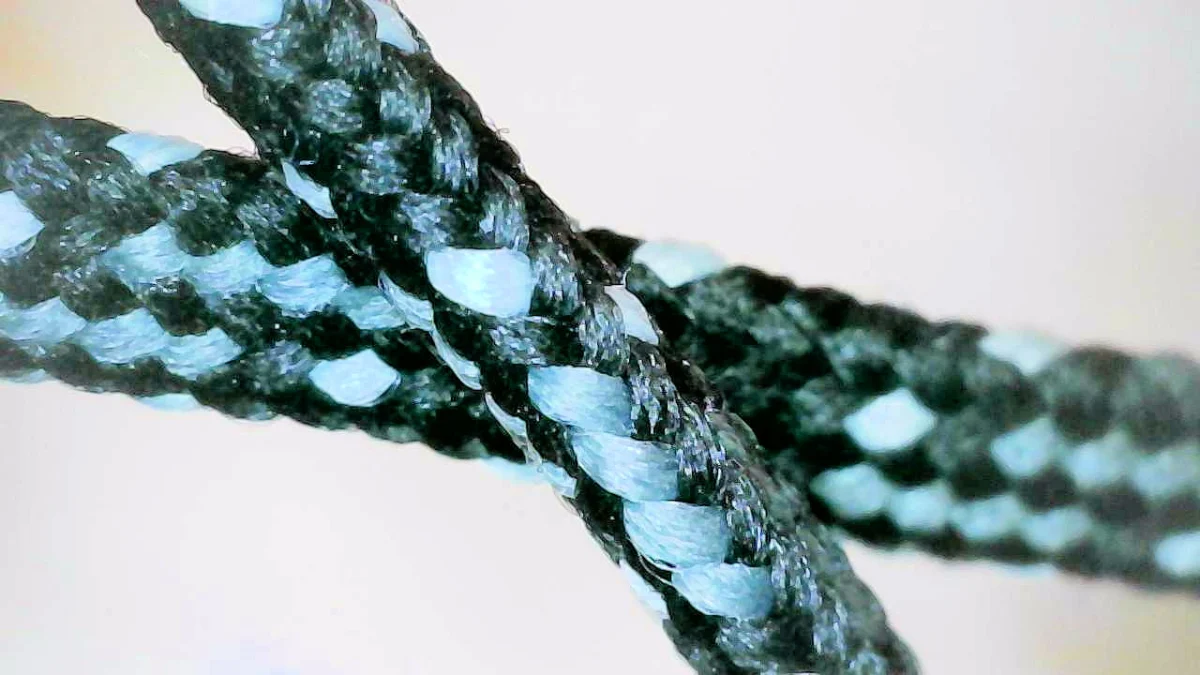
The combination of these two forces creates a self-destructing loop. Once the knot begins to loosen, the friction holding the laces together decreases, allowing the knot to unravel entirely. This is why round, slick, polymer-based laces—the industry standard for many "high-end" hiking boots—are essentially designed to fail. They lack the surface texture required to generate the necessary internal friction to withstand the rigors of a trail.
Supporting Data: Innovations in the Patent Literature
The patent office is a graveyard—or perhaps a laboratory—of failed attempts to solve the "untied lace" problem. A review of U.S. patent filings reveals a desperate, ongoing effort to master the friction coefficient of shoelaces.
Innovations documented in the patent literature include:

- Composite Materials: Laces designed with high-friction cores and durable, grip-heavy outer braids.
- Surface Geometry: Laces with flat-oval profiles, which provide a larger surface area for knot contact than round laces.
- Embedded Friction: Designs featuring beads or specialized coatings meant to "lock" the knot into place once tightened.
- Asymmetric Textures: Laces with different top and bottom surfaces to encourage higher knot-to-knot friction.
These inventions underscore a critical reality: while the basic concept of the lace is 5,000 years old, our understanding of the materials and geometries required to make them "smart" is still evolving. My own experience with my new hiking boots proves this. The laces are flat-oval in shape and have a distinct, slightly rough tactile quality. They are the antithesis of the slick, round, "high-tech" polymers I previously favored. They stay tied because they are engineered for friction, not for visual smoothness.
Implications for Safety and Performance
The problem of untied shoelaces is not merely an annoyance for the casual hiker. It represents a genuine safety hazard. For athletes, a loose lace can lead to a trip-and-fall accident on the field. For hikers in remote areas, a shoe that loses its structural integrity can lead to ankle injuries or blisters that turn a routine hike into a rescue scenario.
Furthermore, there is a clear economic implication. Consumers spend billions annually on footwear, yet the final interface—the lace—is often treated as a commodity rather than a critical component. If manufacturers redirected the energy currently spent on "aesthetically pleasing" but functionally deficient laces toward high-friction, engineered solutions, the average consumer experience would improve drastically.
The industry response has been slow, largely because the shoelace is "good enough" for the mass market. However, as outdoor enthusiasts and professional athletes demand higher performance, we are seeing a shift. The "technical thinking" that goes into the midsole of a shoe is finally being applied to the lace itself.
Conclusion: The Future of the Ancient String
We live in an age of technological paradox. We seek high-tech solutions for everything from our nutrition to our sleep, yet we remain beholden to a length of knotted string to keep our shoes on our feet. My experience has been a reminder that "new" does not always mean "better," and "old" does not always mean "obsolete."
The shoelace is a masterpiece of early engineering—simple, flexible, and customizable. The fact that it has resisted replacement for millennia is a testament to its design. The fact that it can be improved, as demonstrated by the simple act of choosing a higher-friction lace, is a testament to the fact that there is always room for iterative innovation.
The next time you lace up your boots, consider the physics at play. You are engaging with a 5,000-year-old technology that is still being refined. Whether you are walking to the office or summiting a peak in the Rockies, the difference between a pleasant journey and a frustrating one may well come down to the weave, shape, and material of those two pieces of string. Don’t settle for "good enough"—seek out the engineering that keeps you moving, comfortably and securely, from the ground up.