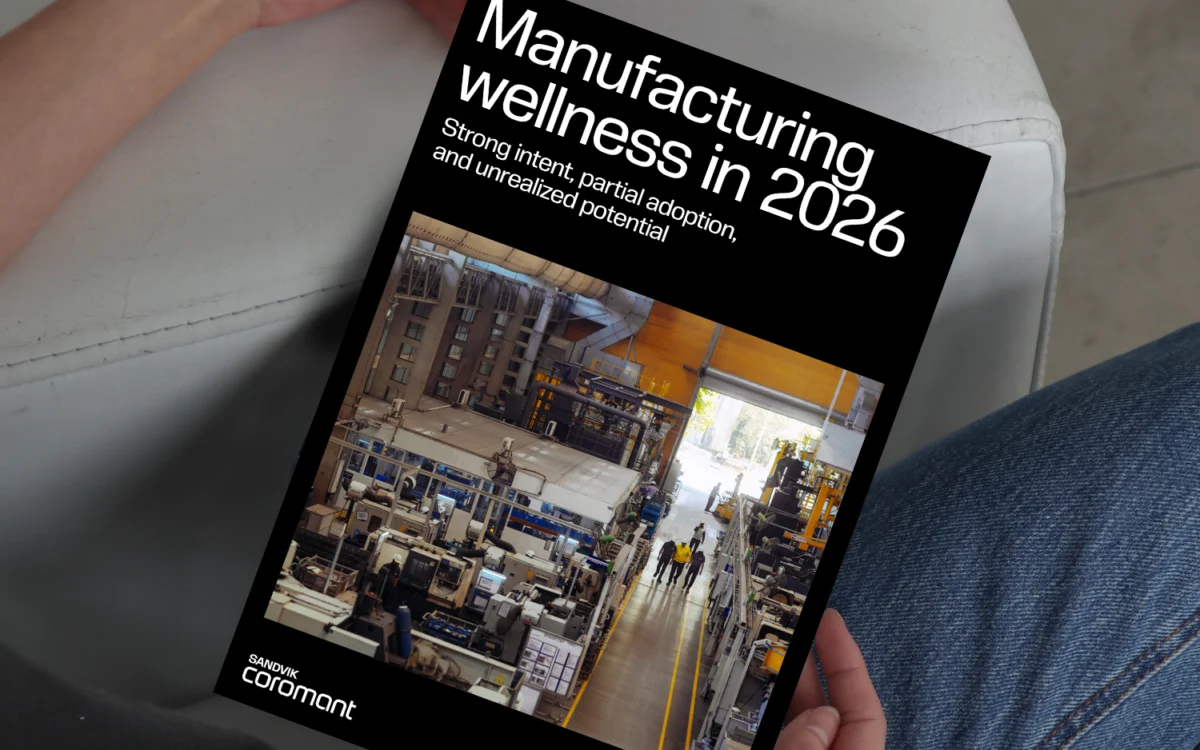
The global manufacturing landscape is currently navigating a period of profound transition. While the industry is flush with digital ambition and technological investment, a new, landmark study suggests that the path to long-term resilience remains fragmented. Sandvik Coromant, a global leader in metal-cutting and machining solutions, has released its inaugural Manufacturing Wellness Report, an ambitious diagnostic tool that evaluates the health of the sector.
The results are sobering: across a sample of nearly 1,000 global manufacturers, the industry achieved an overall "wellness score" of just 49 out of 100. This benchmark serves as a wake-up call, highlighting a systemic disconnect between the aspiration for modernized operations and the reality of their implementation.
Defining Manufacturing Wellness: A New North Star
To understand the significance of this score, one must first understand Sandvik Coromant’s definition of "manufacturing wellness." Introduced in 2023, the concept transcends traditional metrics like OEE (Overall Equipment Effectiveness) or quarterly profit margins. Instead, it defines a "healthy" company as one that is resilient, thriving, and capable of delivering a positive impact on both its workforce and the broader society.
This holistic framework is built upon eight fundamental habits. These pillars are designed to guide organizations from mere "good intentions" to measurable, sustainable success. The habits include:
- Human Capital Development: Prioritizing skills and personnel growth.
- Advanced Automation: Integrating robotics and smart systems.
- Data-Driven Decision Making: Utilizing real-time information.
- Waste Mitigation: Improving resource efficiency.
- Strategic Partnerships: Collaborating for shared success.
- Circular Operations: Moving toward sustainable, regenerative business models.
- Process Optimization: Embedding consistency across workflows.
- Future-Readiness: Anticipating market shifts and technological evolution.
Chronology: From Concept to Global Benchmark
The journey to this report began in 2023, as Sandvik Coromant recognized a recurring theme among its global clientele: while many companies were investing heavily in Industry 4.0 technologies, they were struggling to see the expected returns on their investments.
- 2023: Sandvik Coromant officially introduces the concept of "Manufacturing Wellness," positioning it as a remedy for the "pilot purgatory" that plagued many digital transformation efforts.
- Early 2024: The company develops a 28-question diagnostic tool, designed to assess a company’s performance against the eight habits of wellness.
- Mid-2024: A massive data collection effort is launched, engaging nearly 1,000 manufacturers across different sectors and geographies to establish a global baseline.
- Late 2026: The inaugural Manufacturing Wellness Report is published, offering the first quantitative assessment of the industry’s collective health.
Supporting Data: Where the Industry Stumbles
The report’s data reveals a striking irony: while manufacturers are undoubtedly more "connected" than they were a decade ago, they are not necessarily more "informed."

The Data Deficit
Perhaps the most concerning statistic is that nearly 25% of the surveyed organizations report having zero access to manufacturing or process-related data. This represents a significant hurdle for any digital transformation strategy. Without a baseline of accurate, real-time information, companies are essentially flying blind, making strategic decisions based on intuition rather than empirical evidence.
Performance Ambiguity
The lack of data is compounded by a lack of clarity. Nearly half of the respondents—roughly 50%—admit that they do not have a clear understanding of the performance targets set for their teams. This creates a "wellness gap," where employees are disconnected from the broader goals of the organization, leading to inefficiencies and a lack of accountability.
The Sustainability Gap
Sustainability remains a stated priority for the C-suite, yet implementation lags significantly behind rhetoric. Only 19% of the surveyed organizations have a formal, company-wide circularity policy. This indicates that while circular economy principles—such as recycling, reusing, and minimizing material waste—are recognized as important, they have not yet been integrated into the core operational strategy of most manufacturing firms.
The Automation Paradox
Automation is perhaps the most mature area of the current manufacturing landscape, yet even here, progress is uneven. While 69% of participants report that they have integrated at least some level of automation into their operations, the report notes that this is often localized. True "wellness" requires systemic, end-to-end automation, yet many organizations have merely automated specific, isolated stages of the production cycle, failing to create a cohesive, automated value chain.
The Power of Partnership
One of the most encouraging findings of the report is the clear correlation between collaboration and high wellness scores. Organizations that proactively engage with external partners—whether they be technology providers, consultants, or supply chain collaborators—consistently score higher.
These partnerships act as a force multiplier. By leveraging the expertise of third parties, manufacturers can bypass the learning curves that often stall internal innovation. The data suggests that companies that embrace a "collaborative ecosystem" are significantly more likely to apply efficiency principles consistently, effectively bridging the gap between strategy and execution.

Official Perspectives: The View from the Top
Helen Blomqvist, President of Sandvik Coromant, views the score of 49 as a reflection of an industry that is poised for greatness but currently lacking a cohesive strategy.
"Our first global manufacturing wellness report shows an industry with strong foundations, but also significant unrealized potential," Blomqvist stated during the report’s launch. "Manufacturers are collecting data, investing in technology, and identifying skills gaps. The challenge now is to connect these efforts into a structured approach that improves performance across the whole value chain."
Blomqvist remains optimistic, framing the current state of the industry as a "solid foundation" rather than a failure. "The positive message from the report is that manufacturers are not starting from zero," she added. "Many already have the tools, technologies, and ambition they need. The opportunity now is to make those assets work harder by connecting data across teams, reviewing technology more deliberately, and building stronger, more deliberate partnerships."
Implications: The Path Forward
The implications for the manufacturing sector are clear: the era of "random acts of innovation" must come to an end. To achieve true manufacturing wellness, companies must move toward a more holistic, interconnected strategy.
Connecting the Silos
The primary task for management is to break down the silos that prevent data from flowing across the organization. This means integrating machine data with business intelligence systems and ensuring that every team member—from the shop floor to the executive suite—understands their role in achieving performance targets.
Human-Centric Innovation
While the report emphasizes technology, it also underscores the critical importance of people. Manufacturing wellness is not just about robots and AI; it is about "developing people at every level." This implies a need for robust training programs that empower the workforce to work with new technologies rather than being replaced by them.

From Intent to Structure
The gap between the 19% who have a formal circularity policy and the vast majority who do not represents the next frontier of competitive advantage. Companies that can formalize their sustainability and efficiency targets into operational structures will likely emerge as the market leaders of the next decade.
Conclusion: A Call to Action
The Sandvik Coromant report is more than just a snapshot of the current industry state; it is a diagnostic tool for the future. By offering an online assessment that allows manufacturers to score their own facilities in roughly 10 minutes, the company is democratizing access to the same metrics used in the report.
As the industry faces mounting pressure from global economic volatility, supply chain disruptions, and the urgent need for sustainable practices, the "wellness" of a manufacturing firm will be the primary determinant of its survival. Whether a company chooses to bridge its own internal gaps or continue operating in a fragmented state will dictate its ability to innovate in the coming years.
For those ready to move forward, the message is simple: connect your data, engage your people, formalize your sustainability, and, above all, don’t walk the path alone. The potential for growth is immense, provided that the industry is willing to turn its existing progress into a long-term, resilient strategy.
For more information on the findings, or to conduct a self-assessment of your facility, visit the official Sandvik Coromant Manufacturing Wellness portal.