Main Facts: The Intersection of Extreme Weather and Industrial Safety
For millions of trade professionals, construction workers, utility line technicians, and cold-storage laborers, winter is not merely a seasonal aesthetic or a holiday backdrop—it is a formidable, hazardous operational challenge. When temperatures plummet, the physics of outdoor and deep-freeze labor change entirely. Workers must contend with low visibility, treacherous slips and falls on hidden ice, and the grueling energy drain of constantly shifting microclimates.
Addressing these rigorous demands, industrial safety innovator Ergodyne has officially announced its comprehensive 2026/2027 Winter Product Bundle. Designed to block out biting winds, lock out moisture, and maximize the utility of natural human body heat, the new collection represents a major leap forward in cold-weather Personal Protective Equipment (PPE).
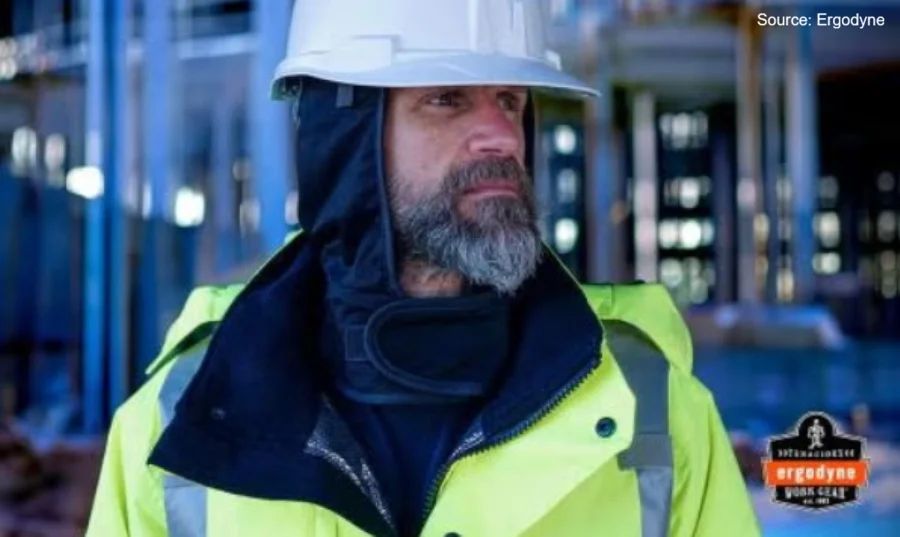
Anchored by proprietary thermal innovations such as ampliFIRE™ aluminum insulation and high-visibility engineering, the new lineup features flagship offerings like the GloWear 8390X X-Back Hi-Vis Winter Jacket and the N-Ferno 6835 Winter Hard Hat Liner. Together, these products aim to dismantle the traditional compromise between heavy-duty thermal protection, on-the-job dexterity, and strict safety compliance standards.
Chronology: The Evolution of Cold-Stress Mitigation in Industrial Workwear
Understanding the engineering behind Ergodyne’s 2026/2027 portfolio requires looking back at how industrial winter gear has evolved over the past several decades.
The Era of Bulk (Late 20th Century)
Historically, industrial cold-weather gear relied heavily on sheer bulk. Workers layered heavy, non-breathable cotton sweaters under stiff canvas jackets. While these setups provided some defense against the wind, they severely restricted movement. Furthermore, when workers exerted themselves physically, these garments trapped sweat against the skin. Once the physical labor paused, that trapped moisture cooled rapidly, accelerating the onset of hypothermia.
The Rise of Specialized Technical Layers (Early 2000s)
As safety standards evolved and OSHA heightened its scrutiny surrounding workplace cold stress, manufacturers began borrowing consumer outdoor-sports technologies. Fleece, synthetic down alternatives, and basic waterproof-breathable membranes entered the industrial workspace. However, standard consumer gear often failed under industrial conditions—it tore easily on scaffolding, interacted poorly with standard harnesses and hard hats, and degraded quickly under heavy daily wear.
The Integration of Smart Thermodynamics (Present Day)
Entering the mid-2020s, the focus shifted from merely "blocking the cold" to managing the body’s internal heat generation. Recognizing that human bodies are natural thermal engines, modern engineering began developing reflective linings that bounce radiant heat back to the user without adding burdensome weight. Ergodyne’s introduction of ampliFIRE™ technology marks a defining milestone in this era, optimizing thermal retention while maintaining the flexibility and breathability required for high-exertion manual labor.
Supporting Data: The Hidden Dangers of Cold Stress
To appreciate why purpose-built gear is essential, one must examine the physiological and environmental realities of working in low-temperature environments.
The OSHA Cold Stress Framework
A common misconception is that hypothermia and cold stress only occur during record-shattering sub-zero blizzards. According to the Occupational Safety and Health Administration’s (OSHA) Cold Stress Guide, the reality is far more nuanced:
"Hypothermia is most likely at very cold temperatures, but it can occur even at cool temperatures (above 40°F), if a person becomes chilled from rain, sweat or submersion in cold water."
When wind speeds increase, the risk multiplies rapidly through wind chill, draining skin temperature and forcing the body to work overtime to maintain core stability.
Performance and Safety Metrics of the 2026/2027 Lineup
Ergodyne’s new collection is backed by rigorous material specifications designed to withstand extreme industrial thresholds:
- GloWear 8390X Thermal Rating: Certified and rated to protect workers in temperatures as low as -55°F (-48°C), depending on the user’s activity level.
- Insulation Distribution: The jacket features 180g of insulation concentrated in the core torso to protect vital organs, balanced with 140g of insulation in the sleeves to preserve arm mobility.
- Durability and Weatherproofing: Built with a heavy-duty 300D polyester shell treated for wind and water resistance.
- Compliance Standards: Fully compliant with ANSI/ISEA 107-2020 Type R, Class 3 visibility standards, ensuring workers remain conspicuous in low-light, high-traffic environments.
- System Integration: The N-Ferno 6835 Hard Hat Liner utilizes a low-profile, two-layer construction featuring built-in pockets specifically sized for chemical warming packs, extending continuous warmth to vulnerable neck and ear zones.
Official Responses: Engineering for the Reality of the Job
Industrial safety is ultimately about human performance. Ergodyne’s product development team emphasizes that true winter workwear must be treated as a specialized tool, entirely distinct from casual winter apparel.
"Winter wear and winter gear are different," explains Claudia Weber, Ergodyne Product Manager. "A down-filled puffer is great for a short ski run. But for long shifts in frigid temps, you need purpose-built gear designed to work with the demands of the job and the required PPE—plus whatever else the cold throws at you."
This philosophy directly informed the development of the 2026/2027 Winter Product Bundle. Rather than forcing workers to choose between warmth and mobility, the engineering team focused on amplifying the body’s own biological responses.
"Your body works hard to generate heat, and we respect that," Weber notes, detailing the mechanics behind their proprietary thermal lining. "That’s what led us to ampliFIRE, a proprietary technology that helps you hold onto more of that warmth."
AmpliFIRE™ utilizes specialized aluminum insulation matrices to reflect and retain radiant body heat rather than letting it escape into the atmosphere. Crucially, the material incorporates a proprietary TriHex pattern, which prevents the inner liner from stiffening. This maintains critical flexibility and breathability, ensuring workers do not overheat and sweat out during high-exertion tasks.
Implications: The Future of Cold-Weather Workforce Protection
The launch of Ergodyne’s 2026/2027 winter collection carries significant implications for safety managers, corporate procurement officers, and frontline laborers across sectors like construction, road maintenance, warehousing, and utilities.
1. Minimizing Productivity Loss and Absenteeism
Cold stress slows down manual dexterity, dulls cognitive focus, and increases fatigue—all of which directly degrade productivity and elevate error rates. By deploying garments that actively manage thermal regulation down to -55°F, companies can maintain operational momentum without sacrificing worker comfort.
2. Closing the Safety Gaps in PPE Integration
One of the most persistent challenges in cold-weather safety has been the "seam gap"—the vulnerable areas where hard hats meet collars, or where gloves meet jacket sleeves. Ergodyne’s holistic approach, highlighted by the N-Ferno 6835 hard hat liner with its extended neck coverage and targeted warming-pack pockets, demonstrates a shift toward unified safety ecosystems. When PPE components work together seamlessly, exposure risks plummet.
3. Elevating Visibility in Shorter Days
As winter compresses daylight hours, workers face heightened risks from vehicular traffic and heavy machinery. Integrating high-visibility ANSI/ISEA-compliant materials—such as the distinctive X-back reflective striping on the GloWear 8390X—ensures that a worker’s direction of movement is instantly recognizable, even in murky dawn light or blinding snow flurries.
Conclusion
As Claudia Weber aptly summarizes, "Winter is going to do its worst either way. Might as well make it work for you."
By treating the human body as an active thermal partner rather than a passive victim of the elements, Ergodyne’s 2026/2027 lineup sets a new benchmark for industrial safety. For workers facing the harshest months of the year, this advanced gear offers a dependable shield against the deep freeze, ensuring they return home safely at the end of every shift.