NEW PRODUCTS / ADHESIVES & DISPENSING ASSEMBLY — In the fast-paced world of modern manufacturing, operational efficiency is measured not just in speed, but in material utilization, waste reduction, and cleanliness. Traditional fluid application methods—particularly in stamping, die casting, and general assembly—have long suffered from chronic inefficiencies. Overspray, uneven lubricant distribution, and fluid migration are persistent challenges that inflate material costs, create hazardous shop floor conditions, and trigger costly part rework.
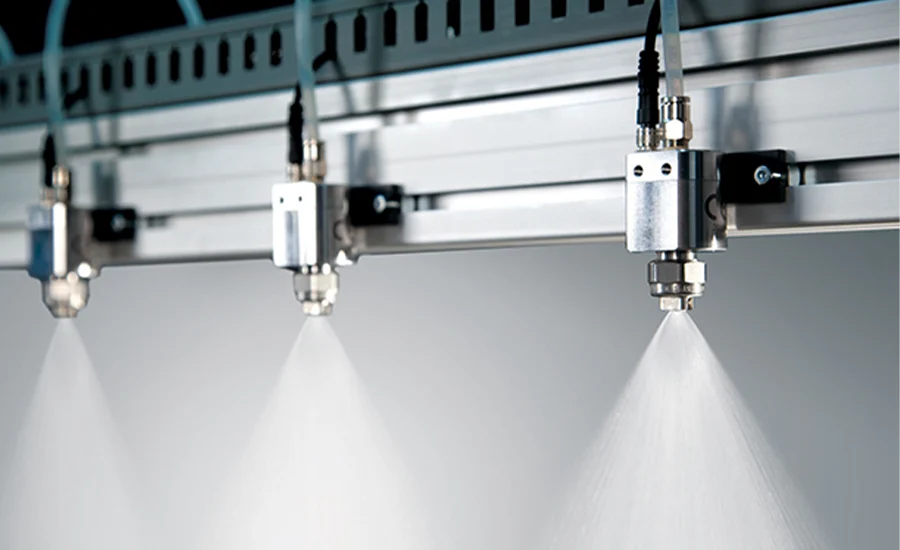
Addressing these industry-wide pain points, Spraying Systems Co. has emerged with an advanced technological framework: Precision Spray Control (PSC). Powered by the synergy of AutoJet® controllers and PulsaJet® nozzles, this automated system is designed to apply exact volumes of lubricants and coatings regardless of fluctuating production line speeds. By optimizing fluid delivery, manufacturers can drastically cut resource waste, elevate end-product quality, and maintain pristine operational environments.
Main Facts: The Technology Behind Precision Spray Control
At its core, Precision Spray Control represents a paradigm shift from traditional, continuous-flow fluid application to an intelligent, demand-driven delivery system.
- The Core Components: The system relies on AutoJet® controllers, which serve as the brains of the operation, and PulsaJet® automatic spray nozzles, which act as the high-speed actuators.
- Dynamic Adaptation: Unlike conventional nozzles that rely on fluid pressure adjustments to change flow rates—often resulting in poor spray patterns or atomization issues—PSC utilizes Precision Pulse Control (PPC). By turning the nozzles on and off at extremely high frequencies (often referred to as Electric Pulse Modulation), the system regulates flow rate while maintaining a constant, optimal spray angle and droplet size.
- Line Speed Integration: As manufacturing lines accelerate or decelerate, the AutoJet controller automatically adjusts the pulse frequency in real-time. This ensures that the exact required volume of lubricant or adhesive is applied to the target surface, preventing under-lubrication at high speeds and pooling during slowdowns.
- Target Industries: The technology is engineered primarily for heavy-duty and precision sectors, including vehicle manufacturing, automotive stamping, die casting, and general assembly operations.
Chronology: The Evolution of Industrial Fluid Application
To understand the significance of Precision Spray Control, it is helpful to trace how fluid application methods have evolved within industrial manufacturing settings.
Early Eras: Manual and Continuous Application
In the early decades of industrial manufacturing, fluid application—such as applying press-forming lubricants to sheet metal or releasing agents to die-casting molds—was predominantly manual. Workers used brushes, rollers, or simple gravity-fed drip systems. While functional, these methods were wildly inconsistent, heavily dependent on operator technique, and resulted in massive material waste.
The Shift to Pneumatic and Hydraulic Systems
As lines accelerated with the advent of mass production, manual methods gave way to automated pneumatic and hydraulic spray headers. These systems utilized continuous spray bars that flooded parts with fluid to ensure adequate coverage. However, they introduced a new set of problems:
- The Overspray Dilemma: To ensure complex geometries were fully coated, engineers typically over-engineered the flow rates, leading to substantial overspray.
- Environmental and Safety Hazards: Excess lubricants atomized into the air or pooled on factory floors, creating slip hazards, degrading air quality, and requiring frequent cleanup.
- Rework and Contamination: Fluid running off stamped parts contaminated surrounding machinery and compromised subsequent bonding or painting processes, driving up rework rates.
The Digital Era: Introduction of Automated Pulse Control
Recognizing the economic and environmental unsustainable nature of continuous spraying, engineering firms began developing closed-loop digital controls in the late 20th and early 21st centuries. The introduction of modular controllers capable of interfacing with factory programmable logic controllers (PLCs) laid the groundwork for modern pulse-width modulation in fluid dispensing.
The Current Standard: Integrated PSC Systems
Today, systems like Spraying Systems Co.’s AutoJet and PulsaJet combination represent the pinnacle of this evolution. By integrating micro-processor-based controllers with high-frequency electronic valves, modern manufacturing lines can achieve micro-liter precision, effectively bridging the gap between fluid dispensing and digital automation.
Supporting Data: The Cost of Inefficiency vs. The ROI of Precision
In manufacturing, fluid waste is rarely viewed as a standalone issue; it is a catalyst for cascading operational costs. Industry data and engineering studies highlight the quantifiable impact of upgrading to advanced spray control systems.
Quantifying Fluid Waste
In a typical automotive stamping plant, lubricants can account for a significant portion of consumable budgets. Traditional continuous spray systems often waste between 30% and 50% of applied fluids due to overspray and runoff. This waste manifests in three ways:
- Direct Material Loss: Purchasing expensive synthetic lubricants, rust preventatives, and drawing compounds only for them to be vacuumed away or wiped off parts.
- Disposal Costs: Hazardous waste management and wastewater treatment fees associated with cleaning oil-soaked parts and shop floors.
- Maintenance Overhead: The labor hours required to scrub machinery, clear clogged lines, and remediate slip-and-fall safety hazards.
Performance Metrics of Pulse Control
According to operational benchmarks from automated assembly environments implementing Precision Spray Control:
- Fluid Reduction: Facilities frequently report lubricant and coating reductions ranging from 40% to 70%.
- Quality Improvements: Defect rates tied to surface contamination (such as paint blistering or adhesive failure caused by excess oil) drop by exponential margins.
- Downtime Minimization: Because PulsaJet nozzles eliminate the need for manual nozzle adjustments and reduce fluid buildup on tooling, unplanned maintenance downtime is slashed.
Official Responses and Industry Insights
Industry analysts and engineering specialists have increasingly emphasized the role of smart dispensing technologies in achieving "Smart Factory" (Industry 4.0) objectives.

"Manufacturers are under immense pressure to tighten margins, reduce their environmental footprint, and elevate product quality simultaneously," notes a leading manufacturing automation consultant. "You cannot achieve these conflicting goals using 20th-century fluid application methods. Technologies that offer closed-loop feedback and real-time adjustments—like precision pulse control—are no longer luxury upgrades; they are foundational components of competitive manufacturing."
Representatives from Spraying Systems Co. emphasize that the design philosophy behind the AutoJet and PulsaJet lineup focuses on eliminating the traditional trade-offs between speed and quality.
"Overspray has long been accepted as an inevitable cost of doing business in stamping and die casting," explains a technical spokesperson for Spraying Systems Co. "Our goal with Precision Spray Control was to challenge that assumption. By synchronizing fluid delivery directly with line speed at a microsecond level, we ensure that every drop of lubricant serves a purpose. It keeps the lines clean, protects downstream processes, and delivers an immediate return on investment for plant operators."
Implications for the Future of Manufacturing, Stamping, and Assembly
The widespread adoption of advanced dispensing and spray control technologies carries profound implications for multiple sectors of the industrial economy.
Environmental Sustainability and ESG Compliance
As global corporations face stricter Environmental, Social, and Governance (ESG) mandates, reducing chemical waste is paramount. Precision spray systems directly support sustainability initiatives by minimizing chemical runoff, conserving water-based or oil-based lubricants, and lowering the carbon footprint associated with manufacturing supply chains and waste disposal.
Enhanced Worker Safety and Ergonomics
Factory floor cleanliness is directly linked to workforce safety and retention. By eliminating airborne mist and pooling puddles of industrial lubricants, automated precision control creates a safer, cleaner, and more ergonomic environment for assembly line technicians and machine operators.
Integration with Industry 4.0 and IoT
The future of fluid dispensing lies in total connectivity. AutoJet controllers and similar advanced systems are increasingly being integrated into Industrial Internet of Things (IIoT) ecosystems. By feeding real-time consumption data, pressure metrics, and operational health diagnostics back to central plant management software, manufacturers can predictive-maintain their equipment, track exact per-part fluid costs, and automate inventory reordering of lubricants.
Competitive Advantage in Vehicle Manufacturing and Beyond
As vehicle manufacturing pivots heavily toward electric vehicles (EVs) and advanced lightweight materials (such as high-strength steels, aluminum, and carbon fiber composites), precise manufacturing tolerances are non-negotiable. Stamping and joining these sensitive materials require exact lubricant application to prevent structural warping, tearing, or bonding failures. Technologies like Precision Spray Control ensure that Tier-1 automotive suppliers and OEMs can meet these rigorous metallurgical and structural standards reliably and repeatedly.
Conclusion
The evolution of industrial manufacturing leaves little room for waste or imprecision. As production speeds increase and quality standards tighten, traditional fluid application methods have proven to be a bottleneck for profitability and cleanliness.
Through the integration of advanced automation—exemplified by Spraying Systems Co.’s AutoJet® controllers and PulsaJet® nozzles—manufacturers are successfully reclaiming control over their fluid usage. By applying the exact volume of lubricant required, precisely when and where it is needed, industrial facilities can eliminate overspray, slash material costs, safeguard product quality, and secure a cleaner, more sustainable operational future.
For more information on optimizing your manufacturing, stamping, or assembly lines with advanced fluid control solutions, visit www.spray.com or contact Spraying Systems Co. directly at 1-800-957-7729.