





The landscape of modern marketing is undergoing its most significant structural shift since the dawn of the internet. As artificial intelligence moves from a novelty to a fundamental operational utility, major brands are grappling with a dual-edged sword: the ability to scale communications to an unprecedented degree versus the existential threat of diluting their hard-earned brand identity.
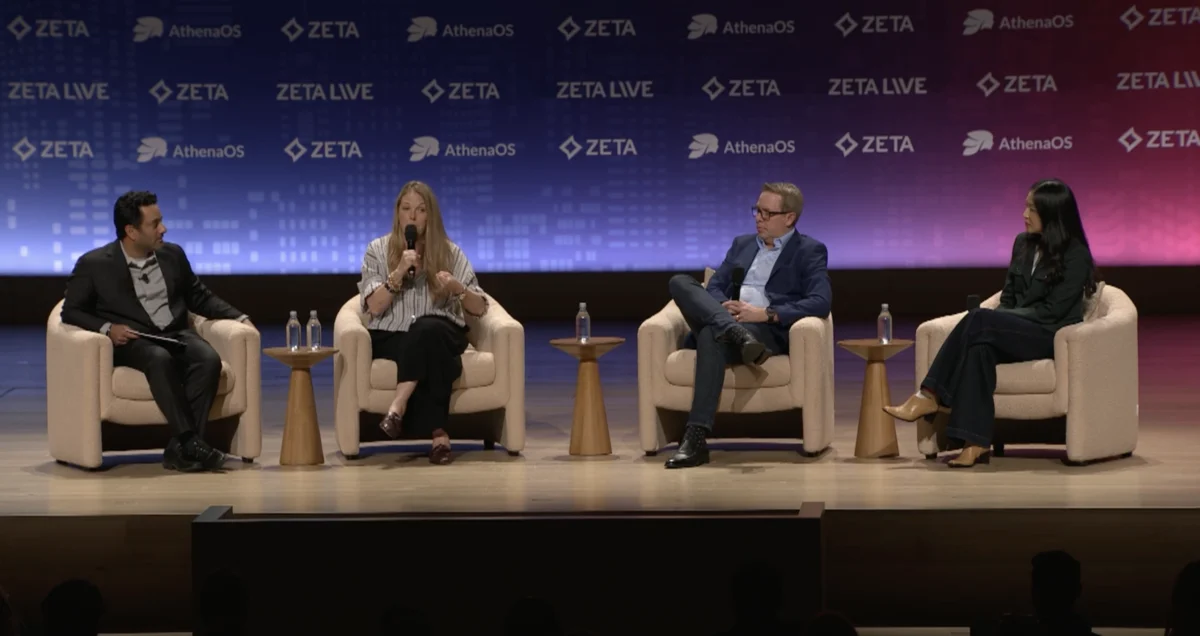
During the October 8 Zeta Live conference in New York City, marketing executives from industry leaders like Babylist, PepsiCo, and Sharp Electronics gathered to discuss the reality of managing AI-driven growth. While the efficiency gains are undeniable, the consensus among these leaders is that technology is no longer the primary challenge—the real work lies in human governance, strategic oversight, and maintaining the "human-in-the-loop" necessity that separates legacy brands from automated noise.
The Evolution of Marketing Infrastructure
The sheer volume of content production made possible by generative AI is staggering. For companies like Babylist, a universal baby registry, the transition has been near-instantaneous. Two years ago, the company’s marketing team was responsible for sending approximately 5 million emails. Today, that number has ballooned to an anticipated 1 billion emails and push notifications annually.
This is not merely a quantitative change; it represents a total reimagining of the marketing role. Email marketers at Babylist are no longer copywriters or manual schedulers; they are effectively "agent managers." By overseeing AI agents that handle the heavy lifting of message creation, subject line optimization, and quality assurance, the team has been liberated to integrate more deeply into product squads. This transition allows them to focus on high-level design and strategic initiatives that were previously buried under the weight of operational busywork.
However, this transition brings immediate risks. "We are now starting to see that our tone, our edge, our authority is getting a little bit diluted because we’re not necessarily doing the work of feeding back into the context layer," admitted Jill Cress, CMO of Babylist. The challenge for modern brands is to prevent the "homogenization" of content—where AI-generated text loses the nuanced, authoritative voice that customers rely on to make informed purchasing decisions.
Chronology of Adoption: From Automation to Integration
To understand how we reached this inflection point, one must look at the progression of AI within the enterprise over the last 24 months.
- Phase 1: The Efficiency Experimentation: Initially, companies treated AI as a cost-cutting tool for repetitive tasks. Agencies and internal teams experimented with text generation and basic image creation to reduce the time spent on drafting and graphic design.
- Phase 2: Operational Deepening: Brands moved to integrate AI into existing workflows. As seen with Sharp Electronics, this phase involved using AI to process legacy data—turning stagnant customer service logs into actionable business intelligence.
- Phase 3: The Strategic Pivot (Current): We are now in the era of "Agentic Marketing." As PepsiCo’s Mark Kirkham suggests, the distinction between "traditional" and "AI-powered" is dissolving. Marketing is now about leveraging AI to solve fundamental human behaviors, such as search and product discoverability, at scale.
Supporting Data: Why Efficiency Isn’t Enough
While the industry often focuses on the speed of production, the metrics that matter remain rooted in engagement and business impact. Babylist reports that since implementing AI-led strategies, they have seen a tangible improvement in performance metrics. While specific figures remain proprietary, Cress confirmed that open rates and click-through rates have trended upward, directly contributing to the company’s bottom line.
Perhaps most surprisingly, the company has found that AI-generated imagery is currently outperforming their traditionally produced photo shoots. By using AI to generate and adapt visual assets, Babylist can iterate on creative content faster and at a lower cost, allowing them to match the visual needs of a fast-paced registry platform without the logistical friction of a studio shoot.
However, the data also provides a warning. When AI platforms are used for discovery, they often show a bias toward a small, select group of incumbent brands. For large enterprises like PepsiCo, this necessitates a new approach to search engine optimization (SEO) and discoverability. As consumers shift their search habits toward platforms like Reddit, Gemini, and TikTok, brands can no longer rely on traditional keyword strategies. They must instead ensure that their brand value proposition is "discoverable" by AI models—a new form of digital hygiene.
Official Perspectives: Navigating the AI Frontier
The panel at Zeta Live highlighted three distinct philosophies regarding AI deployment, each reflecting the specific needs of the brand.
Babylist: The "Trust" Moat
For Babylist, AI is a tool for scale, but it is strictly barred from the most critical areas of the business. "Babylist’s moat is our trust," Cress noted. "Ensuring that humans are writing our independent reviews is incredibly important, and we take that very seriously." This represents a bifurcated strategy: AI handles the outreach and aesthetic assets, while human experts curate the product recommendations and reviews that underpin the brand’s credibility.
PepsiCo: The Death of "AI Search"
Mark Kirkham, CMO of PepsiCo Beverages U.S., argues that the industry’s preoccupation with the term "AI search" is a distraction. "I think we need to just stop talking about search and agentic search. It’s just search," Kirkham said. His view is that search is a human behavior, and technology is merely the mechanism to make that behavior more efficient. For a brand like Gatorade, the focus is on consumer education. If a user asks a complex question about electrolytes on an AI platform, the brand must ensure that its scientific benefits are clearly surfaced in the answer.
Sharp Electronics: Mining the "Dark Data"
Grace Dolan, President of Sharp Electronics U.S. Consumer Division, provides a sobering look at how AI can extract value from existing, underutilized resources. Sharp manages a massive ecosystem of repair services and call centers that generate thousands of data points daily. Before AI, this data sat dormant. Now, it is processed into daily reports that inform marketing on what FAQs to write and sales on which product issues to monitor. For Dolan, the value isn’t in "magic," but in the "smarter use of information that always existed."
The Implications for Future Marketing Teams
The implications of these shifts are twofold: organizational change and the constant need for human oversight.
The Rise of the Internal AI Evangelist
Sharp Electronics has taken a pragmatic approach to upskilling by assigning a "passionate employee"—not a Chief AI Officer, but an enthusiast—to curate an internal newsletter and case studies. This peer-to-peer education model helps mitigate the fear of the unknown and encourages cross-departmental collaboration. It acknowledges that AI is not a destination but a continuous learning process.
The "Human-in-the-Loop" Mandate
The overarching theme from the Zeta Live panel is that as content volume approaches infinity, the value of human editorial judgment increases rather than decreases. Maintaining brand voice requires a "context layer"—a set of guidelines, guardrails, and strategic inputs that only humans can provide. Without this, brands risk falling into a state of "content rot," where automated, bland messaging alienates the very customers they are trying to reach.
Conclusion: The "Always Learning" Reality
As the panel concluded, there was a shared sense of humility. Despite the massive scale at which these companies operate, none of them claim to have "solved" AI. The feeling of being "behind" is a common sentiment among marketing leaders.
"We’re still figuring it out," Dolan remarked. "We’re learning, and we talk about it a lot, and we always feel behind."
This admission is perhaps the most important takeaway for the industry. In an age of exponential technological acceleration, the most successful brands will be those that treat AI as a partner in efficiency while fiercely protecting the human elements of their brand—trust, voice, and expertise. The future of marketing is not about choosing between human or machine; it is about the sophisticated orchestration of both.