In the high-stakes world of organic chemistry, the race to publish a breakthrough often carries the risk of professional friction. When two research groups—one at New York University (NYU) and the other at the University of Regensburg in Germany—independently discovered a novel, light-driven method to synthesize substituted alkenes from nitroalkanes, the stage was set for a classic scientific standoff. Yet, thanks to the intervention of a perceptive journal editor, this potential collision of interests blossomed into a profound international collaboration, redefining how chemists approach the construction of essential molecular building blocks.
Main Facts: A New Frontier in Alkene Synthesis
Alkenes are the backbone of modern chemical utility. From the complex structures of life-saving pharmaceuticals to the polymers that define contemporary materials science, the carbon-carbon double bond is an indispensable motif. However, the traditional methods for constructing these bonds—such as the Wittig reaction, Julia olefination, and the McMurry coupling—are often burdened by restrictive requirements. These classic reactions frequently demand harsh conditions, extreme temperatures, or specialized reagents that fail to tolerate sensitive functional groups.
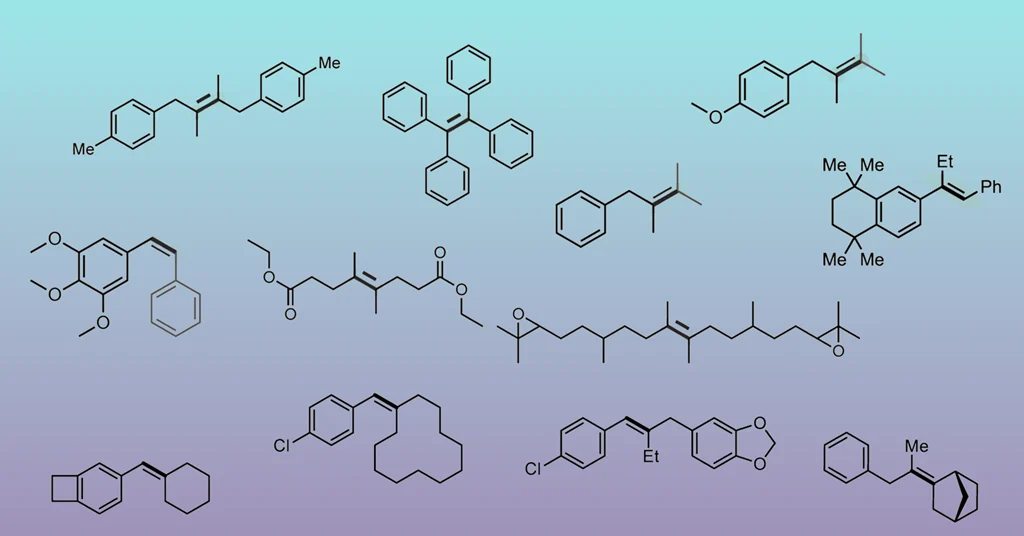
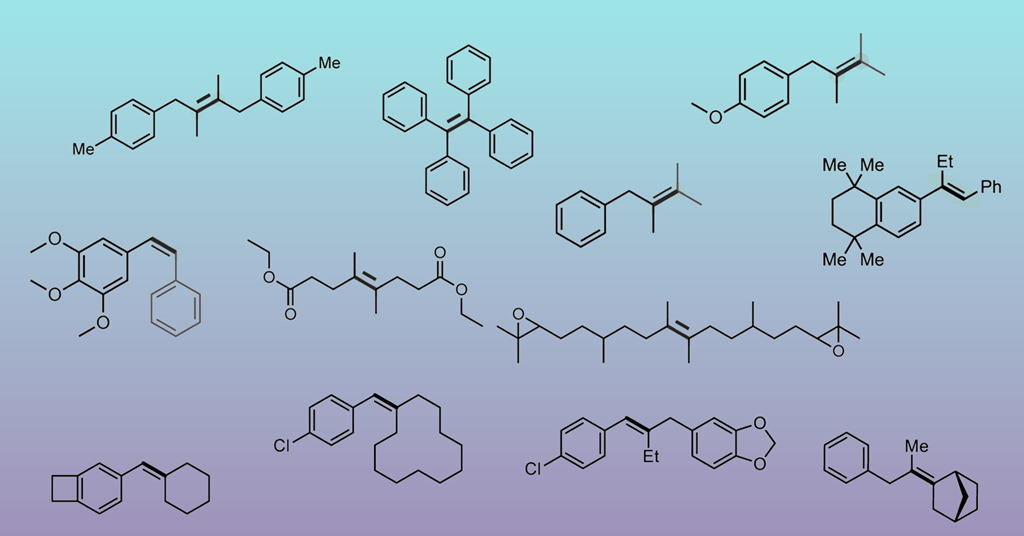
The dual breakthrough from the labs of Marvin Parasram at NYU and Oliver Reiser at the University of Regensburg provides a elegant solution: "photostitching." By harnessing visible light, both teams successfully converted readily accessible nitroalkanes into di-, tri-, and tetra-substituted alkenes. This process effectively transforms nitroalkanes—a previously overlooked or "unactivated" class of molecules—into versatile building blocks. By utilizing the energy of photons, these researchers have bypassed the need for the aggressive conditions that have historically limited synthetic flexibility.
The Chronology of Discovery: Parallel Paths and Serendipity
The story of this discovery is one of convergent evolution in the laboratory. At NYU, Marvin Parasram’s team was originally engaged in a broader investigation into the capacity of visible light to facilitate heteroatom transfer using nitroarenes and nitroalkanes. The transition to alkene synthesis occurred almost by accident. While PhD student Joshua Mitchell was attempting to extend the team’s research to generate carbenes, he observed the formation of alkenes instead. Recognizing the potential for high cross-selectivity, the team pivoted their focus, rapidly uncovering a robust pathway for generating tri-substituted alkenes.
Simultaneously, at the University of Regensburg, Oliver Reiser’s group was working on the reactivity of $alpha$-nitroalkyl radicals within the context of copper-photocatalyzed additions. The spark of discovery occurred when PhD student Max Dietel noticed an anomalous peak during nuclear magnetic resonance (NMR) analysis. Rather than dismissing the result as an experimental error or an unwanted side product, Reiser encouraged a deeper investigation. This "weird peak" turned out to be the first of a significant suite of alkenes, marking a quintessential example of what Nobel laureate David MacMillan famously termed "accelerated serendipity."
The two paths converged at the desk of a Science journal editor. Having received submissions from both teams that detailed remarkably similar synthetic strategies, the editor recognized that both groups had independently unlocked a new chemical reactivity. Rather than allowing the papers to compete, the editor facilitated an introduction. This act of intellectual mediation transformed a potential "scoop" into a partnership.
"Instead of being disappointed that we got scooped, we were able to appreciate each other’s work," reflects Reiser. The groups soon coordinated, even aligning their subsequent submissions to the Journal of the American Chemical Society (JACS) to present their complementary findings to the global community.
Supporting Data: The Mechanics of the Radical Transformation
The chemical mechanism underpinning these breakthroughs relies on the unique properties of the $alpha$-nitroalkyl radical. In the Parasram lab’s approach, the nitronate substrate itself acts as a powerful photoreductant upon absorbing visible light. This allows the reaction to proceed without a traditional catalyst, a point that initially surprised the Regensburg team.
Conversely, the Reiser group utilizes a ruthenium-based photocatalyst, [Ru(bpy)₃]²⁺, to facilitate the oxidation of the nitronate. This pathway initiates homo- and cross-coupling reactions that are highly stereoselective. While both groups have demonstrated the capability to produce di-, tri-, and tetra-substituted alkenes, their methodologies offer slightly different advantages. The Parasram method highlights the efficiency of catalyst-free photochemistry, whereas the Reiser method offers a robust, catalyst-mediated approach that has already successfully generated precursors for complex molecules, including the anti-tumour agent combretastatin-A4.
The stability of the $alpha$-nitroalkyl radical intermediate is the primary determinant of stereoselectivity in both processes. By fine-tuning these radical intermediates, the researchers are beginning to map the limits of what can be synthesized from nitroalkane precursors. Future efforts, according to Max Dietel, will involve time-dependent electron paramagnetic resonance (EPR) spectroscopy to capture these fleeting radical species in real-time, providing a mechanistic blueprint for future refinements.
Official Responses: Cultivating a Culture of Collaboration
The interaction between Parasram and Reiser has become a model for modern academic cooperation. When the two researchers finally met in person in New York shortly after their initial contact, the professional respect was immediate. Parasram, who had been an admirer of Reiser’s work since his graduate school days, found the partnership to be one of the most rewarding outcomes of his career.
"It’s crazy because a couple of weeks after we were put in touch, Oliver was in New York," Parasram recounts. "We met for dinner and coordinated our next submission. It was nice to have someone to discuss the chemistry with, but we didn’t see each other’s papers until we posted on the archive. We’re good friends now."
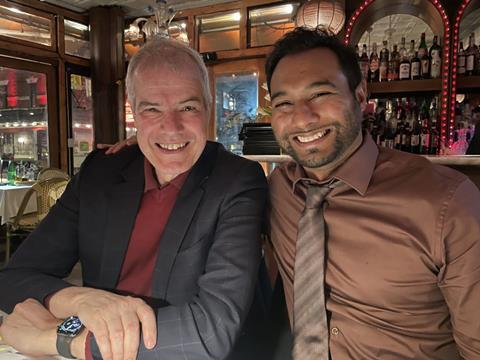
This sentiment is echoed by the institutions themselves. The collaborative spirit has extended beyond just the principal investigators; the teams are now actively planning student exchanges to cross-pollinate their expertise. By sharing data and comparing their respective catalytic and non-catalytic pathways, they have identified that their works are "truly complementary," with each method filling gaps left by the other.
Implications: The Untapped Potential of Nitroalkanes
The broader implications of this work extend far beyond the immediate utility of creating alkenes. By establishing nitroalkanes as a reliable, general building block for complex molecular construction, the research opens a new chapter in synthetic methodology. As Joshua Mitchell noted, there is significant "untapped potential" in utilizing these nitro-based platforms for even broader applications in drug development and material engineering.
The researchers believe that the "photostitching" of nitroalkanes will eventually allow for the synthesis of complex targets that were previously deemed too difficult or too costly to produce. Furthermore, the success of the Parasram-Reiser collaboration serves as a poignant reminder that science is not merely a competitive race to the finish line. It is a collective, human endeavor.
"We can enhance the chemistry, which will hopefully be beneficial to the wider research community," says Parasram. By choosing to collaborate, the two teams have not only accelerated the development of their specific reaction, but they have also provided a template for how scientific inquiry should function in an increasingly interconnected global research landscape. As the teams continue to fine-tune their reactions and explore the versatility of nitro radicals, the scientific community can look forward to a new era of "accelerated serendipity," where the focus remains squarely on the advancement of knowledge rather than the protection of territory.
The story of the "photostitching" alkenes is a testament to the idea that when researchers open their doors to their peers, the resulting innovation is often greater than the sum of its parts. As the two groups continue their joint efforts, the legacy of their chance encounter will likely be felt in laboratories across the globe for years to come.