BERLIN — For decades, the narrative of modern Germany was defined by the concept of the Wirtschaftswunder—the postwar economic miracle—and the enduring stability of its democratic institutions. To domestic politicians and international observers alike, Germany was the rock-solid anchor of the European Union, a manufacturing powerhouse boasting world-class infrastructure, a vocational education system envied globally, and a political culture anchored by consensus and moderation.
Yet, as autumn arrives in 2026, the mood in Berlin is markedly different. The prevailing sentiment among political and corporate elites is no longer self-assurance, but alarm.
For too long, Germany’s leadership class coasted on the momentum of past achievements. They avoided the difficult, structural reforms necessary to future-proof the nation, assuming that incremental adjustments would suffice in a rapidly changing global economy. Today, with a stagnating economy, decaying public infrastructure, digital backwardness, and the surging popularity of extremist populist parties, the chickens have come home to roost.
As the political establishment faces what many describe as an existential threat to German democracy, mainstream elites are realizing that they must rethink everything—from their fiscal orthodoxy and industrial policy to how they communicate with an increasingly alienated citizenry.
Main Facts: The Anatomy of a National Crisis
The challenges facing Germany are multifaceted, systemic, and mutually reinforcing. What began as a series of missed opportunities over the past two decades has coalesced into a multi-layered crisis spanning the economic, technological, and political spheres.
The Economic Stall and Infrastructure Deficit
Germany’s traditional growth model—reliant on cheap Russian energy, robust exports to China, and a heavy reliance on traditional combustion-engine automotive manufacturing—has broken down. High energy costs, driven by the decoupling from Russian gas following the invasion of Ukraine, have severely penalized energy-intensive manufacturing sectors like chemicals, steel, and automotive parts.
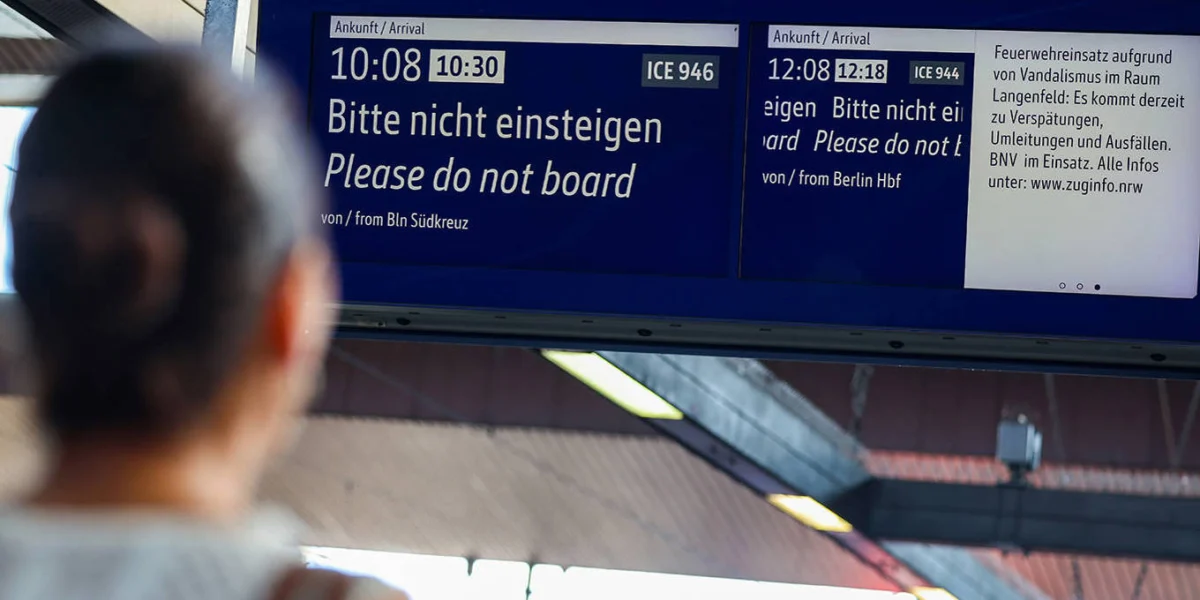
Simultaneously, public and private investment has lagged significantly. Once celebrated for its punctuality and efficiency, Germany’s infrastructure is now a symbol of bureaucratic paralysis. Chronic underinvestment has left the nation’s railway network (Deutsche Bahn), bridges, roads, and digital grid in a state of disrepair. High-speed broadband remains patchy in rural areas, and administrative digitalization lags far behind peer nations in the Organisation for Economic Co-operation and Development (OECD).
The Rise of Extremist Populism
The economic malaise and a growing sense of societal neglect have provided fertile ground for populist extremism. Parties on the radical fringes—most notably the anti-immigrant, Eurosceptic Alternative for Germany (AfD) on the far-right, alongside populist formations on the far-left—have capitalized on public discontent.
Promoting narratives of national decline, cultural anxiety, and anti-establishment sentiment, these parties have moved from the political margins to capturing significant shares of the electorate, particularly in eastern federal states. For mainstream democratic parties, forming stable governing coalitions has become increasingly complex, leading to political fragmentation and governance paralysis.
Chronology: How Germany Reached the Tipping Point
To understand how Europe’s largest economy arrived at this precarious juncture, it is necessary to examine the trajectory of the past twenty years:
- 2003–2005 (The Agenda 2010 Era): Chancellor Gerhard Schröder introduces the "Agenda 2010" labor market and welfare reforms. While painful at the time, these reforms laid the groundwork for Germany’s economic dominance in the late 2000s and 2010s. However, the success of these measures bred a false sense of security among policymakers, who came to view them as the final structural overhaul the country would ever need.
- 2015–2016 (The Refugee Crisis): Chancellor Angela Merkel’s decision to welcome over one million refugees, primarily from war-torn Syria, strains public services and triggers intense societal debate. This period marks the birth of the AfD as a potent electoral force, shifting the boundaries of acceptable political discourse to the right.
- 2020–2022 (The Polycrisis): The COVID-19 pandemic exposes deep digital deficiencies in German schools and public health administration. Shortly after, the outbreak of the war in Ukraine abruptly terminates the era of cheap Russian energy, triggering soaring inflation and threatening Germany’s industrial core.
- 2023–2025 (Economic Stagnation and Electoral Shocks): Germany registers as the worst-performing major economy among G7 nations. As economic growth flatlines, regional elections in eastern Germany yield record-breaking results for extremist parties, shocking the political establishment and leading to intense soul-searching in Berlin.
- October 2026 (The Elites’ Reckoning): Mainstream political and corporate leaders openly acknowledge that incrementalism has failed. Debates intensify over whether to reform the constitutional debt brake (Schuldenbremse), overhaul the tax system, and fundamentally redesign immigration and integration policies to neutralize the populist appeal.
Supporting Data: The Metrics of Decline
The sense of urgency in Berlin is backed by hard economic and demographic data that highlight the erosion of Germany’s competitive edge:
- GDP Growth: According to projections from leading economic institutes (DIW, Ifo, Kiel Institute), Germany’s economic growth has stagnated near zero for three consecutive years, lagging significantly behind the United States and the Eurozone average.
- Investment Gap: The German Economic Institute (Institut der deutschen Wirtschaft) estimates an infrastructure investment backlog running into the hundreds of billions of euros, spanning schools, transport networks, and the green energy transition.
- Electoral Shifts: Polling data from late 2026 places the AfD firmly in second place nationally, and as the leading party in several eastern states, fundamentally altering coalition arithmetic and creating "firewall" dilemmas for traditional parties like the Christian Democrats (CDU/CSU) and the Social Democrats (SPD).
- Demographic Pressures: Germany faces an accelerating labor shortage as the massive "baby boomer" generation retires. Projections indicate that the workforce will shrink by millions over the coming decade unless immigration and labor force participation rates increase dramatically.
Official Responses: What Berlin is Doing—and Failing to Do
In response to the mounting pressure, political leaders and corporate captains are divided on the correct path forward, trapped between traditional fiscal conservatism and the demands of a changing world.
The Debate Over Fiscal Orthodoxy
At the heart of the political debate is Germany’s constitutional "debt brake" (Schuldenbremse), which strictly limits structural federal budget deficits to 0.35% of GDP.
- Pro-Reform Factions: Economists, center-left politicians, and segments of the business community argue that the debt brake is a self-imposed straitjacket that prevents essential investments in green technology, digital infrastructure, and education. They contend that borrowing for future-oriented investments is economically rational and necessary to avert further decline.
- Orthodox Defenders: Conservative politicians and fiscal traditionalists argue that abandoning the debt brake would stoke inflation, burden future generations with unsustainable debt, and undermine fiscal discipline across the European Union.
Industrial Strategy and Green Transition
The government has launched various subsidy programs to attract semiconductor manufacturers (such as Intel and TSMC) and green hydrogen projects. However, these efforts have been criticized as slow, overly bureaucratic, and insufficient to offset the broader loss of industrial competitiveness caused by high energy prices and restrictive labor laws.
Implications: The Stakes for Germany and Europe
The current crisis in Germany extends far beyond national borders. As the political and economic engine of the European Union, a weakened Germany has profound implications for the entire continent.
The Threat to European Integration
A preoccupied and economically sluggish Germany struggles to provide the decisive leadership required to navigate major European challenges, ranging from EU enlargement and security policy to economic reform. Without a robust German economy pulling the Eurozone forward, the bloc risks a broader loss of global competitiveness vis-à-vis the United States and China.
The Resilience of Democratic Institutions
The ultimate test for Germany lies in its ability to counter the populist narrative. If mainstream elites fail to deliver tangible improvements in living standards, public services, and infrastructure, the democratic consensus built painstakingly over the post-WWII era could fracture further.
To keep the "barbarians at the gates," German leadership must abandon complacency. The country that once prided itself on doing no wrong must now prove it has the humility to recognize its mistakes, the courage to embrace sweeping reforms, and the political will to renew its democratic social contract.