The intersection of artificial intelligence and physical manufacturing has historically been defined by a quiet skepticism. While software developers watched large language models write code and generate corporate slide decks at lightning speed, heavy industry—dealing in metallurgy, micron-level tolerances, multi-million-dollar milling machines, and legacy enterprise software—remained largely insulated.
That insulation is evaporating. In a matter of weeks, venture capital syndicates, tech billionaires, enterprise software legacy players, and government bodies have injected billions of dollars and fresh strategic frameworks into what is now being broadly termed "Physical AI" and "Industrial Autonomy."
Yet, as the hype cycle reaches a fever pitch, a fundamental tension defines the sector: the chasm between pristine, simulated engineering environments and the chaotic, greasy reality of a Monday morning on a real factory floor.
1. Main Facts: The New Landscape of Industrial AI
The current wave of manufacturing AI is distinguished by massive capital injections, ambitious technological claims, and a push toward agentic architectures—systems designed not just to analyze passive dashboards, but to make decisions, write code, program hardware, and execute workflows autonomously.
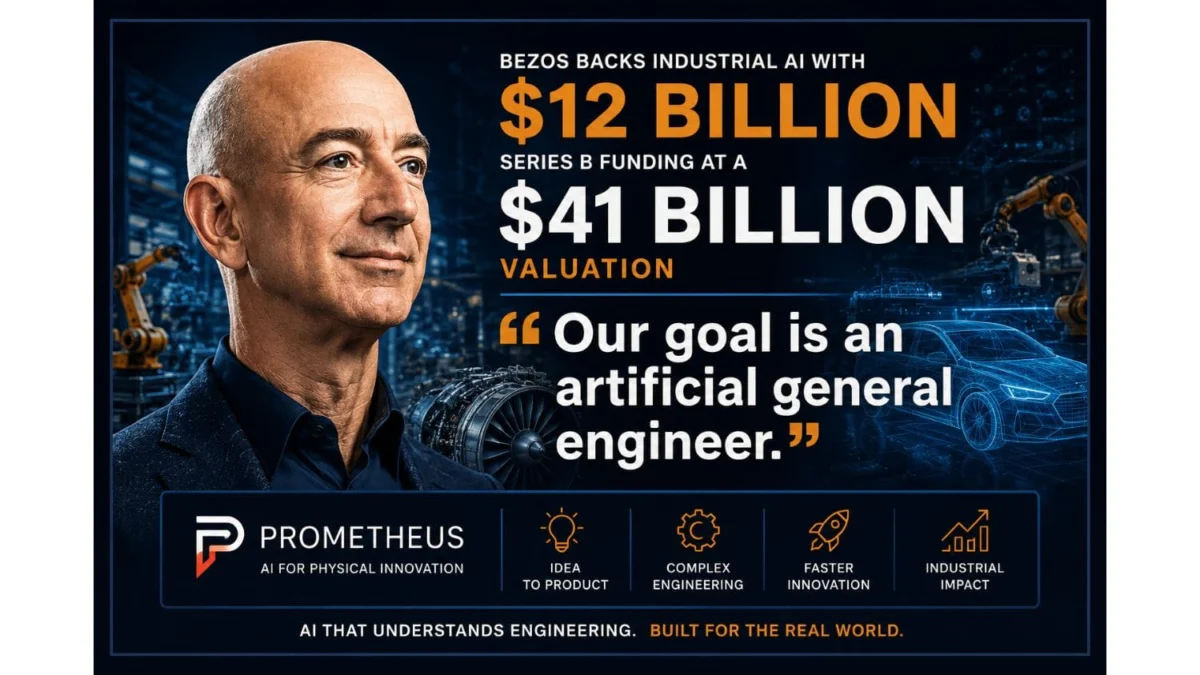
At the bleeding edge of this movement is Prometheus, an industrial AI startup backed by technology magnate Jeff Bezos. Prometheus recently secured a staggering $12 billion funding round at a $41 billion valuation. The company’s core objective is as breathtaking as it is audacious: to build an "Artificial General Engineer" (AGE). The system aims to compress the entire product lifecycle—from initial concept to full-scale manufacturing of complex assemblies like jet engines, medical devices, and consumer electronics—into an automated workflow.
Down the stack from mega-rounds like Prometheus, specialized software providers are targeting narrower, highly tangible bottlenecks. Limitless Labs (formerly LimitlessCNC) closed a $20 million Series A funding round to scale its agentic AI platform designed for Computer-Aided Manufacturing (CAM). By feeding a CAD file into the system, Limitless Labs’ CAM Agent automatically identifies geometry features, recommends tooling, sequences operations, and generates toolpaths—slashing programming times by up to 50%.
Enterprise and industrial systems giants are moving in parallel. PTC has launched Orbit, a software architecture designed to bridge the historical gap between isolated silos of design, field service, and sensor data. Simultaneously, Sight Machine has rolled out an operational AI platform enabling plant engineers to construct living digital models of their manufacturing facilities without requiring specialized data science teams.
Physical hardware is evolving alongside software. Robotics lab Genesis AI has introduced Eno, a general-purpose robotic system that breaks away from the humanoid aesthetic trend to focus strictly on utilitarian task execution.
Rounding out the macro-picture, public policy is stepping in to guide deployment. The UK government has published a comprehensive AI adoption plan for advanced manufacturing, creating a structured roadmap for industrial enterprises moving from initial curiosity to full-scale deployment.
2. Chronology: How the Industrial AI Wave Unfolded
The acceleration of industrial AI did not happen overnight; it represents the convergence of maturing foundation models, surging investor appetite for physical-world tech, and acute labor shortages in skilled manufacturing trades.
- Late 2024 to 2025: As consumer-facing generative AI applications faced market saturation, venture capital firms and strategic investors began pivoting heavily toward deep tech, hardware, and industrial automation. The realization that "software is eating the world" now meant software was preparing to physically build it.
- Early 2026 (The Policy Phase): Recognizing that traditional industrial sectors risked falling behind digital-first economies, regulatory bodies began formalizing adoption frameworks. The UK government released its specialized AI adoption playbook, emphasizing structured validation, risk mitigation, and support for SMEs.
- Mid-2026 (The Enterprise Software Push): Established players like PTC recognized that raw design data was insufficient. Companies began deploying connective tissue software like PTC Orbit to capture the feedback loop between products in the field and the engineers drafting the next iteration.
- Recent Weeks (The Funding Surge): The market experienced a sudden flood of capital. Limitless Labs locked down its $20 million Series A to expand production deployments with industrial titans like Sandvik and Iscar. Simultaneously, the manufacturing world was rocked by the emergence of Prometheus, anchoring a massive $12 billion capitalization round backed by Jeff Bezos to pursue artificial general engineering.
3. Supporting Data and Market Metrics
The scale of investment flowing into industrial AI indicates that institutional capital views manufacturing as the next frontier for automation disruption. However, metrics regarding valuation must be weighed against actual operational deployment metrics.
- $41 Billion: The valuation of Prometheus following its $12 billion funding round. Despite the unprecedented capital raise, the company faces intense scrutiny regarding its core training data transparency and real-world error rates.
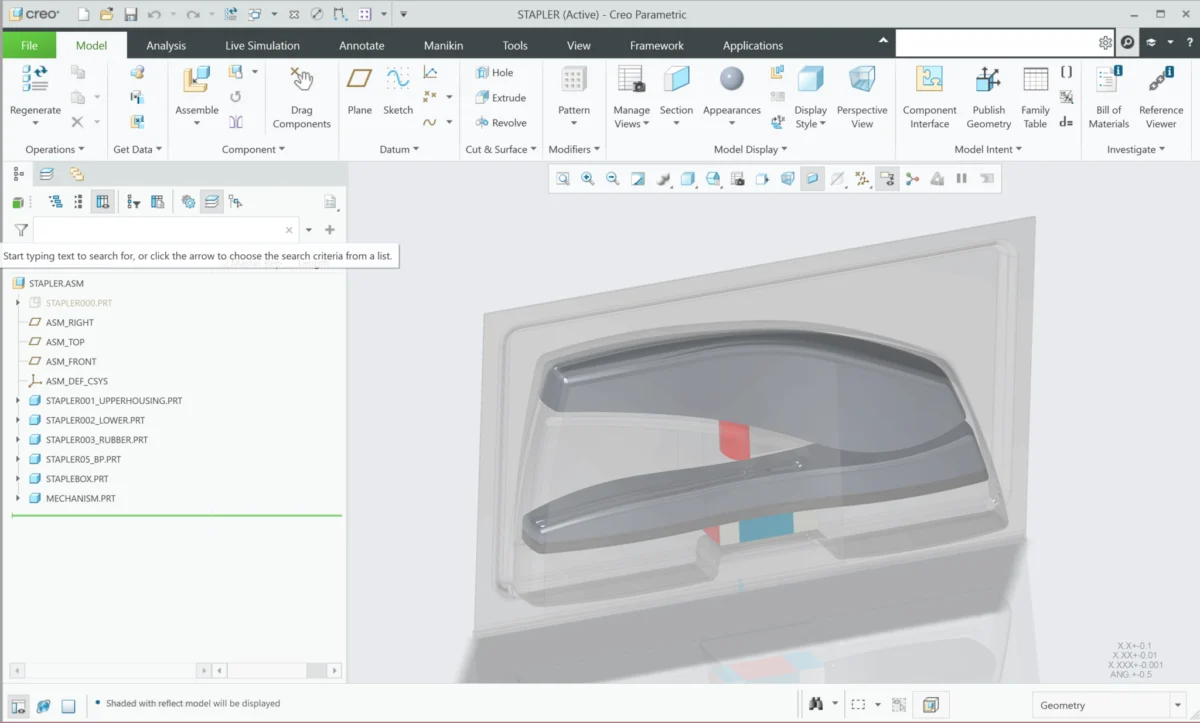
- 50% Reduction: The headline efficiency gain claimed by Limitless Labs in CNC programming time. Unlike theoretical AI models, this platform has secured early commercial traction inside active production environments alongside industry giants like Sandvik and Iscar, integrating directly into established CAD/CAM toolsets such as Mastercam, NX, and Creo.
- $20 Million: The Series A capital raised by Limitless Labs to scale its physical AI foundation model for precision machining.
- Multi-Source Aggregation: Platforms like Sight Machine and PTC Orbit rely on ingesting thousands of disparate data streams—combining shop-floor IoT sensors, maintenance logs, enterprise resource planning (ERP) systems, and field service failure reports to train their analytical agents.
4. Official Responses and Industry Perspectives
The reception to these announcements varies wildly depending on whether the observer sits in a venture capital boardroom or on a manufacturing shop floor.
Proponents of the new wave argue that manufacturing is bottlenecked by human bandwidth and tribal knowledge. In the case of CNC machining, critical programming expertise is frequently locked inside the minds of a dwindling population of senior machinists nearing retirement age. Software solutions like Limitless Labs are viewed not as job-killers, but as force multipliers that codify institutional memory.
Similarly, advocates for Sight Machine’s agent-driven factory models emphasize democratization. By allowing process engineers—the people who understand the physics of the plant—to query live operational models using natural language rather than waiting on overburdened IT and data science teams, operational agility increases exponentially.
Yet, skeptics and seasoned manufacturing engineers offer a sobering counter-perspective. The engineering community frequently points out that AI models trained on pristine CAD files often fail catastrophically when introduced to the messy realities of manufacturing:
- Worn tooling that alters cutting dynamics.
- Unusual workpiece fixtures that introduce unexpected harmonic vibrations.
- Material inconsistencies across different batches of alloy.
Critics of the "Artificial General Engineer" concept note that while generating a visually appealing 3D model of a jet turbine blade is an impressive party trick, the system must account for thermal expansion, micro-fractures, stress tolerances, and rigorous regulatory certification standards. In manufacturing, a confident hallucination does not result in a broken line of code—it results in a catastrophic mechanical failure, ruined multi-thousand-dollar raw stock, or severe safety hazards.
5. Strategic Implications for the Future of Manufacturing
As industrial AI transitions from experimental R&D labs into commercial production, several critical implications emerge for enterprise leaders, engineers, and policymakers.
The Death of Tribal Silos
For decades, engineering, manufacturing execution, and field service operated in distinct silos. Tools like PTC Orbit and Sight Machine represent an industry-wide push to break down these barriers. By turning unstructured field service failures, spare-part demand spikes, and sensor degradation logs into actionable data for design teams, companies can achieve true closed-loop engineering.
The Shift to Agentic Workflows
The conversation has shifted away from passive analytics dashboards. Factory operators do not want to stare at another chart telling them efficiency dropped by 3% last Tuesday. They want systems that can investigate why the yield gap occurred, cross-reference maintenance logs with sensor drift, and push actionable hypotheses directly to floor managers via collaboration software.
The Regulatory and Validation Hurdle
As outlined in government frameworks like the UK’s advanced manufacturing adoption plan, scaling industrial AI requires a methodical, step-by-step approach: scan the opportunity, run a contained pilot, validate rigorously, and only then scale. Companies that skip validation in pursuit of marketing hype risk wasting millions of dollars on software that cannot survive the friction of a live production floor.
Redefining the Engineering Workforce
The ultimate goal of platforms chasing "general engineering" or automated CAM path generation is not to eliminate human engineers, but to elevate them. By offloading tedious data entry, routine toolpath sequencing, and basic log-searching to AI agents, human engineers can refocus their expertise on high-level innovation, materials science, safety validation, and complex problem-solving.
Conclusion
The convergence of artificial intelligence and advanced manufacturing represents one of the most significant shifts in industrial history since the advent of computer-aided design. With billions of dollars backing visionary concepts like artificial general engineering, and practical tools slashing CNC programming times in half, the momentum is undeniable.
However, the ultimate success of this movement will not be measured by venture capital valuations or glossy promotional videos. It will be decided on the shop floor—where raw metal meets cutting edge, where machines vibrate, where legacy systems resist integration, and where human ingenuity remains the ultimate safeguard against the unknown.