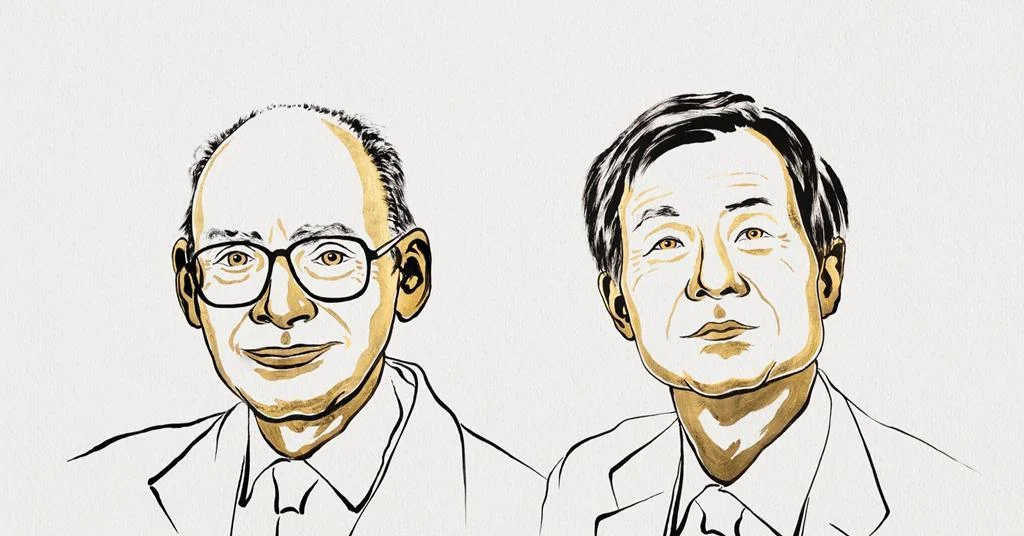







For decades, the field of chemical synthesis has been governed by a "gold standard" of stability. Since the inception of click chemistry—the methodology famously championed by K. Barry Sharpless—the focus has been almost exclusively on the creation of robust, indestructible linkages. These reactions were designed to be the "Lego bricks" of the molecular world: fast, high-yielding, and perfectly permanent.
However, a groundbreaking development has emerged from the labs of Amir Hoveyda at the University of Strasbourg and Boston College. A newly reported copper(I)-catalysed allene–ketone addition, known as CuAKA, is challenging the fundamental dogma of click chemistry by offering something long considered impossible: a click reaction that forms a robust carbon–carbon (C–C) bond that can be selectively disassembled on demand under biologically relevant conditions.
The Main Facts: Challenging Chemical Dogma
The traditional requirements for a "click" reaction are stringent: they must be modular, wide in scope, high-yielding, stereospecific, and—most importantly—energetically favorable to the point of creating an irreversible, inert bond. Typically, this has meant prioritizing heteroatom chemistry (such as the copper-catalysed azide–alkyne cycloaddition, or CuAAC) over carbon–carbon bond formation.
The CuAKA reaction flips this script. It utilizes a copper catalyst to facilitate the addition of allenes to ketones in aqueous environments. This is a significant departure from conventional wisdom, which posits that C–C bond formation is too sensitive to the "messy" conditions of a biological cell to be considered a viable click candidate.
The primary breakthrough of CuAKA lies in its duality:
- Reliability: It proceeds at ambient temperatures within a few hours, requiring no stringent control over air or moisture.
- Reversibility: Unlike the permanent bonds formed by traditional click reactions, the linkage formed by CuAKA can be cleaved under specific physiological conditions, particularly in the presence of low concentrations of hydrogen peroxide.
- Orthogonality: It functions alongside established click methodologies, such as CuAAC and CuPDF, without interfering with their respective chemical pathways, allowing for the construction of sophisticated, multi-functional molecular architectures.
Chronology of Development: A Shift in Perspective
The journey toward CuAKA began with a critical re-evaluation of why click chemistry was so limited in its functional scope. According to Professor Amir Hoveyda, the original impetus for click chemistry was the design of functional molecules, yet the field became obsessed with "non-functional" linkages—bonds that served only to hold pieces together without participating in the biological or chemical activity of the resulting system.
- Early Phase (Conceptualization): The team identified the need for a "reversible click" mechanism. They hypothesized that the perceived incompatibility of C–C bond formation with click chemistry was a failure of catalyst design rather than a chemical impossibility.
- Intermediate Phase (Optimization): Research focused on developing a copper(I) catalyst that could operate in water, allowing for the coupling of complex biomolecules. The team worked on the kinetics of the reaction, ensuring that the addition of allenes to ketones occurred with high efficiency.
- Validation Phase: The team tested the reaction on complex substrates, including the anticancer drug camptothecin and various cell-penetrating peptides. The success of these couplings demonstrated that the reaction is not only robust but also compatible with the intricate molecular structures found in biological systems.
- Current Status: The methodology is currently being proposed as a new tool for chemical biologists, offering a path to dynamic, "on-demand" molecular systems.
Supporting Data: Why CuAKA is Different
The technical elegance of CuAKA lies in its efficiency. In many traditional synthetic routes, C–C bond formation requires harsh reagents, anhydrous solvents, or extreme temperatures—all of which are fatal to delicate biomolecules.
The CuAKA process, by contrast, thrives in aqueous media. Data provided by the research team highlights:
- Catalyst Efficiency: The catalyst is described as simple, cheap, and easy to handle, significantly lowering the barrier to entry for researchers in other laboratories.
- Ambient Operation: The reaction proceeds at room temperature, which is essential for working with living cells or temperature-sensitive proteins.
- Cleavage Specificity: The resulting bond is responsive to hydrogen peroxide. This is a crucial feature, as hydrogen peroxide is a naturally occurring reactive oxygen species (ROS) in biological systems, particularly in areas of inflammation or malignancy. By tuning the peroxide concentration, researchers can trigger the "release" of a payload exactly where and when it is needed.
Official Responses: Expert Perspective
The reaction has garnered significant attention from the global scientific community. Dr. Yimon Aye of the University of Oxford, who was not involved in the original study, has characterized the work as "exciting and interesting."
"The first step, involving $pi$-bond breaking and C–C bond making with a carbonyl, is unexpected compared to existing click coupling," Dr. Aye observes. "It could potentially open up new click coupling avenues."

However, Dr. Aye also provides a balanced, cautious outlook regarding the practical application of this chemistry within living organisms. She points out that the biological environment is far more complex than a test tube. "Naturally occurring carbonyl groups in cells could complicate selective labelling," she warns. Furthermore, because hydrogen peroxide acts as a vital signaling molecule in cells, using it as a "trigger" for bond cleavage requires precise spatial control. If not managed correctly, the chemistry could inadvertently interfere with endogenous biological pathways.
"For use in functional biological contexts," Dr. Aye adds, "rigorous road-testing and validations in biological systems for each step of the two-step process would be necessary."
Implications: The Future of Molecular Engineering
The potential applications of CuAKA are vast, spanning across medicine, chemical biology, and materials science.
Drug Delivery
The ability to link a therapeutic agent to a targeting moiety (such as a peptide) via a bond that only breaks in specific oxidative environments is a "holy grail" for drug delivery. Cancer cells, for instance, are known for their high levels of oxidative stress. A drug-peptide conjugate created via CuAKA could circulate through the body in a stable form and then disassemble upon reaching the tumor, ensuring that the medication is released only where it is required, thereby reducing systemic toxicity.
Chemical Biology
In the field of chemical biology, the ability to install a label or a probe—and then remove it with temporal precision—is transformative. It allows scientists to track biological processes in real-time, observing the assembly and disassembly of molecular complexes within the cell without permanently altering the system.
Materials Science
Beyond biology, CuAKA offers new frontiers in material design. We can now envision the creation of "smart" polymers and networks that are assembled through click chemistry but can be disassembled or reshaped under mild, environmentally friendly conditions. This could lead to the development of self-healing materials or adaptive scaffolds for tissue engineering that change their structural properties in response to their environment.
Conclusion: Completing the Toolbox
Professor Hoveyda remains optimistic about the future of this methodology. "By demonstrating that even traditionally ‘forbidden’ bond constructions can meet click criteria," he suggests, "we are proving that this toolbox is far from complete."
The CuAKA reaction is more than just a new chemical recipe; it is a conceptual shift. It proves that the binary choice between "stable/permanent" and "labile/unstable" is a false dichotomy. By mastering the ability to form C–C bonds that are both robust and reversible, chemists are gaining a level of control over molecular architecture that was previously the stuff of science fiction.
As the scientific community begins the "rigorous road-testing" suggested by experts like Dr. Aye, the focus will shift from the laboratory bench to the biological interface. If CuAKA can survive the scrutiny of the cellular environment, it will undoubtedly become a staple in the repertoire of modern chemistry, enabling a new generation of drugs, probes, and materials that can think, react, and evolve.
The age of the permanent bond is not over, but it has certainly been joined by a much more dynamic, and arguably more powerful, alternative. The "click" of the future may well be one that can be silenced as easily as it is triggered.