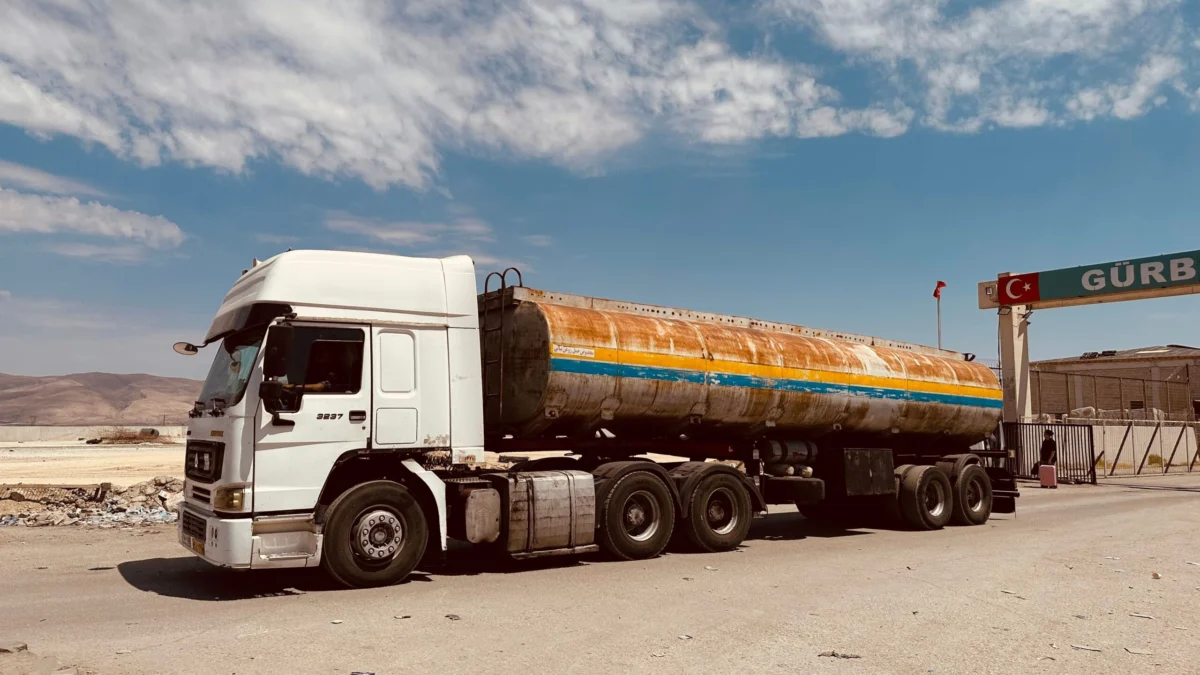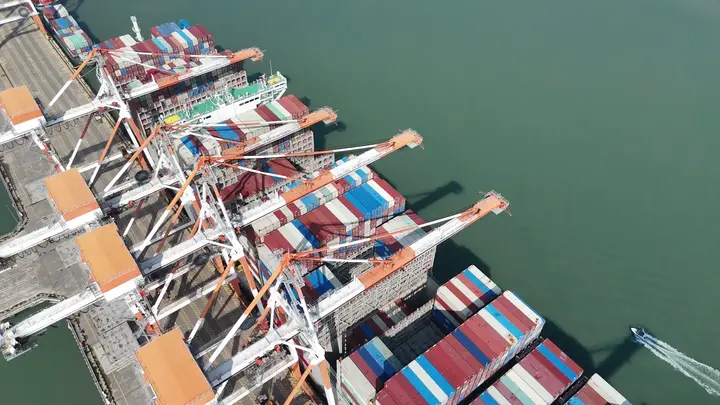
In the modern industrial era, the term "logistics" has transcended its traditional definition of moving goods from origin to destination. Today, it encompasses the high-stakes discipline of project logistics—a specialized, engineering-driven field responsible for the transport, storage, and installation of oversized, high-value, and technically demanding equipment. Whether it is a multi-ton wind turbine blade, a massive power transformer, or an entire pre-fabricated refinery module, these shipments represent the lifeblood of global infrastructure.
Project logistics is no longer a peripheral back-office function; it has emerged as the central execution engine of the global economy. As projects become physically larger and geographically more fragmented, the role of the logistics provider has shifted from simple freight forwarder to strategic engineering partner.
The State of the Market: Scaling for a Global Future
The demand for specialized logistics is inextricably linked to the global push for industrial modernization, energy transition, and infrastructure expansion. According to market intelligence firm Global Market Insights, the global project logistics sector was valued at USD 68.8 billion in 2025. Projections indicate a robust growth trajectory, with the market expected to reach USD 120.1 billion by 2035, representing a steady compound annual growth rate (CAGR) of 5.8%.
This growth is fueled by a "megaproject" phenomenon. Governments worldwide are pouring trillions into the "hard" infrastructure required for the 21st century: modernized rail networks, deep-water ports, sprawling industrial parks, and massive renewable energy grids. As these projects scale in size, the components required to build them have outgrown the confines of standard shipping containers, necessitating bespoke transport solutions that defy conventional logistics models.
Chronology of a Megaproject: From Design to Delivery
To understand the complexity of project logistics, one must view a project through the lens of its life cycle. Unlike retail supply chains, which are characterized by high volume and repetitive cycles, project logistics is defined by "one-off" events where failure is not an option.
Phase 1: Engineering and Feasibility (Pre-Construction)
Before a single piece of cargo moves, logistics providers are embedded in the engineering phase. By analyzing the physical dimensions of modules—such as lifting points, center of gravity, and structural integrity—providers inform designers whether a component can actually be moved from a fabrication yard to a remote site.
Phase 2: Route Surveying and Permitting
Once the cargo is designed, the focus shifts to the path of travel. Providers conduct rigorous route surveys, identifying obstacles like low-hanging power lines, bridge weight capacities, and narrow turning radii. In many cases, these routes require temporary road reinforcements or the coordination of police escorts, a process that can take months of regulatory negotiation.
Phase 3: The Multimodal Execution
When the project commences, it often spans continents. A typical journey might involve:
- Fabrication: Components manufactured in Asia.
- Transshipment: Marine transport via heavy-lift or semi-submersible vessels through the Middle East.
- Customs/Port Handling: Clearing regulatory hurdles in European ports.
- Final Delivery: The "last mile" transit, which is often the most precarious, involving specialized self-propelled modular transporters (SPMTs) to traverse inland terrain to the construction site.
Phase 4: Installation and Handover
The final stage involves the arrival of the component at the exact moment the construction site is ready. Any misalignment here can cause a "bottleneck effect," where specialist crews and expensive cranes sit idle, racking up thousands of dollars in costs per hour.
Supporting Data: Regional Drivers of Demand
Geography remains the primary driver of project logistics trends. While the industry is global, specific regions act as focal points for specialized demand:
- Asia-Pacific: Currently the dominant market. China, India, and Southeast Asia are central hubs for manufacturing and large-scale industrial expansion. The sheer volume of infrastructure development here requires a constant flow of heavy machinery.
- The Middle East and Africa: Rapidly emerging as high-growth regions. Massive urban development projects, port expansions, and the diversification of energy sectors are creating significant demand for heavy-lift capacity.
- Europe: A highly technical market. The region’s focus on the energy transition—specifically offshore wind and grid modernization—requires sophisticated logistics that can handle the extreme precision required for maritime construction.
- North America: Continues to see consistent demand from the LNG sector, mining operations, and the urgent need for domestic infrastructure upgrades, ranging from bridge replacements to the deployment of modular power plants.
The Energy Transition: A Catalyst for Complexity
Perhaps the most significant driver of change in project logistics is the global energy transition. Renewable energy projects, particularly offshore wind, are creating a unique set of logistical challenges. Unlike traditional power plants, wind farm components are hypersensitive to timing and weather.
A single offshore wind project requires the synchronized movement of blades, tower sections, and foundations through a complex chain of marshalling yards and installation vessels. Because these projects occur in volatile maritime environments, logistics planning must account for weather windows. If a shipment arrives too late, the construction window may close, potentially stalling the project for months. This "just-in-time" requirement for "oversized" cargo has forced logistics providers to adopt advanced digital tracking and predictive modeling to manage risks.
Industrial Modularization: The New Design Paradigm
The trend of "modularization" is fundamentally changing how industrial plants are built. Rather than shipping thousands of individual components to a construction site, companies are increasingly building large, pre-assembled modules in controlled fabrication yards.
While this approach improves quality control and reduces the need for large on-site labor forces, it creates a logistical "titan." These modules are often designed to the absolute maximum size a vessel or road can accommodate. Consequently, logistics providers are now active participants in the design process. If a module is designed to be just a few centimeters wider than a bridge on the transport route, the entire project is compromised. This necessitates a tight feedback loop between the engineering firm and the logistics provider, ensuring that the "transportability" of a module is considered from the drafting board stage.
Implications: The Shift Toward Reliability over Rates
In the commodity freight world, the cheapest rate usually wins the contract. In project logistics, the paradigm has shifted toward reliability and risk management.
For a client managing a billion-dollar refinery or a major power project, the cost of the freight is often a fraction of the total project value. The true risk is a delay in the delivery of a critical component, which could lead to project shutdowns and massive financial penalties. Consequently, the industry is increasingly prioritizing:
- Visibility: The ability to track high-value assets in real-time across borders and modes of transport.
- Contingency Planning: The creation of "Plan B" scenarios. If a port is congested or a road is blocked, providers must be able to pivot immediately.
- Regulatory Expertise: Navigating the labyrinth of international trade restrictions, sanctions, and customs requirements, which can change overnight due to geopolitical shifts.
Challenges and Future Outlook
Despite the promising market growth, the industry faces severe headwinds. The supply of specialized assets—such as heavy-lift vessels, high-capacity cranes, and engineered trailers—is inherently limited. Building these assets requires significant capital and time, meaning that when multiple megaprojects occur simultaneously, supply chain bottlenecks are inevitable.
Furthermore, geopolitical instability, trade sanctions, and shifting tariff structures have introduced a new layer of uncertainty. A shipment that was planned six months ago may suddenly face new regulatory hurdles, forcing a rerouting that impacts insurance, transit times, and ultimately, the construction schedule.
Conclusion: The Quiet Force of Progress
Project logistics is the "quiet force" that sustains the world’s most ambitious infrastructure projects. As the global economy pivots toward sustainable energy, grid expansion, and modernized industrial facilities, the reliance on this sector will only deepen.
The successful logistics firms of the future will be those that view themselves not merely as transport providers, but as engineering consultants and risk managers. By integrating multimodal planning, leveraging digital transparency, and engaging early in the project design phase, these companies are ensuring that the blueprints of today become the functioning, tangible assets of tomorrow. In an era of increasing complexity, project logistics remains the essential link that holds the global industrial machine together.