Main Facts: The Hidden Hazard of Particulate Solids
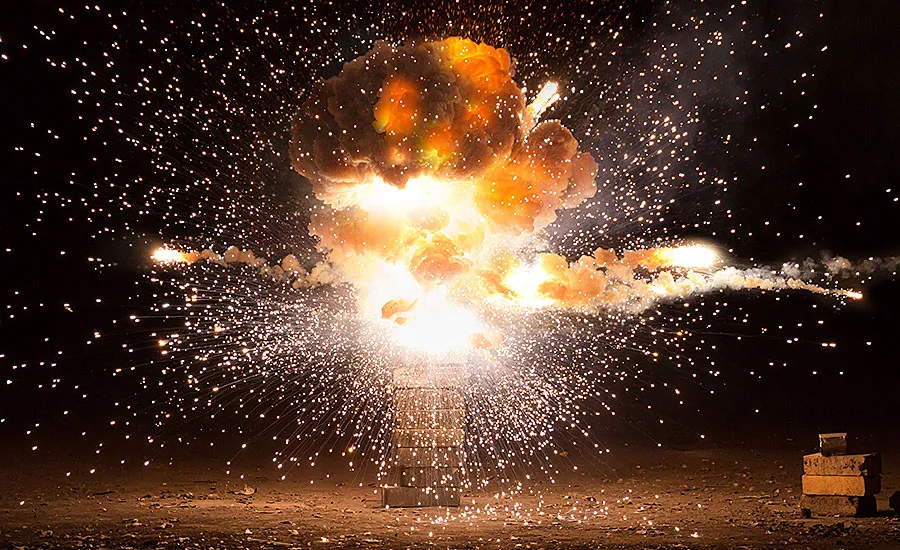
For decades, industrial safety experts have grappled with an insidious and frequently underestimated hazard lurking within manufacturing and processing facilities across North America: combustible dust. While catastrophic fires and explosions are often associated with high-profile materials like natural gas or petroleum, fine particulate solids—ranging from plastics and rubber to agricultural grains, sugar, wood, chemicals, and metals—pose an equally lethal threat under the right conditions.
When materials that appear entirely benign in their everyday, bulk form are reduced to fine powders and dispersed into the atmosphere, their physical properties shift dramatically. Under specific circumstances, these ordinary-looking powders transform into highly explosive fuel.
The mechanism behind this danger is well-documented by safety professionals through the framework of the "dust explosion pentagon." Unlike a standard fire, which requires three elements (fuel, oxygen, and an ignition source), a dust explosion demands five simultaneous elements:
- Combustible dust material
- Oxygen
- An ignition source
- Dispersion (dust suspended in the air)
- Confinement (within a room, ductwork, or processing equipment)
When fugitive dust—material that has escaped process equipment—settles silently on elevated surfaces, structural beams, ductwork, and machinery, it creates a ticking clock. A minor initial disturbance can loft this settled dust into a localized cloud. If that cloud meets an ignition source, it triggers a rapid flash fire. The resulting pressure wave can dislodge additional dust accumulated on overhead surfaces throughout the facility, cascading into a secondary, highly destructive, large-scale explosion.
Compounding the problem, the ignition source does not need to be a dramatic open flame. Industry literature and forensic investigations routinely link plastic-dust and particulate explosions to common industrial catalysts, including hot surfaces from machinery bearings or motors, electrostatic discharges, mechanical friction, impact sparks, and everyday electrical equipment.
Historically, facilities treated dust accumulation merely as a housekeeping challenge—something to be swept up at the end of a shift. However, industrial safety boards, regulatory bodies, and engineering experts are pushing a vital paradigm shift: combustible dust must be rigorously managed as a core process hazard, not a routine janitorial chore.
Chronology: A History Written in Dust
The devastating potential of combustible dust is not a theoretical concern; it is written in the tragic history of American manufacturing. A series of landmark, fatal industrial incidents over the past two decades underscores the severe human cost of unmanaged fugitive dust:
- October 2002 (Vicksburg, Mississippi): A catastrophic dust explosion ripped through a manufacturing facility, resulting in the tragic deaths of five workers and highlighting the severe risks associated with uncontained particulate handling.
- February 2003 (Kinston, North Carolina): Just months later, another massive industrial explosion leveled a manufacturing plant, killing six workers. Investigations revealed that large quantities of fugitive combustible dust had been allowed to accumulate unchecked throughout the facility.
- December 2003 (Corbin, Kentucky): Continuing a grim multi-year streak, a facility explosion in Kentucky claimed the lives of seven more employees, again driven by the ignition of accumulated plastic and rubber dust.
- June 2017 (Didion Milling, Cambria, Wisconsin): A massive combustible-dust explosion and fire devastated a Wisconsin milling facility, resulting in multiple fatalities and severe injuries. This disaster prompted renewed, aggressive federal scrutiny into industrial safety practices, engineering controls, and corporate compliance regarding particulate hazards.
- Present Day: The implementation of consolidated safety frameworks, such as NFPA 660, marks a new era in regulatory enforcement. Manufacturers are under unprecedented pressure to transition from reactive cleanup to proactive, engineered containment strategies, marrying modern automation technology with rigorous risk analysis.
Supporting Data: The Scale of Industrial Vulnerability
The vulnerability of modern manufacturing to combustible dust spans a vast spectrum of industries. While plastics manufacturing—particularly rotational molding processes utilizing finely pulverized polyethylene—faces acute exposure risks, the hazard is equally prevalent across:
- Food Processing: Grain, sugar, flour, starch, and spice handling.
- Woodworking and Forestry: Sawdust, paper, and composite board manufacturing.
- Metals: Aluminum, magnesium, titanium, and iron powders generated during machining and finishing.
- Chemicals and Pharmaceuticals: Organic pigments, resins, and powdered pharmaceutical compounds.
In specialized sectors like rotational molding, the manufacturing lifecycle of a plastic product involves multiple stages of storage, weighing, mechanical transfer, and loading before the powdered polymer ever reaches the mold. Every open transfer point, manual scooping action, or uncovered weighing station creates a vulnerability where microscopic particles can escape into the ambient air of the workspace.
According to safety engineering analyses, manual powder handling significantly elevates human error factors. When operators must physically transport, weigh, and dump materials, the statistical likelihood of spills, unsealed containers, and missed cleaning protocols rises exponentially. Consequently, manufacturing plants that rely heavily on manual intervention often harbor hidden layers of fugitive dust in hard-to-reach elevated areas—surrounding lighting fixtures, atop overhead pipes, and behind ventilation systems—where routine cleaning rarely reaches.
Official Responses: Regulatory Evolution and Expert Insights
To combat the persistent threat of industrial particulate disasters, regulatory frameworks have undergone a massive consolidation. The introduction of NFPA 660: Standard for Combustible Dusts and Particulate Solids represents a watershed moment for industrial safety compliance.
Prior to NFPA 660, safety mandates governing combustible dust were fragmented across multiple standalone standards (such as NFPA 61, 652, 654, 664, etc.), creating a complex landscape that manufacturers navigated with varying degrees of success. NFPA 660 streamlines these requirements into a single, cohesive framework designed to guide facility operators through the identification, assessment, prevention, and mitigation of dust fires, flash fires, and explosions.
The Unified Framework
Chris Cloney, Managing Director of CDTI and a prominent expert in combustible-dust hazard analysis and prevention, notes that Chapters 1 through 10 of NFPA 660 establish universal baseline requirements applicable to all materials capable of producing combustible dust. These baseline protocols dictate explosibility and reactivity testing, mandatory hazard assessments, and the implementation of robust prevention and mitigation systems.
Industry-specific chapters address unique sector challenges—for instance, plastics-producing operations generally fall under Chapter 25, which governs combustible dusts and particulate solids not otherwise specified. However, Cloney emphasizes that the standard’s overarching objective is to prompt manufacturers to ask a fundamental safety question: Where can the hazard be proactively engineered out of the process, rather than merely managed after it appears on the factory floor?
The Three-Part Hierarchy: Contain, Collect, Clean
To operationalize this proactive mindset, Cloney advocates for a strict three-part hierarchical framework for controlling combustible dust outside process equipment: Containment, Collection, and Cleaning.
The ordering of this framework is intentional and strictly prioritized:
- Containment: The most effective approach. The goal is to keep fine dust entirely confined within closed process equipment, preventing any release into the workplace environment.
- Collection: Where complete physical containment is impractical—such as at essential material transfer or loading points—dedicated local exhaust ventilation and collection systems must be deployed immediately to capture escaping material before it can settle.
- Cleaning: A necessary maintenance function, but structurally demoted to the final line of defense. Cleaning addresses what containment and collection failed to capture, transforming the core safety inquiry from "How do we clean up the dust?" to "How much of it can we prevent from escaping in the first place?"
Regulatory Warnings
Federal investigative bodies have consistently underscored the urgency of these engineering controls. Following the deadly explosion at Didion Milling, U.S. Chemical Safety and Hazard Investigation Board (CSB) Chairperson Steve Owens characterized combustible-dust incidents as "deadly and incredibly destructive," explicitly calling out inadequate safeguards, absent engineering controls, and poor corporate safety cultures as primary drivers behind preventable workplace fatalities.
Implications: Bridging Productivity and Safety Through Automation
As manufacturers grapple with the stringent demands of NFPA 660 and heightened regulatory oversight, the business case for plant floor technology is undergoing a profound transformation. For decades, industrial automation was justified almost exclusively through an economic lens: labor savings, increased production throughput, enhanced repeatability, and reduced material waste.
Today, industry leaders argue that safety must claim an equal—if not superior—share of that calculation.
Rethinking Material Handling
Rob Miller, president of Wittmann Battenfeld Canada, brings four decades of experience in material-handling and conveying systems within plastics manufacturing. Working alongside a new generation of technical specialists, including Cole Miller, U.S. Technical Sales lead for ROTOLOAD, Rob Miller has spent years evaluating how automated material-handling applications intersect with plant safety.
"Powder handling is one of those areas where practices that have been accepted for years deserve another look," Rob Miller observes. "Every time material is transferred manually or handled in an open environment, you create another opportunity for powder to escape. The safest dust to clean up is the dust you never release."
This philosophy aligns seamlessly with established industrial safety principles, specifically the Hierarchy of Controls, which prioritizes eliminating, substituting, or engineering out hazards long before relying on administrative procedures, warning signs, or personal protective equipment (PPE).
Cole Miller notes that when evaluating customer facilities, a critical diagnostic question must be asked: How many opportunities exist for powder to escape between initial storage and final molding? "If automation can systematically reduce the number of open transfers and eliminate manual handling steps, you’re cutting off the hazard at the process level," he explains.
Automation as an Engineering Control
Applying automation tools—such as closed-loop conveying systems, automated weighing stations, and sealed dispensing units—replaces error-prone manual tasks with repeatable, engineered processes.
Chris Cloney points out that this integration directly elevates the effectiveness of a facility’s safety program. "Applying automation tools or other engineering controls to replace administrative and PPE controls reduces human error," Cloney notes. "If there is less opportunity for an operator to make a mistake, forget a step in the process, or bypass an unsafe work practice, the overall operational risk plummets."
For example, in rotational molding operations, transitioning from manual scooping, weighing, and dumping of pulverized polyethylene resin to automated, closed-loop vacuum conveying and dispensing systems dramatically curtails airborne particulate generation.
The Limits of Technology
Despite the clear safety advantages, industry veterans issue an important caveat: installing automated conveying equipment does not magically grant automatic compliance with NFPA 660.
Containment itself requires careful engineering. Sealing fine dust inside process equipment concentrates combustible material within that specific machinery, introducing internal fire and explosion risks that must be mitigated through explosion venting, suppression systems, and spark detection.
Consequently, automation cannot operate in a vacuum. A comprehensive safety strategy must integrate:
- Regular, updated Dust Hazard Analyses (DHAs).
- Appropriate fire and explosion protection systems.
- Rigorous ignition-source evaluations.
- Formal Management of Change (MOC) protocols.
- Strict hot-work procedures and ongoing employee training.
As Rob Miller summarizes, "Automation is one engineering tool. You still have to understand the material you’re dealing with, the specific process, and the plant layout. The goal isn’t to claim that one machine solves combustible dust. The goal is to design the overall process to reduce unnecessary exposure and handling."
Conclusion: A New Standard for the Factory Floor
The tragedies recorded in Kinston, Corbin, Vicksburg, and Cambria stand as stark reminders of what happens when combustible dust is underestimated. Industrial plants change, equipment ages, formulations evolve, and without proactive oversight, risks compound quietly in the shadows and overhead rafters.
The arrival of NFPA 660 provides North American manufacturers with a unified, rigorous roadmap. Combined with comprehensive Dust Hazard Analyses and the strategic application of the hierarchy of controls, the path forward is clear.
Ultimately, the most compelling argument for modern plant automation extends far beyond efficiency, labor optimization, or output speed. By rethinking material handling, engineering out manual exposure points, and keeping hazardous particulate matter securely contained within closed systems, manufacturers are discovering a powerful truth: sometimes the greatest value of technology isn’t what it adds to the production line—it’s what it keeps off the factory floor.