





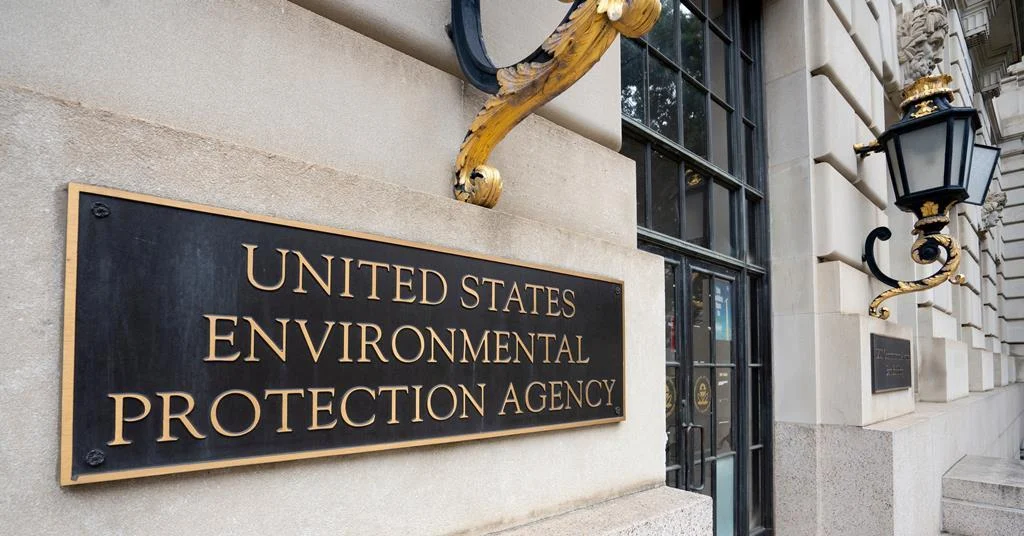
The landscape of American environmental science is undergoing a profound and potentially irreversible transformation. New data analysis from the nonprofit watchdog group Public Employees for Environmental Responsibility (PEER) reveals a precipitous decline in peer-reviewed research originating from the U.S. Environmental Protection Agency (EPA). This downturn, which correlates directly with the massive workforce reductions observed during President Trump’s second term, signals what experts describe as a deliberate "retreat from published research," threatening to hollow out the scientific foundation that has guided federal environmental policy for decades.
The Data: A Statistical Freefall
The figures released by PEER provide a stark, quantitative look at the erosion of the EPA’s research capacity. In 2024, the agency produced a total of 339 peer-reviewed studies. By 2025, that number had fallen to 275—a 19% year-over-year decline.
However, the trajectory for 2026 is far more alarming. Based on the production of only 61 peer-reviewed publications in the first several months of the year, PEER projects an annual total of just 163 studies. Should this projection hold, the EPA’s annual scientific output will have plummeted by more than 40% compared to 2025 and nearly 52% compared to 2024.
"These numbers represent a significant diminution of scientific contributions from the fewer, remaining EPA scientists," says Kyla Bennett, a scientist and attorney serving as PEER’s science policy director. Bennett, who is herself a former EPA staffer, characterizes the trend as an intentional withdrawal from the global scientific dialogue. "It is as if the EPA is seeking to reduce the sum total of human knowledge," she remarked, noting that the agency’s role in providing objective data on human health and ecological integrity is being systematically dismantled.
A Chronology of Erosion
The decline in publications did not happen in a vacuum; it is the culmination of a series of administrative actions that began shortly after the start of President Trump’s second term.
- Early 2025: The administration initiates a massive restructuring of federal agencies, targeting the EPA’s budgetary and personnel pipelines.
- Summer 2025: Tensions reach a breaking point when hundreds of EPA employees—many choosing anonymity—sign a formal dissent letter. This letter voiced strenuous opposition to the administration’s policies, most notably the controversial decision to dissolve the EPA’s Office of Research and Development (ORD). The ORD had functioned as the backbone of the agency’s scientific credibility since its inception.
- Late 2025: The agency begins a wave of disciplinary actions. Records indicate that at least 15 employees linked to the dissent were terminated, with scientists making up roughly one-third of that cohort.
- 2026 (Ongoing): The workforce reduction becomes systemic. Federal data shows that between fiscal years 2025 and 2026, the agency shed 3,000 employees—approximately 20% of its entire workforce.
The Human Cost: Purges and Litigation
The thinning of the EPA’s ranks has been characterized by some observers as a retaliatory purge. According to the American Federation of Government Employees (AFGE) Council 238, which represents 8,000 agency employees, the disciplinary measures taken against dissenters have been unprecedented in the agency’s history.
The union reports that six probationary employees were dismissed, including three scientists, while ten tenured staff members—five of whom were scientists—were also fired. Beyond these terminations, the majority of the dissent letter’s signatories were handed 14-day unpaid suspensions.
In response, AFGE Council 238 has initiated a lawsuit against the federal government. The union’s legal strategy centers on the First Amendment, arguing that the EPA’s disciplinary actions constitute an unconstitutional violation of the employees’ right to free speech and internal dissent. While other federal science agencies—such as the National Institutes of Health and the National Science Foundation—also saw staff sign letters of dissent last summer, the EPA remains the only agency that has pursued such aggressive, formal disciplinary measures against its own personnel.
The "Self-Reinforcing" Effect on Scientific Careers
The implications of this talent flight extend far beyond the immediate loss of current research. Kyla Bennett warns of a "self-reinforcing effect" that could cripple the agency’s recruitment pipeline for a generation.
"Scientific careers rely upon published work," Bennett explains. "When a research institution stops publishing, it ceases to be a viable environment for ambitious, rigorous scientists. Young researchers look at the current state of the EPA and see a graveyard for their professional aspirations."
By discouraging research, the agency is effectively creating a brain drain. When the most talented scientists leave or are forced out, the internal culture shifts, and the institutional knowledge required to interpret complex environmental data disappears. This creates a feedback loop: fewer scientists lead to fewer studies, which in turn leads to a diminished influence for the agency in the broader scientific community, making the EPA a less attractive destination for future scientific talent.
Broader Implications for Policy and Public Health
The most concerning aspect of this decline is its impact on the agency’s core mission: the protection of human health and the environment. EPA regulations have historically been "science-based," meaning that rules regarding air quality, water safety, and toxic chemicals were derived from a robust internal research apparatus.
As the agency’s scientific output withers, the empirical basis for future regulations becomes increasingly fragile. When the EPA stops generating its own peer-reviewed research, it becomes reliant on external studies, which may be funded by stakeholders with specific interests in the outcomes of environmental regulations.
Furthermore, the dissolution of the Office of Research and Development removes the agency’s ability to conduct long-term, independent longitudinal studies. Without this internal oversight, the "scientific contribution of the EPA to a greater understanding of what affects human health and the environment will be significantly diminished," Bennett warns.
Official Responses and the Road Ahead
The agency has remained largely tight-lipped regarding the specific nexus between the personnel cuts and the drop in scientific output. While official statements have emphasized "administrative efficiency" and "budgetary realignment," the data provided by PEER suggests that the cost of these efficiencies is the loss of the agency’s primary purpose: to provide the scientific facts upon which the nation relies to stay safe.
The ongoing litigation by AFGE Council 238 may serve as a crucial test for the protection of federal whistleblowers and the rights of government scientists to challenge policy. However, the damage to the publication records and the loss of experienced researchers may take years, if not decades, to remediate.
As the 2026 fiscal year draws to a close, the scientific community is watching closely. The decline of the EPA as a research powerhouse is not just a story about internal agency politics; it is a story about the changing role of science in American governance. With the volume of peer-reviewed literature shrinking, the nation may soon find itself relying on a shadow of the institutional expertise it once possessed, leaving the public to grapple with the consequences of an agency that is no longer tasked with uncovering the truths behind the environmental challenges of the 21st century.
The question remains: Can the EPA regain its status as a premier scientific institution, or is this the beginning of a permanent retreat from the front lines of environmental science? For now, the charts produced by PEER offer a sobering answer, showing a path of decline that shows no signs of flattening.