Published October 14, 2026 | By Max Garland
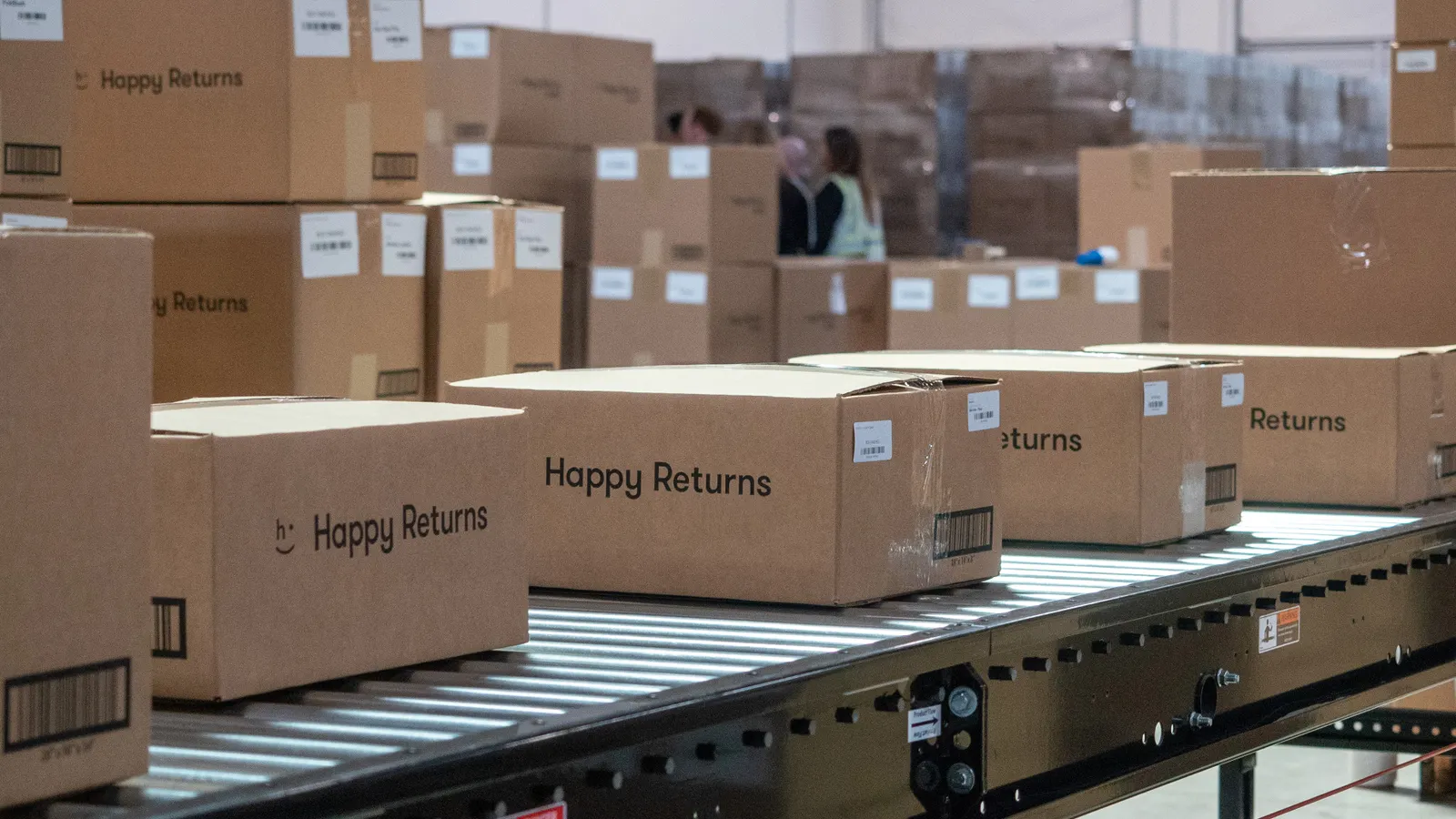
In an aggressive push to capture a larger share of the booming social commerce market, TikTok Shop has announced a groundbreaking integration with Happy Returns, the UPS-owned reverse logistics titan. Major retail brands, including apparel heavyweights Pacsun and Everlane, are already adopting the new capability as merchants brace themselves for the inevitable post-holiday returns deluge.
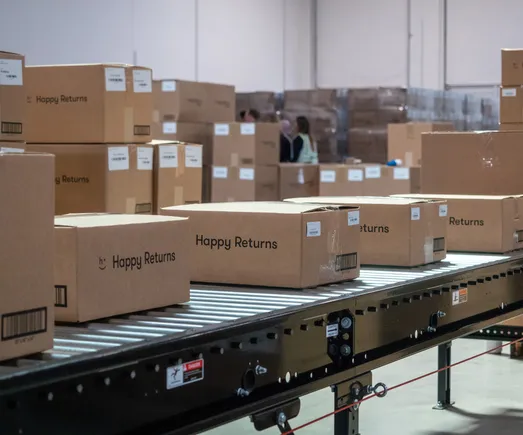
The partnership marks a historic milestone for Happy Returns: it is the first time the company’s infrastructure has been directly embedded into a major social commerce platform’s ecosystem, rather than operating solely through individual merchant websites. According to the announcement, Happy Returns is currently the exclusive box-free, label-free returns option available across TikTok Shop.
The move intensifies the fierce competition in the reverse logistics space, coming on the heels of rival FedEx’s launch of its own competing "Easy Returns" service. By tackling the notoriously friction-heavy reverse supply chain, TikTok Shop and Happy Returns aim to turn a notoriously expensive headache for merchants into a seamless, loyalty-building asset for shoppers.
Main Facts
The core of the new collaboration centers on integrating Happy Returns’ extensive national network of "Return Bars" directly into the TikTok Shop interface. Instead of printing labels, finding cardboard boxes, and waiting in line at traditional shipping carriers, shoppers initiate a return on TikTok, receive a QR code, and drop off the loose item at any designated Happy Returns location.
- Exclusive Partnership: Happy Returns is positioned as TikTok Shop’s sole box-free, label-free returns provider.
- Early Adopters: Prominent retail brands such as Pacsun and Everlane are among the first to roll out the integration.
- Dual Fulfillment Paths: The system is engineered to support both merchants who fulfill orders independently and those utilizing TikTok’s in-house logistics.
- Competitive Landscape: The launch arrives directly to counter rival logistics plays, such as the FedEx Easy Returns service rolled out recently.
For TikTok Shop, which has rapidly transformed from an entertainment app into a formidable e-commerce engine, mastering returns is a critical survival metric. Consumer returns across the retail sector account for hundreds of billions of dollars annually, heavily eroding merchant margins if left unoptimized.
Chronology
The path to integrating social commerce with enterprise-grade reverse logistics has developed rapidly as TikTok Shop expanded its market footprint over recent years:
- Late 2023 – 2024: TikTok Shop officially launches in the United States, rapidly scaling gross merchandise value (GMV) through viral video shopping, creator storefronts, and live-stream events. However, back-end logistics, particularly customer returns, remain largely dependent on traditional, fragmented merchant-led processes.
- 2024–2025: UPS acquires Happy Returns, integrating the reverse logistics provider deeper into its corporate network and expanding the physical footprint of Return Bars across major retail partners (such as Ulta Beauty and Staples). Meanwhile, competing carriers like FedEx launch dedicated drop-off solutions like Easy Returns.
- Mid-2026: Recognizing the friction in social commerce returns—where impulsive buying often leads to higher return rates—TikTok and Happy Returns begin engineering a direct systems integration.
- October 14, 2026: The partnership is officially announced to the public. Brands like Pacsun and Everlane rush to adopt the integration ahead of the critical Q4 holiday shopping season and the anticipated January returns spike.
Supporting Data
The financial and operational stakes surrounding consumer returns are staggering, providing the underlying economic rationale for the TikTok-Happy Returns alliance:
- $850 Billion Problem: According to data from the National Retail Federation (NRF), U.S. consumers are projected to return nearly $850 billion worth of merchandise annually, putting immense strain on retail supply chains.
- 10,000 Threshold: For independent merchants fulfilling their own orders on TikTok Shop, Happy Returns advises that the integration is most cost-effective and operationally viable for brands processing around 10,000 or more returns a year.
- Target Categories: The service is primarily optimized for high-return categories such as apparel, footwear, and accessories, which frequently suffer from sizing and fit discrepancies when purchased impulsively via social video feeds.
- Operational Divide: For merchants using Fulfilled by TikTok (FBT), the integration requires zero setup, as existing Happy Returns capabilities can be activated natively directly through the TikTok Shop Seller Center. For seller-fulfilled operations, Happy Returns provides dedicated onboarding guidance.
Official Responses
Executives from both companies highlighted the strategic importance of bridging social media entertainment with bulletproof supply chain infrastructure.
Patrick Nommensen, President of Strategic Initiatives at TikTok Shop, emphasized the consumer trust factor in his statement:
"Given customer returns cover billions of dollars’ worth of products annually, sellers and the marketplaces hosting them are pursuing returns options that aid shopper convenience and limit processing costs for merchants. For TikTok Shop, the Happy Returns collaboration will help make returns ‘faster, hassle free, and more trustworthy.’"
Birdie Smith, Head of Sales at Happy Returns, elaborated on the operational sweet spot for brands during a merchant-focused webinar:

"If you have seller-fulfilled orders, this is really best fit for merchants that are doing around 10,000 or more returns a year, primarily focused in apparel, footwear, and accessories."
David Sobie, Co-founder and CEO of Happy Returns, underscored how the partnership elevates the platform’s overall merchant value proposition:
"Our TikTok Shop partnership brings Happy Returns into one of the fastest-growing commerce ecosystems, giving greater confidence at purchase while supporting the fraud-resistant, scalable returns infrastructure merchants need to grow."
Implications
The integration of Happy Returns into TikTok Shop carries profound implications for the future of retail, logistics, and consumer behavior:
1. Boosting Conversion Rates Through Consumer Confidence
Social commerce relies heavily on impulse buying driven by short-form video content. However, hesitation regarding "how hard it is to return if it doesn’t fit" often stops a consumer from tapping the "Buy Now" button. By offering a nationally recognized, box-free return method upfront, TikTok Shop removes a major psychological barrier to purchase, directly translating to higher conversion rates for brands.
2. Combating Fraud and Protecting Merchant Margins
Reverse logistics is uniquely vulnerable to friendly fraud, wardrobing, and shipping scams. By routing returns through established, physical Return Bar hubs where items are immediately inspected and aggregated before shipping back to merchants, Happy Returns provides a fraud-resistant infrastructure. This drastically lowers processing costs and mitigates inventory write-offs for brands operating on tight margins.

3. Escalating the Carrier Wars (UPS vs. FedEx)
The reverse logistics sector has turned into a high-stakes battleground for major logistics providers. With UPS utilizing Happy Returns to anchor deep partnerships with dominant e-commerce ecosystems like TikTok Shop, rival carriers like FedEx—fresh off the rollout of its Easy Returns program—will face increased pressure to secure their own exclusive platform integrations.
4. Surviving the Post-Holiday Crunch
Timing the rollout for mid-October gives brands precious weeks to stress-test the integration before the dual onslaught of Black Friday, Cyber Monday, and the massive January returns spike. Retailers utilizing Pacsun and Everlane as bellwethers will be watching closely to see if box-free social commerce returns can successfully weather the peak-season storm.
As social commerce matures from a marketing novelty into a multi-billion-dollar retail titan, seamless reverse logistics is no longer a backend afterthought—it is the foundational pillar determining which platforms and brands will ultimately win the modern consumer.