WASHINGTON — In the modern commercial and industrial real estate landscape, energy efficiency is no longer merely a corporate sustainability talking point—it is a critical driver of operational profitability. Yet, thousands of commercial facilities across North America continue to operate with legacy heating, ventilation, and air conditioning (HVAC) infrastructure governed by obsolete pneumatic or fragmented standalone control systems.
While facility managers are increasingly aware of the staggering operational inefficiencies tied to these outdated architectures, many assume that upgrading to state-of-the-art Direct Digital Control (DDC) systems is a capital-expenditure mountain too steep to climb.
However, a massive pool of untapped financial support exists in plain sight: utility rebate and incentive programs. Designed to encourage large-scale energy conservation, these programs can dramatically alter the financial calculus of an HVAC overhaul. By navigating prescriptive and custom rebate pathways, building owners can slash implementation costs, accelerate return on investment (ROI), and position their facilities for long-term energy resilience.
Main Facts: The DDC Imperative and the Rebate Landscape
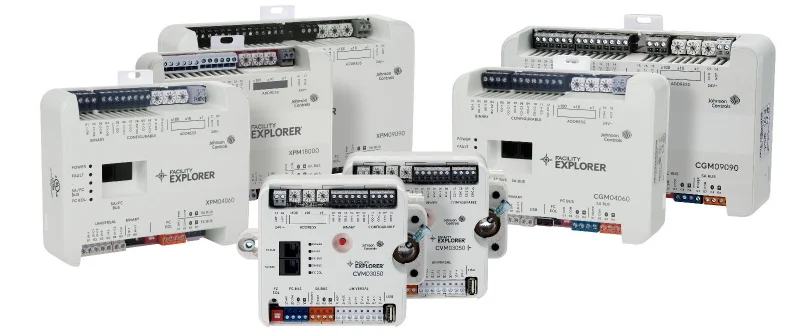
Today, Direct Digital Control (DDC) systems represent the gold standard and industry baseline for all new commercial and industrial HVAC installations. Offering precision, remote monitoring, automated scheduling, and advanced fault detection, DDC systems eliminate the drift, maintenance overhead, and energy waste inherent in older technologies.
Despite these clear advantages, a significant portion of the commercial building stock remains tethered to the past:
- The Legacy Problem: Pneumatic controls, which rely on compressed air networks, require constant calibration, are prone to moisture leaks, and lack the data-gathering capabilities required for modern building optimization. Standalone electronic controls, meanwhile, operate in silos, preventing centralized facility management.
- The Financial Barrier: Upgrading a facility’s entire control infrastructure involves upfront engineering, hardware replacement, software integration, and labor costs—frequently deterring budget-constrained property owners.
- The Rebate Solution: To bridge this financial gap, electric and gas utility companies nationwide offer lucrative incentive programs. These programs are specifically structured to offset the capital expenditure of modernizing building management systems (BMS), rewarding building managers for permanently reducing their grid demand.
Essentially, utility incentives provide a two-pronged financial reward: immediate capital reduction via rebates, followed by perpetual operational savings through reduced monthly utility consumption.
Chronology: The Lifecycle of a DDC Upgrade and Rebate Acquisition
For facility managers embarking on a control system modernization project, understanding the chronological trajectory of the process is vital to maximizing financial returns. While every utility provider has unique administrative workflows, the typical journey from obsolete controls to a high-efficiency DDC installation follows a structured path.
Phase 1: Assessment and Pre-Qualification (Months 1–2)
The process begins with an internal audit where facility managers identify the limitations of their current pneumatic or standalone systems. During this stage, management should consult with energy services partners to pre-screen local utility rebate offerings. Engaging the utility before purchasing equipment or signing contracts is critical, as most programs strictly prohibit retroactive applications for projects already underway.
Phase 2: Pathway Selection—Prescriptive vs. Custom (Month 3)
Once the baseline is established, the facility team determines which rebate pathway aligns best with the scale of the project:
- The Prescriptive Route: Best suited for straightforward, component-level upgrades where energy savings are standardized and easily calculated.
- The Custom Route: Designed for comprehensive, complex system overhauls that require rigorous engineering analysis to prove deep energy reductions.
Phase 3: Engineering Studies and Utility Commitment (Months 4–5)
For custom rebates, a certified energy engineer is brought on-site to conduct a thorough energy audit. The engineer drafts a comprehensive report detailing conservation measures, estimated kilowatt-hour (kWh) and therm savings, and project costs. This report is submitted to the utility provider. Upon review, the utility issues an official financial commitment letter, locking in the rebate amount and approving the subsidization of the engineering study itself.
Phase 4: Project Implementation and Commissioning (Months 6–8)
With funding commitments secured, contractors execute the physical installation of the DDC hardware, field controllers, sensors, and central management software. Rigorous commissioning follows to ensure that the new system operates at peak design efficiency and meets all criteria outlined in the utility agreement.
Phase 5: Verification and Rebate Payout (Months 9–10)
Following successful commissioning, the utility performs a final verification—either via documentation review or an on-site inspection. Once verified, the monetary incentive is disbursed directly to the building owner, concluding the formal rebate cycle while marking the beginning of decades of compounding energy savings.
Supporting Data: Understanding Prescriptive vs. Custom Rebates
To successfully capture utility funds, facility managers must understand the mechanics of the two primary rebate methodologies: Prescriptive Rebates and Custom Rebates. Each serves a distinct project scale and administrative complexity.
+--------------------------------------------------------------------------+
|                       DDC REBATE PATHWAYS AT A GLANCE                    |
+------------------------------+-------------------------------------------+
| PRESCRIPTIVE REBATES         | CUSTOM REBATES                            |
+------------------------------+-------------------------------------------+
| • Best for straightforward   | • Best for complex, comprehensive         |
|   upgrades                   |   facility overhauls                      |
| • Reimbursement per energy   | • Requires a professional energy study    |
|   efficiency point / unit    | • Utility commits funds based on          |
| • Minimal administrative     |   projected custom savings                |
|   overhead                   | • Utility covers ~50% of study costs      |
+------------------------------+-------------------------------------------+
1. Prescriptive Rebates: Simplicity and Speed
Prescriptive rebates represent the most straightforward acquisition path. Utility companies publish fixed schedules of incentives that reimburse building owners on a per-unit or per-energy-efficiency-point basis for upgrading specific equipment to DDC standards.
- How It Works: If a facility replaces a designated number of pneumatic actuators with digital controllers, or upgrades specific air-handling unit (AHU) controls, the utility pays a pre-determined dollar amount per point upgraded.
- Advantages: Minimal paperwork, fast approval times, and predictable financial returns.
- Limitations: These programs are rigid. If an upgrade does not fit neatly into the utility’s pre-approved catalog of equipment or efficiency metrics, it will not qualify.
2. Custom Rebates: Maximizing High-Level Incentives
For comprehensive facility-wide modernizations that transcend basic component swaps, custom rebates offer significantly higher financial rewards.
- The Energy Study: In a custom rebate framework, a qualified energy engineer performs an exhaustive facility-wide energy audit. This study evaluates building thermal loads, occupancy patterns, equipment runtimes, and baseline energy consumption.
- The Deliverable: The engineer produces a detailed technical report outlining bespoke conservation measures, estimated energy savings, and projected greenhouse gas reductions.
- The Financial Incentive: Based on this report, the utility commits a substantial monetary incentive specifically calculated against the projected energy reduction.
- Cost-Sharing Benefits: A major perk of the custom route is that if the customer decides to move forward with the project, the utility typically covers half the cost of the initial engineering study. This drastically reduces the financial barrier to obtaining high-level professional consulting.
Official Responses and Industry Perspectives
As building decarbonization mandates sweep across municipalities nationwide, energy efficiency experts and utility administrators are emphasizing the urgency of modernizing building control layers.
"Many facility operators view their HVAC systems as a sunk cost, managing them strictly on a reactive, break-fix basis," notes Thomas Vance, a senior energy consultant specializing in commercial building automation. "What they miss is that an obsolete pneumatic system is a silent budget drain. Utility rebate programs are essentially government and private utility sectors shouting, ‘Let us help you pay to fix this.’ Ignoring these incentives is literally leaving money on the table."
Utility administrators echo this sentiment, pointing out that peak-demand reduction achieved via modern DDC systems helps stabilize regional electrical grids, preventing brownouts during extreme weather events.
"From a grid management perspective, incentivizing DDC upgrades is one of our most cost-effective investments," explains Sarah Lin, director of commercial programs for a major regional electric utility. "When a building shifts from leaky pneumatic controls to a finely tuned digital automation system, peak load drops dramatically. By co-funding engineering studies and offering custom rebates, we align our financial goals with the building owner’s bottom line: lower energy use, lower operating costs, and a more resilient grid."
Furthermore, industry leaders stress that energy management firms are increasingly bridging the gap between complex utility bureaucracy and busy facility managers. Modern Building Automation Systems (BAS) providers now offer turnkey administrative services—handling everything from initial rebate applications and engineering coordination to final project implementation.
Implications: Future-Proofing Facilities and Maximizing ROI
The decision to upgrade from obsolete pneumatic or standalone controls to a modern DDC architecture carries profound implications that extend far beyond a one-time utility check.
1. Accelerated Return on Investment (ROI)
When capital expenditure is offset by prescriptive or custom utility rebates—and further supplemented by the utility covering 50% of the engineering study—the payback period for a DDC upgrade shrinks dramatically. What might have looked like a seven-to-ten-year payback project on paper can frequently be compressed into a two-to-four-year window once incentives are factored in.
2. Enhanced Tenant Comfort and Asset Valuation
Modern DDC systems offer superior temperature and humidity control, eliminating hot and cold spots that plague older buildings. In an increasingly competitive commercial leasing market, high indoor air quality (IAQ) and energy efficiency certifications (such as ENERGY STAR and LEED) directly elevate property valuations and tenant retention rates.
3. Regulatory Compliance and Decarbonization Readiness
With stringent building performance standards (such as Local Law 97 in New York or BERDO in Boston) taking effect across major metropolitan areas, penalized carbon emissions are becoming a harsh financial reality for non-compliant buildings. Upgrading to a DDC-driven BAS provides the granular data tracking and optimization required to meet these evolving municipal carbon caps, insulating building owners from heavy fines.
4. Comprehensive Partnership Solutions
Navigating the labyrinth of utility compliance, engineering audits, and technical installation requires specialized expertise. Organizations such as Building Automation Systems (BAS) provide end-to-end support, guiding facility managers seamlessly through every stage of the rebate lifecycle—from initial application paperwork and custom energy studies to final implementation.
Conclusion
For facility managers overseeing aging infrastructure, the message is clear: the technology exists, the financial incentives are active, and the operational advantages are undeniable. By capitalizing on utility rebate programs today, building owners can transform an archaic, high-maintenance HVAC liability into a streamlined, high-performance asset—boosting profitability while championing energy sustainability.
To learn more about how to navigate rebate programs and optimize your facility’s infrastructure, visit the Building Automation Services Contact Page or explore their comprehensive Energy Consulting Services.