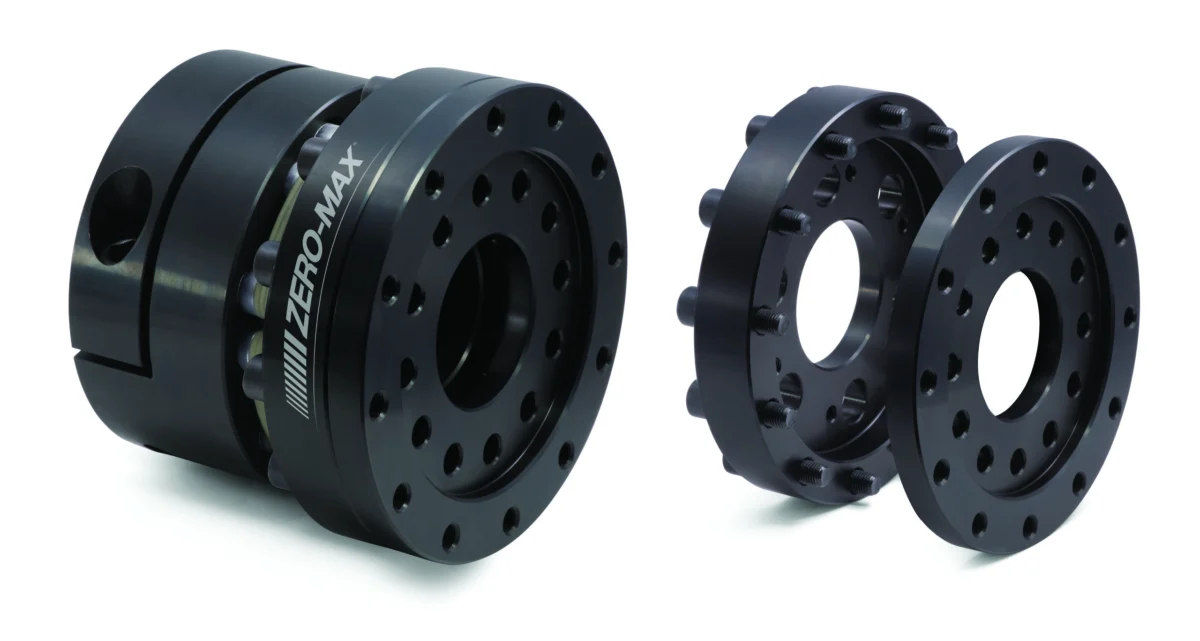
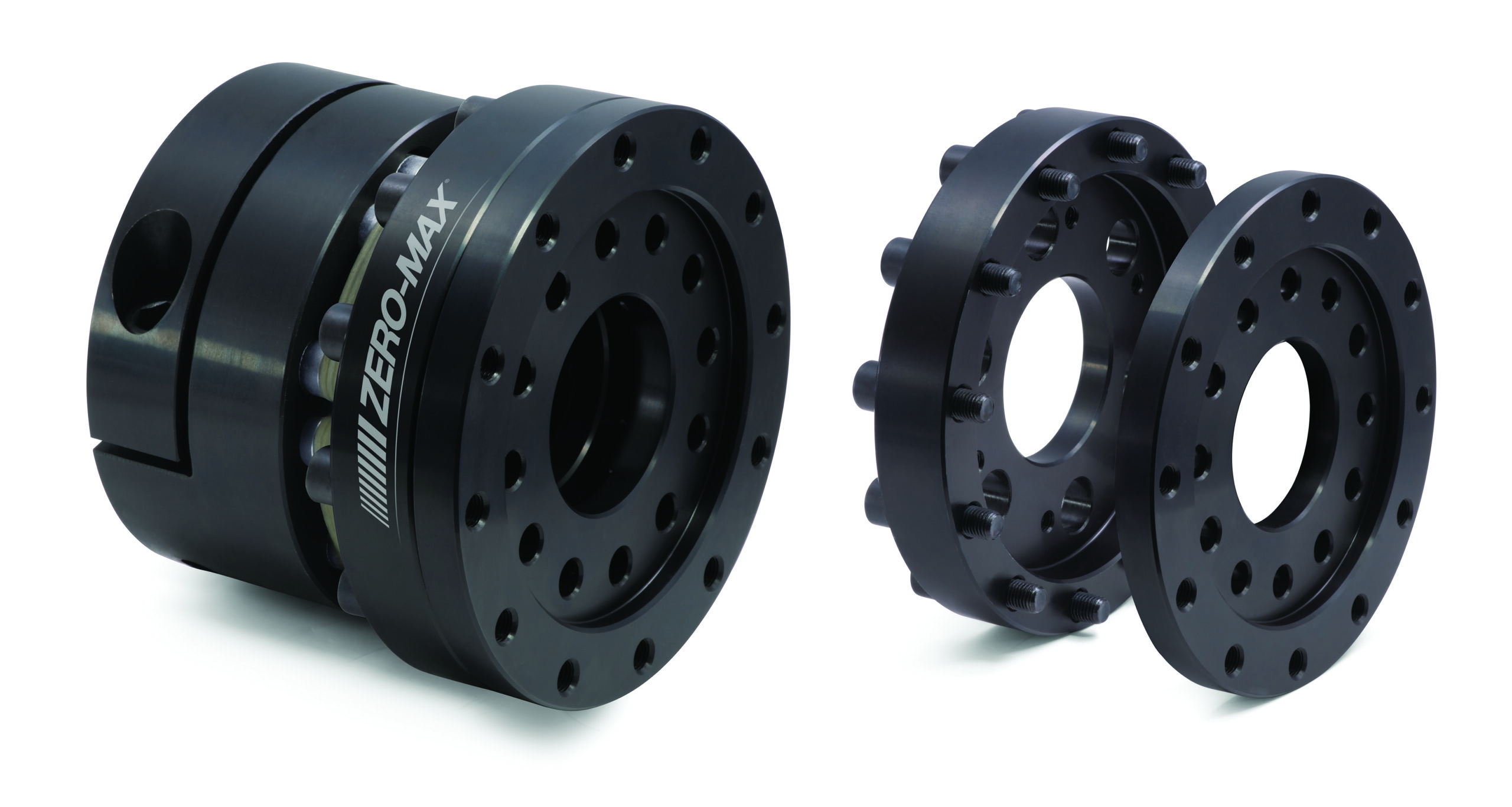
PLYMOUTH, MN — In a move designed to streamline high-precision mechanical power transmission, Zero-Max has announced the introduction of a new ISO flange adaptor for its flagship CD Power-Series flexible shaft couplings. The engineering update is tailored specifically for modern automation, robotics, and servo-driven systems that demand uncompromising torsional stiffness, high positioning accuracy, and a minimized overall footprint.
By integrating standardized mounting capabilities directly into the coupling architecture, Zero-Max aims to eliminate the historical engineering hurdles associated with coupling precision gear reducers, high-performance motors, and automated machinery.
Main Facts: Engineering Precision and Direct Connection
The core enhancement centers around the integration of an ISO adaptor mount flange designed to interface seamlessly with ISO 9409-1 bolt patterns—the global standard widely utilized by manufacturers of precision gear reducers, industrial actuators, and robotic wrists.
Traditionally, engineers tasked with coupling a standard shaft-based coupling hub to an ISO-flanged gearbox had to rely on intermediary transition components, such as separate shaft adaptors. While functional, these extra parts invariably introduced mechanical vulnerabilities, including increased package size, added assembly weight, higher rotational inertia, and, most critically, a reduction in overall torsional stiffness.
The new Zero-Max ISO adaptor mount circumvents these limitations by providing a direct, robust connection to precision gear reducers. By stripping away redundant transition hardware, the updated CD Power-Series couplings preserve the high torsional rigidity necessary for high-speed indexing and exact positioning tasks. Furthermore, the streamlined assembly reduces total system weight and rotational inertia—key metrics in maximizing the dynamic performance of servo motors.
To accommodate specialized industrial assemblies, Zero-Max has engineered the CD Power-Series adaptor mount to support optional locating-pin features. Many precision gear reducers incorporate a locating pin directly into their ISO mounting flanges to guarantee exact component orientation and simplified reassembly following routine maintenance or servicing. Zero-Max’s capability to incorporate a corresponding mating feature ensures that alignment is preserved without guesswork.
Chronology: The Evolution of High-Performance Servo Couplings
The development of the ISO-adapted CD Power-Series reflects a multi-decade trend in industrial automation toward higher integration, reduced footprints, and tighter error budgets.
- Late 20th Century: As brushless servo motors and computerized numerical control (CNC) machinery gained widespread adoption, traditional mechanical couplings—such as old-style jaw or chain couplings—proved inadequate due to backlash and compliance issues. The industry shifted rapidly toward zero-backlash flexible couplings, including beam, bellows, and composite disc designs.
- The Rise of the CD Design: Zero-Max carved out a specialized niche in high-end motion control with its Composite Disc (CD) technology. Engineered for servo-rated applications, these couplings utilized high-strength composite flex elements capable of handling high torsional loads while accommodating parallel, angular, and axial misalignment without introducing backlash.
- Expansion of the Power-Series: Recognizing the growing scale of industrial robotics, heavy-duty packaging machinery, and large factory automation lines, Zero-Max introduced the CD Power-Series to handle higher torque thresholds previously reserved for heavier, less responsive coupling types.
- Current Innovation (2026): With the rapid proliferation of modular, ISO-standardized planetary gearboxes and collaborative robotic joints, engineering teams faced recurring integration challenges at the gearbox-to-coupling interface. Zero-Max’s release of the integrated ISO flange adaptor directly addresses this modern bottleneck, shifting the market toward direct-mount, zero-transition coupling strategies.
Supporting Data: Specifications and Performance Metrics
The CD Power-Series couplings are engineered from the ground up to thrive in punishing, high-dynamic operating environments. To understand their utility, it is helpful to examine the baseline technical principles governing servo-rated flexible couplings.
1. Torsional Rigidity vs. Misalignment Accommodation
In servo applications, torsional stiffness dictates how faithfully a motor’s rotational input is translated to the load. Any "springiness" or wind-up in the coupling creates phase lag, reduces control-loop bandwidth, and extends settling times. Zero-Max’s composite disc design delivers exceptional torsional stiffness while remaining flexible enough to absorb unavoidable misalignments:
- Angular Misalignment: Compensates for angular deviations between shafts without inducing high reactionary loads on adjacent bearing supports.
- Parallel Misalignment: Accommodates offset shafts gracefully through the flex element geometry.
- Axial Motion: Permits thermal expansion and contraction of the drive train without transferring destructive thrust loads into the motor or reducer bearings.
2. Reducing Inertia and System Weight
In high-acceleration pick-and-place robots or electronic assembly lines, every gram of added mass on the driven side of the motor degrades acceleration capability and increases energy consumption. By eliminating the need for a secondary shaft-to-flange adaptor hub, the direct ISO flange design significantly trims the effective envelope of the drive assembly. Lower rotational inertia ($J$) translates directly into:
- Faster cycle times.
- Reduced thermal output from the servo motor.
- Improved energy efficiency over millions of continuous indexing cycles.
3. Diverse Hub and Shaft Configurations
Beyond the new ISO flange adaptor, the CD Power-Series is built for versatility. The product line is available with a variety of opposing hub configurations tailored for diverse mechanical interfaces:
- Keyed and Keyless Shaft Options: Accommodates traditional keyed shafts as well as high-integrity friction-style clamping hubs (keyless bushings) that prevent shaft fretting and maintain 360-degree clamping symmetry at high RPMs.
- Precision Gear Reducer Integration: Directly mates with inline, right-angle, and planetary gearheads commonly found in modern multi-axis machinery.
- Actuator and Robotic Compatibility: Perfectly sized for the high torque-density requirements of industrial articulated arms, automated guided vehicles (AGVs), and gantry systems.
Official Responses and Industry Perspective
While specific executive commentary highlights the practical engineering philosophy driving the product expansion, motion control specialists emphasize that interface standardization is becoming a mandatory requirement for modern original equipment manufacturers (OEMs).
Industry analysts note that as factory floors become more automated, the margin for downtime shrinks. Maintenance technicians working on high-speed packaging lines or complex automated storage and retrieval systems (AS/RS) cannot afford lengthy alignments or convoluted multi-piece assemblies.
"When designing high-performance servo loops, every component added to the mechanical power train is a potential point of failure, compliance loss, or imbalance," explains an independent motion control application engineer. "A direct ISO flange integration on a zero-backlash composite disc coupling solves a very real geometric headache for machine builders. It lets them bolt straight from the gearbox face to a high-stiffness coupling without inventing custom intermediate hardware."
Zero-Max’s engineering and customer support divisions have positioned themselves to assist design teams through the complex transition from legacy coupling designs to optimized ISO-flanged systems. The company offers comprehensive sizing and selection support via phone, email, and interactive online engineering sessions, ensuring that customers correctly match torque capacities, torsional rates, and inertia profiles to their specific application parameters.
Implications for Automation, Robotics, and Machine Design
The introduction of the ISO flange adaptor for the CD Power-Series carries several far-reaching implications for mechanical engineers and system integrators across multiple sectors.
Enhanced Servo Performance and Reduced Settling Time
In high-speed indexing applications—such as rotary dial tables, automated filling lines, and electronic component insertion machines—settling time dictates total throughput. If a coupling introduces excessive wind-up or vibration, the controller must wait longer for the system to settle before executing the next operation. The high torsional stiffness of the CD Power-Series, augmented by the rigid direct-mount ISO flange, dampens torsional vibrations rapidly, directly cutting down settling times and boosting overall plant productivity.
Space Savings in Compact Machinery
Modern machine design is defined by miniaturization. Engineers are constantly challenged to pack more power into smaller enclosures—whether inside the tight confines of a medical diagnostic device, an articulated robotic wrist, or a compact modular conveyor drive. Eliminating transition adaptors saves critical millimeters of axial length and radial clearance, enabling cleaner, more compact machine layouts.
Simplified Maintenance and Servicing
Machine reliability is heavily dependent on serviceability. Standardized ISO 9409-1 bolt patterns ensure that replacement parts are universally accessible. Furthermore, the optional locating-pin integration means that if a gearbox or coupling must be swapped out during routine plant maintenance, the exact angular orientation of the assembly is locked in instantly. This eliminates tedious recalibration procedures, cuts mean-time-to-repair (MTTR), and minimizes human error on the factory floor.
Future-Proofing Automation Architectures
As industrial robotics and modular automation hardware continue to converge around standardized metric interfaces, component manufacturers must align their product roadmaps with global standards. By embracing the ISO 9409-1 standard within its high-performance coupling line, Zero-Max ensures that the CD Power-Series remains a go-to solution for next-generation machine architectures.
Conclusion
Zero-Max’s addition of the ISO flange adaptor to its CD Power-Series flexible shaft couplings represents a targeted, highly practical advancement in mechanical power transmission. By bridging the gap between standardized precision gear reducers and high-performance servo couplings without the deadweight of intermediate transition hardware, Zero-Max delivers a cleaner, stiffer, and more responsive drive train.
For engineers designing the next wave of industrial robots, automated machinery, and precision actuators, the updated CD Power-Series offers an optimized pathway to higher speeds, tighter positioning accuracy, and long-term mechanical reliability.
For detailed technical specifications, CAD models, and application sizing guidelines, engineering professionals can visit the official Zero-Max website at zero-max.com.