WASHINGTON — The U.S. Chemical Safety and Hazard Investigation Board (CSB) has released its comprehensive final report detailing the root causes of the major explosion and fire that rocked the Shell Polymers Monaca facility in Beaver County, Pennsylvania. The incident, which occurred on June 4, 2025, severely damaged critical infrastructure, forced the emergency evacuation of on-site personnel, and released thousands of pounds of hazardous hydrocarbons into the atmosphere.
The federal investigation sheds light on a dangerous convergence of operational vulnerabilities, including the assignment of inexperienced personnel to critical engineering tasks, a heavy reliance on fragile administrative safeguards rather than automated engineering controls, and poor human-machine interface (HMI) design that directly contributed to operator error. While the blast miraculously resulted in no fatalities or serious injuries, federal investigators warn that the structural and operational failures exposed by the incident could easily have yielded a catastrophic tragedy under slightly different circumstances.
Main Facts: The Incident and Immediate Aftermath
The incident centers on "Furnace 5," one of seven massive ethane cracking furnaces housed within the sprawling Monaca petrochemical complex. The facility is designed to convert ethane—a natural gas liquid—into ethylene, a fundamental building block for global plastics and polymer manufacturing.
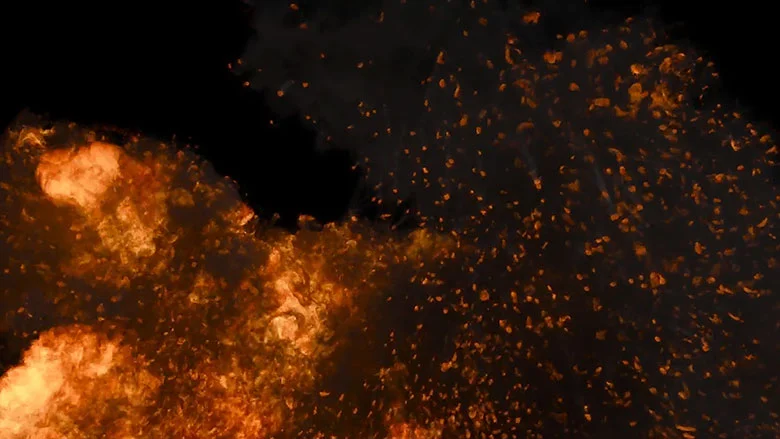
On June 4, 2025, a catastrophic breach occurred when flammable "cracked gas" managed to backflow from downstream processing equipment directly into the firebox of Furnace 5. Once inside the enclosure, the hydrocarbon vapor encountered active, lit pilot burners and instantly ignited. The resulting overpressure explosion severely compromised the structural integrity of the furnace firebox wall, triggering a secondary fire that burned intensely until emergency response teams could isolate the fuel sources and suppress the flames.
Fifteen employees were forced to evacuate the immediate area as thick plumes of smoke billowed from the plant. According to official estimates provided by Shell, the blast and subsequent fire inflicted approximately $95 million in property damage. Furthermore, environmental impact assessments revealed that the incident released an estimated 5,100 pounds of ethylene and associated combustion products into the surrounding air.
Despite the staggering financial toll and environmental release, plant operations eventually resumed on a partial basis; Furnace 5 itself underwent extensive repairs and was successfully brought back into service roughly seven months after the accident. However, the physical recovery of the hardware did little to close the books on the profound systemic questions raised by federal safety regulators.
Chronology of Events: From Routine Maintenance to Catastrophe
To fully understand how a state-of-the-art petrochemical facility suffered such a major containment failure, the CSB constructed a detailed timeline tracing events back to the early months of 2025.
The Ethane Cracking Process and Coke Accumulation
The core function of the Shell Monaca facility relies on high-temperature thermal cracking. Ethane is heated inside the facility’s seven furnaces to break down molecular bonds, producing ethylene and various byproducts. Over time, this high-heat process naturally generates a solid carbon residue known as "coke."
To prevent coke from migrating downstream and fouling sensitive downstream equipment, the furnaces are equipped with specialized "coke traps." Historically, these traps required periodic maintenance, though none of the coke traps across any of the seven furnaces at the Monaca plant had ever been cleaned since the facility’s commissioning.
The Spring 2025 Outage and Cleaning Campaign
In late March 2025, during a scheduled maintenance outage of the ethane cracking unit, Shell inspectors examined the coke trap of Furnace 1. Recognizing a need for maintenance, facility management decided in early April 2025 that the coke traps across all seven furnaces should be cleaned sequentially during the ongoing outage.
Maintenance crews successfully cleaned the coke traps in Furnaces 1, 2, 4, and 7 without incident. Furnace 5 was designated as the next unit in line for the cleaning procedure. However, operational timing created a staggered status across the facility: by the time technicians completed the cleaning of Furnace 5’s coke trap on June 3, 2025, Furnaces 1, 2, 3, and 4 had already been cleared, restarted, and brought back into full ethane cracking mode.
The June 4, 2025 Explosion
As operations teams prepared to return Furnace 5 to active service following its maintenance cycle, a process control engineer was assigned to handle the complex valve configurations required to remove the furnace from its isolated state.
Tragically, the engineer—who was performing this specific, high-stakes task for the very first time—inadvertently manipulated the control systems in a way that simultaneously opened two critical motor-operated valves (MOVs) used to isolate Furnace 5 from the downstream quench tower.
Opening both valves in tandem established an unintended, direct flow path. This path allowed pressurized, highly flammable cracked gas to flow backward from the downstream equipment into the idle furnace firebox. Approximately six minutes after the valves were opened, the accumulated gas migrated to the lit pilot burners, triggering the massive explosion and subsequent fire that permanently altered the facility’s safety narrative.
Supporting Data: Systemic Failures and Contributing Factors
The CSB’s final report makes it clear that the Monaca explosion was not merely the result of a single human error, but rather the predictable outcome of multiple overlapping deficiencies in engineering design, administrative policy, and human factors engineering.
1. Inexperienced Personnel and Deficient Training
Federal investigators discovered that the process control engineer tasked with managing the complex valve alignment for Furnace 5 had never performed the procedure before and possessed limited overall process knowledge. Assigning a high-risk, non-routine task to an inexperienced worker without adequate direct supervision exposed a critical vulnerability in Shell’s operational management systems.
2. Excessive Reliance on Administrative Controls
Shell’s internal process hazard analyses (PHAs) had previously identified cracked-gas backflow as a known, potentially fatal hazard. To mitigate this risk, the facility relied on a staggering 11 separate administrative controls.
However, the CSB noted a fundamental flaw: every single one of these 11 controls depended entirely on human compliance—meaning they required workers and managers to strictly follow written procedures without deviation. When human error inevitably occurred, the administrative safeguards offered zero physical protection.
Crucially, the CSB uncovered evidence that the original furnace technology licensor had actually provided built-in, automated engineering controls capable of preventing backflow. Yet, for reasons that remain unclear, Shell failed to configure or activate these safety features during the removal of the double-isolation state.
3. Flawed Human-Machine Interface (HMI) Design
Compounding the reliance on human memory and procedure was a poorly designed computer interface. The CSB’s investigation revealed that Shell’s Human-Machine Interface displayed three nearly identical valve icons on a single digital logic screen.
Compounding the visual confusion, the identification tags assigned to these vital safety-critical valves differed only by their final digit. This counterintuitive digital layout made it exceedingly difficult for an operator—let alone a novice engineer—to clearly distinguish between the valves, directly contributing to the accidental opening of the wrong hardware paths.
Official Responses and Stakeholder Reactions
Federal safety officials pulled no punches when assessing the corporate and operational culture that allowed the accident to happen.
CSB Chairman Steve Owens emphasized the absolute necessity of prioritizing reliable engineering over mere paperwork and procedural compliance. "This serious incident highlights the importance of ensuring that the personnel who are assigned to critical tasks actually have the experience to do them, as well as the need to have a process control system that is easy to understand and clearly communicates essential information to the people operating it," Owens stated. "Fortunately no one was killed or seriously injured in this incident, but it could have been even worse under different circumstances."
Echoing these concerns, CSB Investigator Owen Trippany pointed directly to the failure to utilize available technology. "This incident demonstrates the importance of using engineered safeguards to control serious process hazards in all modes of operation, rather than relying solely on procedures and worker actions," Trippany remarked. "The CSB’s investigation found that available engineering controls could have been used to prevent the backflow of flammable gas into the furnace."
In response to the findings, the CSB has formally issued two targeted safety recommendations to Shell Polymers Monaca to prevent a recurrence of the disaster:
- Hazard Analysis Review: Shell must review its existing hazard analyses to identify any potentially catastrophic scenarios that currently rely exclusively on administrative controls, and subsequently implement inherently safer designs or automated engineering safeguards where appropriate.
- Engineered Backflow Prevention: Collaborating with technology licensors and adhering to recognized industry best practices, Shell must implement and maintain a dedicated, automated engineered control system designed to physically prevent cracked gas from backflowing into any furnace during all operational modes, including startup and maintenance.
Broader Implications for the Petrochemical Industry
The Shell Monaca incident serves as a sobering reminder to the broader chemical and petrochemical manufacturing sectors regarding the hidden dangers of operational complacency during non-routine procedures.
As facilities across the United States age and shift toward increasingly automated digital control rooms, the relationship between human operators and machine interfaces has never been more critical. The CSB’s findings underscore a vital lesson: human-machine interfaces must be meticulously engineered to minimize cognitive load and eliminate ambiguity, especially when managing high-energy petrochemical streams where a single keystroke can mean the difference between normal operations and a multi-million-dollar explosion.
Furthermore, the report challenges the chemical industry’s historical reliance on "paper barriers"—administrative rules, checklists, and standard operating procedures—as primary defenses against catastrophic failures. Regulators are increasingly drawing a hard line, asserting that wherever technology exists to physically block a hazard, companies have a moral and regulatory obligation to implement engineered safety systems that do not depend on human perfection.
For Shell Polymers Monaca, the path forward involves transforming the painful lessons of June 4, 2025, into permanent cultural and structural upgrades. For the rest of the industry, the CSB’s final report stands as a comprehensive roadmap of what not to do when managing the immense forces of modern industrial chemistry.