In the race toward Industry 4.0, manufacturing leaders are increasingly confronted by a sobering reality: the promise of Artificial Intelligence (AI), advanced analytics, and autonomous systems is often bottlenecked by the very infrastructure meant to power them. While the ambition to digitize is universal, the underlying data—fragmented, siloed, and often unstructured—is frequently incapable of supporting the high-velocity demands of modern machine learning models.
To address this critical impasse, Amazon Web Services (AWS) and HighByte have collaborated to release a comprehensive, 25-page white paper titled, “A Maturity Model for Industrial Data Management.” This framework provides a standardized, actionable roadmap for manufacturing organizations to assess their current standing and bridge the gap between legacy data practices and the requirements of an AI-driven future.
Main Facts: The Industrial Data Bottleneck
The fundamental premise of the new white paper is simple but profound: AI is only as effective as the data feeding it. Many manufacturers have rushed to deploy predictive maintenance models or real-time process optimization tools, only to find that their data lacks the context, quality, and accessibility required for reliable output.
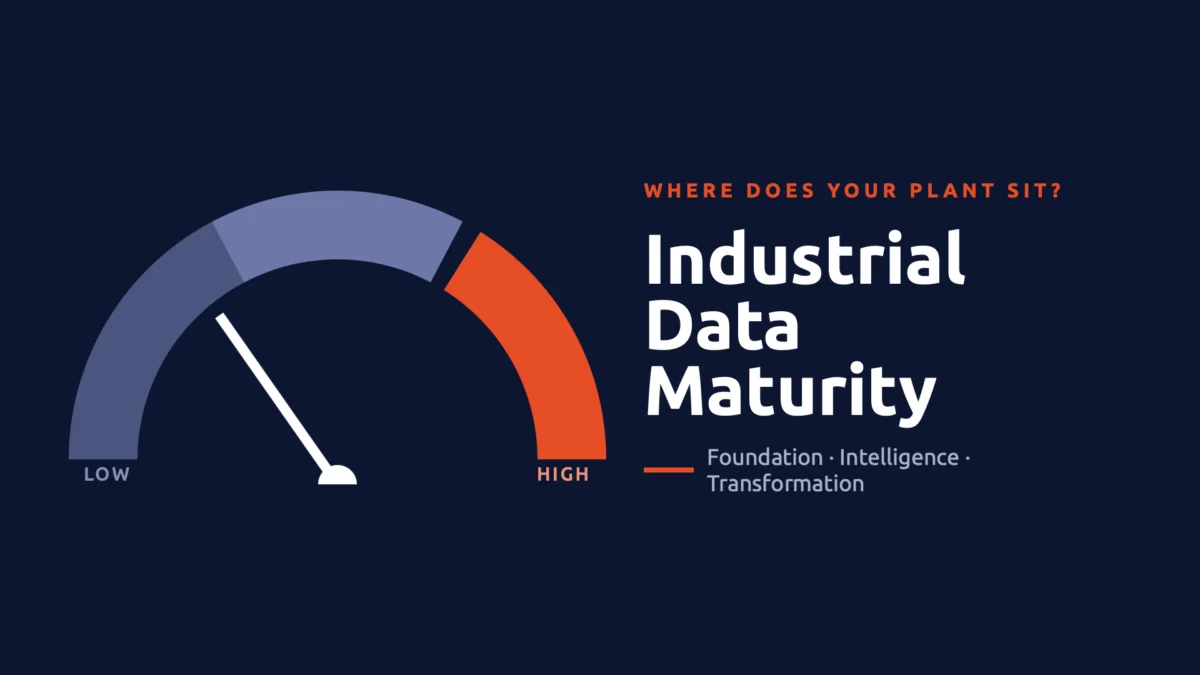
The framework identifies three progressive stages of data maturity:
- Foundation: Establishing the basics of data collection, ingestion, and governance.
- Intelligence: Enabling analytics and process optimization.
- Transformation: Reaching the apex of autonomous operations and sophisticated AI integration.
By mapping these stages to specific use cases—ranging from discrete manufacturing components to complex process workflows—the authors provide a technical and organizational baseline. The document details the necessary technology stacks and best practices required to evolve from reactive data gathering to proactive, AI-ready intelligence.
Chronology: The Evolution of Industrial Data Management
The release of this maturity model arrives at a pivotal moment in the industrial sector. To understand its importance, one must look at the timeline of digital transformation in manufacturing over the last decade.
2015–2018: The Era of "Collect Everything"
Manufacturers began deploying sensors and IoT devices in record numbers. The prevailing philosophy was to "store everything," resulting in massive "data lakes" that were often unorganized and lacked sufficient metadata to be useful.
2019–2022: The Analytics Awakening
As companies attempted to derive insights from their data lakes, they encountered significant friction. IT/OT (Information Technology/Operational Technology) convergence became the primary challenge. Bridging the gap between the plant floor (OT) and the boardroom (IT) proved difficult due to proprietary protocols and siloed data architectures.
2023–Present: The Generative AI Paradigm
The explosion of generative AI and Large Language Models (LLMs) has shifted the focus from merely "having data" to "having curated, governed, and contextualized data." This maturity model is a direct response to the realization that without clean data, AI initiatives in the plant will fail to produce measurable ROI.
Supporting Data and the Four-Step Assessment Process
The framework introduces a rigorous, four-step assessment process designed to move beyond anecdotal progress. It forces organizations to quantify their capabilities through a series of over 50 role-based questions.
The Methodology
- Stage 1 Assessment (Foundational Governance): The organization evaluates if foundational data collection is standardized. Are sensors mapped correctly? Is data security embedded at the edge? If an organization fails to meet the threshold here, the model advises halting further AI investment until the foundation is shored up.
- Stage 2 Assessment (Analytics & Optimization): Here, the focus shifts to whether the organization can perform cross-functional analysis. Can the maintenance team see production bottlenecks that correlate with equipment vibration data?
- Stage 3 Assessment (AI Integration): This level tests the ability to sustain autonomous workflows. Does the system have the "data maturity" to feed real-time insights back into the control loop without human intervention?
Role-Based Insights
The model segments its assessment to ensure departmental alignment:
- Production Managers: Focused on throughput, metrics, and identification of operational bottlenecks.
- Maintenance Teams: Focused on equipment health, sensor reliability, and failure prediction efficacy.
- Quality Personnel: Focused on the lineage of defect data and the ability to trace product errors back to specific process parameters.
- IT/OT Leaders: Focused on the structural integrity of the data architecture, edge-to-cloud integration, and security compliance.
Official Responses and Expert Perspectives
The white paper was co-authored by two of the industry’s most prominent voices in industrial data: Ashtad Engineer, Worldwide Head of Manufacturing Solutions at AWS, and John Harrington, Chief Product Officer at HighByte.
According to the authors, the primary goal of this document is to democratize the path to AI maturity. "Manufacturers often feel overwhelmed by the sheer scale of digital transformation," states the paper. By offering a standardized scorecard, the authors intend to remove the guesswork.
The framework highlights the integration between the AWS Industrial Data Fabric architecture and the HighByte Intelligence Hub. This combination serves as a practical example of how raw data can be transformed into "industrial information" that is standardized, modeled, and securely delivered to the cloud. By using this hub-and-spoke model, organizations can bypass the need for custom coding at every individual node, significantly accelerating the path toward the "Transformation" stage.
Implications: Why This Matters for the Future of Manufacturing
The publication of this framework has several long-term implications for the industrial landscape.
1. From "Project" to "Program"
For years, digital initiatives in manufacturing were treated as one-off projects. This maturity model signals a shift toward treating data management as a long-term, structural program. It encourages organizations to stop chasing "shiny object" AI features and start focusing on the boring, essential work of data governance.
2. Standardizing the Language of Progress
One of the greatest challenges in manufacturing is the lack of a shared vocabulary. An "intelligent" factory in one company might mean something entirely different in another. By defining specific, measurable stages, this white paper allows for benchmarking. Companies can now communicate with stakeholders, investors, and vendors using a common maturity language.
3. The Death of the "Black Box" AI
Perhaps the most significant implication is the focus on "Generative AI readiness." The model forces manufacturers to look at their data and ask: Is this data clean enough for a machine to make a decision? This is a critical step in preventing the "black box" syndrome, where AI makes decisions based on flawed or missing data, leading to costly production errors or safety risks.
4. Bridging the IT/OT Divide
The model explicitly requires input from both IT and OT, recognizing that the most successful digital transformations occur when these two often-siloed departments collaborate. By forcing both sides to answer the same assessment questions, the framework acts as a bridge, ensuring that the technology stack (IT) aligns with the operational reality (OT).
Conclusion: Preparing for the Next Era
As the industrial sector moves toward a more automated future, the "Maturity Model for Industrial Data Management" serves as a necessary compass. It does not promise overnight success; rather, it provides a realistic, step-by-step methodology to ensure that when a manufacturer finally does flip the switch on AI, the data is ready to support the weight of the intelligence built upon it.
For leaders in manufacturing—from plant managers to C-suite executives—this document is an essential tool. It offers a way to move beyond the hype, identify critical gaps, and allocate resources where they will have the most significant impact on operational excellence. As the industry enters a period where AI-driven decision-making will likely differentiate the market leaders from the laggards, those who invest in their data foundations today will be the ones defining the benchmarks of tomorrow.
To download the full white paper, "A Maturity Model for Industrial Data Management," and access the complete 50-question assessment, manufacturing professionals are encouraged to visit the official resources provided by AWS and HighByte. This framework is a critical step toward ensuring that the industrial world is not just connected, but truly intelligent.