As the development of humanoid robots accelerates from controlled laboratory experiments to active roles in dynamic human environments, the industry is grappling with a fundamental challenge: the transition from "automation" to "autonomy." Unlike industrial robotic arms that operate within static, caged environments, humanoids must navigate the chaos of the real world. Achieving this requires a level of situational awareness far beyond the capabilities of standard industrial systems.
At the heart of this challenge is the need for a semantic understanding of the environment, coupled with the predictive capability to anticipate future states. For a robot to walk across a cluttered factory floor or grasp a fragile object while interacting with humans, it must possess a multi-layered, real-time sensory model that effectively merges disparate data streams into a single, cohesive 3D representation of reality.
The Architecture of Awareness: Perception, Reasoning, and Execution
Situational awareness is not merely an input mechanism; it is the foundational layer of a sophisticated three-part architecture that governs humanoid behavior. This continuum of perception and participation allows robots to transition from passive machines to active, independent agents.
The Perception Phase
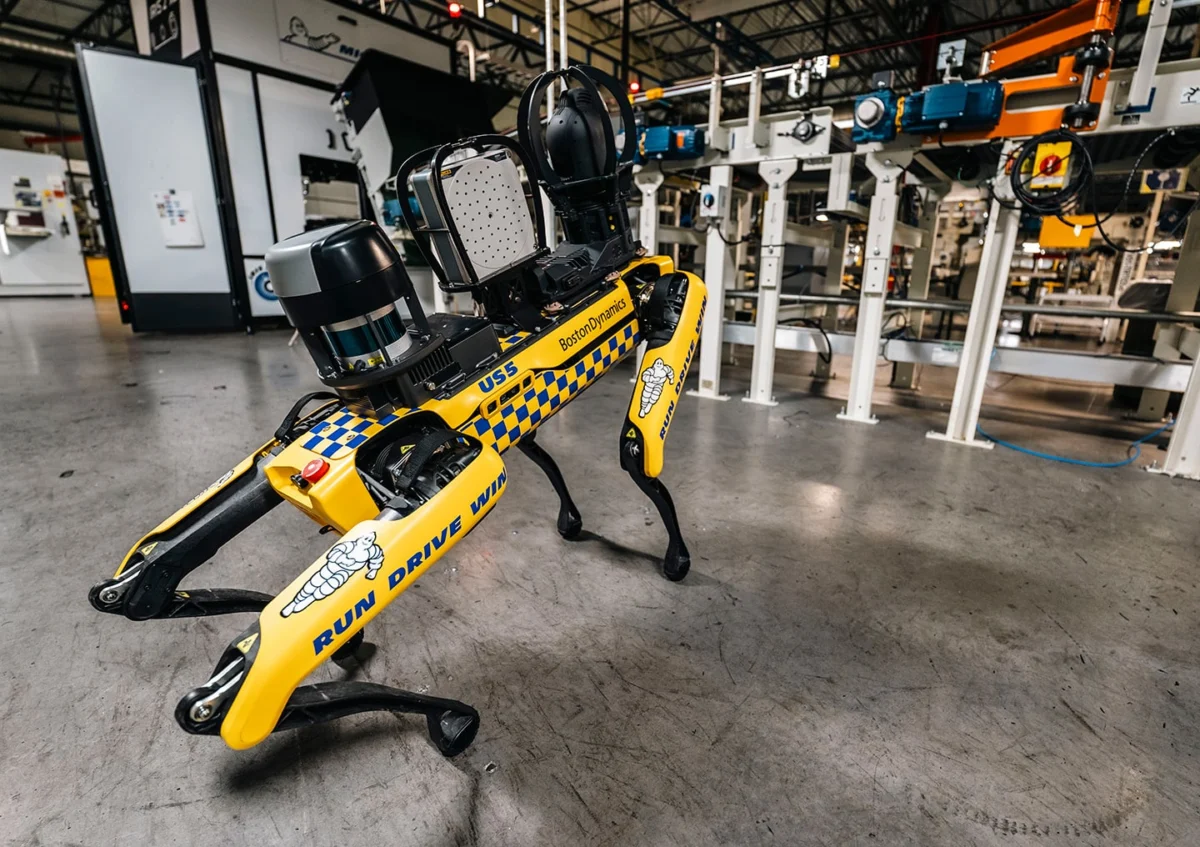
The process begins with the "senses." Humanoids are equipped with a diverse array of sensor modalities, including 3D LiDAR, high-resolution cameras, mm-wave radar, inertial measurement units (IMUs), encoders, microphones, and advanced tactile force sensors. These components ingest massive volumes of heterogeneous data. The goal of the perception layer is to fuse this data into a high-fidelity, real-time digital map. This map acts as the robot’s "worldview," serving as the bedrock for understanding its own position and its relationship with the surrounding space and the humans occupying it.
The Reasoning Phase
Once the data is processed, the robot enters the reasoning phase. Using advanced Artificial Intelligence and Machine Learning (AI/ML) frameworks, the robot evaluates the environmental data against the requirements of its current task—be it traversing uneven terrain or performing a delicate pick-and-place operation. This stage develops granular task plans, defining the mechanical sequences required for motion and interaction.

The Execution Phase (Physical AI)
The final stage is the bridge between digital intent and physical movement. Physical Artificial Intelligence (PAI) tools translate the abstract task plans into precise motor commands. This is where the "rubber meets the road," turning logic into kinematics.
Chronology of Technological Evolution in Sensor Fusion
The path to modern humanoid situational awareness has evolved through several distinct technological eras, each defined by the increasing complexity of data integration.
- Era 1: Proprietary Hardware Integration (Pre-2015): Early humanoids relied on localized, non-fused sensor data. A camera might guide navigation, while a separate pressure sensor managed footfall. There was little cross-talk between systems, leading to high error rates in dynamic environments.
- Era 2: Algorithmic Fusion (2015–2020): The introduction of Kalman filters and basic Bayesian networks allowed engineers to combine IMU data with wheel or limb encoders. This marked the birth of true "odometry," allowing robots to maintain stability and location accuracy in real-time.
- Era 3: Semantic and Feature-Level Integration (2020–Present): We are currently in the era of deep learning-based sensor fusion. Using Principal Component Analysis (PCA) and sophisticated Neural Networks, robots can now extract "features" from raw data. A robot no longer just sees a cluster of pixels; it identifies an object as a "cup" or a "human," understanding the semantic implications of those objects.
- Era 4: The Future of Morphological Computing (Emerging): The current research frontier involves offloading computational tasks to the physical structure of the robot itself. By using compliant, soft-material sensors, the robot’s body "computes" the physics of a grasp, reducing the processing load on the central processor.
Supporting Data: The Three Levels of Fusion
Effective data integration is structured in a hierarchy of three levels, ensuring that the system is both robust and computationally efficient.
1. Data-Level Fusion (Raw Input)
This is the lowest level of the stack. Raw sensor data is often noisy, inconsistent, or intermittent. By applying techniques such as complementary filters, weighted averages, and Kalman filtering, developers can strip away noise and normalize the incoming stream. This ensures that the system works with "clean" data before any high-level processing begins.
2. Feature-Level Fusion (Intermediate Processing)
At this level, the robot extracts significant features from the raw data. Using dimensionality reduction methods like Multi-Dimensional Scaling (MDS) or Factor Analysis, the system compresses vast amounts of sensory information into a "feature vector." This allows the humanoid to maintain a comprehensive picture of its environment without exhausting its computational budget.

3. Decision-Level Fusion (High-Level Logic)
When the robot faces high uncertainty—such as navigating a crowded room where human movement is unpredictable—it utilizes decision-level fusion. Through methods like majority voting and advanced Bayesian networks, the robot compares predictions from several internal models to reach a consensus, ensuring that the chosen action has the highest probability of success.
Official Industry Perspectives: The Role of Tactile Sensing
Industry experts, including those from organizations like Futek and the Oxford Robotics Institute, emphasize that situational awareness is incomplete without touch. For a humanoid to be truly useful in a warehouse or a home, it must possess "haptic intelligence."
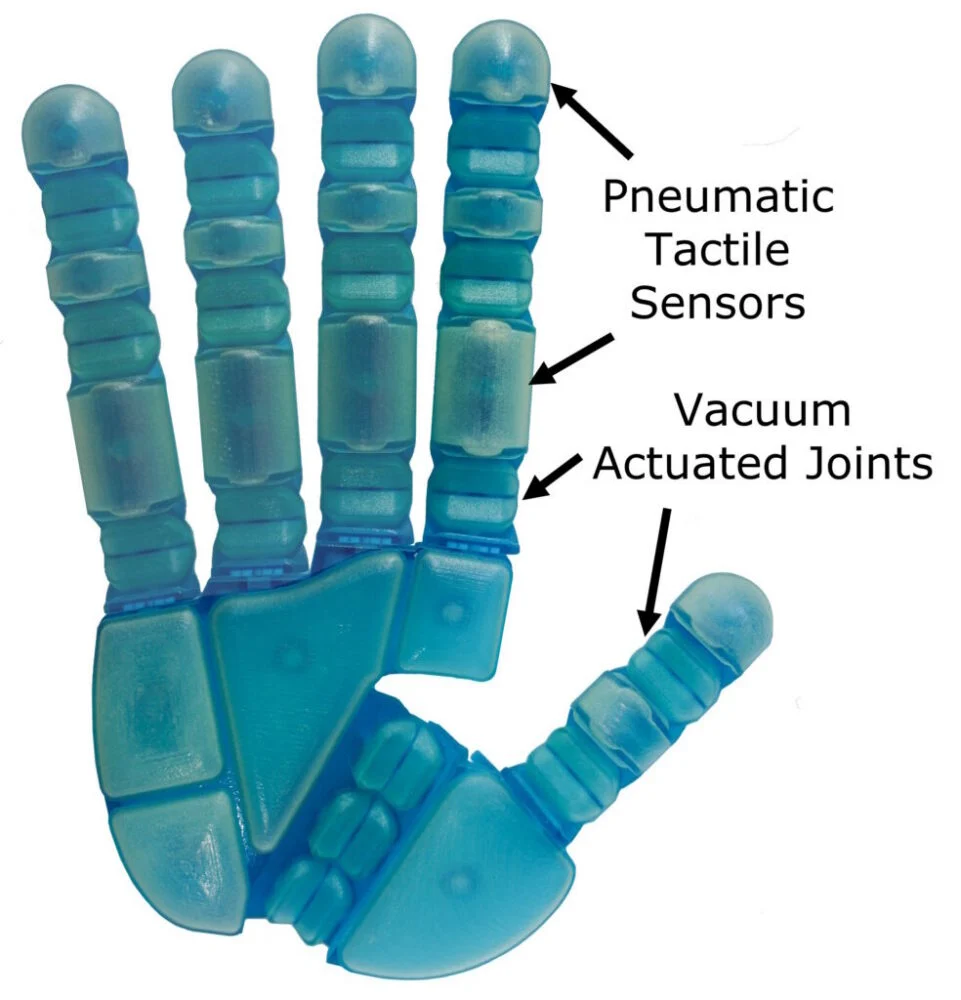
"The shift toward multi-material 3D-printed hands represents a paradigm shift," noted one industry researcher. "By using compliant materials for joints and soft tactile sensors on the fingertips, we allow the robot to ‘feel’ its way through a task. This eliminates the need for constant, energy-intensive visual feedback loops. The physical form of the hand performs part of the computation."
From the bottoms of the feet—which track load and balance—to the fingertips—which detect texture and fragility—tactile sensors are the final piece of the puzzle. They enable the "proprioception" (internal body awareness) that, when combined with "exteroception" (external environment sensing), allows for the circular, adaptive behavior required in real-world settings.
Implications for the Future of Human-Robot Interaction
The maturity of sensor fusion has profound implications for the future of the workforce and human-robot collaboration (HRC).

Safety and Predictability
The most immediate implication is the liberation of robots from safety cages. When a robot can accurately track its own physical state alongside the unpredictable movements of humans, it becomes a safe coworker. This real-time awareness allows the humanoid to pause, pivot, or adjust its trajectory in milliseconds, preventing accidents before they occur.
Increased Productivity in Non-Standard Environments
Current industrial robots are limited to structured, repetitive tasks. A human-aware humanoid, however, can navigate "dirty, dull, or dangerous" environments that were previously inaccessible. This has significant potential for Industry 5.0, where the goal is to return the human touch to manufacturing while using robots to handle the physical strain of heavy lifting or repetitive movement.
The Power Bottleneck
Despite these advancements, the reliance on continuous, high-speed sensor fusion creates a significant power draw. As noted in recent EEWorld Online discussions, the energy cost of running high-frequency 3D LiDAR, cameras, and onboard AI processing is currently a limiting factor for battery-operated bipedal robots. The development of more efficient PAI (Physical Artificial Intelligence) and morphological computing is essential to extend operational runtimes from minutes to full work shifts.
Conclusion: A Circular Discipline
Situational awareness is a perpetual, circular process. As the humanoid executes a task, the feedback from its physical sensors (proprioception) is continuously compared against the initial environmental map (exteroception). If the robot’s hand encounters an unexpected object, or if a human walks into its path, the system immediately adjusts its plan.
This iterative cycle—Perception to Reasoning to Execution—is the hallmark of the next generation of humanoid robotics. While the field is still being refined, the transition toward integrated, multi-modal sensor fusion is proving that the future of robotics lies not just in how well a machine can see, but in how well it can "feel" and understand the world around it. As the technology matures, we can expect to see humanoids move from being mere curiosities to indispensable partners in the global economy.