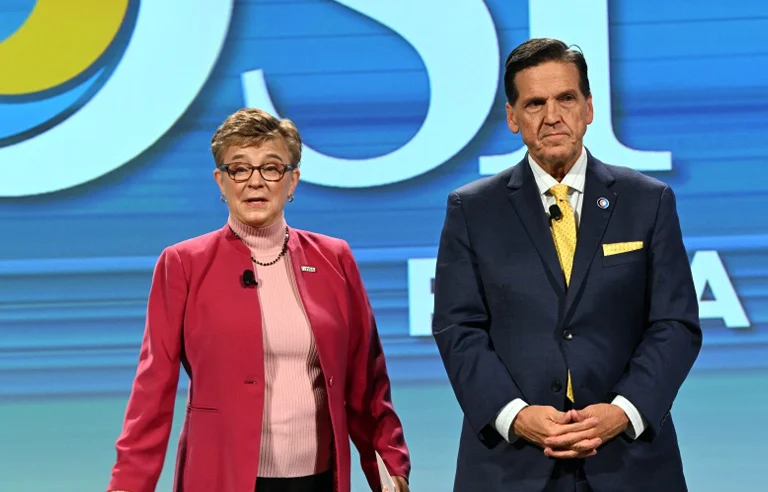
INDIANAPOLIS – In a landmark move to reshape the landscape of American workplace safety, a powerful coalition of the nation’s leading health and safety organizations has officially partnered with the Occupational Safety and Health Administration (OSHA). Announced on September 30, the newly formed National Serious Injury and Fatality (SIF) Prevention Alliance marks a strategic shift from reactive safety measures to a proactive, data-driven approach designed to identify and neutralize the high-risk hazards that lead to the most catastrophic workplace outcomes.
The initiative brings together the National Safety Council (NSC), the American Industrial Hygiene Association (AIHA), the American Society of Safety Professionals (ASSP), and the University of Colorado’s Construction Safety Research Alliance (CSRA). By pooling their collective expertise, research capabilities, and training infrastructure, these organizations aim to provide employers with the practical tools necessary to dismantle the conditions that permit life-altering injuries and fatalities to occur.
Main Facts: A New Era of Preventative Safety
The core mission of the National SIF Prevention Alliance is rooted in a fundamental realization: not all workplace incidents are equal. While safety professionals have traditionally focused on reducing the total number of recordable injuries, the SIF Prevention Alliance emphasizes that the potential for harm is a more critical metric than frequency alone.
A Serious Injury or Fatality (SIF) is defined as an incident that results in a life-altering injury or death. These events are often the result of specific, high-risk hazards that, if left unaddressed, carry a near-certain probability of causing severe damage. The alliance’s primary objective is to equip organizations with a framework to identify these "precursors"—the specific conditions, behaviors, and environmental factors that precede an SIF.
By standardizing the approach to hazard identification, the alliance intends to help employers move beyond basic compliance and toward a culture of high-reliability organization (HRO). The partnership is structured to provide:
- Actionable Training: Scalable educational modules for safety managers and frontline supervisors.
- Research-Backed Solutions: Utilizing the findings from the University of Colorado’s CSRA to inform real-world safety policies.
- Public-Private Synergy: Leveraging OSHA’s regulatory oversight alongside the NSC’s extensive advocacy network to reach industries that historically struggle with high fatality rates.
Chronology: The Road to the Alliance
The formation of this alliance did not occur in a vacuum; it is the culmination of decades of evolving safety philosophy.
The Traditional Safety Paradigm (1970–2010)
For years, the gold standard of workplace safety was the "Heinrich Pyramid," which suggested that reducing minor injuries would automatically reduce major ones. Safety professionals focused on total injury counts, hoping that a safe environment for small incidents would equate to safety for all. However, data from the last decade has proven this theory incomplete.
The Shift Toward SIF Focus (2010–2023)
As workplace safety data became more granular, experts noticed a disturbing trend: organizations with excellent records for minor cuts and bruises were still experiencing occasional, yet catastrophic, fatalities. This realization sparked a movement within the safety community to distinguish between "incidents" and "serious outcomes." The NSC began piloting its SIF Prevention Model during this period, gaining traction in high-risk sectors like construction, manufacturing, and energy.
The Strategic Alignment (Early 2024–September 2024)
Throughout 2024, discussions between OSHA and major stakeholders intensified. Recognizing that the government could not solve the SIF crisis through regulation alone, OSHA sought a formal partnership with the private sector. The culmination of these discussions led to the official announcement on September 30, cementing a formal alliance that bridges the gap between regulatory enforcement and organizational best practices.
Supporting Data: Why SIFs Demand a Dedicated Strategy
The urgency behind this alliance is underscored by sobering statistics regarding workplace safety in the United States. Despite technological advancements and improved safety equipment, thousands of workers lose their lives annually, and tens of thousands suffer permanent, life-altering injuries.
The "Precursor" Reality
Research indicates that approximately 20% of all recordable workplace injuries have the potential to be SIFs. However, current reporting systems often treat a near-miss involving a forklift the same way they treat a papercut—as a generic injury statistic. The alliance aims to change this by advocating for "precursor analysis."
Industry-Specific Vulnerabilities
- Construction: Remains one of the highest-risk industries, with falls, struck-by incidents, and electrocutions accounting for the vast majority of SIFs.
- Manufacturing: Machinery-related entanglements and energy-release incidents continue to present the highest risk of fatality.
- The Hidden Cost: Beyond the human tragedy, the financial impact of SIFs on the U.S. economy is estimated in the billions of dollars annually, encompassing lost productivity, legal fees, workers’ compensation claims, and the devastating cost of training replacement staff.
The CSRA’s ongoing research into "SIF precursors" has demonstrated that when companies invest in identifying these specific risks, they see a significant downward trend in major incidents, even if minor injury counts remain stable. This data serves as the foundational argument for the Alliance’s strategy.
Official Responses: Voices of Leadership
The launch of the alliance has been met with widespread support from industry leaders who view this as a necessary evolution of safety management.
Lorraine M. Martin, NSC CEO:
"For more than half a century, NSC and OSHA have worked together to prevent injuries and save lives in our nation’s workplaces," said Martin. "The National SIF Prevention Alliance represents a historic evolution in how we achieve that shared mission. As we move together toward proactively addressing the conditions that can lead to the most serious outcomes, we can begin to prevent tragedies before they occur."
Focusing on Potential:
Martin further emphasized the importance of perspective: "Preventing SIFs requires a deliberate focus on the risks with the greatest potential to cause harm. By bringing together OSHA, NSC, and leading safety organizations, this alliance can help employers turn knowledge into action and ultimately save lives."
The Industry Perspective:
Representatives from the AIHA and ASSP have echoed these sentiments, noting that the alliance provides a platform for industrial hygienists and safety professionals to share cross-disciplinary data. For instance, an industrial hygienist looking at chemical exposure might identify an SIF risk that a traditional safety manager—focused solely on mechanical guards—might miss. This collaboration is designed to eliminate these blind spots.
Implications: A New Standard for Workplace Safety
The implications of this alliance for the American workplace are profound and multifaceted.
1. Shift in Regulatory Focus
While OSHA will continue to enforce regulations, the alliance suggests that the agency is increasingly interested in supporting "safety excellence" rather than just "safety compliance." Organizations that adopt the alliance’s SIF Prevention Model may find themselves better prepared for OSHA audits and inspections, as they will have already documented the high-risk hazards the agency targets most aggressively.
2. Evolving the Safety Professional’s Role
Safety professionals are now being encouraged to become "Risk Architects." The traditional role of checking fire extinguishers and ensuring PPE usage is evolving into a more analytical profession. Safety officers will now be expected to lead SIF risk assessments, utilizing advanced software and data analytics to identify which processes in their facility carry the highest risk of catastrophic failure.
3. Culture Change
Perhaps the most significant implication is the cultural shift. By prioritizing SIFs, employers send a clear message to their workforce: "We are not just looking for minor infractions; we are focused on ensuring you go home in the same condition you arrived." This fosters trust between management and employees, as the focus shifts from punitive "rule-following" to collaborative "risk-reduction."
4. Technological Integration
The alliance is expected to accelerate the adoption of technology in safety. This includes the use of AI-driven video monitoring to detect near-misses, wearable sensors to track proximity to heavy machinery, and digital checklists that prioritize high-risk tasks. The NSC’s existing SIF Prevention Model provides a roadmap for this integration, serving as the "how-to" manual for the alliance’s new members.
Conclusion: Turning Knowledge into Action
The launch of the National SIF Prevention Alliance is more than just a bureaucratic milestone; it is a commitment to the sanctity of human life in the industrial sphere. By moving away from the "all injuries are equal" mindset, the coalition is paving the way for a more surgical and effective approach to safety.
As the alliance begins its work, the challenge will be implementation. Bringing these resources to small- and medium-sized enterprises (SMEs)—which often lack the budget for dedicated safety departments—will be the true test of the initiative’s success. However, with the combined weight of OSHA’s authority and the NSC’s educational reach, the framework is in place to reach these smaller employers and provide them with the knowledge they need to protect their workers.
The message from this partnership is clear: we know where the most dangerous risks are, we have the data to identify them, and through this new alliance, we have the collective will to stop them. The goal is no longer just to reduce the numbers on a spreadsheet; it is to ensure that every worker returns home safely, every single day. The era of reactive safety is ending; the era of proactive SIF prevention has begun.