By Alun Williams Published in Military & Aerospace Electronics
Main Facts: A New Era in Autonomous Defence
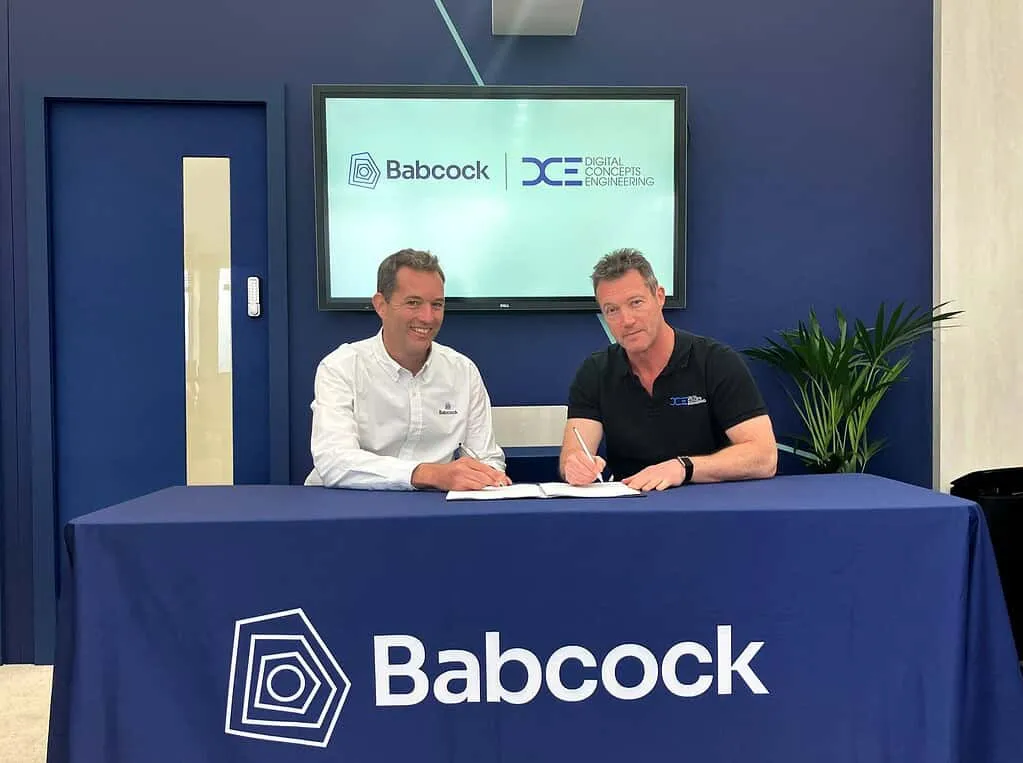
In a strategic move that highlights the rapidly accelerating shift toward robotic warfare and autonomous field logistics, British aerospace and defence titan Babcock has signed a landmark Memorandum of Understanding (MoU) with ground vehicle specialist Digital Concepts Engineering (DCE).
The partnership formally bridges DCE’s cutting-edge expertise in uncrewed ground vehicles (UGVs) and advanced robotic control systems with Babcock’s formidable global manufacturing, systems integration, and through-life support capabilities. The collaboration is designed to scale up the production and deployment of next-generation autonomous ground platforms, embedding them seamlessly into broader military architectures.
At the heart of this agreement are two core technological assets developed by DCE:
The X-Series UGV: A rugged, highly mobile, mid-sized uncrewed ground vehicle capable of traversing the most demanding and hostile terrains while carrying payloads between 150kg and 500kg and towing up to three tonnes.
The Marionette Universal Control System: An innovative software-and-hardware suite engineered to convert standard, crewed military vehicles into fully autonomous or remotely operated platforms, providing a cost-effective pathway to robotic fleet upgrades.
By combining DCE’s agile, specialized robotic designs with Babcock’s institutional scale, the partnership aims to offer defense customers in the United Kingdom and allied nations a comprehensive ecosystem that spans training, vehicle integration, logistical support, infrastructure, and operational lifecycle management.
Chronology: From Concept to Battlefield Integration
The trajectory of this partnership reflects the urgent modernization pressures currently facing international armed forces.
Pre-2026 (Foundational Development): DCE establishes itself as a niche innovator in robotic control systems and modular ground platforms, gaining recognition for its Marionette system and the rugged X-Series UGV architecture. Concurrently, Babcock expands its footprint in land and mission systems, seeking reliable, combat-proven autonomous partners to future-proof its defense portfolio.
September 2026 (The Public Debut): The fledgling partnership makes its high-profile public debut at the bi-annual Defence Vehicle Dynamics (DVD 2026) exhibition. During the live-action event, the companies showcase a real-world proof of concept: the integration of Babcock’s proprietary digital ammunition rack onto an X-Series UGV. The demonstration successfully illustrates the feasibility of autonomous resupply missions for frontline mortar and artillery units, paired with remote system monitoring and diagnostics.
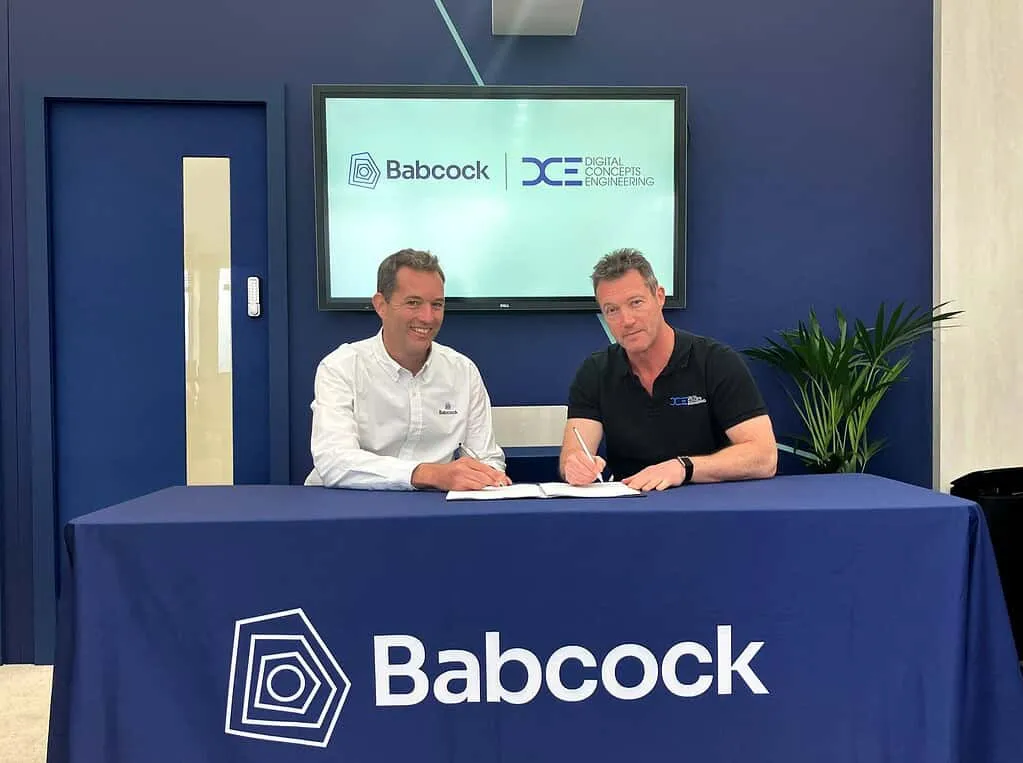
Late 2026 (Formalizing the Alliance): Building on the operational success of the DVD 2026 demonstration, Babcock and DCE formalize their cooperative framework by executing the strategic MoU, establishing the groundwork for joint international bidding, co-development, and integrated fielding.
Supporting Data: Technical Specifications and Operational Utility
Modern military operations increasingly rely on reducing human exposure to high-risk environments, particularly in contested logistics and resupply missions. The technical capabilities brought to the table by DCE and Babcock are uniquely tailored to meet these operational demands.
The X-Series UGV Performance Metrics
Payload Capacity: 150kg to 500kg, enabling the transport of heavy ammunition, medical supplies, or surveillance gear.
Towing Capacity: Up to 3 tonnes, allowing it to recover stalled vehicles, haul heavy artillery pieces, or transport supply trailers across broken terrain.
Mobility: Designed specifically for tactical environments where traditional wheeled or tracked vehicles face severe mobility restrictions due to mud, rubble, or steep gradients.
The Marionette Universal Control System
Retrofitting entire military fleets with brand-new, factory-built robotic vehicles is financially and logistically prohibitive for most Ministries of Defence. The Marionette system solves this dilemma through a modular conversion approach:
Fleet Agnostic: Capable of transforming existing in-service vehicles into autonomous or tele-operated units.
Scalable Control: Allows a single operator to manage multiple robotic assets safely from a protected distance, drastically reducing personnel requirements in high-threat zones.
The Digital Ammunition Rack Integration
Highlighted during the DVD 2026 trials, Babcock’s digital ammunition rack mounted onto the X-Series UGV addresses one of the most perilous logistics bottlenecks in modern warfare: frontline ammunition replenishment. By automating the transport and transfer of mortar and artillery shells, the system reduces the vulnerability of human supply crews to enemy counter-battery fire and drone surveillance.
Official Responses: Leadership Perspectives
The partnership has received strong backing from the executive leadership of both organizations, who emphasize the complementary nature of their respective business models.
Mike McGinty, Managing Director of DCE, highlighted the strategic advantages of aligning a specialized technology creator with an industrial giant:
"DCE and Babcock bring highly complementary capabilities to this partnership. [We] specialise in developing operational UGVs and robotic control systems, while Babcock brings the scale, systems-integration expertise and support capability needed to help take these technologies further. Together, we can explore how autonomous ground systems can be integrated into wider military capability and supported throughout their operational life — both for the UK and internationally."
Echoing these sentiments, Louise Atkinson, CEO of Babcock’s Land and Mission Systems business, underscored the paradigm shift currently reshaping military doctrine worldwide:
"Autonomous systems are changing the way modern militaries operate. And as experts in manufacturing and systems integration, Babcock can leverage these capabilities to deliver operational advantage. By working with DCE, we’re bringing together complementary expertise to help develop and support the next generation of uncrewed ground systems for customers in the UK and around the world."
Implications: Reshaping the Future of Defence Logistics
The Babcock-DCE Memorandum of Understanding carries profound implications for the future of land warfare, defense industrial economics, and strategic capability development.
1. The Domination of Contested Logistics
Recent global conflicts have laid bare the extreme vulnerability of traditional military supply lines. Drone warfare, precision artillery, and electronic jamming make human-driven supply convoys exceptionally high-risk. Uncrewed ground vehicles equipped with heavy-load capabilities, such as the X-Series, offer a viable solution for keeping frontline units supplied without risking military personnel. The integration of Babcock’s digital ammunition racks points directly toward a future where automated resupply chains operate continuously under fire.
2. Upgrading Existing Fleets vs. Procuring Anew
Defense budgets globally are constrained by rising procurement costs and competing demands. By combining DCE’s Marionette retrofit technology with Babcock’s integration prowess, the partnership provides cash-strapped defense ministries with an economically viable alternative to buying entirely new fleets of robotic vehicles. Converting existing combat and support vehicles into optionally manned or fully autonomous assets maximizes the return on legacy defense investments.
3. Strengthening the UK Defence Industrial Base
For the United Kingdom, the alliance reinforces domestic sovereign capability in autonomous systems. As the UK Ministry of Defence accelerates its Future Soldier modernization initiatives and explores artificial intelligence and robotics integration, partnerships between agile SMEs (Small and Medium-sized Enterprises) like DCE and tier-one primes like Babcock serve as a vital mechanism for rapidly transitioning laboratory innovations into battle-ready hardware.
4. Export Potential and International Interoperability
Beyond domestic requirements, the collaboration is explicitly targeted at international markets. NATO and allied militaries are racing to achieve common standards in autonomy and unmanned operations. A joint offering backed by Babcock’s international footprint positions both companies to capture a significant share of the burgeoning global market for military robotics, ensuring high interoperability across allied forces.
As military technology continues its relentless march toward unmanned and autonomous operations, the partnership between Babcock and Digital Concepts Engineering marks a critical step in turning robotic battlefield concepts into reliable, scalable, and operationally proven realities.