By Laura Fischer (Principal Team Lead for Climate Resilience Analysis, EPRI)
Edited by Paul Gerke
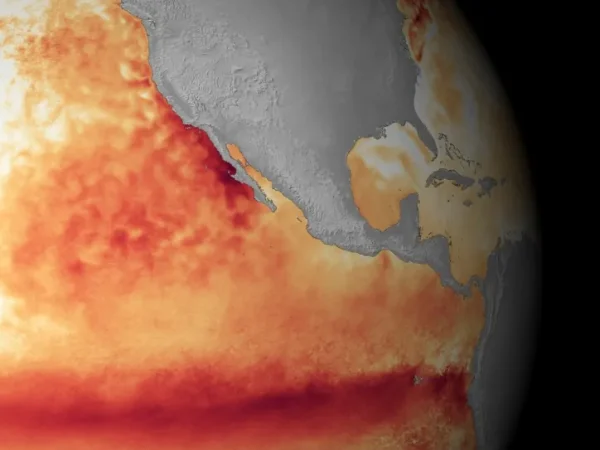
As climate scientists continue to monitor and track a strengthening El Niño phase heading into late 2026, a familiar set of headlines is once again dominating weather reports across the United States. Forecasters are pointing toward wetter winters in specific domestic regions, reduced Atlantic hurricane activity, and renewed, localized drought concerns taking root across parts of the American West.
Meanwhile, on the international stage, the signals are even more pronounced. Following a stretch where Europe endured record-breaking, historic summer heatwaves, the United Kingdom’s national meteorological service has issued a striking projection: this unfolding El Niño cycle could potentially materialize as the strongest in living memory.
For the modern power sector, however, the fundamental question is never whether El Niño will produce a single, easily predictable outcome—because it will not. A powerful El Niño phase does not guarantee extreme weather events, nor does it impact every geographic region in an identical manner. Instead, the phenomenon functions as a massive probabilistic shift. It alters the underlying odds of specific weather patterns unfolding, providing utilities and energy planners with a critical seasonal climate signal that can—and should—be integrated into holistic grid planning alongside standard operational risks.
The true strategic value of tracking El Niño lies not in attempting to predict specific storms, localized droughts, or individual grid failures months in advance. Rather, its value is found in helping energy planners ask better, more targeted operational questions much earlier in the planning cycle.
Main Facts: Understanding the 2026–2027 El Niño Outlook
At its core, the El Niño-Southern Oscillation (ENSO) cycle stands as the planet’s single most dominant driver of year-to-year climate variability. During its warm phase, El Niño significantly alters the behavior of the Pacific jet stream, effectively redistributing thermal energy and moisture patterns across vast global regions.
In North America, standard historical correlations associate El Niño with a suppression of Atlantic hurricane activity—largely driven by increased vertical wind shear over the tropical Atlantic—alongside milder summer conditions in select parts of the U.S. Southeast. However, these generalized tendencies do not equate to a total elimination of risk. While Atlantic hurricane counts may statistically trend lower during an El Niño year, storm severity is never guaranteed to follow suit. Major, highly destructive hurricanes have formed and made landfall during past El Niño phases.
For electric utilities and grid operators, the most immediate and actionable implications of the cycle are inherently tied to the water cycle. El Niño frequently contributes to significantly wetter conditions throughout California, the Southern Rockies, and portions of the Southern United States. Conversely, it simultaneously increases the statistical likelihood of warmer, drier winter and spring conditions across the Pacific Northwest.
These divergent regional shifts directly influence a cascade of critical operational metrics, including:
- Hydropower generation potential
- Long-term reservoir storage operations
- Flood control management strategies
- Vegetation growth rates and subsequent wildfire fuel loading
- Seasonal resource adequacy and capacity planning
Chronology of Climate Intelligence and Grid Integration
The realization that macro-climate oscillations like ENSO must be formally integrated into electrical engineering and utility planning has evolved significantly over the past two decades. Historically, utilities relied heavily on historical weather analogs—looking backward at past decades of load data and weather extremes to project future grid requirements.
As climate variability has accelerated, this retrospective approach has proven insufficient. The timeline of grid resilience has shifted from reactive emergency response toward proactive, forward-looking climate adaptation frameworks.
The Evolution of ENSO in Utility Planning
- Early 2000s: Utilities primarily treat El Niño and La Niña as meteorological curiosities, rarely incorporating them into formal capacity or transmission planning.
- Mid-2010s: Severe multi-year droughts (such as the historic California drought) and devastating wildfire seasons force a cultural shift, encouraging closer collaboration between meteorologists and power system engineers.
- 2020s: Collaborative research initiatives—such as EPRI’s Climate Resilience and Adaptation Initiative (READi) and the development of advanced climate risk programs—formalize how physical climate data is translated into actionable engineering metrics.
- Late 2026: As forecasters warn of a potentially record-breaking El Niño, utilities face an unprecedented stress-test of their seasonal climate forecasting integration, blending long-term climate signals with day-to-day grid operations.
This progression underscores a vital truth for modern operators: seasonal climate signals are no longer academic exercises. They are core inputs for maintaining grid reliability in an era of compounding stresses.
Supporting Data: Hydropower Dynamics and Regional Exposure
The operational exposure of the power sector to El Niño is perhaps nowhere more evident than in the management of hydroelectric resources. Because El Niño creates distinct wet and dry anomalies across North America, its impact on hydro-dominated grids is highly polarized.
The Wet Signal: Opportunities and Overflows
In regions experiencing a heightened wet signal—such as California and the Southern Rockies—significantly improved reservoir levels can substantially boost hydropower generation. This abundance of clean, flexible energy can ease stress on regional power markets and support broader municipal water supply needs.
However, excessive and rapid precipitation introduces its own complex operational challenges:
- Flood Control Mandates: Operators must frequently balance power generation with strict flood-control requirements, releasing water preemptively to maintain buffer capacity behind dams.
- Infrastructure Strain: Rapid snowmelt and high-flow conditions elevate the risk of reservoir overtopping, debris accumulation against intakes, and mechanical stress on generation facilities.
- Availability Requirements: Facilities must be fully maintained and staffed to rapidly modulate output during high-flow emergency events.
The Dry Signal: Pacific Northwest Pressures
In stark contrast, a warmer and drier winter in the Pacific Northwest can place severe pressure on regional hydropower resources. If low winter snowfall limits the mountain snowpack, spring and summer runoff will fall below historical averages.

This risk, however, is far from uniform. Large, deep-storage reservoirs possess the operational flexibility to draw down lake levels and manage water storage across multiple years, buffering against single-season deficits. Smaller energy systems, conversely, face tighter constraints. These smaller systems may need to pivot away from aggressive generation schedules, taking on vital water-management roles while relying on power imports, thermal generation units, or emerging energy storage resources to offset reduced hydro output.
Ultimately, El Niño’s hydropower implications cannot be understood through broad national generalizations. They must be rigorously assessed at the site, basin, and regional level, taking into account local reservoir capacities, basin hydrology, mandatory environmental water releases, municipal obligations, and the broader regional generation mix.
Official Responses: Wildfires, Load Impacts, and Risk Frameworks
Beyond water management, El Niño significantly alters landscape conditions and electricity demand patterns, prompting structured responses from emergency planners and load forecasters.
Anticipating the Wildfire Cycle
The ecological impacts of El Niño often ripple well beyond the immediate rainy season. In regions that receive heavy precipitation, an explosion of fine vegetation growth—often referred to as "fine fuels"—frequently occurs during the spring. When subsequent dry months or seasonal shifts arrive, this abundant vegetation dries out, creating a massive tinderbox.
Utilities, land managers, and emergency planners increasingly utilize El Niño-informed seasonal outlooks to anticipate these cycles. By recognizing where heavy fuel growth is occurring, organizations can proactively adjust vegetation management schedules, accelerate grid hardening efforts, and ramp up infrastructure inspections within high-risk corridors before peak wildfire seasons materialize.
Calibrating Electricity Load Impacts
The impact of El Niño on electricity demand (load) is real, but it requires careful calibration. Historical patterns indicate that El Niño years frequently bring milder summer conditions to parts of the U.S. Southeast compared to La Niña phases, which are historically linked to more frequent and intense high-temperature extremes in the region. This milder summer profile can temporarily depress regional cooling demand and reduce peak load pressures.
However, industry experts issue a strong caution: a milder regional pattern does not translate to an absence of heat risk. Global baseline temperatures have risen substantially, meaning that modern cooling demand can remain stubbornly elevated even when regional seasonal weather patterns track slightly below historical temperature extremes.
Load forecasters must treat ENSO not as a deterministic tool for day-ahead peak forecasting, but as a probabilistic modifier. Understanding these seasonal tendencies allows utilities to fine-tune maintenance schedules during shoulder months, adjust long-term resource adequacy models, and maintain operational readiness for unexpected weather anomalies.
Implications for the Future of Grid Resilience
For the modern utility, El Niño serves as a powerful reminder that grid planning must embrace uncertainty rather than seek false precision. Even during exceptionally strong ENSO phases, regional weather can—and frequently does—diverge from historical expectations. Background climate warming, shifting ocean temperature anomalies, and localized topography can all amplify, mute, or entirely complicate expected meteorological impacts.
Crucially, El Niño does not eliminate the necessity of preparing for extreme, low-probability outcomes. Its true utility lies in narrowing the range of probable seasonal conditions, enabling planners to rigorously evaluate and prioritize potential operating scenarios.
To maximize grid reliability, utilities are increasingly embedding El Niño outlooks into a comprehensive, multi-layered risk management framework. This framework must simultaneously account for:
- Aging transmission and distribution infrastructure
- Accelerating load growth driven by electrification and data centers
- Persistent rate pressures and economic constraints
- Extreme weather frequency driven by baseline climate change
- Ongoing resource adequacy challenges and transmission bottlenecks
What Utilities Can Do Now
As the 2026–2027 El Niño continues to strengthen, it offers an invaluable test case for how modern utilities consume and operationalize seasonal climate intelligence. Industry leaders are focusing on several key action items:
- Enhance Climate Data Integration: Partnering with research institutions (such as EPRI and NOAA) to translate raw macro-climate forecasts into localized, asset-level engineering data.
- Review Drought and Flood Protocols: Stress-testing reservoir management plans and coordinating closely with municipal water agencies to prepare for polarized hydrological outcomes.
- Refine Vegetation Management Strategies: Utilizing moisture and precipitation forecasts to dynamically adjust wildfire mitigation and vegetation clearance cycles in high-risk zones.
- Update Resource Adequacy Models: Incorporating probabilistic ENSO trends into seasonal capacity planning to ensure adequate generation and storage availability during high-stress periods.
Grid operators can never predict every individual storm, heatwave, drought, or flood with absolute certainty. However, by leveraging advanced climate intelligence and embedding probabilistic thinking into everyday operations, the power sector can successfully prepare for a wider range of possibilities—ultimately securing the reliability and resilience of the electrical grid for decades to come.
About the Author
Laura Fischer is the Principal Team Lead for Climate Resilience Analysis at EPRI, where she leads comprehensive research examining the physical impacts of climate change on the electric power system.
She currently manages Program 262: Climate Risk and Resilience, having previously served as the Lead for Workstream 1 (Physical Climate Data and Guidance) for EPRI’s prominent Climate Resilience and Adaptation Initiative (READi). Additionally, Laura contributed her expertise as an author for the Adaptation chapter and as a Technical Contributor for the Energy chapter of the Fifth National Climate Assessment.
Before joining EPRI, she served as an ORISE Fellow with the Climate Change Adaptation staff at the U.S. Environmental Protection Agency (EPA), researching the systemic impacts of climate change on federal programs and identifying actionable adaptation strategies to mitigate operational risks.