MILWAUKEE — In a major push to reshape the landscape of intelligent infrastructure, Johnson Controls has announced a sweeping rollout of next-generation hardware, advanced controllers, intelligent plug-load management systems, and high-precision environmental sensors. Unveiled at the close of January, the new product ecosystem is designed to deliver unprecedented flexibility, enhanced cybersecurity, improved edge-processing capabilities, and significant energy savings for commercial real estate portfolios, industrial facilities, and institutional campuses.
The comprehensive product refresh touches nearly every layer of the modern Building Management System (BMS), spanning field equipment controllers, supervisory plant hardware, plug-load management tools, and specialized life-safety gas detection arrays. Industry analysts note that this broad spectrum of releases underscores Johnson Controls’ strategic pivot toward decentralized edge intelligence and deep interoperability within the Facility Explorer ecosystem.
Main Facts: A Holistic Upgrade for Modern Facilities
The late-January product launch is not a mere incremental update; it represents a fundamental modernization of core infrastructure components utilized by system integrators and facility managers worldwide.
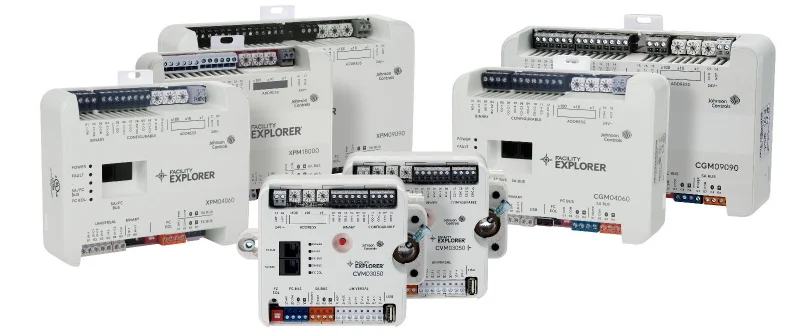
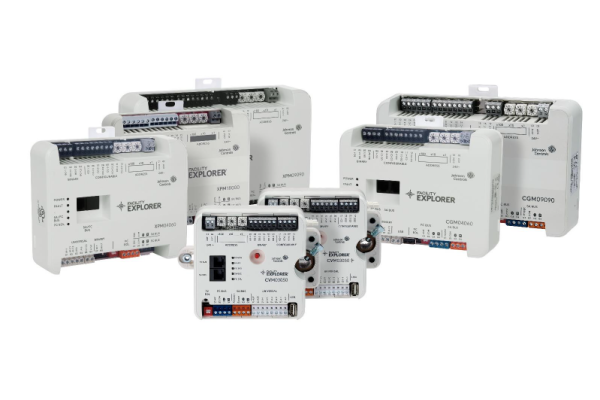
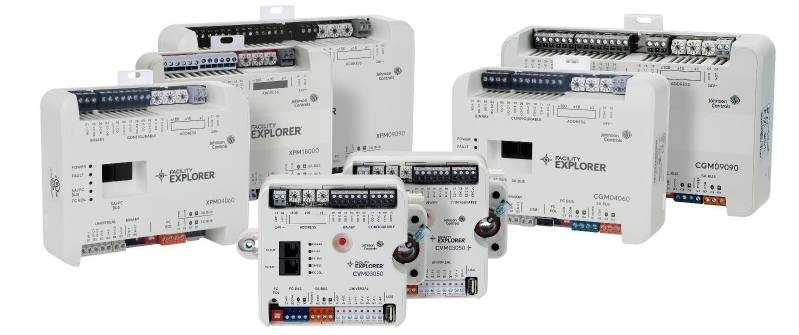
At the center of the release are expansions to the next-generation equipment controller family, featuring a new general-purpose application equipment controller, a specialized Variable Air Volume (VAV) box controller equipped with position feedback, and three robust expansion I/O modules. Crucially, Johnson Controls has integrated an onboard real-time clock into its existing CGM and CVM controller lines. This seemingly small hardware enhancement endows the edge devices with powerful standalone capabilities, allowing them to autonomously manage complex schedules, operational calendars, and trend data logs even during extended network outages.
Complementing the core controllers are three other major pillars:
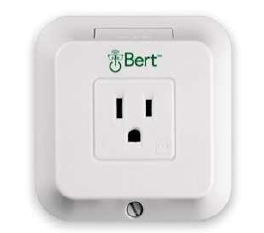
- BERT Plug Load Management: Smart, Wi-Fi-enabled plug-load controllers designed to slash phantom energy waste by automating device-level power states.
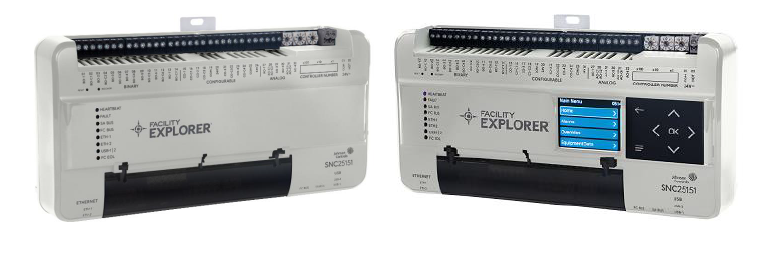
- FX Supervisory Plant Controller (SNC) Series: A hybrid supervisory controller combining network management with direct equipment control, natively supporting BACnet Protocol Revision 18.
- Advanced Environmental and Safety Sensors: The plenum-rated HE-6900 Duct Probe Relative Humidity and Temperature sensor alongside the versatile GS3000 Gas Detection Sensor Series for carbon monoxide and nitrogen dioxide monitoring.
Chronology: The Evolution Leading to the January Launch
The genesis of this product rollout reflects years of strategic acquisition, technological refinement, and shifting market demands toward IoT-enabled (Internet of Things) building spaces.
- Early 2020s: As building operators faced mounting pressures to reduce carbon footprints and optimize indoor air quality (IAQ) in the wake of global health concerns, Johnson Controls accelerated its research and development pipeline focusing on edge resilience. Facility managers increasingly demanded controllers that could operate independently when network connectivity was compromised.
- Mid-2023: Integration of smart plug-load management technologies gained traction as enterprises sought granular visibility into non-HVAC electrical consumption—a category historically difficult to track within traditional BMS architectures.
- Late 2023: Field testing and compliance validation of BACnet Revision 18 compatibility began across prototype supervisory controllers, ensuring future-proof integration with third-party devices.
- January (Late): Johnson Controls officially announced the commercial availability of the complete next-generation suite, marking a milestone in unified building automation architecture.
Supporting Data: Technical Specifications and Architectural Impact
To fully grasp the scope of Johnson Controls’ latest offering, industry professionals must examine the granular technical specifications driving these devices.
1. Next-Generation Controllers and CGM/CVM Enhancements
The expansion of the equipment controller family addresses long-standing bottlenecks in zone-level control. The addition of the VAV box controller with position feedback ensures precise damper positioning, minimizing hunting and stabilizing airflow in complex commercial zones.
The integration of the integral real-time clock into CGM and CVM models transforms these units from simple slave devices into autonomous operational nodes. When disconnected from the primary Facility Explorer network server, these controllers can maintain schedules for up to weeks at a time, preserving historical trend data without interruption.
2. BERT Plug Load Management
Plug loads account for a significant percentage of commercial building electricity consumption—frequently up to 30% of total plug-in device energy usage. BERT (Building Energy Reduction Technology) devices act as intelligent inline circuit controllers and smart plugs.
- Connectivity: Integrated Wi-Fi capabilities allow for seamless wireless deployment without overloading primary automation trunks.
- Measurement: Continuous, high-resolution power metering provides real-time amperage, voltage, and watt-hour consumption data.
- Automation Logic: Facilities teams can configure automated shedding schedules based on occupancy detection, time-of-day tariffs, or integration parameters pulled directly from the broader BMS.
3. FX Supervisory Plant Controller (SNC) Series
The SNC series bridges the traditional gap between field-level input/output handling and high-level supervisory network coordination.
- Hybrid Architecture: Combines supervisory logic and native equipment control in a single hardware footprint, lowering capital expenditure for mechanical rooms and packaged equipment plants.
- Protocol Standards: Full compliance with BACnet Protocol Revision 18 enhances interoperability, reducing engineering hours spent on custom mapping of third-party controllers.
- Connectivity and Expansion: Onboard physical inputs and outputs are supplemented by dual Ethernet ports supporting daisy-chain IP networking topologies. Furthermore, the inclusion of an SA bus port allows technicians to daisy-chain additional I/O modules cost-effectively.
4. HE-6900 Duct Probe RH and Temp Sensor
Designed for demanding air distribution environments, the HE-6900 series provides high-accuracy relative humidity sensing (offered in strict $pm$2%RH and $pm$3%RH tolerances) paired with selectable temperature sensing outputs. Housed in a durable, plenum-rated plastic enclosure, the sensor is thoroughly tested to UL 2043 standards, ensuring safety compliance for installation directly within supply and return air plenums.
5. GS3000 Gas Detection Sensor Series
Indoor air quality and life safety receive a major boost through the GS3000 Series. Built for both indoor and outdoor placement, the sensors monitor hazardous accumulations of carbon monoxide (CO) in parking structures and nitrogen dioxide ($textNO_2$) in loading docks or mechanical spaces. The series emphasizes low total installed cost through simplified wiring architectures and rapid calibration routines.
Official Responses and Industry Perspectives
While Johnson Controls has long maintained a dominant market share in commercial building automation, industry stakeholders have praised this release for addressing the practical, day-to-day pain points of systems integrators.
"System integrators and facility directors have been asking for edge devices that do not collapse when a network switch fails," noted an independent building automation consultant. "By building reliable real-time clocks and robust standalone scheduling into the CGM and CVM lines, Johnson Controls is acknowledging that network reliability in commercial buildings is never 100%. This update builds a vital safety net into the operational logic."
Furthermore, the integration of BERT plug-load management speaks directly to corporate sustainability officers. Modern ESG (Environmental, Social, and Governance) reporting frameworks demand auditable metrics down to the device level. By bringing plug loads under the umbrella of traditional BMS monitoring, building owners can now capture hidden energy drains that escape standard HVAC and lighting audits.
Implications: The Future of Smart, Resilient Buildings
The ripple effects of this product release will likely influence design standards across the building automation sector for the next several years.
Economic and Energy Implications
With commercial electricity rates fluctuating wildly and carbon taxation looming in major metropolitan markets, energy waste is no longer just an environmental concern—it is an existential financial threat. The combination of precise VAV control, duct-level environmental sensing, and automated plug-load management gives facility managers the exact toolset required to drive Energy Use Intensity (EUI) down to historic lows.
Engineering and Labor Efficiency
Labor shortages in the specialized trades have made installation speed and commissioning simplicity paramount. Products like the SNC supervisory controller—featuring daisy-chain IP networking and flexible SA bus expansion—directly reduce the physical man-hours required to wire a plant room. Similarly, the simplified calibration of the GS3000 gas sensors and the plug-and-play nature of BERT Wi-Fi devices reduce configuration friction.
Cybersecurity and Interoperability
By aligning with BACnet Protocol Revision 18, Johnson Controls is reinforcing the industry’s commitment to secure, open-protocol communication. As buildings become more deeply connected to enterprise IT networks, the ability to integrate seamlessly with third-party ecosystems while maintaining strict security compliance is non-negotiable.
Conclusion
Johnson Controls’ late-January product launch represents a mature, well-rounded approach to the modern built environment. By harmonizing edge-device autonomy, supervisory power, plug-load visibility, and life-safety compliance into a single cohesive framework, the company has provided the building automation community with a powerful toolkit for the future.
For facility managers, system integrators, and building owners interested in exploring how these next-generation controllers, sensors, and management tools can be integrated into existing infrastructure, reach out to Building Automation Systems (BAS) professionals for detailed engineering consultations and deployment strategies.