By Max Garland | Supply Chain Dive
Published: October 7, 2026
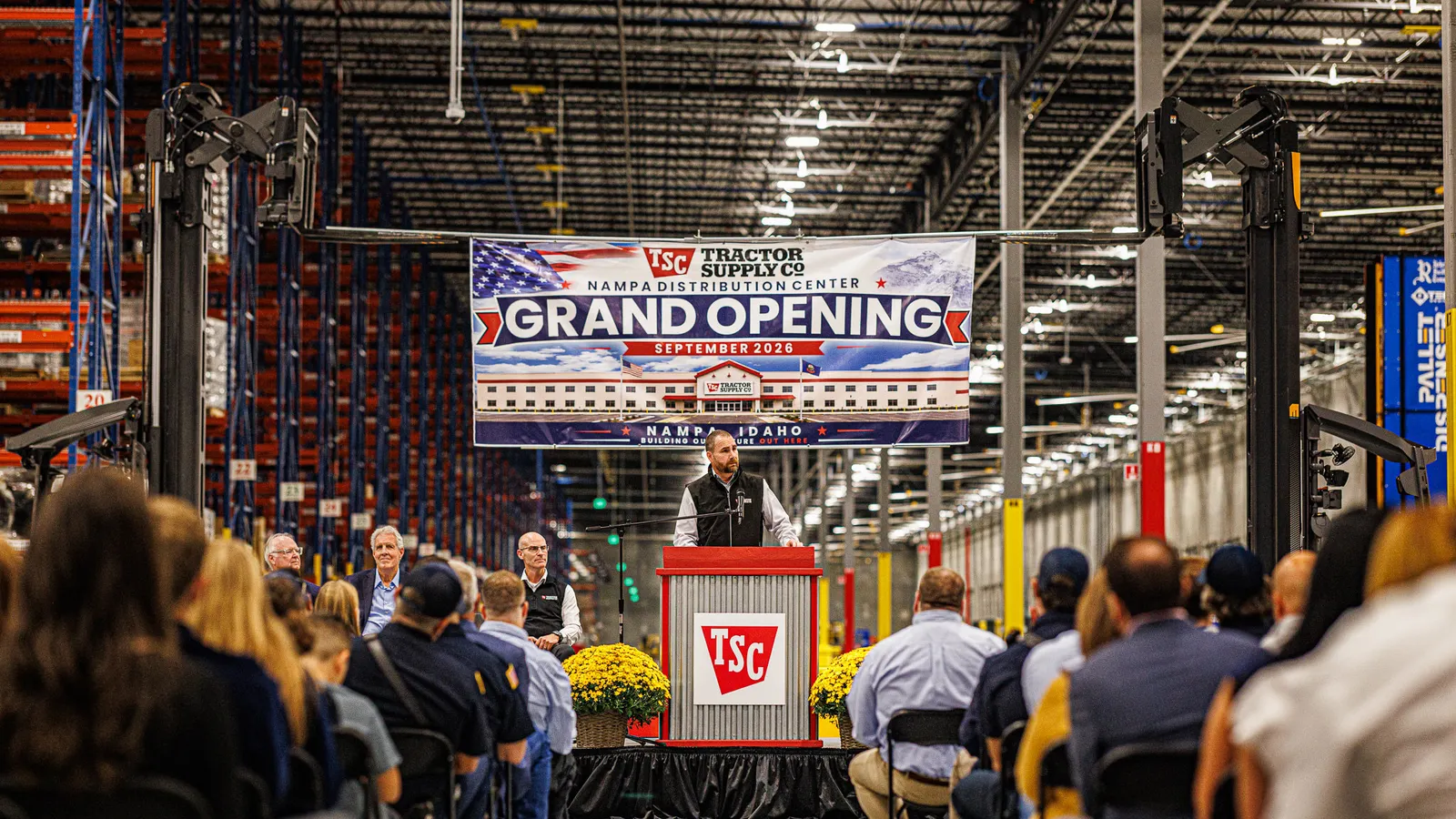
Tractor Supply Company has officially inaugurated its latest distribution center in Nampa, Idaho, marking a significant milestone in the retailer’s aggressive expansion strategy across the Pacific Northwest. The facility, which is now fully operational, serves as a cornerstone for the company’s logistics infrastructure, designed to streamline inventory flow to 123 retail stores in the region. Beyond mere storage capacity, the Nampa hub distinguishes itself by housing a specialized internal team dedicated exclusively to the integration of practical artificial intelligence (AI) into daily warehouse operations.
As the retail landscape shifts toward higher customer expectations for product availability, Tractor Supply is betting that its investment in automation and AI will provide the competitive edge necessary to maintain its "Out Here Lifestyle" brand promise.
Main Facts: A New Pillar of Supply Chain Efficiency
The Nampa distribution center represents a sophisticated evolution in Tractor Supply’s supply chain management. Chief Supply Chain Officer Craig Ledbetter characterized the facility as a "new standard for how products move through our supply chain," emphasizing that the site is not just a building, but a high-tech ecosystem.
The core of this facility’s operational prowess is the implementation of an automated storage and retrieval system (AS/RS) provided by Knapp, a global leader in logistics automation technology. This system, which is being deployed by Tractor Supply for the first time at the Nampa site, allows for the seamless, high-speed movement of inventory. By utilizing automated conveying systems to store, sequence, and transport products, the company expects to significantly reduce human error, decrease physical strain on warehouse staff, and drastically improve the speed at which goods move from the loading dock to store shelves.
This facility is part of a broader strategy to optimize the retailer’s footprint in the Northwest U.S., a region where the company has seen consistent demand growth.
Chronology: Building the Network
Tractor Supply’s journey toward the Nampa opening is part of a multi-year effort to fortify its distribution network in response to rapid store growth.
- Fiscal Year 2025: Tractor Supply solidified its commitment to regionalized logistics, noting in SEC filings that 81% of merchandise sold across its network originated from company-owned distribution centers. During this period, the company began finalizing site selection for the Nampa facility to bridge the gap in its Northwest coverage.
- Q2 2026: The retailer demonstrated strong growth momentum by opening 28 new retail stores, necessitating a robust distribution backbone to keep pace with the influx of new retail square footage.
- October 7, 2026: The official unveiling of the Nampa facility, signaling the integration of the Knapp automated systems and the commencement of the AI-focused operational team’s research and implementation phase.
Supporting Data: The Strategic Necessity
The importance of this facility is underscored by the company’s own financial and operational reporting. According to a securities filing dated December 27, 2025, Tractor Supply operated 70 retail locations across Idaho, Oregon, Nevada, and Washington. The Nampa facility is strategically positioned to minimize logistics costs and optimize the transit distance from the distribution hub to these stores.
The reliance on centralized distribution is a calculated move. By funneling 81% of its merchandise through its own network—rather than relying solely on direct-from-vendor shipments—Tractor Supply gains granular control over inventory levels. This control is critical for a retailer that stocks thousands of unique SKUs, ranging from heavy agricultural equipment to livestock feed and seasonal apparel. The Nampa site acts as a critical node in this "hub-and-spoke" model, ensuring that the 123 stores it supports are never out of stock on high-velocity items.
Official Responses and Vision
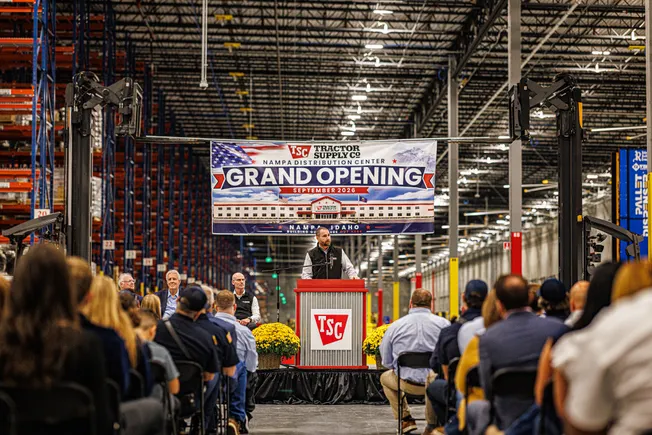
During the grand opening event, Craig Ledbetter, Chief Supply Chain Officer, highlighted the dual-pronged approach of the Nampa facility: physical automation and digital intelligence.

"As more people look to embrace the ‘Out Here Lifestyle’ and we continue to open new stores, this distribution center will be vital to get our customers the products they want and need," Ledbetter stated. He further noted that the integration of the Knapp technology was a deliberate choice to "redefine the capacity and safety standards" of their logistics network.
The inclusion of an AI-focused team within the facility is perhaps the most forward-looking aspect of the project. While many retailers are still in the pilot phase of AI, Tractor Supply is embedding data scientists and operations experts directly into the warehouse floor. Their mandate is to move beyond theoretical AI applications and focus on practical, real-time needs: predictive maintenance for machinery, optimized labor allocation based on fluctuating demand, and dynamic inventory slotting that adjusts automatically as product trends shift.
Implications: The Future of Retail Logistics
The opening of the Nampa facility holds several profound implications for the retail sector at large.
1. The Automation Imperative
Tractor Supply’s investment in the Knapp AS/RS system signals that medium-to-large scale retailers can no longer rely on manual labor alone to achieve necessary throughput. As wage pressures increase and the labor market remains tight, automating the "sequence and move" portion of the warehouse becomes a financial necessity rather than an optional upgrade.
2. AI as a Localized Operational Tool
By placing an AI team on-site, Tractor Supply is acknowledging that supply chain data is most valuable when it is contextualized. An algorithm designed for a warehouse in the Southeast might not work in the Northwest due to differing climate impacts on product demand, transportation logistics, and seasonal shifts. The Nampa team will likely serve as a blueprint for how other regional distribution centers can adapt to local market idiosyncrasies using localized intelligence.

3. Strengthening the "Out Here" Competitive Advantage
Tractor Supply operates in a niche where customer loyalty is built on reliability. If a rancher or farmer needs a specific type of feed or a replacement part, they need it immediately. By shortening the distance between the distribution hub and the store, and by ensuring that the hub itself is hyper-efficient, Tractor Supply is effectively insulating itself against the "Amazon effect." While e-commerce giants focus on individual package delivery, Tractor Supply is winning by mastering the replenishment of the physical retail store, which remains the primary touchpoint for their core demographic.
4. Scalability and Future-Proofing
The Nampa facility was not designed to be static. The "automated architecture" is modular, allowing for future upgrades as new AI models or hardware advancements emerge. This design philosophy suggests that Tractor Supply expects to continue its rapid store expansion, and it is building the infrastructure today that can support double or triple the current throughput in the coming decade.
Conclusion
The Nampa distribution center is more than just a warehouse; it is a manifestation of Tractor Supply’s long-term strategy to fuse industrial-grade logistics with advanced digital capability. As the retail sector faces a future defined by supply chain volatility and the relentless demand for efficiency, the Nampa hub serves as a critical proof point. By prioritizing automation, regional density, and applied AI, Tractor Supply is setting a high bar for its peers, ensuring that the "Out Here Lifestyle" remains fully stocked and ready for the challenges of the modern economy.
As operations ramp up in the coming months, the industry will be watching closely to see if the AI-driven efficiencies in Nampa translate into the significant margin improvements and inventory reliability that the company’s leadership anticipates. For now, the Nampa site stands as a testament to the fact that even for a retailer rooted in traditional rural values, the future is increasingly written in code and automated logic.