LOGISTICS & SUPPLY CHAIN MANAGEMENT — In the high-stakes world of freight procurement, conventional wisdom has long suggested that competition breeds lower costs. For decades, shippers have relied on a classic economic playbook: pit multiple third-party logistics (3PL) providers against one another on the same shipping lanes, watch them vie for the business, and pocket the savings.
However, according to industry veterans, this tried-and-true method is increasingly backfiring. Far from driving rates down, flooding the marketplace with competing intermediaries is inadvertently handing the upper hand to carriers—a phenomenon industry experts have dubbed "broker poker."
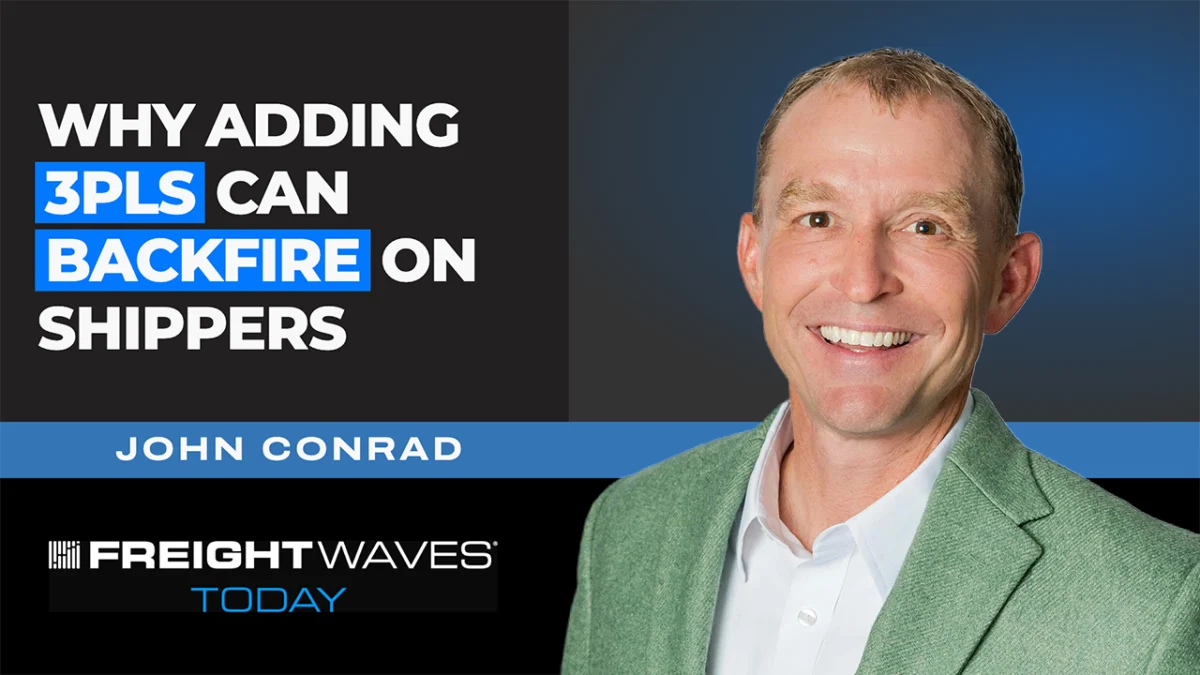
In a recent comprehensive breakdown on the realities of managed transportation, John Conrad, Chief Revenue Officer at Evans Transportation Services, shed light on how overlapping 3PL networks distort pricing signals, why artificial intelligence is frequently oversold in the logistics space, and how surging data center construction is upending the open-deck freight market.
For logistics directors, routing guide managers, and supply chain executives navigating an increasingly volatile post-pandemic landscape, these operational insights offer a critical wake-up call.
Main Facts: The "Broker Poker" Trap and Market Realities
At the core of Conrad’s industry critique is a fundamental misunderstanding of modern carrier behavior. When a shipper splits its freight portfolio across a fragmented roster of multiple 3PLs in a desperate bid to unearth lower spot rates, those intermediaries frequently end up competing for the exact same loads in the exact same lanes.
Carriers are neither blind nor naive to these tactics. When transportation providers repeatedly see the same piece of freight broadcasted into the marketplace by different brokers, they instantly recognize artificial bidding competition. Instead of rushing to secure the load out of fear of missing out, savvy carriers bide their time. They recognize that an over-saturated bidding environment signals desperation or inefficiency, allowing them to delay acceptance and ultimately extract higher rates from intermediaries—costs that inevitably trickle back down to the shipper.
"Those brokers who are going out to the marketplace over and over and over again on the same lane, they’re driving the rate up because the carriers get smart and they say, I’m going to wait for a little while because you guys are all bidding on it," Conrad explained during his analysis. "And at the end of the day, I’m going to be able to get a little bit higher rate if I wait."
This dynamic flips the foundational rule of supply-side economics on its head. Rather than generating competitive tension that benefits the buyer, over-delegating to a fragmented network of brokers creates artificial scarcity and market friction.
"Sometimes what can happen is when you flood the marketplace with too many bidders and too many 3PLs, you can actually do the opposite of what you’re intending to do," Conrad warned.
Chronology: The Evolution of Freight Brokerage and Managed Transportation
To understand how the logistics industry arrived at the current era of "broker poker," it is necessary to examine the historical trajectory of third-party logistics over the past four decades.
1. Post-Deregulation Origins (Mid-1980s)
Following the Motor Carrier Act of 1980, the U.S. trucking industry underwent massive deregulation, opening the floodgates for independent freight brokerages and logistics innovators. Among the earliest beneficiaries of this new regulatory framework was Evans Transportation Services, founded in 1985 as a privately held, family-owned enterprise. Operating with an MC number beginning with 1, the firm established itself during an era when outsourced logistics was defined primarily by basic transactional brokerage rather than strategic supply chain integration.
2. The Era of the Multi-3PL Dispersal (2000s–2010s)
As global supply chains grew in complexity and e-commerce accelerated consumer demand, corporate shippers looked for ways to aggressively slash transportation overhead. This gave rise to the multi-vendor 3PL model. Shippers routinely onboarded half a dozen or more logistics partners, operating under the assumption that a heavily digitized, highly distributed bidding process would guarantee the absolute lowest cost per mile.
3. The Pandemic Disruption and Spot Market Volatility (2020–2023)
The COVID-19 pandemic and subsequent supply chain shocks shattered traditional freight forecasting. Record-high spot rates, catastrophic equipment shortages, and skyrocketing fuel prices forced shippers to rethink their reliance on pure transactional arbitrage. Managed transportation—defined not merely as hiring a broker to cover a load, but as a holistic, end-to-end outsourcing model encompassing network optimization, carrier compliance, and administrative execution—moved to the forefront.
4. The Modern AI and Heavy-Haul Era (Present Day)
Today, the logistics sector stands at a crossroads defined by technological transformation and hyper-specialized capacity crunches. While firms experiment with artificial intelligence, machine learning, and agentic voice systems to handle inbound call volumes, underlying macroeconomic pressures—such as Gulf Coast weather threats and massive infrastructural builds for data centers—continue to dictate daily rate realities.
Supporting Data: Volatility, Fuel Disconnects, and Heavy-Haul Pressures
The inefficiencies of broker poker do not exist in a vacuum; they interact directly with broader macroeconomic trends and structural shifts within specific equipment modes.
The Fuel-Rate Disconnect
One of the most persistent misconceptions among shippers is that falling fuel prices automatically translate to cheaper freight. Conrad pointed to recent market cycles where fuel prices appeared to be on a downward trajectory, yet average per-mile freight rates stubbornly refused to drop in tandem. When fuel prices inevitably rebounded, shipping rates immediately resumed their upward march. This rigidity demonstrates that carrier operating costs, labor shortages, and equipment maintenance continue to form a high financial floor that raw fuel fluctuations alone cannot break.
Regional Pressure Points and Weather Risks
Geography plays an outsized role in localized rate spikes. Conrad highlighted Gulf Coast markets surrounding Houston and Louisiana as primary pressure points within the national grid. In these regions, load-to-truck ratios have occasionally reached extremes—soaring to "hundreds and hundreds of loads to one truck."
These structural imbalances leave regional supply chains acutely vulnerable to exogenous shocks. For instance, an approaching tropical storm or hurricane in the Gulf Coast does not merely disrupt local operations; it ripples across national routing guides, driving up spot rates and diesel fuel costs simultaneously as emergency supplies and structural rebuilding materials compete for dwindling capacity.
The Open-Deck and Heavy-Haul Anomaly
While dry van and less-than-truckload (LTL) sectors have experienced relative stabilization following post-pandemic corrections, the open-equipment and heavy-haul segment has emerged as the most volatile mode in contemporary logistics.
Much of this unpredictability is driven by a massive, non-traditional consumer of logistics capacity: the artificial intelligence boom. The rapid, nationwide construction of massive AI data centers requires unprecedented volumes of specialized heavy machinery, structural steel, cooling systems, and electrical hardware. Large equipment orders arriving in concentrated batches routinely absorb available open-deck capacity in localized bursts, driving up rates for any shipper requiring flatbeds or specialized trailers. According to industry projections, as long as corporate America’s appetite for high-speed data processing and cloud infrastructure continues to expand, this heavy-haul bottleneck shows no signs of easing.
Official Responses: Redefining "Outsourcing Done Right"
Faced with these multi-faceted challenges, industry leaders are advocating for a fundamental reassessment of how shippers structure their relationships with third-party logistics providers.
According to Evans Transportation Services—which currently serves approximately 300 corporate customers—the solution is not to eliminate third-party logistics providers entirely, but to exercise greater discipline in how they are integrated. Conrad emphasized that there are entirely legitimate, highly strategic reasons to utilize more than one 3PL within a supply chain. However, the threshold for adding an additional partner should be built upon a pre-existing, deeply trusted relationship within a specific vertical or segment of a shipper’s business, rather than a frantic, short-sighted pursuit of rate arbitrage.
To illustrate this philosophy, Evans noted that its own managed transportation solutions frequently retain and incorporate other competing 3PLs if a shipper client already has a deeply vetted, high-performing relationship on a specific lane or segment. Rather than forcefully displacing vendor partnerships that took years or decades to build, a sophisticated managed transportation provider works to harmonize them.
"Outsourcing done right," as Conrad describes it, relies on a balanced hybrid framework. It marries proprietary, custom-built transportation management technology with off-the-shelf industry tools, supplemented by cutting-edge automation. For instance, Evans has integrated agentic AI voice systems into its operational workflow. These intelligent voice tools are deployed to handle initial, high-volume inbound call traffic, triaging basic inquiries before seamlessly routing complex issues to live human operators. This blend of technological efficiency and human oversight allows logistics professionals to focus on high-level network strategy rather than administrative triage.
Implications: What Shippers Must Do Now
The takeaways for logistics executives, supply chain directors, and transportation managers are clear. Continuing to operate under the assumption that "more brokers equal lower rates" is a recipe for inflated freight budgets, carrier friction, and chronic administrative waste.
To adapt to the realities of modern freight markets, organizations should consider the following strategic shifts:
- Rationalize the 3PL Roster: Audit current routing guides and carrier networks to identify instances of broker overlap. If multiple intermediaries are consistently bidding on the same lanes, consolidate ownership with a primary managed transportation partner or establish strict jurisdictional boundaries for each provider.
- Prioritize Long-Term Carrier Relationships: In an environment where carriers hold significant leverage—particularly in high-demand regions like the Gulf Coast or specialized sectors like heavy-haul—reliability and relationship capital outweigh fleeting spot-market discounts.
- Account for Structural Demand Drivers: Recognize that macro-trends, such as data center construction and energy market volatility, will continue to exert upward pressure on specialized equipment segments. Shippers must forecast capacity needs months in advance rather than relying solely on spot-market reactivity.
- Embrace Intelligent Automation Wisely: Leverage technological tools—such as AI-driven customer service systems and advanced TMS platforms—to streamline internal communications, but ensure that strategic decision-making remains firmly anchored by experienced human operators who understand market nuances.
Ultimately, navigating today’s complex freight environment requires moving away from chaotic, transactional brawls in the spot market and toward disciplined, collaborative, and strategically managed supply chain ecosystems. Shippers who make this transition will not only protect their bottom lines, but they will also build the resilience necessary to weather whatever disruptions lie ahead.