Taiwan is currently navigating a high-stakes energy transition. Under the Renewable Energy Development Act, the nation has set an ambitious target: to have half of its total power generation derived from natural gas by 2025. This aggressive shift is not merely a policy preference; it is an industrial necessity to ensure grid stability as the island moves away from legacy baseload sources toward a diversified mix dominated by intermittent renewables like solar and wind.
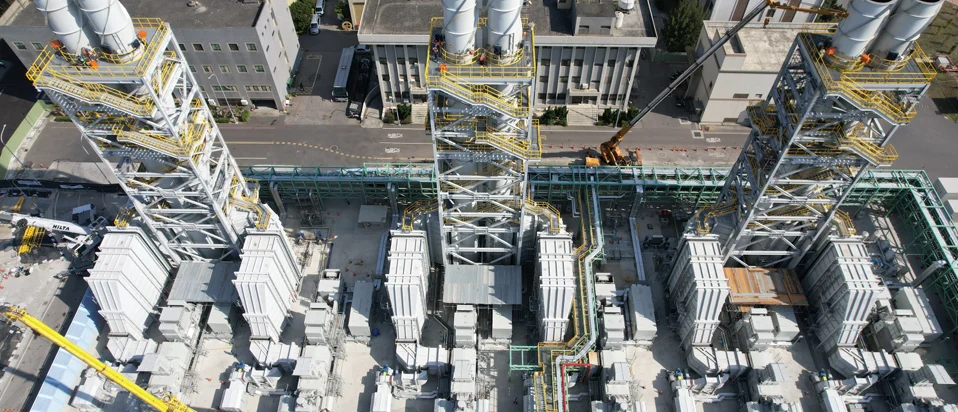
Meeting this goal requires more than just capital—it requires an unprecedented pace of infrastructure deployment. The Tung Hsiao power plant in Miaoli County stands as the definitive blueprint for this mandate. Between February 2022 and January 2023, the facility underwent a remarkable transformation, installing six aeroderivative gas turbines that reached full commercial operation in just ten months. This 180 MW injection into the national grid provides a masterclass for utilities and contractors globally on how to navigate the complex, high-pressure environment of fast-track power commissioning.
Chronology of Execution: A Ten-Month Sprint
The success of the Tung Hsiao project was rooted in the rejection of traditional, linear project management. Instead of waiting for one phase to conclude before beginning the next, the engineering teams adopted a parallel-path methodology.
- February 2022: Project groundbreaking. Initial site preparation begins, synchronized with the finalization of turbine logistics and regulatory filings.
- Q2 2022: Foundations and civil works proceed simultaneously with the factory assembly of the LM2500XPRESS modular units.
- Q3 2022: Logistics coordination hits its stride. Equipment shipments are timed to arrive exactly as site crews complete mechanical and electrical hookups.
- Q4 2022: Regulatory compliance for Dry Low Emissions (DLE) technology is finalized in tandem with installation, preventing post-construction permit bottlenecks.
- January 2023: Final grid interconnection testing concludes. All six units reach full operational capacity, adding 180 MW to the grid.
By collapsing the timeline through modularity and proactive supply chain management, the project developers proved that grid-scale power does not need to take years to manifest.
Turbine Selection: Why Aeroderivative Units Lead the Pack
The heartbeat of the Tung Hsiao facility is the LM2500XPRESS, a modular, aeroderivative gas turbine package. For project engineers, the choice of aeroderivative technology was not a matter of preference but a requirement for the modern grid.
The primary advantage lies in the factory-assembled nature of the units. Approximately 95% of each turbine is built off-site in a controlled environment. By the time the units reach the site in Miaoli County, they are essentially "plug-and-play" assemblies. This significantly reduces the time spent on hazardous, weather-dependent site labor, which is often the primary source of delays in conventional power plant construction.
Furthermore, these units were selected for their operational agility. As Taiwan integrates more wind and solar, the grid faces extreme volatility. The LM2500XPRESS units are engineered to reach full power from a cold start in roughly eight minutes. This rapid-response capability is the "buffer" required to balance the grid when renewable output fluctuates. Additionally, the units are hydrogen-ready; they currently operate on a 35% hydrogen blend, with a clear engineering roadmap to reach 100% hydrogen combustion by 2030, aligning the plant with Taiwan’s long-term net-zero carbon strategy.
The Logistics of Speed: End-to-End Coordination
The logistical hurdles of moving six massive turbines through international ports and onto a construction site are often underestimated. In the Tung Hsiao project, the logistics strategy was treated as an engineering discipline rather than an administrative task.
The project team recognized that a single customs delay or a missed shipping window could cascade into months of lost time. To mitigate this, they implemented a "just-in-time" delivery model. Port clearance was coordinated months in advance, and the supply chain for critical components was managed with active, real-time oversight. Instead of waiting for supply chain shortages to materialize, the project managers utilized predictive sourcing, ensuring that if a specific component was delayed, alternatives were already in the pipeline.
This level of granular coordination separates successful fast-track projects from those that stagnate. By treating logistics as a continuous, synchronized loop, the team ensured that the site crews were never idle, waiting for parts that were held up in transit.
Grid Interconnection and Site Readiness
A common pitfall in power generation projects is the "disjointed site." This occurs when turbines arrive, but the civil, mechanical, and electrical infrastructure is not yet ready to receive them. At Tung Hsiao, the strategy was to treat site readiness as the primary prerequisite for equipment delivery.

Engineering for grid interconnection was finalized well before the turbine delivery dates. This allowed for the immediate integration of the turbines into the transmission network as soon as the physical installation was complete. The project engineers focused on high-level integration testing during the construction phase, rather than treating it as a final hurdle to be cleared after the build.
Navigating Regulatory and Environmental Hurdles
Taiwan’s air quality regulations are among the most stringent in the region. Traditional coal or older natural gas plants often struggle to meet these standards without major, time-consuming retrofits. The Tung Hsiao project, however, integrated emissions compliance into the design phase.
The turbines were equipped with advanced Dry Low Emissions (DLE) technology, which reduces NOx and CO emissions by more than 90% compared to standard combustion cycles. By selecting this technology at the inception of the project and running the regulatory approval process concurrently with construction, the team avoided the "compliance trap"—a scenario where a plant is finished but cannot be turned on because it hasn’t passed environmental inspections.
Building Local Capability: Beyond Commissioning
The project’s success was not just measured by the "on" button, but by the plant’s ability to remain productive for decades. Recognizing that sophisticated technology requires a skilled workforce, the project included a robust, structured training program for local staff.
Onsite workshops and hands-on maintenance training ensured that the operators were intimately familiar with the LM2500XPRESS units before the contractor officially handed over the keys. This is a critical investment. A plant staffed by undertrained personnel is prone to outages and performance degradation within the first year of operation. By prioritizing knowledge transfer, the project developers ensured that the plant would not just hit its targets for 2023, but maintain its contracted uptime well into the future.
Implications for the Future of Energy
The Tung Hsiao plant is a beacon for other nations struggling to balance the energy trilemma: the need for security, affordability, and sustainability.
For plant managers and project engineers, the primary takeaway is that "fast-track" does not mean "shortcuts." It means superior planning. The key to the ten-month schedule was the integration of four specific pillars:
- Modular Technology: Leveraging factory-built components to reduce on-site uncertainty.
- Synchronized Logistics: Managing the supply chain as a critical path activity.
- Parallel Engineering: Conducting regulatory and civil work concurrently with equipment procurement.
- Operational Foresight: Investing in local workforce training from day one.
As global grids face the inevitable shift toward renewable-heavy profiles, the demand for flexible, fast-starting, and emissions-compliant gas power will only grow. The Tung Hsiao project serves as a replicable model for how the energy industry can move at the speed of the transition, proving that massive infrastructure projects can be completed in months, not years, if the planning is as rigorous as the engineering.
Ultimately, the Tung Hsiao project has shifted the industry’s perception of what is possible. It has proven that the transition to a low-carbon grid does not require a sacrifice in reliability or a decade-long construction timeline. Through the combination of modular design and aggressive, integrated project management, Taiwan has secured a vital piece of its energy future, setting a new international standard for what rapid, sustainable power development looks like in the 21st century.
About the Author: Laiba Mehboob is a senior technical content writer at Prismecs, a power generation equipment and services company, where she writes about the technologies and operational challenges facing power producers. She has spent several years in technical and SEO-focused content roles and also works as a data analyst, bringing a data-driven approach to industry writing.