WASHINGTON — The escalating friction between surging energy demands from artificial intelligence data centers and the protection of everyday utility consumers reached a new federal milestone this week. The U.S. Department of Energy (DOE) formally aligned itself with the Federal Energy Regulatory Commission (FERC) in a high-stakes regulatory dispute over how PJM Interconnection—the nation’s largest grid operator—proposes to finance emergency capacity acquisitions.
At the heart of the controversy is PJM’s controversial "reliability backstop procurement" proposal. Conceived through a fast-track stakeholder process, the framework was designed to plug an impending capacity shortfall across PJM’s footprint, which spans 13 Mid-Atlantic and Midwest states plus the District of Columbia. However, federal regulators and energy officials have pumped the brakes, warning that the financial burden of these grid upgrades risks falling on the shoulders of residential and small business ratepayers rather than the massive tech enterprises driving the demand.
The outcome of this regulatory battle will set a vital national precedent for how regional transmission organizations (RTOs) manage the clean-energy and computational loads of the 21st century without triggering economic fallout for ordinary Americans.
Main Facts
The core of the dispute centers on PJM’s struggle to secure adequate electricity generation capacity to maintain grid reliability. Driven by an unprecedented explosion in data center construction—largely fueled by generative artificial intelligence and cloud computing—energy demand forecasts in the PJM region have skyrocketed.
To bridge the looming deficit, PJM designed a reliability backstop procurement plan aimed at acquiring 6.8 gigawatts (GW) of new capacity to make up for shortfalls exposed during the capacity auction for the 2028/2029 delivery year. PJM noted that this target could theoretically be reduced if expected new supplies successfully interconnect to the grid ahead of schedule.
However, the mechanism hit a major roadblock when FERC intervened. The commission halted the procurement process—originally slated to kick off on September 30—after ruling that several pillars of PJM’s proposal were potentially "unjust and unreasonable." Specifically, FERC targeted provisions concerning:
- Cost allocation methodologies,
- Transmission owner exit rules, and
- Load-serving entity (LSE) collateral requirements.
In its recent filing, the DOE threw its full weight behind FERC’s assessment, asserting that PJM’s proposed cost-sharing structures fail to align with the core tenets of the voluntary Ratepayer Protection Pledge. Signed by major utilities operating within the PJM footprint—including American Electric Power, AES, CenterPoint Energy, Dominion Energy, Exelon, FirstEnergy, and PPL—the pledge commits companies to shielding everyday consumers from price spikes caused by massive new industrial and technological loads.
Chronology of Events
Understanding how this regulatory showdown unfolded requires looking back at the compounding pressures facing the PJM grid over the last several years:
- 2023–2024: PJM experiences consecutive base capacity auctions where it fails to acquire enough resources to meet its established reserve margin targets. Price caps and reserve shortfalls spark widespread alarms regarding long-term resource adequacy.
- Mid-2024: Recognizing that standard market mechanisms are struggling to keep pace with rapid commercial development, PJM initiates a fast-track stakeholder process to formulate a "reliability backstop procurement" plan. The goal is to proactively contract for necessary resources to prevent rolling blackouts and capacity crunches later in the decade.
- Late Summer 2024: PJM formalizes its procurement target of 6.8 GW for the 2028/29 delivery year, aiming for an initial rollout of the backstop mechanism by September 30.
- September 2024: FERC abruptly halts the implementation of PJM’s backstop plan. The commission finds elements of the proposal—particularly cost allocation—legally vulnerable under the Federal Power Act. FERC establishes a formal hearing process running through February to resolve the disputes while inviting PJM to submit compliant modifications.
- Fall 2024: The U.S. Department of Energy files formal comments supporting FERC’s intervention. The DOE strongly emphasizes the Ratepayer Protection Pledge, demanding that the costs of infrastructure required by data centers be borne directly by the entities creating the demand.
Supporting Data and Technical Analysis
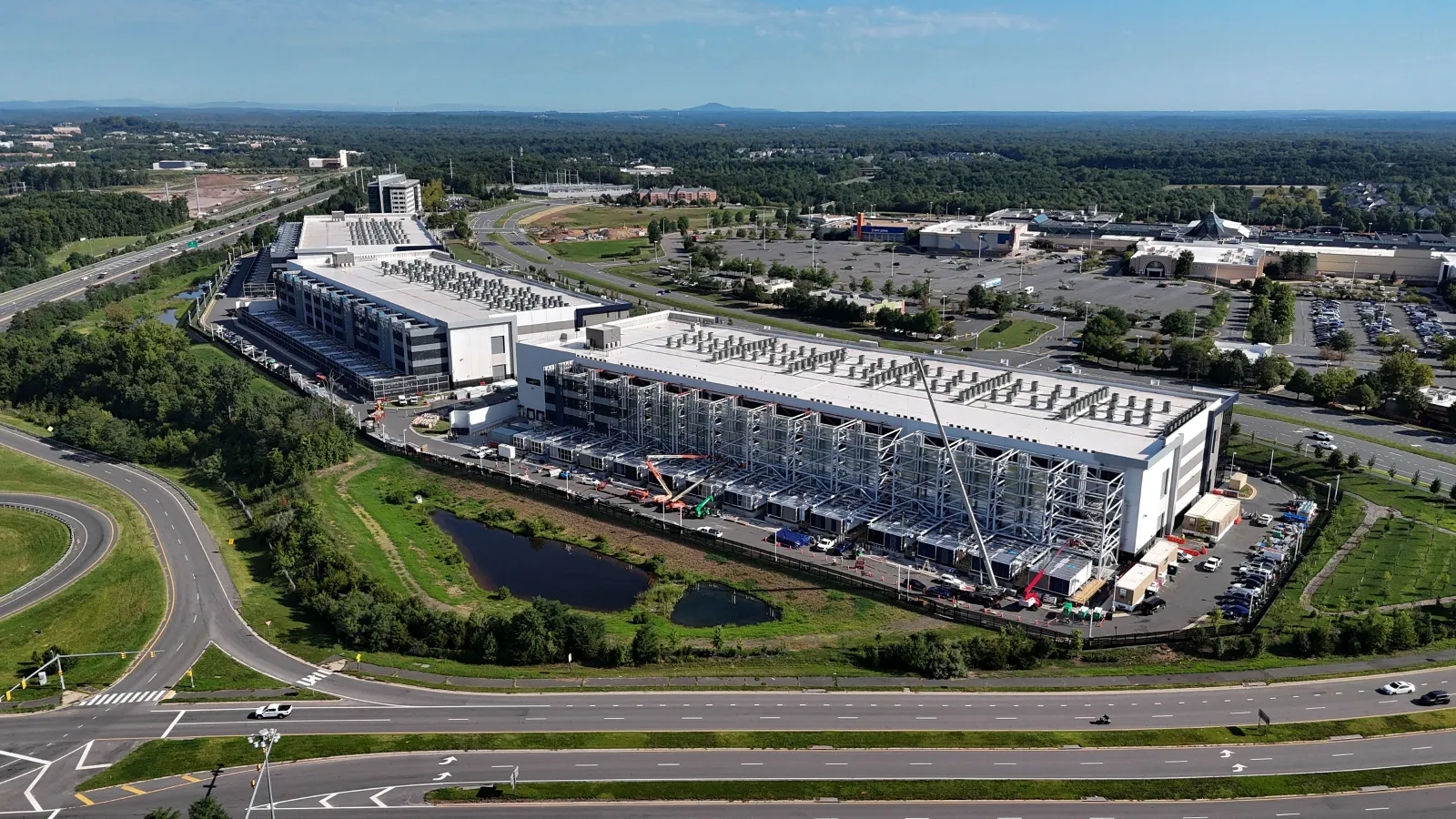
The technical debate between PJM, FERC, and the DOE underscores the extreme difficulty of forecasting load in an era defined by hyper-scale computing facilities. According to system planners, a single modern data center campus can consume as much electricity as a mid-sized city, transforming sleep quiet suburban utility zones into heavy industrial load centers overnight.
PJM’s previous base capacity auctions revealed systemic vulnerabilities:
- Capacity Deficits: PJM failed to procure sufficient resources in its last two base auctions, pushing reserve margins uncomfortably close to minimum reliability thresholds.
- Procurement Scale: The proposed 6.8 GW backstop procurement represents a massive injection of new capacity required explicitly to backstop the projected surge in load by 2028 and 2029.
- Tracking Gaps: According to the DOE, PJM’s current baseline demand forecasting lacks the granular, project-level data tracking necessary to accurately match costs with causation.
The DOE warned that PJM’s tariff may inadvertently omit large loads already embedded in baseline forecasts or, conversely, fail to account for projects that are subsequently delayed, downsized, or canceled entirely.
"A capability to continuously track whether a project enters into service—and therefore benefits from the capacity and system investments procured to serve it—or is delayed, reduced, or cancelled, can help assign costs for new generation to the customers responsible for those investments," the DOE stated in its filing. Without these safeguards, the grid operator risks double-counting load growth, misattributing demand to the wrong utility zones, and unfairly socializing infrastructure costs across millions of residential ratepayers.
Official Responses and Stakeholder Positions
The federal intervention has exposed deep ideological and economic fault lines among grid operators, federal regulators, the executive branch, and utility providers.
The Department of Energy’s Stance
The DOE has emerged as an aggressive champion for consumer protection in wholesale electricity markets. By invoking the White House’s Ratepayer Protection Pledge, the department made it clear that the energy transition and the artificial intelligence boom cannot be subsidized by working-class families.
"Under the Ratepayer Protection Pledge, large electric energy loads—not American households or other business ratepayers—must fund the electric energy generation and related infrastructure that such new large load projects require," the DOE emphasized.
The agency firmly backed FERC’s recommendation that PJM overhaul its cost-allocation models to rely on dynamic, continuously updated load forecasts.
Federal Energy Regulatory Commission (FERC)
FERC’s intervention highlights a growing regulatory scrutiny over regional market rules in the face of the energy transition. By declaring vital parts of PJM’s proposal potentially unjust and unreasonable, FERC has asserted that RTOs cannot bypass equitable cost allocation principles simply under the guise of an emergency reliability crisis. The agency’s hearing process, scheduled to run through February, will serve as the primary forum for hashing out compliant reforms.
PJM Interconnection
PJM officials have faced a difficult balancing act: managing unprecedented industrial demand while ensuring system adequacy across a complex multi-state footprint. PJM maintains that fast-track mechanisms are essential to prevent severe capacity shortages as coal and gas plants retire while load scales upward. Representatives for PJM did not immediately respond to requests for comment regarding the DOE’s recent filing or their timeline for submitting revised tariff proposals to FERC.
Utility Companies and Industry Reactions
Major utilities operating within the PJM footprint find themselves navigating a delicate landscape. Having signed the voluntary Ratepayer Protection Pledge, companies like American Electric Power, Dominion Energy, and Exelon are publicly committed to shielding consumers. However, balancing the commercial interests of tech giants seeking rapid grid interconnections with the rigorous compliance demands of federal watchdogs remains an operational tightrope walk.
Broader Implications for the U.S. Power Grid
The standoff between PJM, FERC, and the DOE is far more than a regional procedural dispute—it is a bellwether for the future of American electricity markets. As the United States accelerates its deployment of energy-intensive technologies, including semiconductor fabrication plants, green hydrogen facilities, and massive artificial intelligence data centers, the fundamental architecture of regional grid planning is being severely tested.
Several long-term implications emerge from this ongoing regulatory clash:
1. Redefining "Cost-Causation" in Modern Grids
For decades, traditional cost-allocation models relied on predictable, incremental load growth that could be easily averaged across broad consumer bases. The advent of hyper-scale data centers shatters this model. The federal government’s insistence that "the causer pays" signals a permanent shift toward individualized, project-level cost tracking for ultra-large commercial loads.
2. Heightened Federal Scrutiny of RTO Rules
FERC’s willingness to halt PJM’s fast-tracked procurement demonstrates that federal regulators are not willing to rubber-stamp emergency market changes proposed by grid operators, even when genuine reliability concerns are at stake. Other regional transmission operators—such as MISO, SPP, and ERCOT—are likely watching closely as this precedent takes shape.
3. The Future of the Ratepayer Protection Pledge
The integration of voluntary corporate pledges into federal regulatory arguments marks a novel intersection of executive branch policy and independent agency oversight. If the DOE successfully ties PJM’s compliance to the principles of the Ratepayer Protection Pledge, it could create a powerful new enforcement mechanism that holds both utilities and developers accountable for regional price stability.
4. Navigating the AI Energy Crunch
Ultimately, the resolution of the PJM reliability backstop dispute will dictate how quickly and efficiently the United States can expand its digital infrastructure without plunging residential consumers into an affordability crisis. If market rules successfully channel the financial responsibility back to tech developers, the U.S. grid may successfully weather the data center boom. If not, everyday ratepayers risk footing a multi-billion-dollar bill for a technological revolution they never asked for.
As FERC’s hearing process proceeds toward its conclusion, all eyes remain on PJM to see whether the grid operator will adopt federal guidance and draft a revised, consumer-protected procurement framework before capacity shortfalls materialize in the late 2020s.