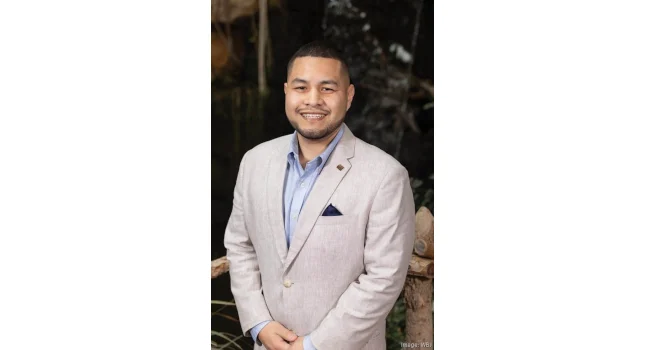
In the high-stakes world of amusement ride manufacturing, where precision engineering intersects with public safety and thrill-seeking, few professionals have made as significant an impact as Manny Villarreal. As an Electrical Engineer at Chance Rides LLC in Wichita, Kansas, the 32-year-old has distinguished himself not merely as a technical expert, but as a pivotal leader who has fundamentally improved the reliability and manufacturability of some of the world’s most recognizable entertainment systems.
Villarreal’s trajectory—from a curious high school student to a UL Qualified Manufacturer Technical Representative—serves as a blueprint for the modern engineer: one who balances complex technical problem-solving with a deep, human-centric commitment to mentorship and community development.
The Core Facts: Driving Innovation at Chance Rides
Manny Villarreal’s primary mandate at Chance Rides involves the sophisticated design, maintenance, and production of electrically driven transportation and amusement systems. In an industry where "downtime" is not just a financial concern but a critical safety factor, Villarreal has earned a reputation for "taking ownership."
Colleagues note that he frequently identifies under-resourced areas within legacy systems, systematically correcting outdated electrical architectures to bring them in line with modern safety standards. His work is characterized by a "first-principles" approach: he does not simply patch existing designs; he re-engineers them to enhance reliability, reduce long-term maintenance costs, and streamline the assembly process for manufacturing teams.
As a UL Qualified Manufacturer Technical Representative, his authority in matters of safety and standards compliance is paramount. He ensures that every electrical system leaving the Chance Rides facility adheres to the highest global benchmarks, a role that requires constant vigilance, ongoing education, and an uncompromising dedication to technical excellence.
Chronology: A Path Shaped by Physics and Persistence
Villarreal’s journey into the world of engineering was not a straight line, but rather a series of deliberate pivots driven by an evolving passion for the sciences.
The High School Catalyst
The seeds of his career were sown during his senior year of high school. Tasked with a capstone project centered on post-graduation plans, a young Villarreal found himself at a crossroads. He began researching professional paths that demanded a rigorous application of mathematics and science. It was during this exploration that he first encountered mechanical engineering, a field that promised to turn abstract theory into tangible results.
The Academic Pivot
Upon entering university, Villarreal initially pursued the mechanical track. However, his academic trajectory shifted during his undergraduate studies when he enrolled in a foundational physics course and a subsequent elective in digital systems. These subjects ignited a dormant interest in the behavior of electrons and the complexity of circuit design.
Recognizing that his true intellectual curiosity lay in electrical systems, Villarreal made a bold decision: he switched majors. While this change extended his graduation timeline to six years, he views the extra time as a "best-in-class investment." By merging his foundational mechanical knowledge with specialized electrical expertise, he emerged as a "bridge engineer"—someone capable of understanding the entire mechanical-electrical ecosystem of a machine.
Industry Integration
Since joining the professional ranks, Villarreal has rapidly ascended. His transition into the amusement industry allowed him to apply his cross-disciplinary background to a field where safety margins are microscopic and user experience is everything. His career at Chance Rides has been marked by a transition from individual contributor to a mentor and departmental leader.
Supporting Data: The Impact of "Engineering Ownership"
The effectiveness of Villarreal’s work can be measured through three primary metrics: System Reliability, Manufacturability, and Knowledge Transfer.
- Reliability Improvements: By auditing and upgrading legacy electrical designs, Villarreal has directly contributed to a decrease in unscheduled maintenance for ride operators. His redesigns often focus on modularity, allowing for faster diagnostics and component replacement.
- Manufacturability: By engaging directly with shop-floor staff, Villarreal ensures that his designs are not just functional, but feasible. This "Design for Manufacturing" (DFM) approach reduces assembly errors and lowers the time-to-market for complex ride systems.
- Mentorship Metrics: His involvement in the internship program has led to a measurable increase in student retention and professional confidence among his mentees. By shifting the intern experience from "task-based" to "project-ownership," he has helped prepare the next generation of engineers for the realities of industrial environments.
Official Perspectives: The Value of Mentorship and Culture
Villarreal’s leadership style is defined by his ability to bridge the gap between abstract engineering requirements and the practical needs of the workforce. His approach to mentorship is arguably his most significant contribution to the culture at Chance Rides.
Rather than delegating isolated, low-impact tasks to interns, Villarreal integrates them into the lifecycle of an electrical project. He encourages a culture of questioning, where he explicitly explains the "why" behind every design choice. This transparency serves two purposes: it educates the next generation, and it subjects his own designs to rigorous scrutiny, ensuring that no potential flaw goes unnoticed.
"He doesn’t just teach the technical specs," a colleague remarked. "He teaches how to think like an engineer who is responsible for the safety of thousands of people."
Furthermore, his collaborative engagement with the mechanical and manufacturing departments is seen as a vital asset to the firm. By breaking down the "silos" that often plague large-scale manufacturing, he ensures that the electrical components are perfectly integrated with the structural components, fostering a cohesive team environment that minimizes errors and maximizes safety.
Implications for the Future: Bridging Industry and Academia
Villarreal’s influence extends well beyond the walls of the Chance Rides facility in Wichita. His dedication to community outreach, particularly through his alma mater, Wichita State University, highlights the importance of industry-academic partnerships.
Strengthening the STEM Pipeline
Villarreal is a staunch advocate for first-generation and underserved students. He understands that the path to an engineering degree is often obstructed by socioeconomic barriers. By participating in student-engagement activities and maintaining active connections with faculty, he provides students with a real-world roadmap of what a career in the amusement industry looks like.
His outreach efforts are not just altruistic; they are strategic. By strengthening the ties between the local engineering community and the industry, he is helping to ensure a robust pipeline of talent for his company and the broader Kansas industrial sector. He serves as a living proof that the "six-year degree" path is not a failure of planning, but a mark of deep intellectual maturity and dedication.
The Future of Amusement Engineering
As amusement rides become increasingly digitized—incorporating advanced sensors, AI-driven safety monitoring, and complex control systems—the need for engineers like Villarreal, who possess both a legacy understanding of mechanical systems and a forward-looking mastery of electrical systems, will only grow.
His commitment to safety standards—specifically his role as a UL Qualified Manufacturer Technical Representative—positions him as a leader in an era of tightening regulations. As the industry faces new pressures regarding public safety and environmental sustainability, professionals who prioritize compliance without sacrificing innovation will be the architects of the next generation of theme park technology.
Conclusion: A Blueprint for the Modern Engineer
Manny Villarreal represents a new archetype in engineering leadership. He is neither the distant designer nor the isolated technician; he is a collaborator who recognizes that the quality of a machine is directly proportional to the quality of the culture that built it.
From his decision to invest in a longer, more comprehensive education to his daily work in the manufacturing plant, Villarreal has shown that professional success is not defined by the speed at which one climbs the ladder, but by the stability of the foundation one builds beneath them. Whether he is correcting a legacy circuit design, mentoring an intern through a complex technical problem, or inspiring a first-generation student to pursue a degree in STEM, Manny Villarreal is ensuring that the future of the amusement industry is built on a foundation of safety, intelligence, and inclusive leadership.
For the engineering community, his career offers a compelling lesson: the most complex problems are rarely solved by technology alone—they are solved by people who understand how to connect their tools, their teams, and their communities toward a singular, safer goal.