COPENHAGEN — The tranquil shores of the Danish coast offered an idyllic backdrop for a recent three-day gathering of Chief Procurement Officers (CPOs). Yet, the serene atmosphere was swiftly disrupted by a fresh wave of geopolitical volatility echoing from across the Atlantic: Washington’s announcement of a sweeping new regime of tariffs targeting 60 nations worldwide.
As the 24-hour global news cycle whirred into hyper-drive and supply chain executives scrambled into immediate response mode, the incident served as a stark reminder of the relentless pressures facing modern procurement leaders. In an era defined by trade wars, protectionist policy shifts, and sudden regulatory shocks, the temptation to react to every breaking headline is immense.
However, industry experts argue that succumbing to this reactive posture is a critical mistake. Rather than getting bogged down in the day-to-day administrative firefighting sparked by erratic political announcements, procurement leaders must look past the immediate turbulence. The real story is not a collection of isolated tariff decrees, but a fundamental, long-term restructuring of international commerce—a phenomenon economists have dubbed “the great rewiring.”
Main Facts: The Anatomy of Modern Trade Disruption
The latest US tariff announcements are merely the latest chapter in a multi-year trend toward economic fragmentation. For decades, global supply chains operated under a banner of hyper-globalization, characterized by low trade barriers, predictable regulatory environments, and a relentless pursuit of the lowest-cost producer, predominantly centered in Asia.
Today, that architecture is unraveling. The core facts driving the contemporary procurement landscape include:
- Proliferating Protectionism: Governments worldwide are increasingly utilizing trade duties, export controls, and industrial subsidies to reshore critical manufacturing, protect domestic labor markets, and secure strategic supply chains.
- The Weaponization of Trade: Tariffs are no longer viewed strictly as fiscal tools for revenue generation or domestic industry protection; they are routinely deployed as instruments of broader geopolitical strategy and national security.
- Chronic Volatility: CPOs can no longer rely on historical cost models or stable multi-year logistics agreements. Policy changes can—and do—happen overnight, rendering traditional forecasting models obsolete.
Against this backdrop, the knee-jerk reaction of many corporate boards is to pivot toward defensive, highly localized isolationism. Yet, experts caution that treating every tariff announcement as a five-alarm fire risks blinding organizations to the deeper, more profound structural currents reshaping the global economy.
Chronology: From Hyper-Globalization to Strategic Fragmentation
To understand how procurement functions arrived at this crossroads, it is necessary to examine the chronological evolution of modern trade policy over the past two decades.
- The Era of Predictability (Early 2000s–2016): Characterized by the expansion of the World Trade Organization (WTO), the rise of complex transnational supply chains, and a general consensus that free trade was an unmitigated global good. CPOs operated with a mandate focused almost exclusively on cost optimization and lean inventory management (Just-In-Time).
- The First Trade Shock (2018–2019): The introduction of sweeping US-China Section 301 tariffs shattered the illusion of permanent trade stability. For the first time in a generation, procurement leaders were forced to model the financial impact of sudden import duties and map their tier-two and tier-three suppliers for geographical exposure.
- The Pandemic and Supply Chain Collapse (2020–2022): COVID-19 exposed the vulnerabilities of lean, highly extended supply chains. Border closures, port congestion, and raw material shortages forced organizations to pivot from Just-In-Time to Just-In-Case strategies, introducing redundancy, dual-sourcing, and nearshoring into boardroom discussions.
- The Era of "The Great Rewiring" (2023–Present): Today, trade policy has become permanently weaponized. Industrial policies such as the US Inflation Reduction Act (IRA) and the European Union’s Carbon Border Adjustment Mechanism (CBAM), combined with continuous tariff escalations, have transformed supply chain management from an operational back-office function into a board-level geopolitical defense mechanism.
Supporting Data: The Cost of Reactive Fatigue
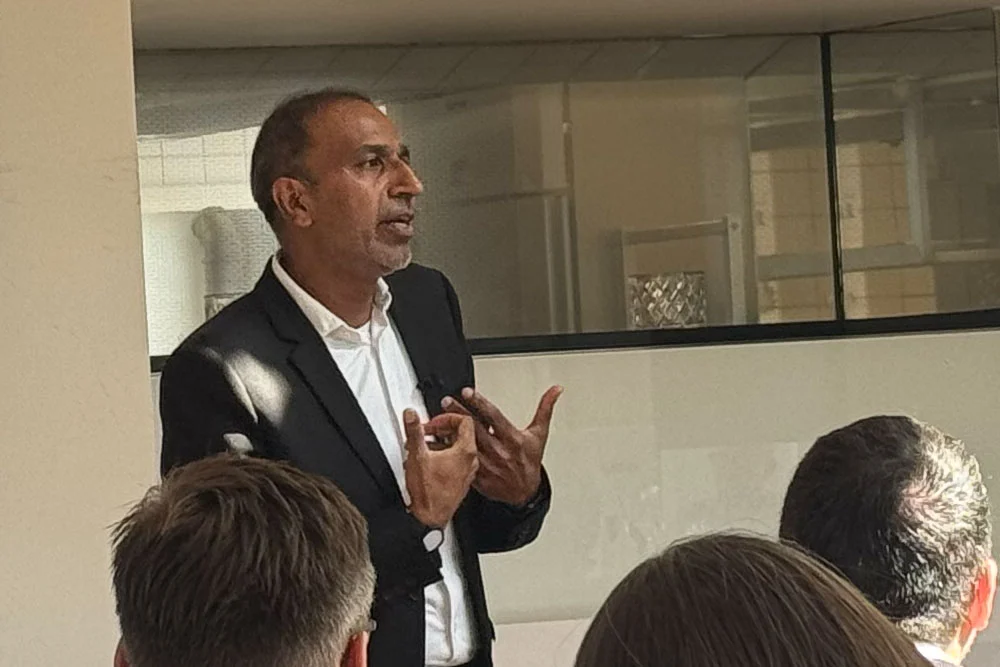
During a keynote address at the recent Ovation leadership summit, renowned economist Sony Kapoor challenged procurement executives to reassess how they consume information and allocate their cognitive and strategic resources.
“The daily high-frequency obsessive monitoring of the news flow, particularly coming from the other side of the Atlantic, is so depressing that we’ve lost track of the big picture,” Kapoor told the gathered CPOs.
The data supporting Kapoor’s thesis on "reactive fatigue" is compelling. Internal pulse surveys conducted across major executive networks indicate that:
- 78% of CPOs report feeling a constant state of operational anxiety driven by breaking geopolitical headlines and regulatory shifts.
- Over 60% of organizations admit to making reactive, short-term sourcing adjustments (such as hastily changing suppliers based on a single policy proposal) that ultimately increased their cost-to-serve without providing long-term structural resilience.
- Less than 25% of procurement budgets are currently dedicated to long-term structural transformation, with the vast majority consumed by day-to-day tactical mitigation and crisis management.
Kapoor emphasized that trade duties and protectionist measures are merely symptoms of a much larger, structural transition. Capital, sourcing capacity, and strategic commercial relationships are actively being moved, rebuilt, and reimagined on a global scale. Crucially, this evolution is not being driven by a handful of social media posts or high-profile political pronouncements, but by what Kapoor describes as “millions of small decisions that are individually micro-relevant, but not macro-significant.”
Official Responses and Expert Perspectives: Separating Noise from Trend
The challenge for modern CPOs lies in filtering out the relentless noise of daily political theatre to focus on genuine macroeconomic trends.
Industry leaders at the Danish retreat debated the fine line between prudent risk management and paralyzing over-responsiveness. Responding to every political headline, executive order, or tariff tweet guarantees perpetual organizational fatigue. When every corporate notification brings a state of dread followed by a demand for immediate remediation, employee burnout skyrockets and strategic clarity evaporates.
“Your decisions are both deeply affected by this daily unpredictable policymaking and essential to preserving the basic architecture that delivered us so much prosperity,” Kapoor explained to the CPO community. “The tradeoff is that you have to make sure to separate the noise from the trend, the noise from the structural change, and not get so hyper-responsive to the noise that you sacrifice longer-term opportunities.”
This perspective is gaining traction among forward-thinking procurement organizations. Rather than panic-buying inventory or abruptly severing supplier relationships every time a new tariff is floated in Washington or Brussels, resilient organizations are building institutional frameworks designed to absorb volatility without compromising profitability.
Recent pre-event pulse surveys underscore this shift in mindset. Members participating in the Ovation community increasingly recognize that building long-term resilience does not require abandoning global trade altogether; rather, it demands a sophisticated approach to risk diversification, regionalization, and supplier collaboration.
Implications for the CPO: Navigating the Brave New World
What do these macroeconomic shifts mean for the practitioner sitting in the CPO chair? As the global trade landscape continues to evolve at a dizzying pace, procurement leaders must pivot from tactical firefighting to strategic architecture.
1. Shift from Cost Optimization to Total Value and Resilience
The era of optimizing solely for the lowest landed cost is dead. CPOs must embed geopolitical risk assessment, tariff scenario modeling, and supply chain visibility deeply into their sourcing methodology. This involves evaluating suppliers not just on price and quality, but on their geographic resilience, regulatory compliance track record, and flexibility.
2. Cultivate Strategic Patience
In an environment designed to trigger knee-jerk reactions, patience is a competitive advantage. Leaders must establish clear governance frameworks that prevent the organization from over-indexing on temporary political posturing. Before uprooting a supply chain in response to a proposed tariff, CPOs must analyze whether the policy represents a permanent structural shift or transient political bargaining.
3. Build Agility into Supplier Contracts
Because the regulatory environment will remain volatile for the foreseeable future, rigid, long-term contracts locked into specific geographies can become financial death traps. CPOs should champion flexible contracting models that allow for agile volume reallocation, shared tariff-impact burdens, and rapid onboarding of alternative regional suppliers when necessary.
4. Reclaim the Strategic Narrative
Procurement teams must move away from being viewed merely as cost-cutting compliance officers and step into their role as strategic navigators of corporate risk. By focusing executive leadership on long-term structural trends rather than daily news cycles, CPOs can secure the investment and authority needed to future-proof their organizations.
Conclusion
The new wave of global tariffs and protectionist policies will undoubtedly create choppy waters for international commerce. For the CPOs gathered by the Danish coast, and for procurement professionals worldwide, the temptation to stare obsessively at the political radar screen is entirely understandable.
Yet, the true test of leadership in this environment is the ability to remain anchored. By distinguishing fleeting political noise from permanent structural transformation, CPOs can successfully navigate the great rewiring of global trade—turning modern volatility into an engine for long-term enterprise resilience and sustainable growth.