MIAMI – July 20, 2026 – A seismic shift is occurring within the corporate landscape, defined not by the mere adoption of new software, but by how organizations fundamentally rethink their operations. New research released today by The Hackett Group (NASDAQ: HCKT) reveals that the gap between companies that treat Artificial Intelligence (AI) as a simple automation tool and those that utilize it to drive process-led transformation is widening into a chasm.
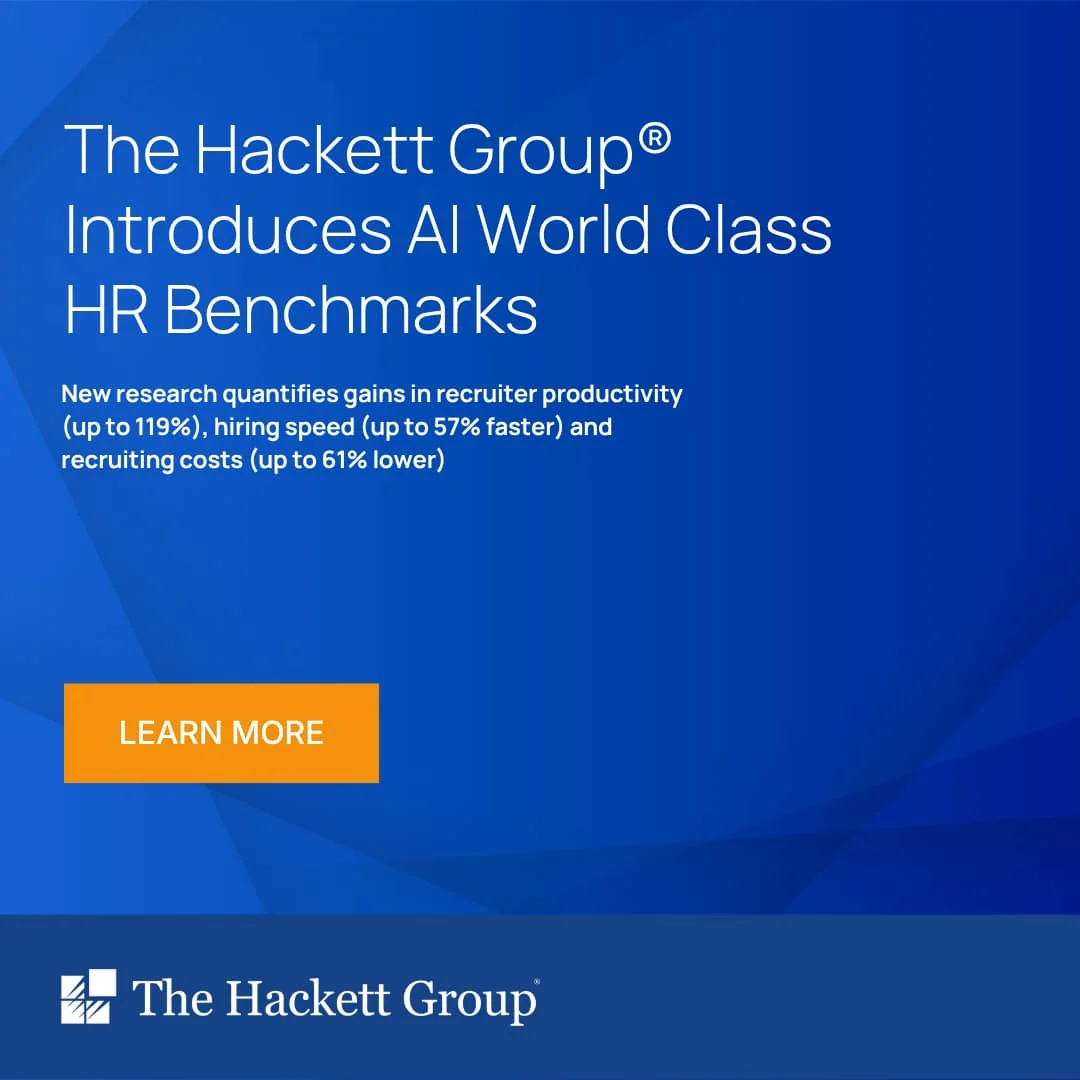
The study, titled AI World Class HR Benchmarks, provides the most granular quantification to date of how AI is redefining workforce performance. For organizations willing to redesign their end-to-end hire-to-retire workflows, the rewards are immense: recruiter productivity gains of up to 119%, hiring speeds increased by 57%, and a staggering 61% reduction in total recruiting costs.
The Main Facts: Quantifying the AI Advantage
The Hackett Group’s findings suggest that we have moved past the "hype phase" of AI. The current era is defined by tangible ROI and structural changes. By examining 16 end-to-end enterprise processes, researchers identified that the most significant value is captured when AI is integrated into the foundation of a workflow, rather than being "bolted on" to existing, inefficient systems.
The data highlights a compelling hierarchy of performance. Organizations that pursue what The Hackett Group terms "AI World Class" status are outperforming their peers by margins that were previously considered impossible. In the realm of talent acquisition—a critical bottleneck for many modern enterprises—the compounding effects of AI are most visible. By automating sourcing, refining screening algorithms, and streamlining onboarding, companies are not just saving money; they are fundamentally changing the caliber of talent they can attract and retain.
Chronology: From Experimental Adoption to Process-Led Maturity
To understand where the market stands, one must look at the evolution of AI integration over the last several years.
- 2023-2024: The Pilot Era. Organizations largely focused on isolated use cases—deploying AI chatbots for basic HR queries or utilizing basic algorithmic tools for resume parsing. The focus was on "low-hanging fruit."
- May 2026: The "AI World Class" Catalyst. The Hackett Group introduced its foundational research on AI World Class performance, identifying that organizations pursuing process-led transformation were already seeing 75% performance advantages over competitors.
- July 2026: The Quantified Benchmark. The release of the current HR-specific benchmarks marks a pivot point. The focus has shifted from whether AI improves performance to how specific process reinvention creates sustainable competitive advantage.
This timeline reflects a maturing market. Enterprise leaders are moving away from the "one use case at a time" approach, which often leads to fragmented data and siloed workflows, and toward a holistic, enterprise-wide strategy that re-engineers how HR functions from the ground up.
Supporting Data: The Power of Compound Efficiency
The metrics provided by the study serve as a stark warning to laggards. When an organization integrates AI into the entire hire-to-retire process, the gains are not merely additive; they are multiplicative.
Talent Acquisition Performance
- Cost Per Hire: Up to 61% reduction.
- Recruiter Productivity: Up to 119% increase.
- Time-to-Fill: Up to 57% faster.
Broader Workforce Impact
The benefits ripple outward into the entire employee lifecycle. According to the research, AI World Class organizations are seeing:
- Internal Fill Rates: Up to 101% higher, indicating that AI-driven talent mapping is far more effective than manual tracking.
- Training and Development: Up to 160% more training hours provided, as AI systems better identify skill gaps and personalize learning paths.
- Self-Service Capabilities: A 187% increase in HR self-service, which liberates HR professionals from routine administration, allowing them to focus on high-level strategic business partnering.
These numbers illustrate a clear trend: AI, when applied correctly, acts as a force multiplier for human capability. It does not replace the strategic intent of the HR department; it provides the bandwidth for that intent to be realized.
Official Responses: Insights from Industry Leaders
The leadership at The Hackett Group views these findings as a wake-up call for executives who remain hesitant to commit to deep-level transformation.
"Most organizations are still trying to justify AI investments one use case at a time," notes Lee Derryberry, Principal and HR Transformation practice leader at The Hackett Group. "Our research shows the greatest returns come when organizations redesign end-to-end processes enabled by AI, allowing improvements to compound across HR as a whole."
The sentiment is echoed by Franco Girimonte, a Principal at the firm, who emphasizes the qualitative shift in the HR role. "The real value of AI isn’t automating recruiting. It’s stronger organizational capability. Organizations that redesign hire-to-retire processes around AI build more agile workforces, accelerate skills development, and enable HR to become a more strategic business partner."
The firm’s approach is underpinned by decades of data. By leveraging insights from 98% of the Dow Jones Global Titans and 90% of the Fortune 100, The Hackett Group has built a repository of best-practice process flows that form the bedrock of their AI delivery platforms, such as Hackett AI XPLR and ZBrain.
Implications: The Growing Capability Gap
The implications of this research are profound. We are witnessing the emergence of a "Capability Gap."
The Competitive Divide
Organizations that fail to pivot to process-led transformation risk falling into a "productivity trap." While they may implement AI tools, their lack of structural change means they are essentially running faster on a treadmill. In contrast, "AI World Class" organizations are fundamentally changing their business model, using AI to become more agile, responsive to talent shortages, and better aligned with shifting market demands.
Strategic Reorientation
HR departments are under immense pressure to do more with fewer resources. The Hackett Group’s research suggests that the only viable path forward is the total integration of AI into the fabric of the organization. This shift transforms HR from an administrative function into a strategic engine that directly impacts the company’s bottom line.
The Future of Work
As companies continue to grapple with persistent talent shortages and the need for rapid skill development, the ability to effectively utilize AI will determine which firms thrive and which stagnate. The "AI World Class" standard established by this research is not merely a benchmark for HR; it is a blueprint for the modern enterprise.
For leaders looking to bridge the gap, the message is clear: Stop looking for tools to automate your current problems, and start looking for ways to redesign your processes to solve them permanently.
About The Hackett Group
The Hackett Group, Inc. (NASDAQ: HCKT) is a global leader in ROI-led, AI enterprise transformation. By leveraging proprietary AI delivery platforms and decades of process intelligence, the firm helps the world’s largest organizations achieve peak operational performance. For more information, visit www.thehackettgroup.com.
Note: This article contains forward-looking statements regarding future performance and market trends. Actual results may vary based on market conditions, implementation strategies, and other external factors.