CHICAGO — In an era where industrial automation demands increasingly higher levels of precision, reliability, and compact design, Elmo has announced a major expansion of its advanced motion control portfolio. The company is set to introduce a robust lineup of new motion controllers and high-performance servo drives explicitly engineered to conquer demanding operating conditions—ranging from extreme temperatures and high altitudes to deep-sea environments, severe humidity, and intense mechanical vibration.
Industry professionals will get their first live, hands-on look at these cutting-edge solutions during Automate 2026, taking place from June 22 to 25 at McCormick Place in Chicago. Attendees can explore the innovations directly at Elmo’s official exhibition space, Booth S-3601.
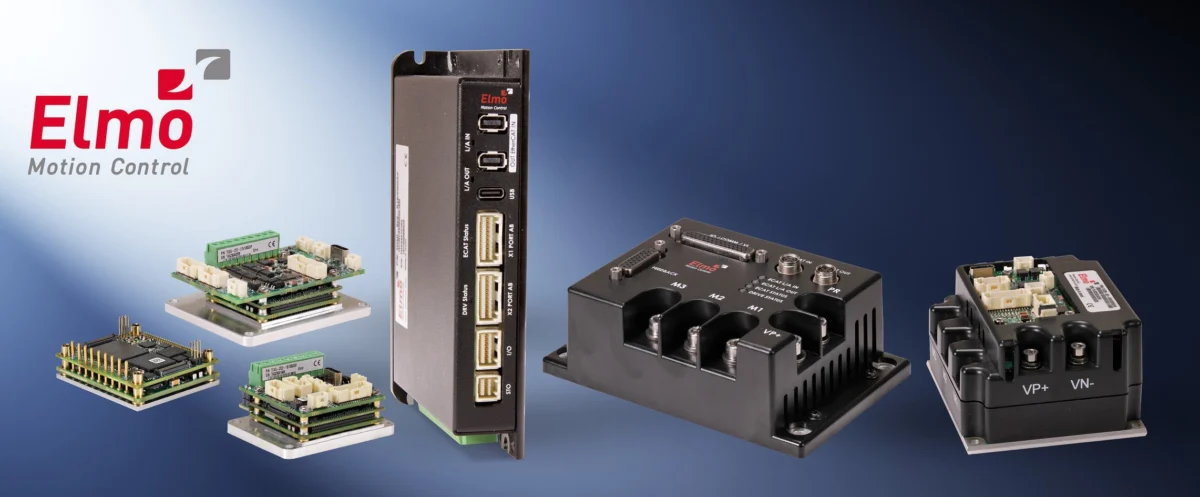
This product rollout not only significantly broadens the capabilities of Elmo’s established Platinum line but also marks the official debut of the brand-new Titanium line. The newly introduced hardware family brings multi-axis configurations, advanced integrated intelligence, and comprehensive functional safety features into ultra-compact footprints, addressing the escalating market need for smarter, safer, and smaller motion systems.
Main Facts: Redefining Performance and Safety at the Edge
The centerpiece of Elmo’s Automate 2026 showcase is a comprehensive suite of hardware and software innovations designed to streamline machine architecture, reduce physical footprints, and elevate performance across harsh industrial environments.
At the core of this release is the strategic implementation of drive-level functional safety. By embedding safety protocols directly into the servo drives, Elmo enables engineers to drastically reduce the reliance on bulky external safety hardware, extensive cabling, and separate safety PLCs. This decentralized approach simplifies overall machine architecture, lowers installation costs, and accelerates time-to-market for OEMs.
The product introduction spans two primary categories:
- The Expanded Platinum Line: Building on a proven legacy of high-performance servo control, the updated Platinum line introduces enhanced processing capabilities, flexible connectivity, and rigorous environmental hardening. These drives are built to maintain absolute stability and precision under the most punishing physical conditions.
- The New Titanium Line: Designed specifically for space-constrained multi-axis architectures, the Titanium line leverages advanced Gallium Nitride (GaN) semiconductor technology. This leap in material science allows for unprecedented switching efficiency, drastically reducing thermal dissipation while packing high-end computing power into a fraction of the physical space traditionally required.
Furthermore, Elmo is backing these hardware rollouts with its sophisticated software ecosystem—featuring the Elmo Application Studio III (EASIII) and Composer2—empowering design engineers to seamlessly develop, test, and implement complex control algorithms with minimal friction.
Chronology: Evolution Toward Ultra-Compact, Intelligent Motion
To understand the significance of Elmo’s latest release, it is helpful to examine the technological trajectory of industrial motion control over the past decade.
Phase 1: The Transition to Decentralized Intelligence
Historically, motion control architectures relied heavily on centralized control panels housing massive banks of drives, PLCs, and discrete safety relays. As automation advanced into collaborative robotics and mobile platforms, this centralized model proved too bulky and inefficient. Elmo responded over the years by developing ultra-compact, highly efficient intelligent drives that could be mounted directly on or near the motor, minimizing wiring and maximizing dynamic response.
Phase 2: The Rise of Advanced Materials and Functional Safety
As automation applications expanded into more hazardous and rugged environments—such as aerospace testing, deep-subsea robotics, and heavy outdoor mobile machinery—the demand for environmental hardening spiked. Concurrently, international safety standards (such as IEC 61508 and ISO 13849) placed heavier burdens on machine builders to incorporate functional safety (like Safe Torque Off, Safe Operating Stop, and Safely Limited Speed).
Phase 3: The Debut of the Titanium Line and Automate 2026
The culmination of this evolutionary path is the launch of the Titanium line. By integrating multi-axis capabilities and GaN technology into a single, cohesive family, Elmo has shifted the paradigm from mere component minimization to true systemic integration. The introduction of these drives at Automate 2026 represents a generational leap forward, setting the stage for the next decade of intelligent, highly mobile industrial automation.
Supporting Data: Engineering Efficiency and Spatial Optimization
The practical advantages of Elmo’s new product lines can be quantified through significant space savings, thermal efficiency improvements, and architectural simplification.
Footprint Reduction and Bus Synchronization
In modern multi-axis robotics, physical space is frequently at a premium. The Titanium line addresses this challenge head-on with unprecedented integration metrics. A prime example is the Titanium Castanet, a multi-axis powerhouse capable of replacing up to two traditional Elmo Twitter servo drives in specific operational applications.

By consolidating dual-axis control into a single physical unit, the Titanium Castanet achieves:
- Drastic Reduction in Overall System Size: Machine builders can shrink control enclosures or eliminate them entirely by mounting drives closer to the axes of motion.
- Streamlined Communications: Engineers can now synchronize X/Y positioning over a single internal communication bus rather than managing two separate, complex bus networks. This reduces latency, simplifies troubleshooting, and lowers points of failure.
Gallium Nitride (GaN) Technology Advantage
Traditional silicon-based MOSFETs have largely hit their theoretical efficiency limits in high-frequency switching applications. By incorporating GaN (gallium nitride) technology into the Titanium line, Elmo achieves significantly faster switching speeds with markedly lower conduction and switching losses.
- Higher Efficiency: GaN allows the servo drives to operate at higher frequencies without generating prohibitive amounts of heat.
- Power Density: The resulting thermal efficiency translates directly into smaller physical dimensions, allowing high-power motor control to fit into extremely tight mechanical spaces, such as robotic joints, wearable exoskeletons, and dexterous multi-fingered end-effectors.
Rigorous Environmental Specifications
Industrial applications frequently expose automation equipment to punishing external forces. Elmo’s new Platinum and Titanium components are engineered to withstand:
- Extreme Temperatures: Designed to maintain thermal equilibrium and stable electrical performance in sub-zero freezers or high-heat manufacturing cells.
- Altitude & Pressure: Built to endure rapid pressure differentials encountered in aerospace and high-altitude ground support systems.
- Sea Depth: Ruggedized housings and conformal coating options protect electronics against moisture ingress and high-pressure saline environments.
- Humidity & Vibration: Robust mechanical construction prevents component fatigue, solder-joint cracking, and short-circuiting in washdown or high-vibration stamping and machining environments.
Official Responses and Industry Context: Powering Mobile and Robotic Systems
Modern robotics—spanning Automated Guided Vehicles (AGVs), Autonomous Mobile Robots (AMRs), human-collaborative robots (cobots), and human-augmentation exoskeletons—requires a distinct set of motion control characteristics. These mobile and autonomous platforms rely heavily on battery power, meaning that every watt of wasted energy directly translates to reduced operational uptime.
Meeting the Complex Demands of Mobile Robotics
Robotic systems frequently require multiple distinct servo drives operating completely independently to govern precise motor position, velocity, and torque, while simultaneously maintaining tightly synchronized system-wide motion. Furthermore, a single robotic architecture often demands heterogeneous motor sizing:
- Large Motors: Dedicated to high-torque axes such as robot base rotation, shoulder, and elbow joints in cobots.
- Small Motors: Deployed in delicate high-precision areas such as robotic wrists, grippers, and multi-jointed hand assemblies.
To address this vast spectrum of requirements without compromising performance, Elmo’s servo drives offer exceptional adaptability. They deliver ultra-smooth sinusoidal commutation, advanced current loop bandwidths, and highly deterministic multi-axis synchronization. Whether driving a heavy-duty AGV navigating a bustling warehouse floor or a delicate surgical-assist arm, the drives ensure high trajectory tracking accuracy and minimal settling times.
Comprehensive Software Support: EASIII and Composer2
Hardware innovation is only as powerful as the software tools used to configure it. Elmo supports its entire ecosystem via the Elmo Application Studio III (EASIII) and Composer2 software suites.
These platforms provide machine builders and systems integrators with intuitive graphical environments to:
- Rapidly commission and tune servo loops.
- Design, simulate, and execute complex motion trajectories and control algorithms.
- Implement diagnostic routines and monitor real-time drive performance parameters.
- Streamline the certification process for functional safety implementations. (Note: Certain advanced safety features are currently navigating final third-party certification processes).
Implications: What This Means for Machine Builders and OEMs
The introduction of Elmo’s expanded Platinum series and the brand-new Titanium line carries profound implications for the industrial automation landscape, particularly for Original Equipment Manufacturers (OEMs) and advanced machine builders.
- Lower Total Cost of Ownership (TCO): By shrinking cabinet footprints, eliminating redundant cabling, and removing the need for external safety PLCs and relays, OEMs can significantly reduce their Bill of Materials (BOM) and assembly labor costs.
- Accelerated Design Cycles: Advanced software integration via EASIII, combined with simplified multi-axis architectures over unified buses, means that engineers can prototype, test, and deploy complex multi-axis machinery faster than ever before.
- Expansion into Extreme Markets: With certified resilience against temperature, vibration, moisture, and altitude, engineers are no longer constrained by the environmental limitations of standard commercial automation hardware. Applications in marine exploration, aerospace, heavy outdoor logistics, and extreme manufacturing environments become immediately viable.
- Enhanced Safety Compliance: Decentralizing safety down to the drive level ensures that modern machinery can achieve higher safety integrity levels (SIL / PL) with greater architectural flexibility, protecting human operators working in close proximity to high-speed cobots and AMRs.
Looking Ahead to Automate 2026
As the industrial automation community converges on Chicago this June, Elmo’s showcase at Booth S-3601 will undoubtedly serve as a focal point for engineers seeking to push the boundaries of what compact, intelligent motion systems can achieve.
For machine builders looking to reduce system complexity, shrink their physical footprint, and conquer the harshest operating environments on Earth—or beneath the sea—Elmo’s latest innovations offer a clear roadmap toward the future of high-performance automation.
For more information, technical specifications, and event schedules, visit elmomc.com.