




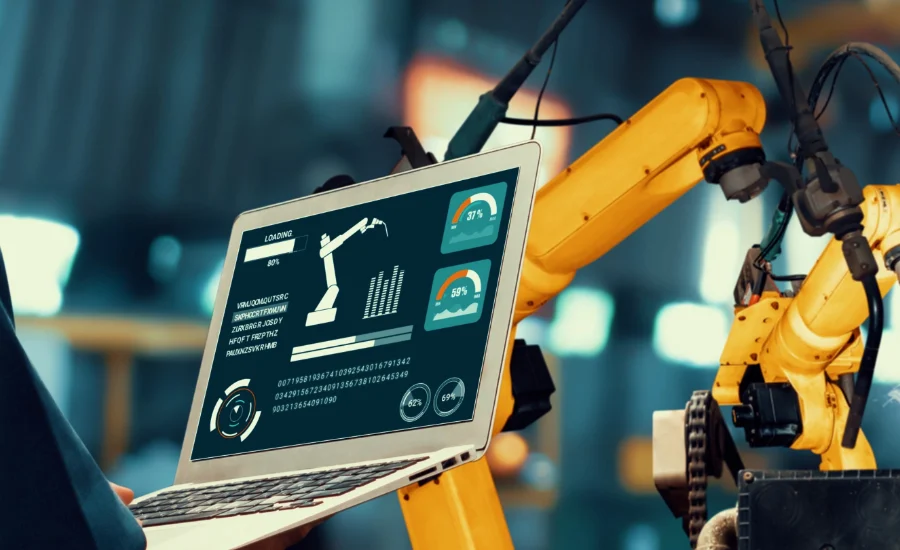
CHICAGO — For decades, the manufacturing sector has been built on precision, physical tolerances, and the steady rhythm of assembly lines. Today, a new rhythm is echoing across the industrial landscape—the rapid, data-driven pulse of artificial intelligence.
Yet, as manufacturers gather for the upcoming industry milestones, the conversation has fundamentally shifted. The foundational question of whether AI belongs on the factory floor has been definitively answered. In its place lies a far more complex, urgent puzzle: How do industrial enterprises successfully scale artificial intelligence across sprawling operations, harmonize legacy machinery with modern algorithms, and prove definitive value to skeptical stakeholders?
Recent data paints a picture of an industry in transition. According to a comprehensive new survey of 500 manufacturing technology decision-makers conducted by Revalize and Configure One, a staggering 92% of industrial organizations have moved past the initial phase of AI exploration. More than half—60%—now report broad or advanced adoption across their enterprises. Within the United States, that momentum is even more pronounced, with adoption figures climbing to 69%.
Despite this widespread embrace, the journey from pilot projects to enterprise-wide integration is fraught with friction. As manufacturers prepare for events like The ASSEMBLY Show, slated for October 27–29 at the Donald E. Stephens Convention Center in Rosemont, Illinois, the industry is confronting the sobering realities of scaling a transformative technology.
Main Facts: The Current State of Industrial AI
The transition of artificial intelligence from a futuristic curiosity to a standard operational tool represents one of the fastest technological shifts in manufacturing history. However, the Revalize and Configure One study reveals a stark dichotomy between the desire to deploy AI and the structural readiness to manage it.
Key findings from the report highlight several critical trends:
- High Adoption, Uneven Measurement: While 92% of manufacturers are actively using AI beyond the experimental stage, only 49% rigorously measure the return on investment (ROI) of these projects.
- The Data Quality Bottleneck: The single largest barrier to successful AI adoption is data quality, cited by 33% of respondents. Disparate legacy systems, siloed information, and uncleaned sensor data continue to hamper predictive models.
- Aggressive Financial Expectations: In the United States, 58% of surveyed decision-makers expect their AI investments to achieve a complete payback in less than 12 months. Concurrently, 27% cite unclear ROI as a primary hurdle to further deployment.
- The Executive Perception Gap: A notable divide exists between the C-suite and front-line senior managers. Executive leaders are more than twice as likely as senior managers to describe their AI adoption as "advanced" and to express confidence in their organization’s ability to scale these technologies.
These statistics underscore a pivotal moment for industrial operations. The initial gold rush of generative AI and machine learning pilots has given way to the hard work of operationalization.
Chronology: From Theoretical Exploration to Factory Floor Reality
To understand how the manufacturing sector arrived at this crossroads, it is helpful to trace the rapid evolution of artificial intelligence in industrial settings over the past decade.
Phase 1: The Era of Isolated Pilots (Mid-2010s to 2020)
During the early days of Industry 4.0, artificial intelligence was largely viewed through a lens of academic curiosity or localized problem-solving. Manufacturers experimented with isolated predictive maintenance models on high-value CNC machines or computer vision systems for basic surface inspection on a single line. These projects were typically spearheaded by forward-thinking innovation teams or academic partnerships, operating largely independently of core plant operations.
Phase 2: The Generative AI Boom and the Scramble for Tools (2021–2024)
The widespread democratization of cloud computing, edge processing power, and the explosion of generative AI models shifted the paradigm overnight. Manufacturers were no longer just looking at algorithmic anomaly detection; they were exploring large language models for process planning, automated code generation for robotic arms, and conversational interfaces to parse massive technical manuals. The focus was on capability—discovering what the technology could do.
Phase 3: The Reality Check and the Push for Scale (2025–Present)
Today, the industry has entered a maturity phase defined by financial accountability and architectural integration. Driven by economic pressures, supply chain volatility, and labor constraints, leadership teams are demanding clear pathways to profitability. The emphasis has shifted from experimental novelty to systemic integration—asking where AI is genuinely driving throughput, reducing scrap rates, and easing ergonomic strain on assembly workers.
Supporting Data: The Hurdles and Financial Realities
While the macro-level adoption rates suggest a sector moving at breakneck speed, a closer examination of the survey data reveals the operational friction points keeping plant managers awake at night.
The Data Dilemma
Artificial intelligence is fundamentally data-hungry. Yet, manufacturing environments have historically been characterized by heterogeneous equipment from various decades, proprietary protocols, and fragmented data silos.
- 33% of respondents identify poor data quality as the single largest impediment to AI success.
- Without clean, standardized, and contextualized data streams coming from PLCs, SCADA systems, and enterprise resource planning (ERP) software, machine learning models frequently suffer from "garbage in, garbage out" phenomena, leading to false positives in quality inspection or inaccurate production forecasting.
The ROI Paradox
The financial expectations placed on industrial AI are exceptionally high, particularly in North America, where nearly six in ten leaders anticipate recouping their capital expenditures in under a year. Yet, this high-pressure timeline clashes with the reality that nearly half of manufacturers lack rigorous ROI tracking frameworks.
When investments fail to show immediate, quantifiable impacts on the bottom line—often due to poor integration or vague implementation scopes—enthusiasm wanes, creating a cycle of hesitation among financial decision-makers.

The C-Suite vs. Shop Floor Divide
Perhaps one of the most revealing insights from the Revalize and Configure One study is the perceptual disconnect between executive leadership and operational managers:
- C-suite respondents were more than twice as likely as senior managers to characterize their AI programs as "advanced."
- Executives were also more than twice as likely to report that their organizational ability to scale AI had grown significantly stronger over the past year.
This gap suggests that while high-level strategies and budgets are being approved at the corporate level, the day-to-day friction of cleaning data, retraining legacy operators, and managing tool downtime is felt most acutely by the managers and engineers on the ground. Bridging this communication gap will be essential for sustainable, long-term success.
Official Responses and Industry Perspectives
As the industrial sector braces for these challenges, thought leaders and event organizers are positioning upcoming forums as critical testing grounds for pragmatic solutions.
Industry analysts emphasize that the honeymoon phase of industrial AI is officially over. "Manufacturers are no longer asking whether artificial intelligence belongs in their operations," notes industrial tech observers. "Increasingly, they’re trying to figure out how to make it work at scale, under real-world factory constraints."
This sentiment forms the backbone of the upcoming ASSEMBLY Show in Rosemont, Illinois. Event organizers have curated the educational tracks and exhibit floors specifically to address the operational friction points highlighted in recent data.
A centerpiece of the event will be the dedicated AI in Manufacturing keynote, designed to strip away the industry hype and address foundational questions head-on. Panelists and manufacturing pioneers will tackle:
- Data Governance: Establishing robust pipelines to clean, secure, and unify factory-floor data.
- Workforce Readiness: Upskilling assembly workers, machine operators, and maintenance technicians to collaborate seamlessly alongside intelligent systems.
- Measurable ROI: Implementing concrete Key Performance Indicators (KPIs) to track financial and operational returns accurately.
- Transitioning to Production: Moving successful prototypes out of the innovation lab and into rigorous, 24/7 assembly environments.
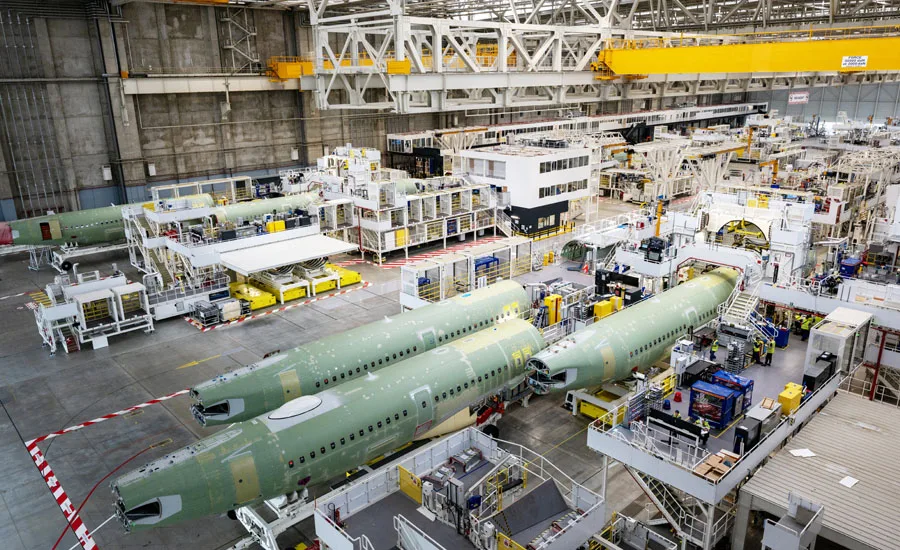
Furthermore, the exhibit floor will serve as a living laboratory. Attendees will witness AI technologies moving past theoretical demonstrations into tangible applications—ranging from advanced machine vision inspection systems and real-time operator guidance platforms to intelligent process planning tools that optimize line balancing and ergonomics.
Implications: What This Means for the Future of Manufacturing
The maturation of artificial intelligence in industrial settings carries profound implications for the workforce, competitive strategy, and the structural design of future smart factories.
1. The Redefinition of the Assembly Line Worker
Fears of wholesale automation are being replaced by a more nuanced reality: augmentation. As AI-driven tools take over repetitive quality checks, dynamic path planning for robotics, and complex documentation searches, the role of the assembly worker is evolving. Workers are increasingly becoming exception-handlers and system trainers.
Tools like smart search assistants—such as the newly launched Ask ASM platform designed to provide instant answers on assembly and manufacturing topics—exemplify how information accessibility is empowering personnel to solve complex problems faster on the shop floor.
2. The Imperative of Data Architecture
Manufacturers can no longer treat IT and OT (Operational Technology) as separate entities. Scaling AI requires a unified data architecture that bridges the shop floor to the enterprise cloud. Companies that invest in modernizing their data pipelines and breaking down information silos will pull ahead of competitors bogged down by legacy constraints.
3. Pragmatism Over Hype
The industrial sector is notoriously pragmatic. Technologies that fail to prove their worth within a predictable financial window are quickly abandoned. The current pressure to demonstrate sub-twelve-month payback periods means that future AI vendors must focus on turnkey solutions that solve hyper-specific, high-cost pain points—such as reducing scrap, preventing unplanned downtime, or accelerating new product introduction (NPI) cycles.
Conclusion: Entering the Era of Execution
The artificial intelligence boom successfully captured the imagination of the manufacturing sector, driving widespread experimentation and historic adoption rates. Yet, as the industry prepares to convene in Rosemont this October for The ASSEMBLY Show, the narrative has matured.
The defining challenge for industrial leaders is no longer discovery; it is execution. By addressing data quality bottlenecks, bridging the perception gap between executives and shop-floor managers, and demanding rigorous, measurable ROI, manufacturers can transform AI from a buzzword into a permanent, profit-driving pillar of modern industrial operations.