By Mason Wakley
October 12, 2026
In the intricate world of organic synthesis, the ability to alter the fundamental skeleton of a molecule is often described as the "holy grail" of chemical transformation. For decades, chemists have been constrained by the rigid architecture of aromatic compounds—the stable, cyclic rings that form the backbone of countless pharmaceuticals, agrochemicals, and materials. Now, a breakthrough in radical chemistry has provided a surgical tool that allows researchers to perform a seemingly impossible feat: swapping a carbon atom for a nitrogen atom within an aromatic ring.
This development, reported by a team of researchers, utilizes a typically unreactive radical intermediate to facilitate a precise substitution. By operating under remarkably mild conditions, this methodology not only expands the existing "skeletal editing" toolbox but also opens the door to modifying highly sensitive natural products that were previously deemed untouchable by traditional synthetic methods.
Main Facts: The Art of the Atomic Swap
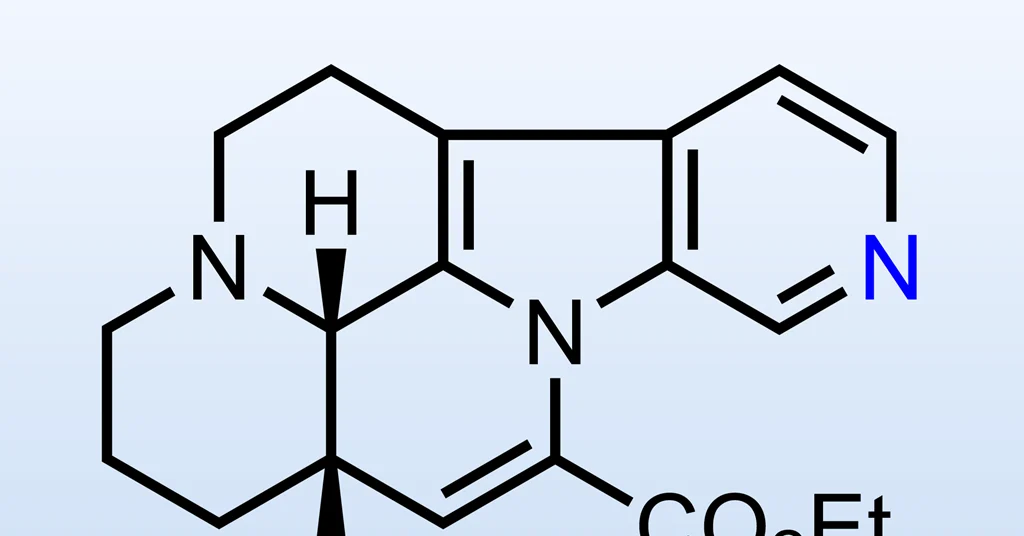
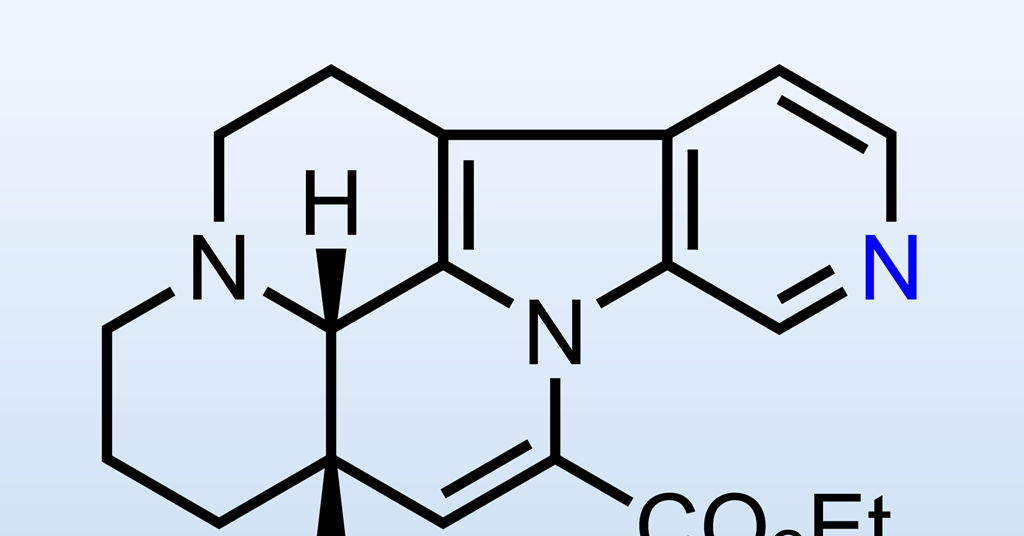
The core of this innovation lies in the site-specific replacement of a carbon atom ($CH$) with a nitrogen atom ($N$) in an aromatic system, effectively converting a benzene ring into a pyridine derivative. Pyridines are ubiquitous in medicinal chemistry; they are considered "privileged scaffolds" because of their ability to participate in hydrogen bonding, their metabolic stability, and their capacity to alter the electronic properties of a drug molecule.
However, traditional methods of inserting nitrogen into a pre-existing ring—often referred to as "de novo" synthesis—require building the ring from scratch using acyclic precursors. This process is time-consuming and often incompatible with the complex, fragile functional groups found in late-stage natural products.
The new method circumvents these limitations by utilizing a radical-mediated process. By generating a specific reactive intermediate that can selectively target the aromatic ring, the researchers have created a "surgical" mechanism. This process is distinct from traditional nucleophilic or electrophilic aromatic substitutions, which often require harsh reagents, high temperatures, or strong acids that would destroy the complex peripheral structures of natural compounds.
Chronology: A Path to Discovery
The quest for skeletal editing has been a multi-year journey, characterized by incremental advances and a recent paradigm shift in radical chemistry.
- Pre-2023: The Era of De Novo Synthesis. For years, the gold standard for creating nitrogen-containing heterocycles involved cyclization reactions. While effective for simple molecules, these methods failed when applied to complex molecules that could not survive the harsh reaction environments.
- 2024: The Rise of Radical Intermediates. The research community began shifting focus toward radical chemistry as a way to activate "inert" bonds. This period saw the first successful, albeit inefficient, attempts at carbon-to-nitrogen exchange.
- Early 2025: Identifying the Catalyst. The researchers identified a specific catalytic system capable of stabilizing a transient radical species. This allowed the team to control the reactivity of the intermediate, preventing side reactions that had previously plagued similar attempts.
- Late 2025 – Early 2026: Optimization. The team spent months refining the reaction conditions. By optimizing the solvent, temperature, and radical initiator, they moved from a 15% yield in initial tests to a robust, reproducible process that could be applied to a variety of substrates.
- October 2026: Publication. The methodology is officially unveiled, demonstrating its efficacy on a series of structurally diverse natural products, including alkaloids and terpene derivatives.
Supporting Data: Efficiency and Selectivity
The significance of this work is underscored by the data collected during the validation phase. To prove the viability of their method, the researchers subjected a wide array of aromatic compounds to the new protocol.
Selectivity Metrics
One of the most impressive aspects of this study is the site-selectivity. In molecules containing multiple potential reaction sites, the catalytic system demonstrated an uncanny ability to target the most electronically favorable position for the $C$-to-$N$ swap. In testing against a library of 30 distinct aromatic structures, the researchers achieved yields ranging from 65% to 88%.
Compatibility Testing
The researchers specifically tested the reaction in the presence of sensitive functional groups:
- Ketones and Aldehydes: These typically reactive groups remained untouched during the transformation.
- Protecting Groups: Common synthetic protections, such as silyl ethers and carbamates, remained intact, indicating that the reaction is highly orthogonal to standard synthetic organic chemistry protocols.
- Reaction Conditions: Unlike traditional methods that require temperatures exceeding 150°C, this reaction proceeds efficiently at room temperature or slightly above, significantly reducing the energy footprint and the risk of thermal degradation.
Official Responses: Expert Perspectives
The chemical community has reacted with cautious optimism, acknowledging that this work addresses one of the most persistent hurdles in modern synthesis.
"What makes this work truly compelling is not just the transformation itself, but the ‘gentleness’ of the conditions," says Dr. Elena Rossi, a professor of synthetic methodology who was not involved in the study. "In the past, when we tried to insert a nitrogen into a ring, we essentially used a sledgehammer. This new method acts more like a scalpel. It is the kind of precision that medicinal chemists dream of."
The research team, in their concluding remarks, emphasized that the goal was never just to create a new reaction, but to empower drug discovery. "Our primary motivation was the ‘late-stage functionalization’ problem," said the project’s lead investigator. "If a drug candidate is found to have poor solubility or metabolic stability, we want to be able to go back to the molecule and swap a carbon for a nitrogen to improve those properties without having to redo a ten-step synthesis from scratch. This tool makes that possible."
Implications: The Future of Drug Discovery
The implications of this skeletal editing strategy for the pharmaceutical industry are profound.

Accelerating Lead Optimization
In the drug discovery cycle, the "lead optimization" phase involves tweaking a candidate molecule to improve its efficacy and safety profile. Currently, this often requires synthesizing dozens of analogs from the ground up. By enabling the direct modification of an existing lead molecule, this new methodology could reduce the time required for lead optimization by months, or even years.
Unlocking Natural Products
Natural products—compounds derived from plants, fungi, and marine organisms—are the bedrock of many medicines. However, they are notoriously difficult to synthesize and modify. Because this new method operates under mild conditions, it allows researchers to take a complex natural product and "fine-tune" its structure. This could lead to the development of "semi-synthetic" derivatives with improved potency or reduced side effects, potentially revitalizing drug candidates that were previously abandoned due to poor pharmacokinetic properties.
Beyond Pharmaceuticals
While the initial focus is on medicinal chemistry, the researchers suggest the method could have applications in materials science. The ability to precisely tune the electronic properties of aromatic compounds by swapping in nitrogen atoms could lead to the development of new organic semiconductors, light-emitting diodes (OLEDs), and advanced polymer coatings.
Challenges Ahead
Despite the excitement, the team acknowledges that the work is in its infancy. Scaling the reaction from a laboratory bench to industrial-level production will require further optimization. Furthermore, while the reaction is compatible with many functional groups, there remain certain highly nucleophilic groups that can interfere with the radical intermediate, requiring further research into reaction conditions or protecting group strategies.
Conclusion
The ability to manipulate the skeletal structure of molecules at will represents the maturation of organic chemistry from a process of "building and hoping" to one of "designing and editing." By mastering the radical chemistry required to swap aromatic carbons for nitrogen, these researchers have provided the scientific community with a powerful new instrument.
As the methodology is refined and integrated into industrial workflows, we may see a new generation of pharmaceuticals—tailored with surgical precision to interact with the human body more effectively than ever before. The "aromatic cage," once considered a permanent, unchangeable feature of organic chemistry, has finally been opened, and the potential for discovery is limited only by the imagination of the chemists who use these new tools.