By Mary Bailey
Published: October 12, 2026
Main Facts
In a landmark development for the advanced materials and energy storage sectors, Imerys Graphite and Carbon Switzerland Ltd. (IGC)—a subsidiary of the global mineral giant Imerys S.A. (Paris, France)—has announced a major breakthrough in the commercial production of its SU-NERGY™ graphite line. Operating out of its state-of-the-art facility in Bodio, Switzerland, the company has successfully scaled up the manufacturing of industrial-grade synthetic graphite with a radically reduced climate impact.
By leveraging biomass-based feedstocks and 100% low-carbon electricity, the next-generation synthetic graphite achieves a "cradle-to-gate" climate impact of less than 0.1 kg $textCO_2texte$ per kilogram of material produced. This achievement shatters previous environmental benchmarks for carbon materials, offering industries that rely heavily on high-purity graphite—such as electric vehicle (EV) battery manufacturers, energy storage system developers, and advanced electronics producers—a near-zero-carbon alternative without sacrificing any technical performance.
The new SU-NERGY™ iteration builds upon a proprietary, catalyst-free manufacturing process optimized at the Bodio plant. While traditional synthetic graphite production is notoriously energy-intensive and heavily reliant on fossil-derived raw materials, Imerys’ updated technological framework successfully marries ecological sustainability with industrial-scale output. This positions the company at the vanguard of the European Union’s industrial decarbonization movement, providing a localized, highly resilient supply chain that insulates manufacturers from overseas supply disruptions while aggressively driving down Scope 3 emissions.
Chronology of Innovation: From Concept to Commercialization
The path to producing the world’s lowest-impact industrial synthetic graphite has been a carefully mapped-out journey of research, pilot testing, and rapid commercial scaling by Imerys’ research and development divisions.
2025: The Launch of the SU-NERGY™ Platform
The foundational chapter of this technological leap occurred in 2025, when Imerys Graphite and Carbon introduced the original SU-NERGY™ product line. That initial release was widely celebrated across the chemical engineering and materials science sectors for achieving a watershed 60% reduction in $textCO_2$ emissions compared to traditional, conventional synthetic graphite production methods.
The 2025 iteration proved that synthetic graphite could be manufactured without traditional chemical catalysts—a process innovation that not only streamlined production costs and product purity but also drastically lowered the environmental penalties historically associated with high-temperature graphitization. However, leadership at Imerys viewed that milestone merely as a stepping stone toward true carbon neutrality.
2026: Scaling Biomass Integration and Low-Carbon Energy
Throughout early and mid-2026, engineers and materials scientists at the Bodio, Switzerland facility focused on replacing remaining fossil-based precursors with sustainable, biomass-derived feedstocks. By optimizing the structural integrity and carbon-yield efficiency of these biological residues, the research team managed to bypass the carbon footprint typically tied to petroleum coke and other fossil-derived inputs.
Simultaneously, the facility intensified its integration of 100% low-carbon electricity sources to power its ultra-high-temperature furnaces. The convergence of biomass chemistry and renewable power culminated in the October 2026 announcement: the successful, industrial-scale rollout of SU-NERGY™ graphite boasting a cradle-to-gate impact of under 0.1 kg $textCO_2texte$/kg. This evolution marks a transition from laboratory-scale proof-of-concept to a robust, high-volume commercial reality capable of servicing demanding global markets.
Supporting Data and Technical Performance
To fully appreciate the significance of Imerys’ latest achievement, one must examine the metrics that govern modern carbon material manufacturing. Synthetic graphite is a critical component in lithium-ion battery anodes, conductive additives, and specialized thermal management systems. Historically, however, its production footprint has been a major contributor to industrial greenhouse gas emissions.
Comparative Carbon Footprint Metrics
- Traditional Synthetic Graphite: Often incurs high cradle-to-gate emissions due to the reliance on fossil-based petroleum or pitch precursors and carbon-heavy electrical grids.
- First-Generation SU-NERGY™ (2025): Achieved up to a 60% reduction in $textCO_2$ emissions relative to traditional industry baselines.
- Next-Generation SU-NERGY™ (Late 2026): Reaches an ultra-low cradle-to-gate climate impact of $< 0.1 text kg textCO_2texte/textkg$.
Technical Integrity and Material Characteristics
A common concern in sustainable materials engineering is the "green penalty"—the compromise of material performance, durability, or purity in exchange for environmental credentials. Imerys has rigorously tested its new biomass-derived graphite to ensure no such compromise exists.
- Catalyst-Free Purity: The manufacturing process remains entirely catalyst-free, eliminating trace metallic impurities that can degrade electrochemical performance and battery lifespan.
- Identical Technical Specifications: The latest SU-NERGY™ graphite maintains the exact physical, electrical, and thermal performance metrics of its predecessor. It offers high electrical conductivity, exceptional crystallinity, and structural stability.
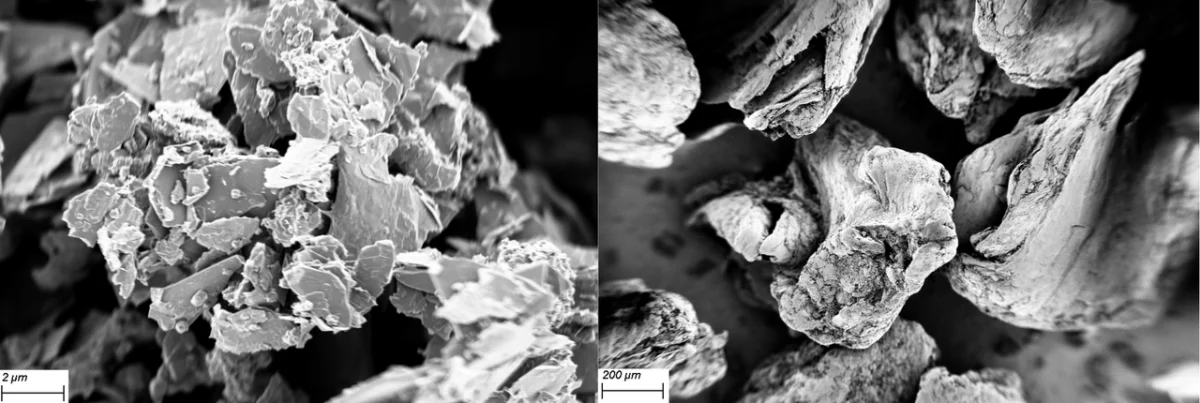
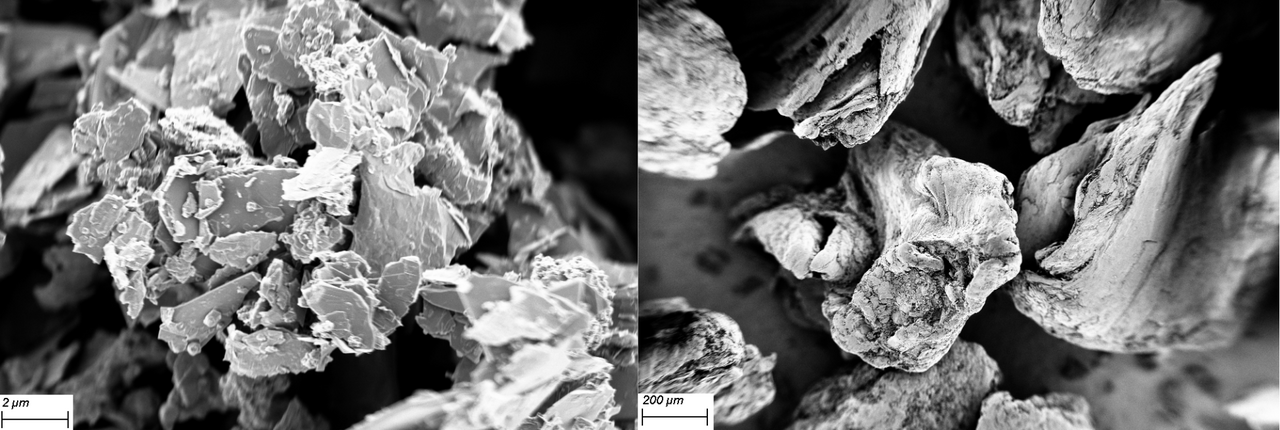
- Microscopic Morphology: Advanced Scanning Electron Microscopy (SEM) imaging confirms that the micro-structure of the biomass-derived graphite exhibits the uniform particle size distribution and optimized surface morphology required for rapid lithium-ion intercalation and de-intercalation in advanced energy storage applications.
Official Responses and Industry Perspective
Industry leaders and corporate executives have hailed the announcement as a defining moment for the materials sector, emphasizing both its environmental integrity and its strategic commercial value.
Frank Wittchen, Vice President and General Manager of the Graphite & Carbon Division at Imerys, reflected on the milestone during the official release:
"When we launched the SU-NERGY™ series last year, we promised it was just the beginning of our journey to reshape the graphite landscape. This innovation serves as a crucial enabler for our customers. It helps them meet their decarbonization targets while securing a localized, resilient European supply chain."
Wittchen’s remarks underscore a dual imperative facing modern manufacturers: the regulatory and ethical necessity to slash greenhouse gas emissions, alongside the operational necessity to insulate supply chains from geopolitical volatility and long-distance maritime shipping bottlenecks. By producing this material in Bodio, Switzerland—at the heart of Europe—Imerys offers regional manufacturers a secure, reliable source of critical raw materials that aligns seamlessly with stringent European Union environmental mandates.
Independent chemical engineering analysts have similarly noted that Imerys’ success sets a new psychological and technical benchmark for competitors. As carbon border adjustment mechanisms (such as the EU’s CBAM) tighten economic pressures on carbon-intensive imports, domestic manufacturers utilizing materials with a sub-0.1 kg $textCO_2texte$/kg profile will enjoy significant regulatory and financial advantages.
Broader Implications for Global Industries
The commercial availability of industrial-scale, ultra-low-carbon synthetic graphite carries sweeping implications across multiple high-tech economic sectors:
1. Advanced Mobility and the Electric Vehicle (EV) Revolution
Automotive manufacturers are under intense pressure to account for the entire lifecycle emissions of their vehicles, extending far beyond tailpipe emissions into the supply chain ("Scope 3" emissions). Battery manufacturing is one of the most carbon-heavy phases of EV production. By sourcing anode materials like Imerys’ SU-NERGY™, battery cell makers can drastically reduce the carbon accounting of their finished products, making green EVs truly sustainable from the ground up.
2. Energy Storage Systems (ESS)
As global grids transition toward intermittent renewable sources like wind and solar, stationary energy storage systems are expanding rapidly. Paradoxically, building the infrastructure for the clean energy transition has often relied on dirty manufacturing processes. The adoption of biomass-derived, low-carbon graphite resolves this contradiction, ensuring that the transition to green energy is built upon an authentically sustainable material foundation.
3. Circular Economy and Alternative Resources
By successfully integrating biomass residues into high-tech carbon manufacturing, Imerys is demonstrating how industrial biotechnology can intersect with heavy manufacturing. This model reduces reliance on depletable fossil fuels, valorizes organic byproducts, and points the way toward a more circular industrial economy where waste streams become high-value technological inputs.
4. Supply Chain Sovereignty
With global supply chains facing increasing vulnerability to trade disruptions, the expansion of advanced production capabilities within Europe provides critical regional security. European and Western manufacturers can now secure top-tier conductive and energy-storage materials locally, ensuring compliance with evolving trade policies and environmental regulations without sacrificing quality or scalability.
Conclusion
Imerys Graphite and Carbon’s latest technological breakthrough represents far more than a corporate milestone; it signals a fundamental shift in what is possible in heavy industrial manufacturing. By successfully combining biomass chemistry, 100% low-carbon electricity, and rigorous process engineering at its Bodio facility, Imerys has proven that ecological sustainability and high-volume industrial output are not mutually exclusive. As the SU-NERGY™ line scales up to meet global demand, it provides industries with the vital tools they need to build a cleaner, greener, and more resilient technological future.