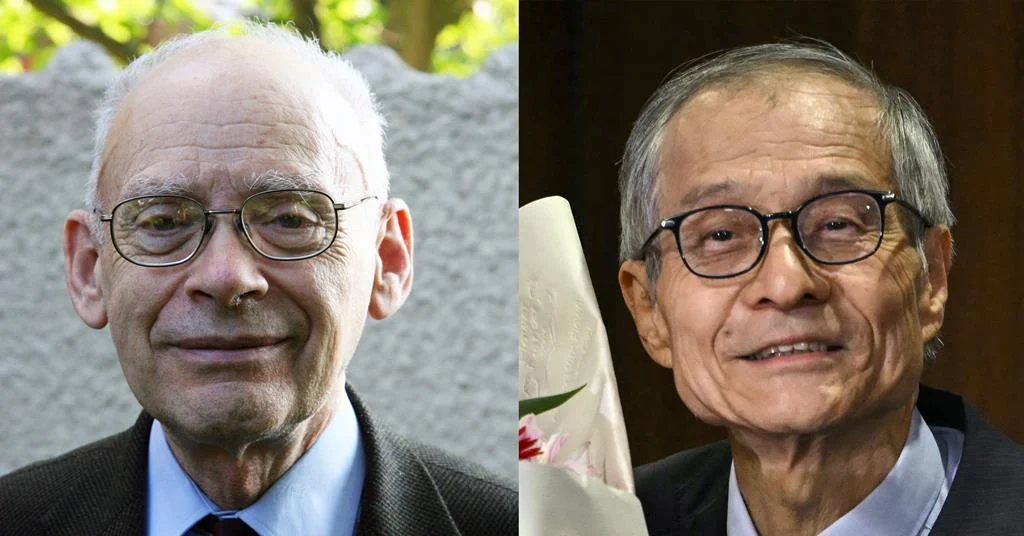
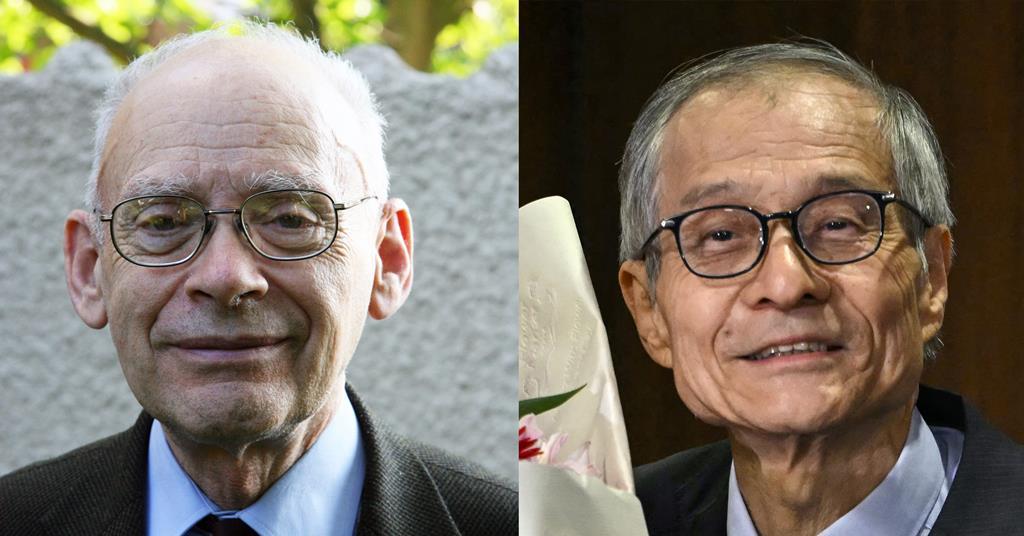
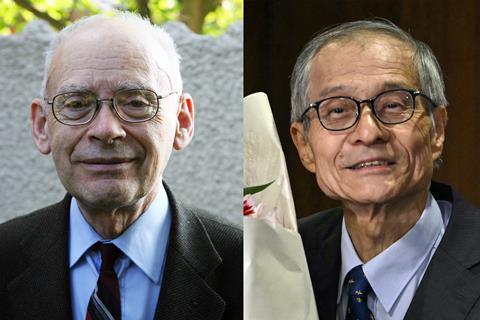
The Royal Swedish Academy of Sciences has awarded the 2026 Nobel Prize in Chemistry to Henri B. Kagan and Kenso Soai for their seminal work on the "discovery of non-linear effects and autocatalysis in asymmetric organic synthesis." This prestigious recognition addresses one of the most profound mysteries in the chemical and biological sciences: the origin of homochirality.
For over a century, scientists have grappled with why life on Earth exclusively utilizes one "handedness" of molecules—such as L-amino acids and D-sugars—over their mirror-image counterparts. By explaining how chemical reactions can spontaneously break symmetry to produce single-enantiomer yields, Kagan and Soai have provided a foundational answer to how the building blocks of life may have emerged from a prebiotic, racemic world.
The Chemical Mystery: Why Life is Chiral
At the heart of today’s announcement is the concept of molecular chirality. Many organic molecules exist as pairs of enantiomers—non-superimposable mirror images of one another. While these molecules are chemically identical in their physical properties, they interact differently with other chiral environments, a fact that is critical to the function of proteins, DNA, and pharmaceuticals.
For decades, the persistence of homochirality in living systems was a source of debate. If chemical reactions in nature produce an equal mix of both mirror images (a racemic mixture), how did life settle on a single "left-handed" or "right-handed" bias? Henri Kagan’s work in the 1980s, specifically regarding non-linear effects in asymmetric catalysis, demonstrated that small amounts of chiral imbalance could be amplified to near-perfect purity. Building on this, Kenso Soai discovered a unique autocatalytic process—now known as the "Soai reaction"—where the product of the reaction acts as a catalyst for its own production, creating a feedback loop that drives the system toward a single enantiomer.
A Chronology of Discovery
The path to this year’s Nobel Prize spans four decades, representing a triumph of fundamental, curiosity-driven research.
1986: The Breakthrough
The Nobel Committee noted that the foundational work for the prize dates back to 1986. Henri Kagan, a French chemist whose influence on asymmetric synthesis is legendary, began uncovering the mechanics of how catalyst asymmetry influences product outcome. His realization that the relationship between catalyst purity and product purity is often non-linear was a paradigm shift in synthetic chemistry.

The Rise of the Soai Reaction
Kenso Soai, a Japanese chemist, expanded these concepts into the realm of autocatalysis. His discovery, which can generate increasing yields of a single enantiomer, provided a tangible model for how early-Earth chemistry might have "chosen" one mirror image over another. While many in the scientific community previously viewed these reactions as curiosities, they are now understood as essential models for the chemical origins of biological homochirality.
2026: The Recognition
Despite being overlooked for the 2001 Nobel Prize—a snub that famously drew public outrage from prominent French scientists—Kagan’s contributions have finally been codified in the annals of history. Kenso Soai, a recipient of the 2005 Chirality Medal, has long been a titan in his field, and today’s announcement marks the formal validation of his life’s work.

Data and Trends: Mapping the Nobel
The 2026 award highlights a shift in the geography of scientific prestige. As the Nobel Committee moves toward honoring fundamental mechanisms, the geographic distribution of winners remains heavily skewed toward the United States and Europe, though Japan’s role as a powerhouse of organic synthesis is underscored by Soai’s selection.
The "Academic Family Tree"
A review of academic lineage shows the deep roots of this year’s laureates. Henri Kagan was mentored by Jean Jacques, who was in turn a student of Marcel Delépine. This lineage links modern Nobel winners to the turn-of-the-century pioneers of structural chemistry. Interestingly, the Nobel Prize in Chemistry has moved from being a predominantly European honor in the early 20th century to one that now frequently recognizes work conducted in global research hubs, with over 30% of 21st-century laureates being immigrants who moved to advance their research.

Statistical Context
- Prize Value: This year, the Nobel Foundation increased the prize amount to 12 million SEK (approx. £870,000) per category.
- Gender Representation: The field remains male-dominated, with only eight women having received the chemistry prize since its inception.
- The "No-Win" Years: The prize has been withheld eight times in history, most notably during the World Wars. 1924 stands out as a year where the committee deemed no discovery sufficiently significant to merit the award.
Official Responses and The "Call"
The announcement in Stockholm was met with jubilation in the scientific community, though the logistics of notifying the winners were as dramatic as ever.
Kenso Soai, when reached by the Nobel committee, was reportedly engaged in "recreational consumerism" when the call came through. The interview was famously cut short as Soai had to take an urgent call from the Japanese Prime Minister. Henri Kagan, now 95, stands as one of the oldest living Nobel laureates, providing a poignant bookend to a career that has spanned the transition from classical synthetic chemistry to the modern era of molecular machines and complex asymmetric catalysis.

"This is a chemist’s chemistry prize," remarked one attendee at the Nobel press conference. "It isn’t a story about a gadget that changes your iPhone; it is a story about the fundamental rules of the universe that allowed life to begin."
Scientific Implications and Legacy
The work of Kagan and Soai is not merely a theoretical exercise. Understanding homochirality has massive implications for the pharmaceutical industry, where the chirality of a drug can be the difference between a life-saving medicine and a toxic compound. The ability to control enantiomeric purity is the backbone of modern drug development.

Beyond the Lab: The Origin of Life
The most far-reaching implication of the Soai reaction is its role in the "origin of life" research. By showing that a small, random bias in a chemical environment can be amplified into a dominant handedness, the laureates have provided a plausible mechanism for how the primordial soup transitioned into the organized, chiral biology we see today.
A Legacy of Persistence
As the Nobel Foundation noted during the ceremony, the journey to the podium is rarely straight. Like Thomas Lindahl or Carolyn Bertozzi, who both famously "hated" chemistry in high school, Kagan and Soai remind the next generation that scientific success is built on "luck, stubbornness, and perseverance."

Looking ahead, the research community is already planning a series of symposia to discuss the implications of this year’s win. Chemistry World will host a free webinar this Friday at 3:00 PM BST, featuring David Pendlebury of Clarivate’s Institute for Scientific Information, to delve deeper into the bibliometric impact of the Soai reaction and the non-linear effects discovered by Kagan.
Final Thoughts
As the 2026 Nobel week concludes, the choice of Kagan and Soai serves as a reminder that the Nobel Prize continues to prioritize fundamental understanding over immediate commercial application. While the discovery of C60 or the development of molecular machines made for flashy headlines, the work of Kagan and Soai touches the very fabric of existence.

They have answered a question that Louis Pasteur first posed over a century ago. They have, in the words of the Nobel Committee, "reshaped our understanding of molecular chirality." As the scientific world turns its gaze toward the next generation of researchers, the legacy of these two men—one who spent decades patiently mapping the non-linear, and one who discovered the self-propagating power of symmetry-breaking—will remain a cornerstone of chemical science for decades to come.
The Nobel committee has successfully closed the chapter on the 2026 chemistry cycle, leaving behind a legacy that emphasizes that even the most invisible, smallest molecules can hold the secrets to the largest questions of human existence.