By Anirudh Agarwal
Mechanical Engineer & Additive Manufacturing Specialist
Over the past decade, the landscape of additive manufacturing has undergone a seismic shift. What was once an industrial niche dominated by proprietary, high-cost machinery has evolved into a vibrant, highly accessible ecosystem. At the heart of this transformation is the democratization of Fused Filament Fabrication (FFF) and Fused Deposition Modeling (FDM) technologies, supercharged by open-source collaboration and the unyielding creativity of the global maker community.
As a mechanical engineer whose career has spanned fields as diverse as polymer composites, aerospace component design, and food extrusion, I have watched this evolution firsthand. Today, 3D printing is no longer merely a tool for turning static Computer-Aided Design (CAD) files into physical prototypes. Thanks to advances in G-code manipulation, automated workflows, and non-planar slicing, the technology has taken on a life of its own.
Main Facts: The Democratization of Additive Manufacturing
The modern era of accessible 3D printing traces its roots back to the mid-2010s, a critical juncture when foundational patents for FDM and FFF technology expired. This expiration tore down the financial and legal barriers that had long protected industrial manufacturing monopolies, unleashing a wave of inexpensive, highly adaptable desktop 3D printers.
Crucially, this hardware boom coincided with the rise of open-source frameworks. The RepRap project established a philosophical and practical blueprint for self-replicating machines, fostering a culture where hardware modifications and software developments were shared freely. Concurrently, free, open-source slicers such as Slic3r, PrusaSlicer, and Ultimaker Cura emerged, giving users unprecedented control over how digital models are translated into physical paths.
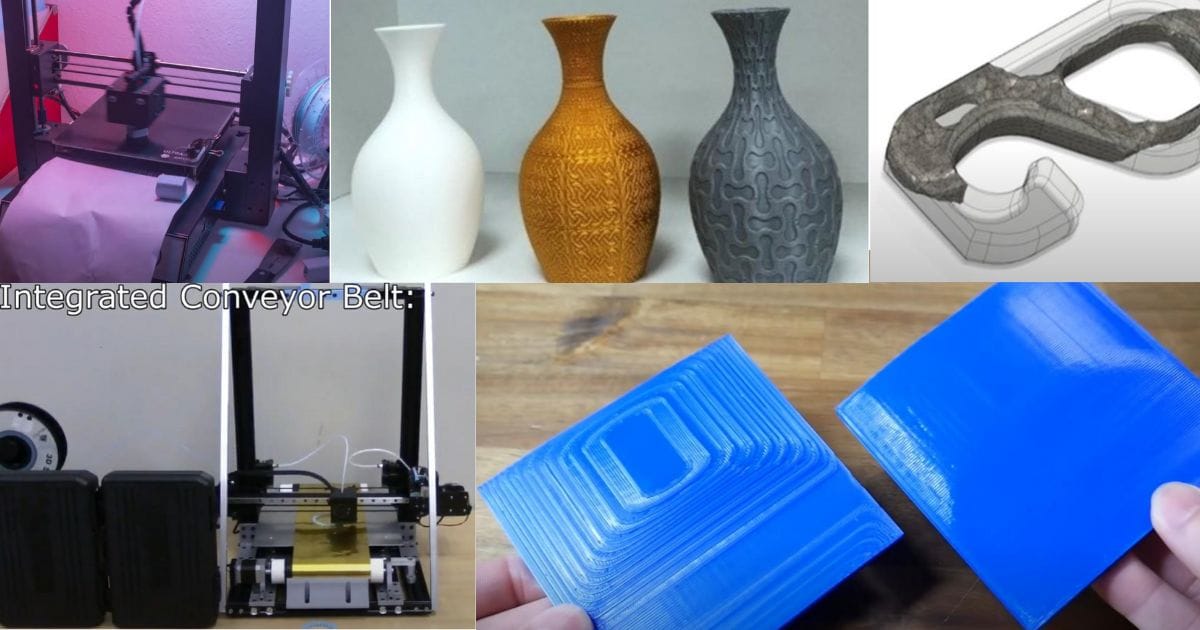
Rather than treating the printer as a closed black box, hobbyists, tinkerers, and professional engineers began pulling back the software curtain. By directly editing low-level machine instructions—known as G-code—and tweaking slicer settings, the community transformed basic desktop printers into versatile fabrication platforms capable of embedded manufacturing, automated mass production, and complex material deposition.
Chronology: From Industrial Patents to Open-Source Innovation
To understand how desktop 3D printing reached its current state of capability, it helps to examine its developmental trajectory:
- Pre-2010s (The Proprietary Era): Additive manufacturing was largely confined to industrial facilities. High-resolution stereolithography (SLA) and selective laser melting (SLM) machines, alongside high-end FDM systems from companies like Stratasys, carried six-figure price tags. Patents restricted market entry, and software was rigidly locked down.
- The Mid-2010s (Patent Expirations & The Maker Boom): As key FDM patents expired, a vacuum was created in the consumer market. Companies like Prusa Research and Ultimaker capitalized on this, while open-source initiatives like RepRap galvanized a global community of builders. Slicing software matured rapidly, democratizing print parameter control.
- Late 2010s to Early 2020s (Specialized Research & Custom G-code): Researchers and early-stage startups began pushing printers beyond standard thermoplastics. In academic settings—such as my own early work with polymer composites at the Singapore University of Technology and Design (SUTD)—engineers began bypassing standard slicers entirely, writing custom C++ algorithms and hand-coding G-code to deposit continuous fibers in mid-air. Similar breakthroughs occurred in alternative domains, such as the development of food 3D printing systems at Nanyang Technological University (NTU).
- The Present Day (Advanced Automation & Non-Planar Slicing): Today’s makers are achieving feats once thought impossible on consumer hardware. Through continuous production loops, conveyor belt integrations, load-dependent infills, and true 3-dimensional (non-planar) printing, the boundaries separating desktop machines from advanced manufacturing cells are rapidly dissolving.
Supporting Data: Pushing the Technical Envelope
While out-of-the-box slicing profiles are sufficient for ninety percent of everyday printing tasks, unlocking the true potential of additive manufacturing requires stepping outside the confines of standard software. Several advanced techniques illustrate how deep G-code and hardware tinkering are redefining what printers can achieve.
1. Embedded 3D Printing and Custom G-code Generation
Standard slicers operate under a fundamental assumption: layers must be stacked flat on top of one another, and material cannot be extruded into empty space without support structures. However, advanced applications often demand exceptions.
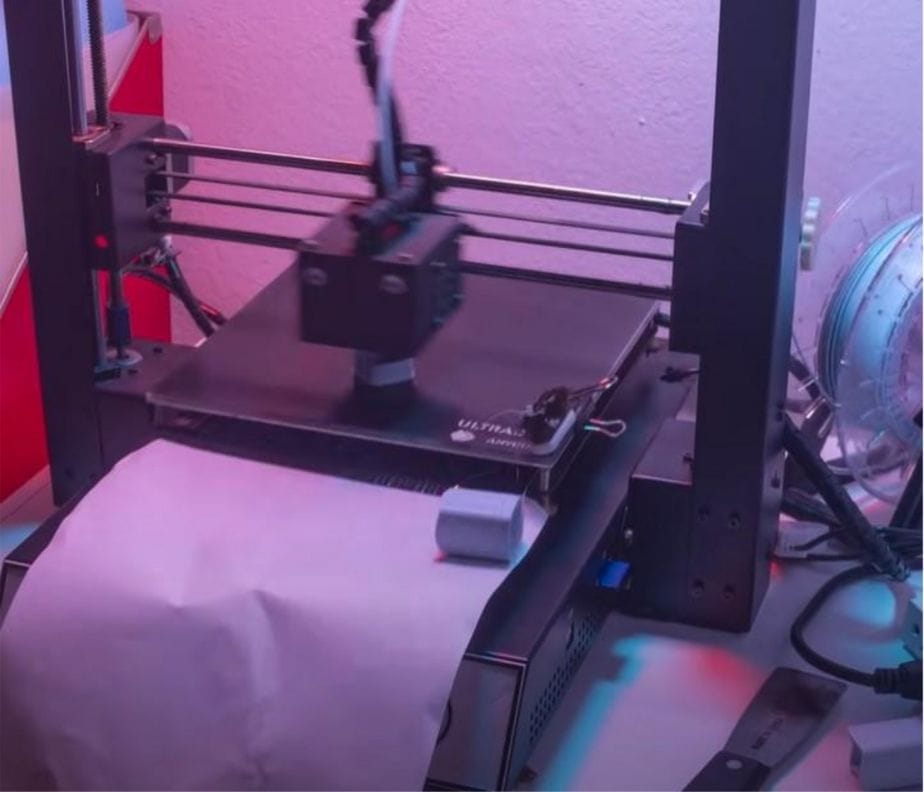
During my time at SUTD, my research into embedded polymer composites required laying down high-strength polymer strands within a secondary substrate to create reinforced composite materials. Because commercial slicers could not handle single-line deposition in mid-air, I had to write custom G-code from scratch. I programmed precise extruder movements and strategic pauses to align substrate containers manually. Ultimately, the complexity of these toolpaths led me to write dedicated C++ programs to calculate and generate G-code for complex fiber orientations—a methodology I later adapted for simple FDM operations and published on GitHub.
2. Food 3D Printing: Actuation and Material Control
At NTU and later through my spin-off venture, Anrich3D, developing food-compatible 3D printers required rewriting the rules of material actuation. Unlike standard thermoplastics that melt and solidify via thermal changes, food pastes (ranging from chocolate to hydrocolloids) rely on mechanical extrusion via auger or plunger systems.
Initial iterations required writing raw G-code to govern custom motor movements. Later, by modifying the starting and ending G-code scripts within standard slicing environments, we automated essential purging and pausing sequences. This ensured that every material transition—crucial when switching between distinct food components—occurred cleanly without clogging or cross-contamination.
3. Automation and Continuous Production
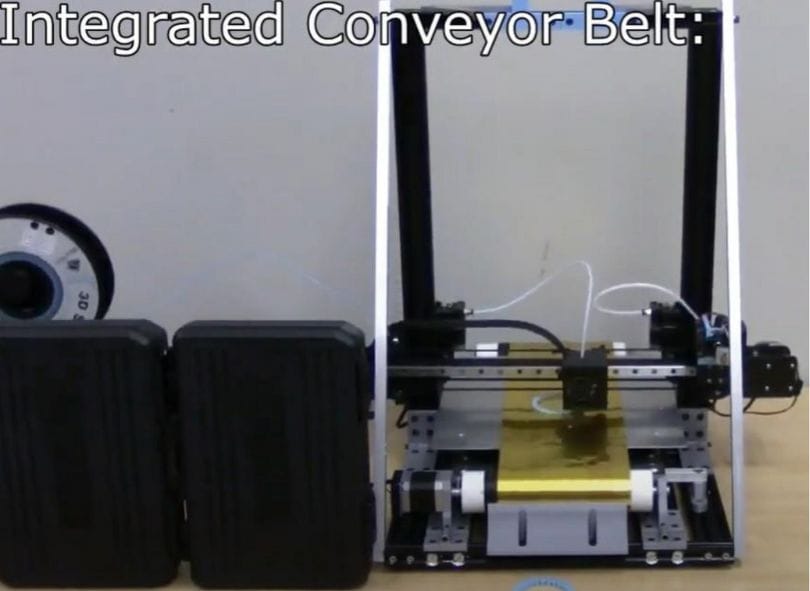
One of the most exciting developments in the creator economy is unattended, continuous manufacturing. As demonstrated by popular creators like Make Anything, clever G-code manipulation can enable a standard printer to eject a finished part and immediately begin printing the next one without human intervention.
By adding a simple nozzle-cleaning brush and programming the final G-code sequence to push the finished print off the build plate upon cooling, a desktop printer can run through multi-part batches overnight. For higher-volume demands, makers like Swaleh Owais (Call me Swal) have taken this a step further by retrofitting standard print beds into automated conveyor belt systems, turning consumer printers into continuous production lines (as documented extensively on his Hackaday project log).
4. Load-Dependent Infill and Topological Optimization
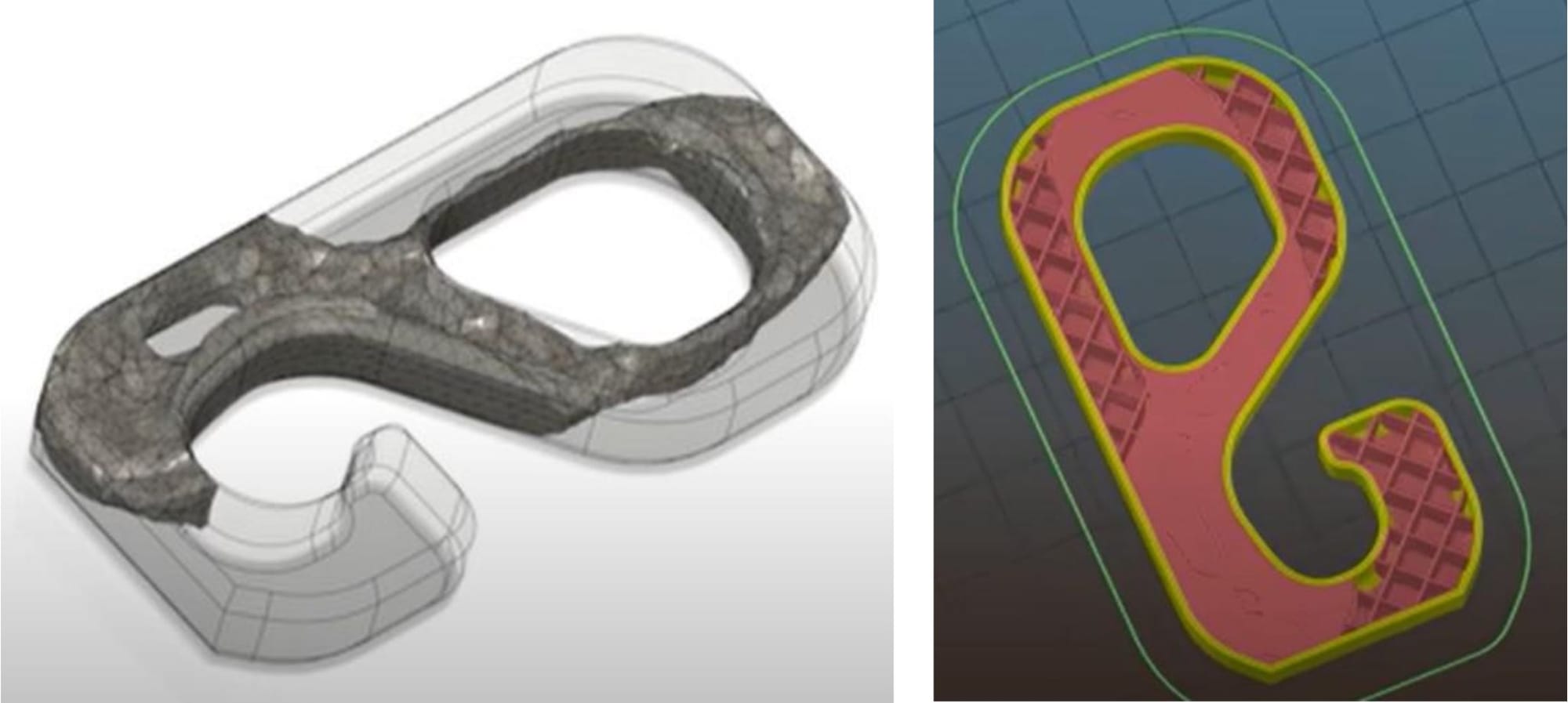
Topology optimization and generative design have long allowed engineers to create mathematically rigorous structures that minimize weight while maximizing stiffness. Traditionally, manufacturing these shapes required expensive metal additive techniques like Selective Laser Melting (SLM).
However, as Stefan from CNC Kitchen has demonstrated, desktop FDM users can approximate this structural efficiency using load-dependent infill. By running a simulation in software like Autodesk Fusion 360, exporting the stressed regions as an STL file, and using it as a modifier within the slicer, users can assign 100% infill strictly to areas undergoing high mechanical stress while maintaining standard, lightweight infill across the rest of the part. This approach yields massive strength gains without wasting material or increasing print times unnecessarily.
5. True 3D (Non-Planar) Printing
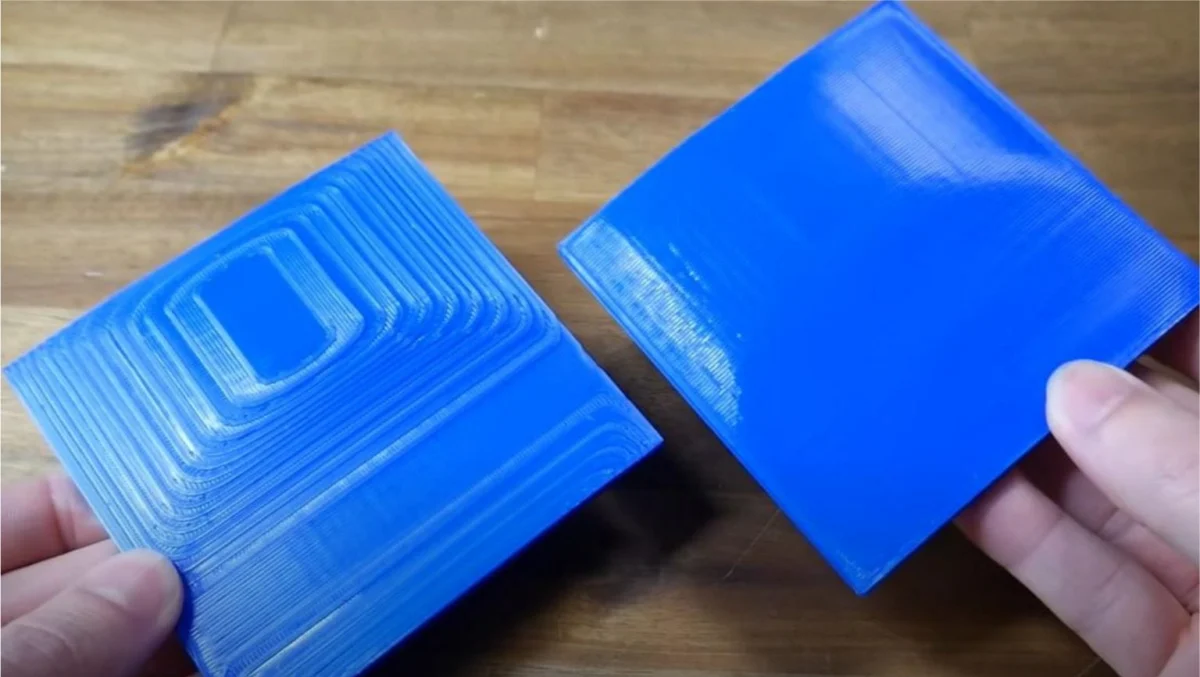
A persistent aesthetic and structural drawback of traditional FDM printing is the presence of "staircase" layer lines on curved surfaces, caused by approximating smooth geometries with flat horizontal slices.
Addressing this, Michael Laws (Teaching Tech), building upon foundational work by Tams Uham, popularized true 3D or non-planar printing. By utilizing modified Linux-based setups and leveraging the non-planar layer capabilities within Slic3r, users can configure printers to navigate complex X, Y, and Z coordinates simultaneously. While clearance must be carefully calculated to ensure the extruder body does not collide with existing geometry, the result is breathtaking: ultra-smooth curved surfaces with zero visible layer lines, even at coarser resolutions.
6. Surface Texturing for Thin-Walled Rigidity
Thin-walled 3D printed components are notoriously susceptible to warping and structural weakness due to the anisotropic nature of FDM deposition. Drawing inspiration from corrugated sheet metal and industrial piping, advanced slicing software—such as Raise3D’s ideaMaker—allows users to emboss geometric textures directly onto thin walls. As CNC Kitchen’s testing has shown, introducing these micro-textures dramatically increases the stiffness of thin components and mitigates warping stresses during the cooling phase.
Official Responses and Industry Perspectives
The boundary between consumer-grade hobbyism and industrial manufacturing continues to blur. Major industrial additive manufacturing firms have taken note of the agility displayed by the open-source community.
While enterprise-level systems (such as industrial FDM platforms, Stratasys PolyJet machines, and Formlabs SLA systems) prioritize closed, highly validated workflows for medical and aerospace compliance, industry leaders increasingly acknowledge that innovation is bubbling up from the desktop sector. Features like automated bed clearing, multi-material purging algorithms, and advanced infill patterns—pioneered by open-source contributors—frequently find their way into next-generation commercial machines.
In aerospace applications, such as my work with satellite manufacturing at Galamad Aerospace, the philosophies born in the maker community directly influence high-stakes engineering. Utilizing high-performance desktop and industrial machines—ranging from Bambu Lab X1 Carbon printers running complex gyroid infills to metal SLM systems fabricating optimized Attitude Determination and Control System (ADCS) chassis—engineers are proving that lightweight, consolidated geometries are no longer the exclusive domain of multi-million-dollar production lines.
Implications: The Future of Distributed Manufacturing
The evolution of 3D printing from a novelty hobby into an advanced, programmable engineering discipline carries profound implications for global supply chains and local innovation.
- Democratization of Engineering R&D: Small startups and independent inventors can now prototype and manufacture complex functional assemblies—complete with embedded sensors, optimized structural infills, and non-planar surfaces—from a home workshop.
- Sustainable Production: By shifting from mass manufacturing in centralized factories to on-demand, local fabrication using load-optimized, material-saving geometries, the carbon footprint of logistics and warehousing can be substantially reduced.
- The Rise of the "Full-Stack" Maker: As the barrier between software (G-code, C++, algorithmic design) and hardware (extruders, kinematics, automation) dissolves, the modern engineer or maker must increasingly adopt a multidisciplinary skillset.
Conclusion
Today’s 3D printers are far more than passive appliances that translate CAD files into plastic trinkets. They are open, hackable platforms waiting to be pushed past their advertised limits. Whether you are experimenting with food extrusion, writing C++ scripts for continuous fiber reinforcement, or exploring non-planar layer paths to eliminate staircase artifacts, the community has proven that curiosity is the ultimate manufacturing tool.
For those looking to take their first steps into advanced desktop fabrication, the journey need not be overwhelming. As creator Zack Freedman illustrates in his detailed guides on functional and artistic prints, diving into the world of open-source design is as simple as picking a project, downloading a model, and starting the print. The tools are ready—the rest is up to you.